Chose a Date for the Play

17-year-old Helena Muffly wrote exactly 100 years ago today: 

Tuesday, March 11, 1913: We decided tonight to have our play on the fifth of April.

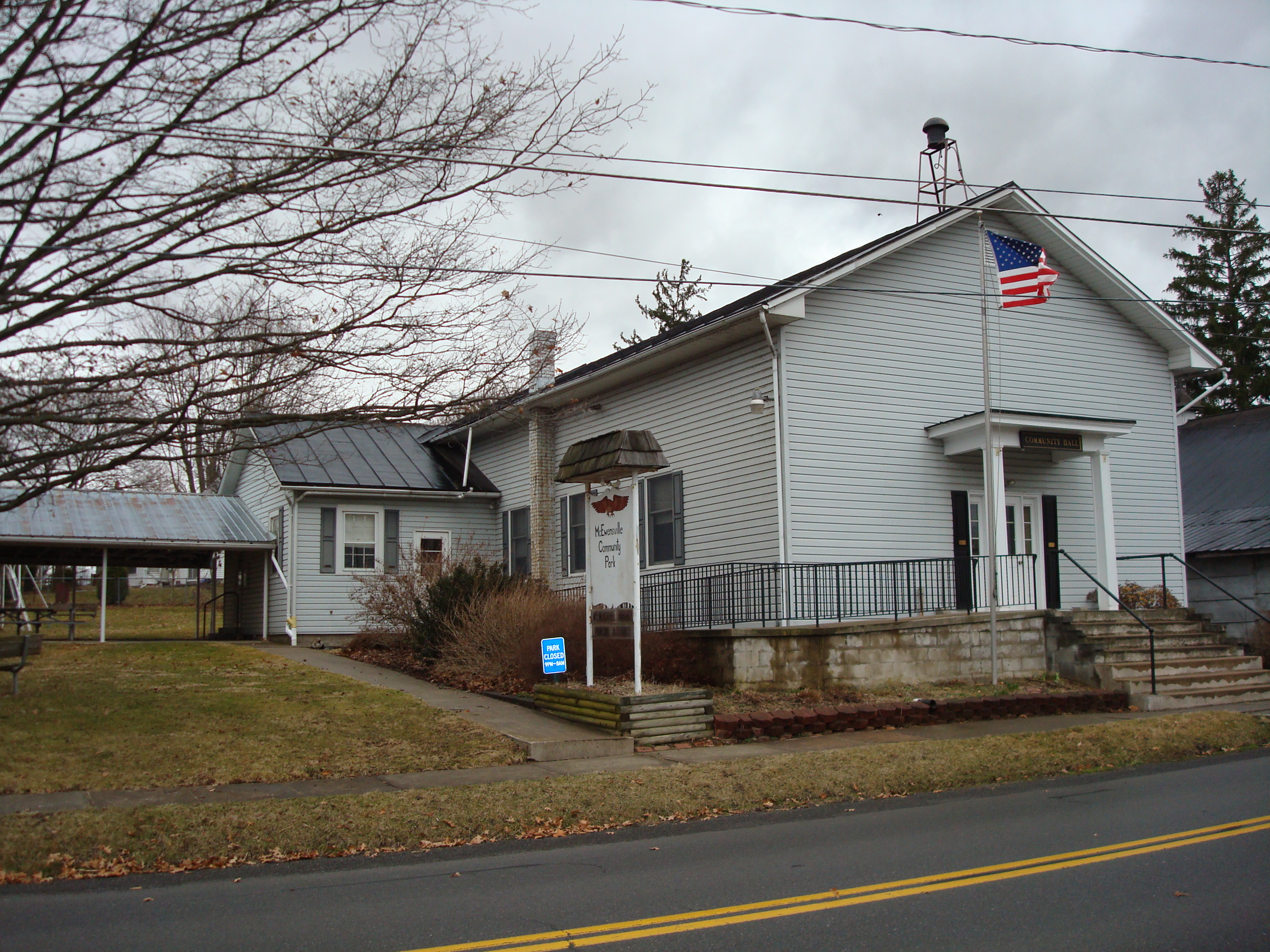
McEwensville Community Hall
The play was probably was held at the McEwensville Community Hall. The same building has served as the town’s community hall for more than 100 years.

Her middle-aged granddaughter’s comments 100 years later:

The previous evening Grandma did not go to play practice because it was raining. Probably the practice was canceled on the 10th and moved to the 11th due to the inclement weather. In general it seemed play practice only took place once—or maybe twice–a week.

Grandma had been going to play practices since January 27. She had the role of Chloe, the servant.  It seems somewhat surprising that the date of the play was only now selected. The cast probably wanted to be confident that they knew their lines and were ready for the play before choosing a date.

I suppose there was no need to rush to select the date since  the play was probably the only upcoming event in the small town of McEwensville–and nothing else was vying for the venue.

Didn’t Go To Play Practice

17-year-old Helena Muffly wrote exactly 100 years ago today: 

Monday, March 10, 1913:  It rained tonight so we didn’t go up to practice.

A recent rainy day in McEwensville

Her middle-aged granddaughter’s comments 100 years later:

Grandma was in the class play. Did some of the cast members show up for practice? . . or did everyone independently decide that the weather was too bad?

Today we’d text, email, or call if we couldn’t get to a play practice or meeting. A hundred years ago, did people just use their own judgment to determine whether an event was probably canceled due to weather?

Wooltex Spring Coat Advertisement

17-year-old Helena Muffly wrote exactly 100 years ago today: 

Sunday, March 9, 1913:  Went to Sunday School this afternoon. It was so nice out. Felt most too warm with my jacket on going up.

1913-04-39.b

Wooltex

The W. BLACK COMPANY

Designers

Wooltex Coat $15.00

Model 2249

An Extraordinary

Demonstration of Wooltex Value.

A handsomer coat for general service could scarcely be designed at any price than this model, No. 2249. It comes in whip cords, diagonal worsteds, find fancy diagonals, and a variety of fancy worsteds. Trimming is with inserts of self or contracting color broadcloth, and with buttonholes and invorine buttons to match inserts. Price but $15.00.

There are a few woman in every city who are always  “well-dressed”.

They are not always the richest.

Go see the Wooltex spring models and know why so many of them wear Wooltex coats and suits.

The Store That Sells Wooltext Coats, Suits, Skirts

(Source: Ladies Home Journal, April, 1913)

Her middle-aged granddaughter’s comments 100 years later:

The online Weather Channel forecast for McEwensville for today is a low of 31° and a high of 52.° Sounds like a nice day—though still jacket weather. It may have been a just a little bit nicer on this date a hundred years ago.

How to Wash Hair Brushes and Combs

17-year-old Helena Muffly wrote exactly 100 years ago today: 

Saturday, March 8, 1913:  It was kind of dull here today. Nothing much of anything doing.

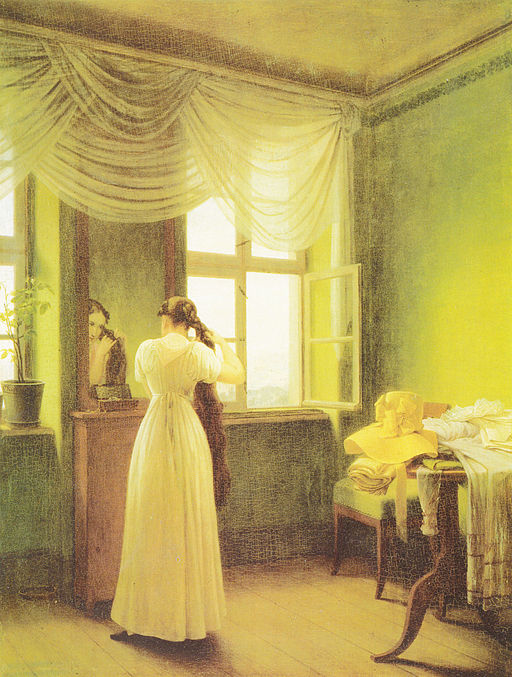
In Front of the Mirror by Georg Friedrich Kersting (Source: Wikimedia Commons)

Her middle-aged granddaughter’s comments 100 years later:

Hmm—What boring chores did Grandma need to do on a dull Saturday in March? ’

When I was a child, a weekly Saturday chore was to wash all the hair brushes and combs. I wonder if Grandma also did this when she was young,

I think that the reason we washed the brushes and combs was to have clean ones after we washed our hair. (We only washed our hair once a week back then.)

Here’s how to wash brushes and combs:

Add two or three tablespoons of baking soda to a small pan filled very hot water. (I use very hot tap water.) Swish the brushes and combs through the water—and “comb” the brushes with the combs. This cleans both the brush bristles and the comb teeth. Rinse with cool water. Lay on counter to air dry.

My sense is that people brushed their hair a lot more in the old days—and that brushing was one way to distribute, or remove, the oil and dirt between washings.

I can remember those old luxurious boar hair brushes that we used to have. Can you still buy them?

Old Honey Candy Recipe

17-year-old Helena Muffly wrote exactly 100 years ago today: 

Friday, March 7, 1913: Ruth and I went to a candy box social up at Smith’s School House tonight. We walked up but rode home with her cavalier.
DSC07187

Her middle-aged granddaughter’s comments 100 years later:

Whew, it must have been a  2 or 3 mile walk to Smith School. I think that the school was located  out in the country near the intersection of Vincent Road and 8th Street Drive.

This was the third time that a box social has been mentioned in 1913. They must have been really popular back then. It sounds like the box social went well for Grandma’s sister Ruth. I wonder who got Grandma’s box of candy.

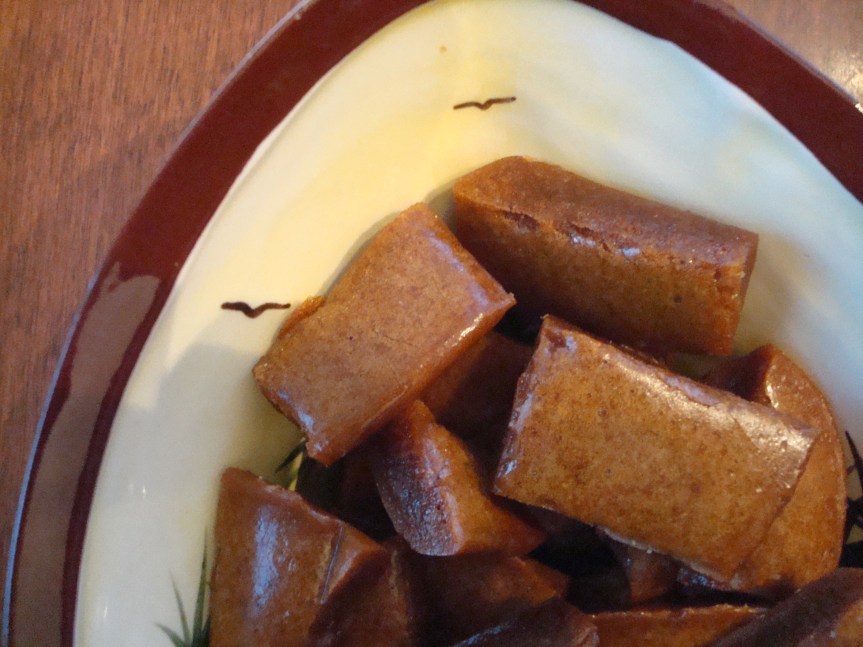
What kinds of candy did the Grandma and Ruth make? Here’s an old recipe for Honey Candy that I found in the December, 1912 issue of Ladies Home Journal.

Honey Candy

One quart of honey, three heaping teaspoonfuls of butter, two tablespoonfuls of vinegar, half a teaspoonful of baking soda, and two teaspoonfuls of lemon extract. Put the honey, butter, and vinegar into a saucepan, and boil until the mixture will harden when dropped into cold water; then stir in the baking soda and the lemon extract. Pour into a buttered tin to cool. When half cold mark into squares and when cold break apart.

The candy turned out well, but has a different taste from the typical corn syrup-based hard candy of today. It is a rich buttery hard candy with concentrated honey undertones. It’s the perfect candy to satisfy my sweet tooth–without making me want to eat a second piece.

This mixture boils at a low temperature. Most of the time, I had it on the low setting on my stove to keep it from boiling over.

It takes a long time to get the boiling mixture to the hard crack stage (300 degrees). I boiled it for about 1 1/2 hours.

You may also enjoy these previous posts with old candy recipes:

Old-fashioned Sugar Taffy Recipe

Old Cocoa Fudge Recipe

1911 Chocolate Fudge Recipes

Old-fashioned Butterscotch Recipe

Old-fashioned  Coffee Candy Recipe

Sour Cream Fudge

Woodrow Wilson Inaugurated

17-year-old Helena Muffly wrote exactly 100 years ago today: 

Thursday, March 6, 1913:  I got pretty cold today. My hands got rather chilly coming home from school. Ma and Ruth went up to Oakes.

woodrow wilson
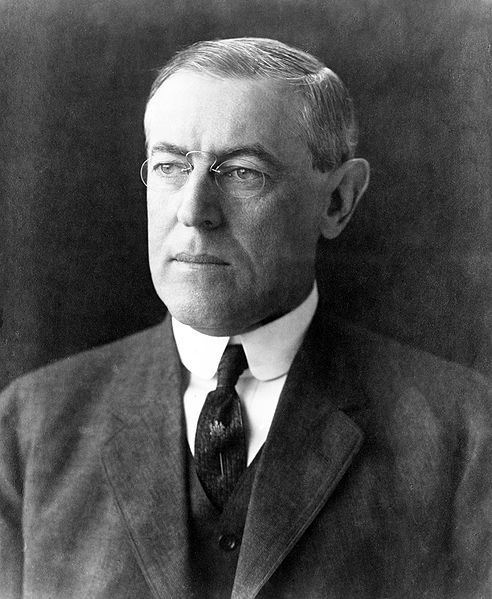
President Woodrow Wilson

Her middle-aged granddaughter’s comments 100 years later:

It sounds like it was a cold day. Did Grandma forget her gloves? Maybe she thought that the day would be warmer than it actually was.

For today’s post, I searched for a hundred-year-old newspaper article about the weather, but I failed to find any anything. Instead I discovered that a hundred years ago today was the 3rd day of President Woodrow Wilson’s presidency.

A hundred years ago the presidential inauguration was in March.  Inauguration Day used to be four months after election day. In 1913, it was on March 4.  Inauguration day was changed to noon on January 20 by the Twentieth Amendment in 1933.

In November, 1912 Woodrow Wilson, a Democrat, beat the incumbent president, Robert Taft in a three-way race. He also beat former president Theodore Roosevelt. Roosevelt was the founder of the Bull Moose Party. For more on the election see:

The 1912 Presidential Campaign: The Republicans, the Democrats, and the Bull Moose Party

Was Grandma excited about the new president? . . unhappy about the change. . .indifferent?

The Oakes lived on a farm near the Muffly family. They had several children about the same age as the Muffly children. Rachel Oakes was a friend of Grandma and her sister Ruth.

Selected Graduation Invitations

17-year-old Helena Muffly wrote exactly 100 years ago today: 

Wednesday, March 5, 1913: We had a class meeting tonight to decide some things. One was we selected our invitations.

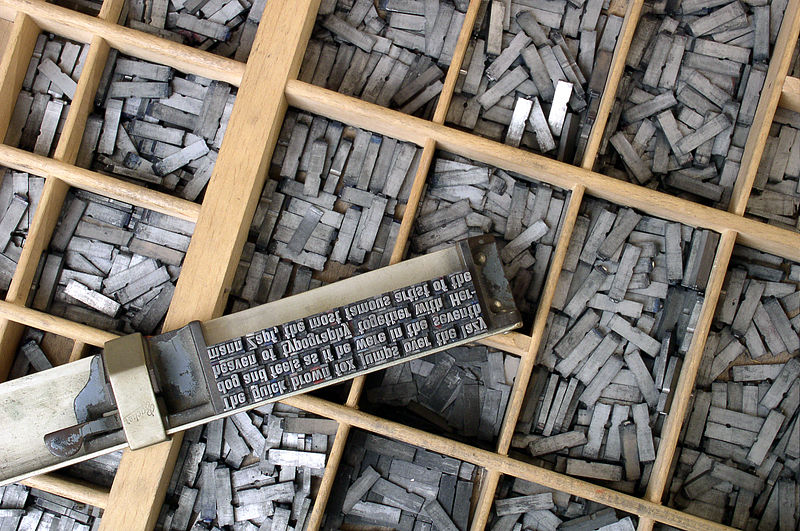
Metal movable type similar to what the printer may have used to make the invitations (Source: Wikipedia)

Her middle-aged granddaughter’s comments 100 years later:

Grandma was in her last year at McEwensville High School. Her class apparently was selecting what the invitations to their graduation would look like. I think that you’d call Grandma a senior, but I’m not sure since the school was an old-fashioned 3-year high school.

I think this is what was involved in getting invitations—

One of the class members probably visited the shop of a printer and got some sample invitations. The samples may have been glued into a book.  There probably were different prices for different invitation styles.

Once the class selected an invitation style, the words that would go on the invitation, and the number of invitations needed, the information would have been taken back to the printer.

The printer would then have ordered the blank invitations from his supplier. Once the blank invitations arrived, the printer would set up the type-face and print a copy for the class to proof.

Once the proof was approved, the invitations would be printed.

Whew, that’s a lot of steps (and I probably missed a few). It’s so much easier today with the internet.