What Did Wedding and Engagement Rings Cost a Hundred Years Ago?

18-year-old Helena Muffly wrote exactly 100 years ago today: 

Thursday, June 5, 1913:  Nothing doing, therefore not worth writing about.

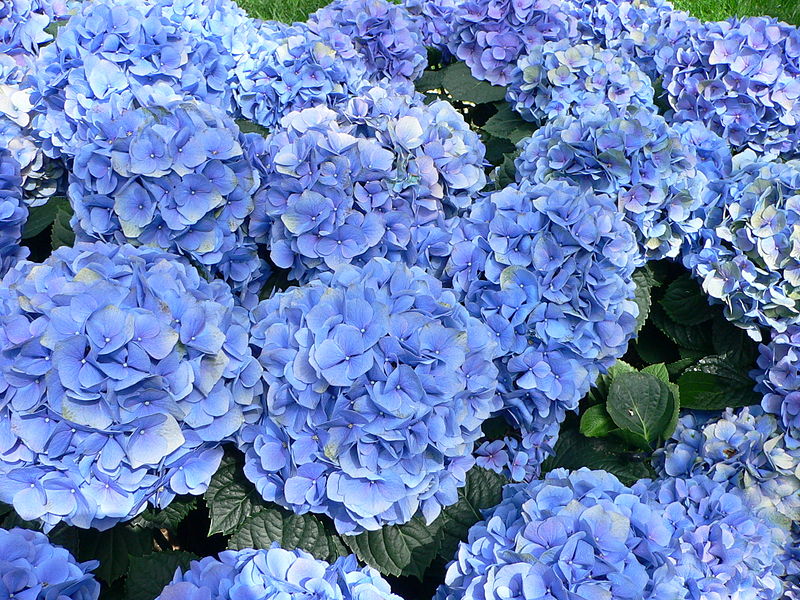
Photo source: Wikipedia

Her middle-aged granddaughter’s comments 100 years later:

Since Grandma again didn’t write much, I’m going to continue with the advice that “Aunt Harriet,” an advice columnist in Farm Journal, gave young men in the April, 1913 issue.

Yesterday, I posted Aunt Harriet’s answer to the question, “How much should I spend on a day’s outing with a young lady I hope to win for my wife?”

Assuming, all went well with the outing, young men apparently had a follow-up  question:

“How much should I spend on an engagement ring?” and “How much does a wedding-ring cost?” are questions frequently asked me by anxious young men.

Because the last question is the easiest to answer, we will take that first. A 14-karat ring will cost about $3, while one of 18-karat gold will cost from $5 to $8. What is known as an English ring is the best style. It is narrow, thick, and rounded, inside and out, making it comfortable and durable.

The cost of an engagement ring should be determined by the circumstances of the happy pair. While for years the solitaire diamond has been first choice for such rings, other settings are permissible, and when it comes to a choice between an engagement ring and a balance for necessities or emergencies, the wedding-ring may be made to serve both purposes and the happiness of the marriage will not suffer thereby.

While you can buy a diamond ring as low as $15, the stone will be small and, while genuine, not of the best quality. The average size costs about $100. It requires a good income to live up to such a ring, and a sensible girl would rather have that money in the bank, or invested in home comforts or furnishings.

Of late years it has become quite customary to use the birthstone of the young lady for the engagement ring, and these can be had in a variety of settings and at various prices.  . .

How Much Should a Man Spend on a Date? Hundred-Year-Old Advice

18-year-old Helena Muffly wrote exactly 100 years ago today: 

Wednesday, June 4, 1913: Nothing doing, therefore not worth writing about.

dirt.road
Photo Source: Wikimedia Commons

Her middle-aged granddaughter’s comments 100 years later:

Since Grandma didn’t write much a hundred years ago today, I’ll share some advice an advice columnist named Aunt Harriet gave a young man in the April, 1913 issue of Farm Journal.

(An aside—I’m amazed that Farm Journal had an advice columnist years ago.)

“How much should I spend on a day’s outing with a young lady I hope to win for my wife?”

When it comes to saying just how much a man should spend on amusements, no stranger can advise. The young man who lives in a scenic district of the United States, writes me, “How much should I spend of a day’s outing when we take a trip over one of our mountain railroads?”

Having invited a young lady to accompany him on such a trip, he should pay all of the necessary expenses, such as carfare, carriage hire, fees, etc.

If the luncheon is not carried along, he pays for this, at a convenient café, and to these necessary outlays, he may add any extra which appeals to their tastes, –a box of candy, a package of picture post cards, a glass of soda water, or any pretty souvenir, which might serve as a memento of a pleasant day’s outing.

Take along enough money to provide for emergencies. The unexpected will sometimes happen, –an accident, a storm, perhaps, something to prevent the carrying out of your plans. Of course your first thought will be the comfort and safety of your companion, and the extra money will ease your way.

In attending a place of amusement, the legitimate expenses are the price of admission and transportation to and from the building. Select as good seats as you can afford; they need not be the most expensive in the house. You can, if you choose, send flowers to the young lady on the day of the entertainment; the florist will help you decide, and the young lady will wear them.

There may be a supper afterwards, but this is not in good taste unless you are in a party. A girl and a man, alone in a restaurant late at night are subject to criticism. As prices vary in different localities, I am sure my young men friends will understand that is impossible for me to state definitely how much they should spend.

Pricked Two Fingers

18-year-old Helena Muffly wrote exactly 100 years ago today: 

Tuesday, June 3, 1913: Had the luck to prick two of my fingers. They hurt some for awhile.

pillow.cases

Her middle-aged granddaughter’s comments 100 years later:

Hmm—any ideas how Grandma might have pricked two fingers? She could have easily pricked one while doing embroidery, mending  dress or  her father’s torn bib overalls, or doing other hand sewing—but two?

1913 Treaty Ending Balkan War

18-year-old Helena Muffly wrote exactly 100 years ago today: 

Monday, June 2, 1913:  About the same as any other day. Didn’t do anything of note.

Milton.Evening.Standard.6.1.13
Source: Milton Evening Standard (June 1, 1913)

SIGN BALKAN WAR TREATY

Delegates of Turkey and the Allies in Accord

London, May 31.—The preliminary treaty of peace was signed at St. James palace by the delegates of all the Balkan allies and of Turkey.

Sir Edward Grey, the British foreign secretary, presided at the conference as he did at the previous debates, in the capacity of honorary president, and opened the proceedings with an explanation of Europe’s attitude and of the necessity of insisting that there be no further delay.

The powers will not, however, be able to indulge in unalloyed self congratulations as the outlook in the Balkans is marred by the reports of continued warlike measures and even of conflicts between the allies. A dangerous temper is prevailing both in Servia and in Bulgaria.

All the efforts of Russia to bring about peace between Bulgaria and Servia apparently have failed, and the worst is still feared. Meanwhile the quarrelsome allies are throwing enormous bodies of troops into Macedonia for the purpose of occupying disputed territory.

Bulgarian artillery at Prava opened fire on the Greek positions in the directions of Eleuthera, according to the Exchange Telegraph company’s representative in Athens.

The Bulgarian commander refused to enter into negotiations with the Greek commander to stop firing. Owing to this clash a part of the Greek fleet has been sent to Eleuthera.

Her middle-aged granddaughter’s comments 100 years later:

Grandma’s world often seems so small.  The diary provides little evidence that she was aware of happenings across the US and around the world.

But the newspaper that Grandma would have read, the Milton Evening Standard, regularly reported national and world events.

For example, the previous day  the paper contained the above article about a peace treaty–it’s called a war treaty in the headline, but the text says it’s a peace treaty– that was signed by the Balkan countries and Turkey.

The article indicates that the treaty may not have been totally successful—and obviously over the longer run it failed since World War I began a little over a year later due to continued unrest in the Balkan countries.  The war was triggered when Archduke Ferdinand of the Austro-Hungarian Empire was assassinated in Sarajevo, Serbia on June 28, 1914.

An aside—it’s interesting how the spelling of several cities and countries have changed across the years. In the old article:

–Serbia was spelled Servia.

–Prague was spelled Prava.

–And, I’m not quite sure what Eleuthera referred to in the article (“. . . the Greek fleet has been sent to Eleuthera”), but I’m pretty sure that it wasn’t the island in the Bahamas.  🙂

Percentage of US Population Affiliated with Various Religions, 1913 and 2013

18-year-old Helena Muffly wrote exactly 100 years ago today: 

Sunday, June, 1913:  

What is so rare as a day in June ,

For then if ever comes perfect days,

When song of bird and hum of bees

Bring to us fair summer’s sweetest day.

Went to Sunday school this afternoon. Took my time a getting home. I heard some of the best speaking I have ever listened to this evening. A converted Jew talked about some of the customs of the Jewish people in the Reformed Church at McEwensville.

Religious.Affiliation

Her middle-aged granddaughter’s comments 100 years later:

Grandma’ diary entry made me wonder: What percentage of the US population were considered members of the various religions in 1913 and 2013?

I discovered that this was a much more difficult question to answer than I thought it would be.  The data on religious affiliations were collected very differently in the early 1900s than how it is gathered now—so when the data are compiled to do a comparison, it’s kind of like comparing apples to oranges.

This gets complicated, but let me try to explain what I did to create the figure above:

In the early 1900s , the US Bureau of the Census conducted a religious census every ten years.  Religious leaders were asked how many members their congregation had; whereas in recent years, various non-profit organizations have conducted surveys where they asked a sample of the population about their religious preferences.  As a result of these differences in methodology many more people were considered to have no religious affiliation a hundred years ago than now.

Calculation of 1913 Percentages

For the figure above, I used data from an article titled “U.S. has 42,043,374 Members of Church, New Census Shows” in the May 2, 1918 issue of the Minneapolis Morning Tribune. According to the article:

The term ‘members’ has  a wide variety of uses. In most Protestant bodies it is limited to communicants or confirmed members; in the Roman Catholic, Eastern, and some other churches it includes all baptized persons, while in some bodies it covers enrolled persons.

The membership for the Jewish congregations requires some explanation. Some congregations reported as members all who contribute to the treasury of the congregation and not infrequently included women and children. The more orthodox, of the other hand, reported only those males who have incorporated the institution or have bought share or membership in it, but do not recognize as members other persons who are regular attendees or even contributors.

For the figure, I used data from the 1916 Religious Census, as reported in the Minneapolis Morning Tribune article, since this was the one done closest to a hundred years ago.  To calculate the percentages I used the US population estimate for 1916 as reported by the US Bureau of the Census. I assumed that the percentage of the population who were members of various religions did not change much between 1913 and 1916 when creating the figure.

Calculation of the 2013 Percentages

For the 2013 percentages, I used data from a survey conducted by the Pew Research Center.  Phone interviews were used to survey a sample of the US population. Respondents were asked which religion they identified with.

The survey was conducted in July, 2012—and I assume that the percentages have not changed significantly since then.

Monthly Poem

On the first of each month Grandma included a poem in the diary. For more information about the poems, see a previous post:

Monthly Poem in Diary

1913 L.L. Olds Seed Company Advertisement

18-year-old Helena Muffly wrote exactly 100 years ago today: 

Saturday, May 31, 1913:  What I did today was far from being romantic. I had to help plant taters this afternoon.

potato 1

25 Years’

Potato Experience

For a quarter of a century I have made a specialty of growing and handling Choice Seed Potatoes, testing all the leading varieties, retaining and improving the best. This year’s list is the cream.

My 26th Annual Seed Book

should be in the hands of every progressive farmer and gardener. It contains 54 pages crowded full of valuable information. The best in Seed Potatoes, Field and Garden Seeds of all kinds. Write postal today.

L.L. OLDS, President

L.L. Olds Seed Co., Drawer C, Madison, Wis.

Her middle-aged granddaughter’s comments 100 years later:

Grandma did you dream about doing romantic things?  Hmm. . .  I guess that’s for another day.  In the meantime, the farm work needed to be done.

I’m not sure whether the Muffly’s raised potatoes to sell . . or if they just raised them for family use. Either way, they would have planted lots of potatoes. A hundred years ago potatoes were one of the main staples that people ate during the long winter months.

Previous posts about potatoes include:

Planting Potatoes

Harvesting Potatoes

Old-fashioned Fried Potatoes

Old-fashioned Potato Cakes

Memorial Day, 1913

18-year-old Helena Muffly wrote exactly 100 years ago today: 

Friday, May 30, 1913:  Went up to McEwensville this morning as I planned to do some time ago. There wasn’t any band and not so many people. Wanted to go to Watsontown this afternoon to see the cemetery, but didn’t have anyone to go with. After thinking it over I decided to go as I believed I would feel miserable if I staid at home. The slippers I had on made me awful tired and began to wonder how I would get myself home. The problem was solved when I got a chance to ride where-upon I considered myself quite fortunate.

Was the McEwensville event held at the cemetery or at the Community Center?

The brick building in the background once houses McEwensville School.

DSC04286

Her middle-aged granddaughter’s comments 100 years later:

A hundred years ago Memorial Day was always on May 30. In the 1910s it was an important holiday with lots of parades and celebrations honoring aging Civil War veterans.

It sounds like the day got off to a rocky start, but ended nicely. Did Grandma wear the new dress that her mother made? Who brought her home from Watsontown? . .. . anyone interesting?

At the Watsontown Cemetery, did Grandma put the wreath she made the previous day on the grave of her paternal grandparents?  Her grandfather, S.K. Muffly, died when she was very young; but her grandmother, Charlotte Muffly, died in 1905 when Grandma was 10. What were Grandma’s memories of her grandmother? . . . Did she miss her?

DSC04484

DSC04488

DSC04487

Or maybe Grandma put the wreath on the grave of her aunt, Mary (Muffly) Fienour, who died the previous summer. (In the obituary Mary’s last name is spelled Feinour.) Mary is buried next to her mother (Charlotte).

DSC04486

Mary Feinour Obituary. Source: Milton Evening Standard (July 19, 1912). Click to enlarge for easier reading.

(The fourth gravestone in the group, is the stone of Grandma’s uncle, Samuel Muffly. That stone won’t have been there in 1913–he didn’t die until 1930.)