18-year-old Helena Muffly wrote exactly 100 years ago today:
Sunday, August 3, 1913:Went to Sunday School this morning. Didn’t go any place this afternoon although I would have liked to.
Recent picture of the house and yard where Grandma lived when she wrote the diary.
Her middle-aged granddaughter’s comments 100 years later:
Grandma—I bet that you wanted to be part of the action (whatever that was back then). It’s no fun when everyone else is busy and you’re stuck at home with nothing to do.
—
I can remember how slow Sunday afternoons sometimes seemed to pass when I was a child. My parents were glad to have a day when they could rest, but I was BORED!!
18-year-old Helena Muffly wrote exactly 100 years ago today:
Friday, August 2, 1913:I don’t remember exactly.
Photo Source: Farm Journal (July, 1913)
Her middle-aged granddaughter’s comments 100 years later:
It almost sounds like Grandma didn’t write this entry until the following day since she can’t remember what she did on August 2. Since she didn’t write much a hundred years ago today–—I’m going to go back to her diary entry on the 1st.
It was a relatively long entry and included her monthly poem for August:
The month of August with skies serene
Smiles upon this world again.
Let us welcome her with open arms,
For sweet summer cannot always reign.
I also can sense that sweet summer will end too soon. The days are getting shorter. . . and the wind is blowing over the wheat stubble.
A question—Does anyone know the poem that has a line that says something like: When the wind blows over the wheat stubble, Fall can’t be far away.
My father used to always say a poem with those lines on late summer days when there was just a hint of fall in the air. I think that he memorized it when he was in elementary school—but I can’t find it when I search online.
18-year-old Helena Muffly wrote exactly 100 years ago today:
Thursday, August 1, 1913:
The month of August with skies serene
Smiles upon this world again.
Let us welcome her with open arms,
For sweet summer cannot always reign.
A big thunderstorm came up this afternoon. Just before it got here, I had gone off to one of the neighbors and Ma not knowing where I was had quite a hunt for me.
Source: Wikimedia Commons
Her middle-aged granddaughter’s comments 100 years later:
Grandma! You should have told your mother where you were going. Didn’t you know that she’d worry even though you are a grown 18-year-old woman?
Your words make me think of Aunt Em hunting Dorothy in The Wizard of Oz.
I know that you won’t have seen the movie –it wasn’t made until 1939—but did you read the book? According to Wikipedia,The Wonderful Wizard of Oz by L. Frank Baum was published in 1900.
—
For information about the monthly poems sees this previous post:
18-year-old Helena Muffly wrote exactly 100 years ago today:
Monday, July 28, 1913 – Thursday, July 31, 1913:Nothing very much doing for these days. It’s so terrible hot and I have a hard time of it just doing nothing. I’d hate to go anyplace such weather as this is.
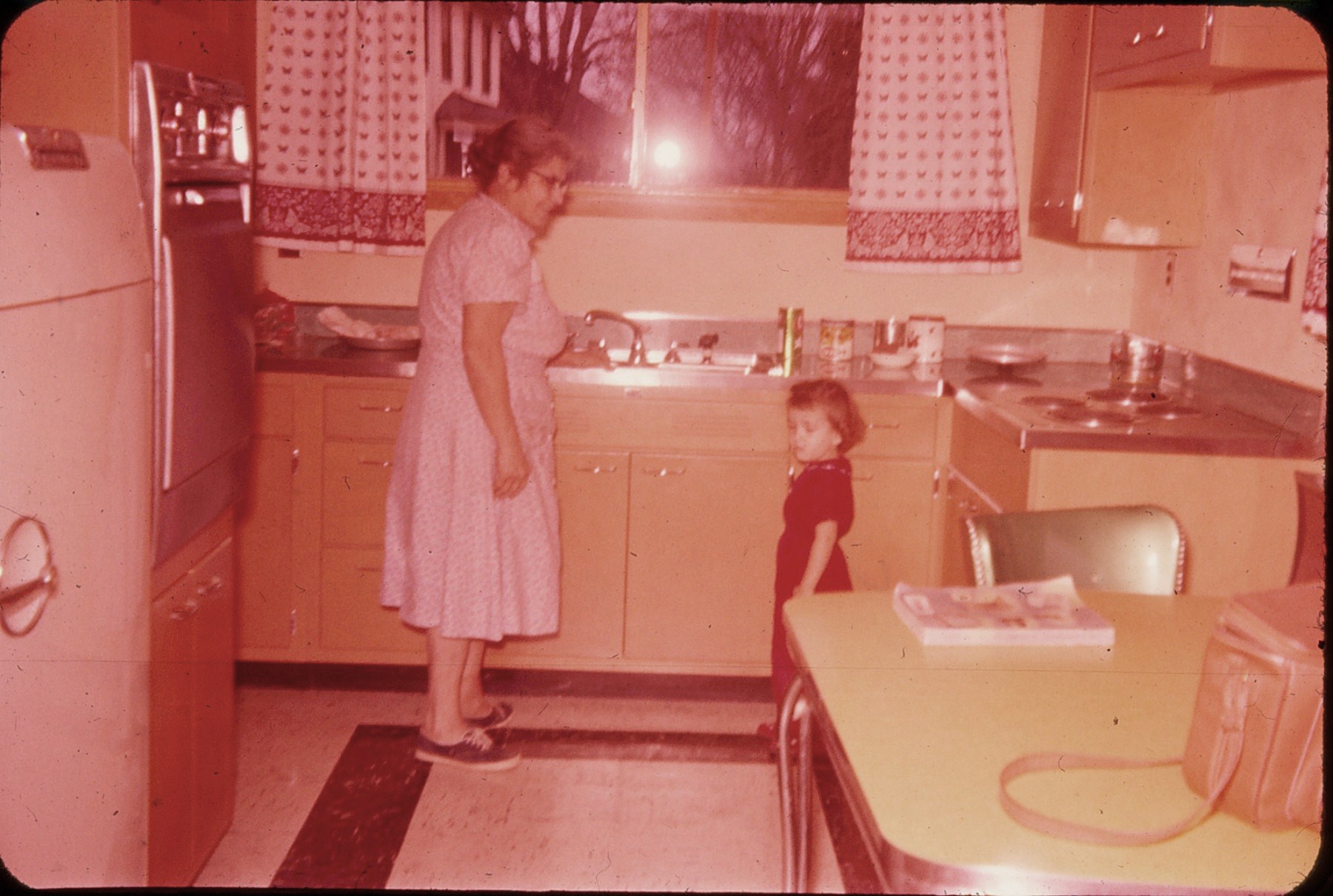
Grandma and me
Her middle-aged granddaughter’s comments 100 years later:
This is the last of four days that Grandma lumped together into one diary entry. Since Grandma didn’t write anything specific for this date, I’m going to share a picture of Grandma and me.
Others who have family history blogs often have awesome pictures of themselves with the relative they are writing about—and I’m always slightly jealous.
The few pictures that I have of me with Grandma have many limitations. Time has taken a toll on the color, the picture has lighting problems or is blurry, and so on.
But, in spite of the poor quality of the picture above, I really like this photo so I decided to share it with you.
18-year-old Helena Muffly wrote exactly 100 years ago today:
Monday, July 28, 1913 – Thursday, July 31, 1913: Nothing very much doing for these days. It’s so terrible hot and I have a hard time of it just doing nothing. I’d hate to go anyplace such weather as this is.
Her middle-aged granddaughter’s comments 100 years later:
This is the third of four days that Grandma lumped together into one diary entry.
Since Grandma didn’t write anything specific for this date, I’m going to share some more hundred-year-old advice from an advice columnist called “Aunt Harriet.” It was published in Farm Journal.
Heart Problems
[Note: Aunt Harriet didn’t include the original questions, just the answers.]
“Whistling Girl”: No, I do not think it improper for a young, healthy and happy girl to whistle around her own home; but it would be unwise for her to walk along the street or public highway doing so.
“Dismay”: It is not necessary to have s written agreement concerning the breaking of an engagement. You can ask the young woman to release you from a promise which you feel has been a mistake and say that you will return her gifts and her letters, and she will no doubt understand that you expect her to do the same with yours. Make your request in language as polite as you can command, and consider well before you enter into another engagement.
L.T.W.: It is rather difficult to make advance now that the young man has left your neighborhood. If you had any special reason for refusing his attentions, and now find that you were mistaken, you might write and tell him so. On the other hand, if it was just a whim and you have gotten over it, you might write and explain. You could write to him about like this: “Dear friend John: In thinking over the changes in our neighborhood, I am reminded of my lack of appreciation of your attention to me. I sincerely regret my shortcomings in this direction.
Farm Journal (May, 1913)
You may also enjoy these previous posts that contain advice from Aunt Harriet:
18-year-old Helena Muffly wrote exactly 100 years ago today:
Monday, July 28, 1913– Thursday, July 31, 1913: Nothing very much doing for these days. It’s so terrible hot and I have a hard time of it just doing nothing. I’d hate to go anyplace such weather as this is.
Picture caption: Who said girls couldn’t—and shouldn’t—fish down on the old dock or under the sycamore? Who gave the outdoors to their brothers anyway? Source: Good Housekeeping (July, 1913)
Her middle-aged granddaughter’s comments 100 years later:
There’s no new diary entry to post today since Grandma apparently didn’t write anything for four days—and then summarized what she was thinking at the end of the time period.
But, I wonder if Grandma ever did any fun activities on hot summer days. Did she ever go fishing, either in the creek that flowed along the edge of the farm or in the West Branch of the Susquehanna River which flows through the nearby town of Watsontown?
The text of the short article beside the picture seems a bit odd to me, but it probably made perfect sense a hundred years ago. It says:
Play!
There’s no doubt whatever about it, men have all the best of it in this world, and women have to put up with ‘most anything. Why, just take that one example of the way the men go rooting in the back of the closet on the top floor after that old fishing-rod, the one with the black thread all wrapped about the part of it that split once when—everyone in the neighborhood knows it was five pounds. And there’s the fuss they make over the disgraceful old clothes that are fit for only the rag-bag, and goodness knows hardly that, , and the disreputable hat that you were planning to give to Mandy Brown’s husband the very next time he came after the ashes, and—
Good Housekeeping (July, 1913)
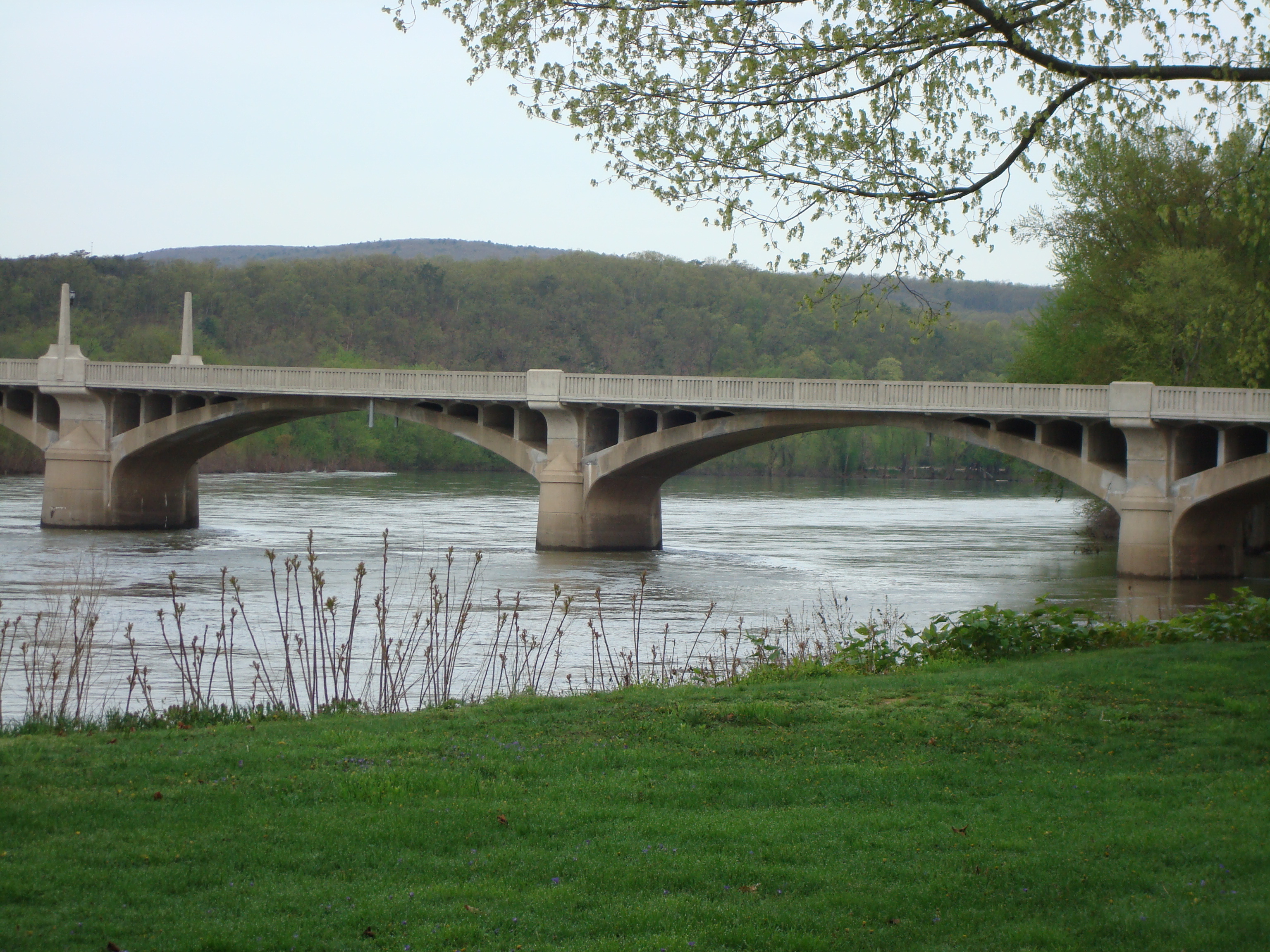
Warrior Run Creek near the Muffly farmRecent photo of the river at Watsontown.
18-year-old Helena Muffly wrote exactly 100 years ago today:
Monday, July 28, 1913 – Thursday, July 31, 1913:Nothing very much doing for these days. It’s so terrible hot and I have a hard time of it just doing nothing. I’d hate to go anyplace such weather as this is.
Maximum, Minimum, and 8 p.m Temperatures
July 28, 1913
Source: Washington Post (July 29, 1913)
Her middle-aged granddaughter’s comments 100 years later:
Sounds like it was miserably hot in central Pennsylvania. A hundred years ago farmers like the Muffly didn’t even have electricity so there were no fans—just the sweltering heat.
Grandma apparently didn’t even have enough energy to write in her diary for several days. How hot was it?
Two Pennsylvania Cities—Philadelphia and Pittsburgh had highs of 90, so it’s a safe bet that it was in the upper 80’s or possibly 90 in McEwensville. Hot–but it doesn’t sound as unbearably hot as Grandma described it. Maybe the humidity was really high and there was no breeze– that could make it seem “terrible hot”.