18-year-old Helena Muffly wrote exactly 100 years ago today:
Sunday, December 28, 1913:Went to Sunday School this afternoon for this last time in this year. Would like to say “I haven’t missed any,” but I can’t. The missing amounts to two.
Her middle-aged granddaughter’s comments 100 years later:
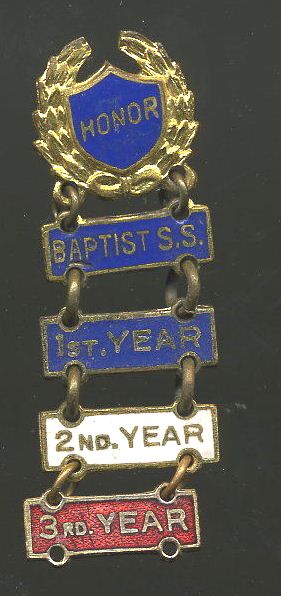
I think that this Sunday School attendance pin is from the mid-1900s. Does anyone know if there were attendance pins a hundred years ago?
Grandma—
Don’t beat yourself up for missing two Sundays. I’m impressed that you made it to Sunday School for 50 of the 52 weeks in 1913.
18-year-old Helena Muffly wrote exactly 100 years ago today:
Saturday, December 27, 1913: Expected company today, but was doomed to disappointment, no sign of cousin Alma appeared.
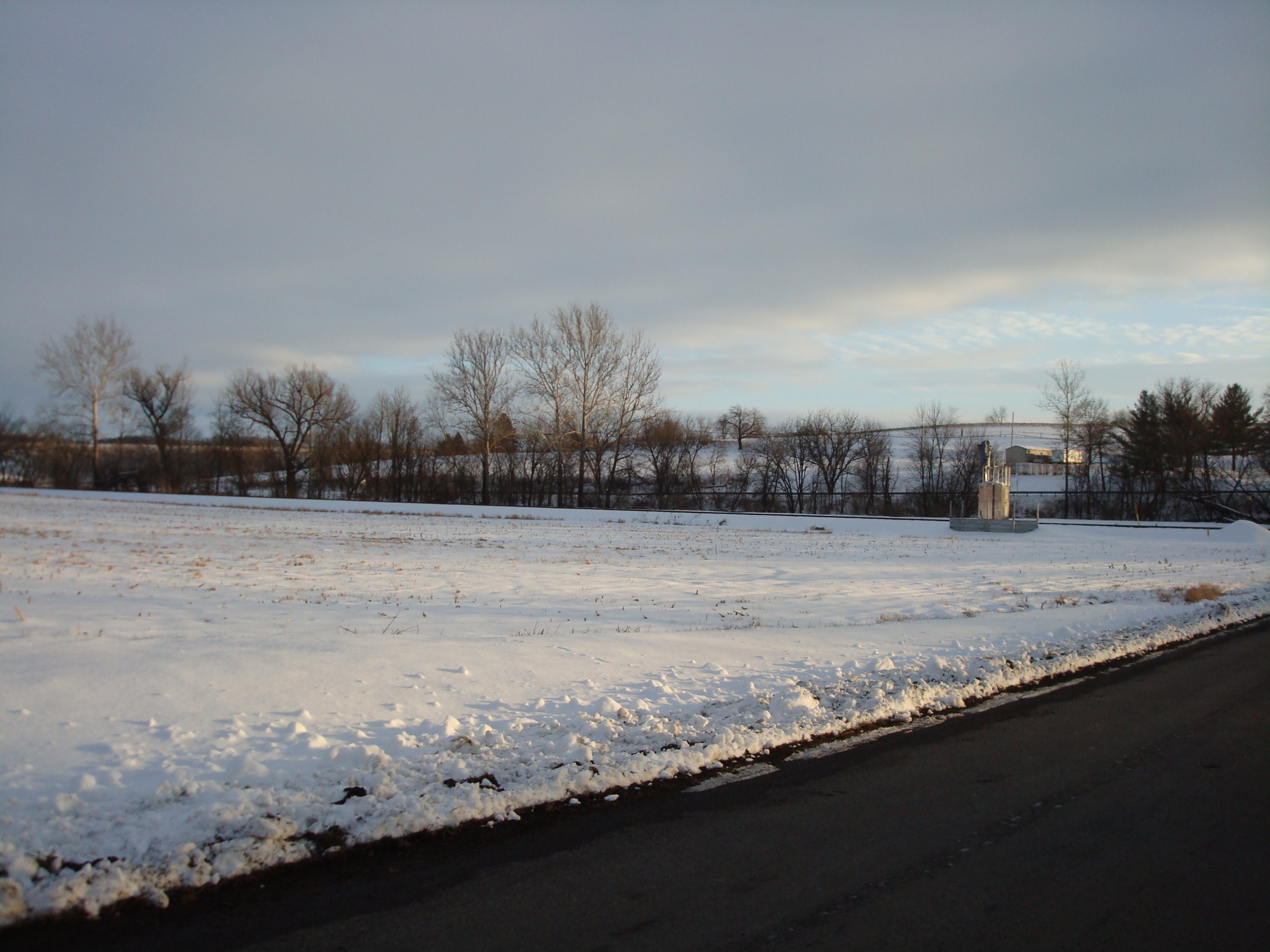
Grandma probably looked out the window, across the frozen fields, as she waited for the train (that hopefully contained Alma) to come down tracks.
Her middle-aged granddaughter’s comments 100 years later:
A hundred years ago visits were often planned via letter—and when plans changed at the last minute there was no way to let the other person know.
Grandma’s cousin. Alma Derr, lived on a farm in Montour County, Pennsylvania near the hamlet of California. Alma was the daughter of Judson Derr. He was a brother of Grandma’s mother.
Alma was 15-years-old—and was three years younger than Grandma; but despite the age difference they apparently were good friends.
The previous summer Grandma spent several days at Alma’s. For example, on August 16, 1913 Grandma wrote:
Went out to Alma’s this morning on the train. We went to a festival over at California this evening. That was the first country festival I was ever to. We went up to the Hall this afternoon to tap the packers and then we swiped a dish of ice cream. When we finished it, we washed the dish and spoon in salt water.
18-year-old Helena Muffly wrote exactly 100 years ago today:
Friday, December 26, 1913:My music teacher didn’t come this morning, perhaps on account of the snow. There was a white Christmas after all. It came in the evening.
Her middle-aged granddaughter’s comments 100 years later:
Snow! What a beautiful way for the 26th to dawn. The beauty of fresh snow after a brown Christmas (at least during the daylight hours) must have been wonderful antidote to any post-holiday blues.
Music Teacher
The music teacher came to Grandma’s house to give her piano lessons? When Grandma had previously mentioned the lessons, I’d always assumed that she’d gone to the teacher’s home.
Sometimes I don’t even realize what I don’t know something until I read a diary entry that makes me realize that I’d previously misinterpreted it.
It’s amazing how a word here and there over multiple diary entries across the course of time fills in the pieces of the puzzle.
18-year-old Helena Muffly wrote exactly 100 years ago today:
Thursday, December 25, 1913: The day of preparation and expectation has dawned at last. Arose earlier than usual because it was Christmas. Am very much pleased with my presents. Have fourteen of them.
Besse and Curt were out for dinner. We had roast chickens.
Am not so sorry that the day is almost over, for e’er another year has gone its round and she will be with us again.
Source: Ladies Home Journal (December, 1913)
Her middle-aged granddaughter’s comments 100 years later:
18-year-old Helena Muffly wrote exactly 100 years ago today:
Wednesday, December 24, 1913:Went to Watsontown this morning with Pa on the big wagon. This trip finished my Xmas shopping.
Ruth and I went up to McEwensville this evening to attend the Christmas services in the Lutheran Church. Was pretty dark coming home. Discovered on the way that I had left my umbrella behind me. Hope I get it again.
Messiah Lutheran Church, McEwensville
Her middle-aged granddaughter’s comments 100 years later:
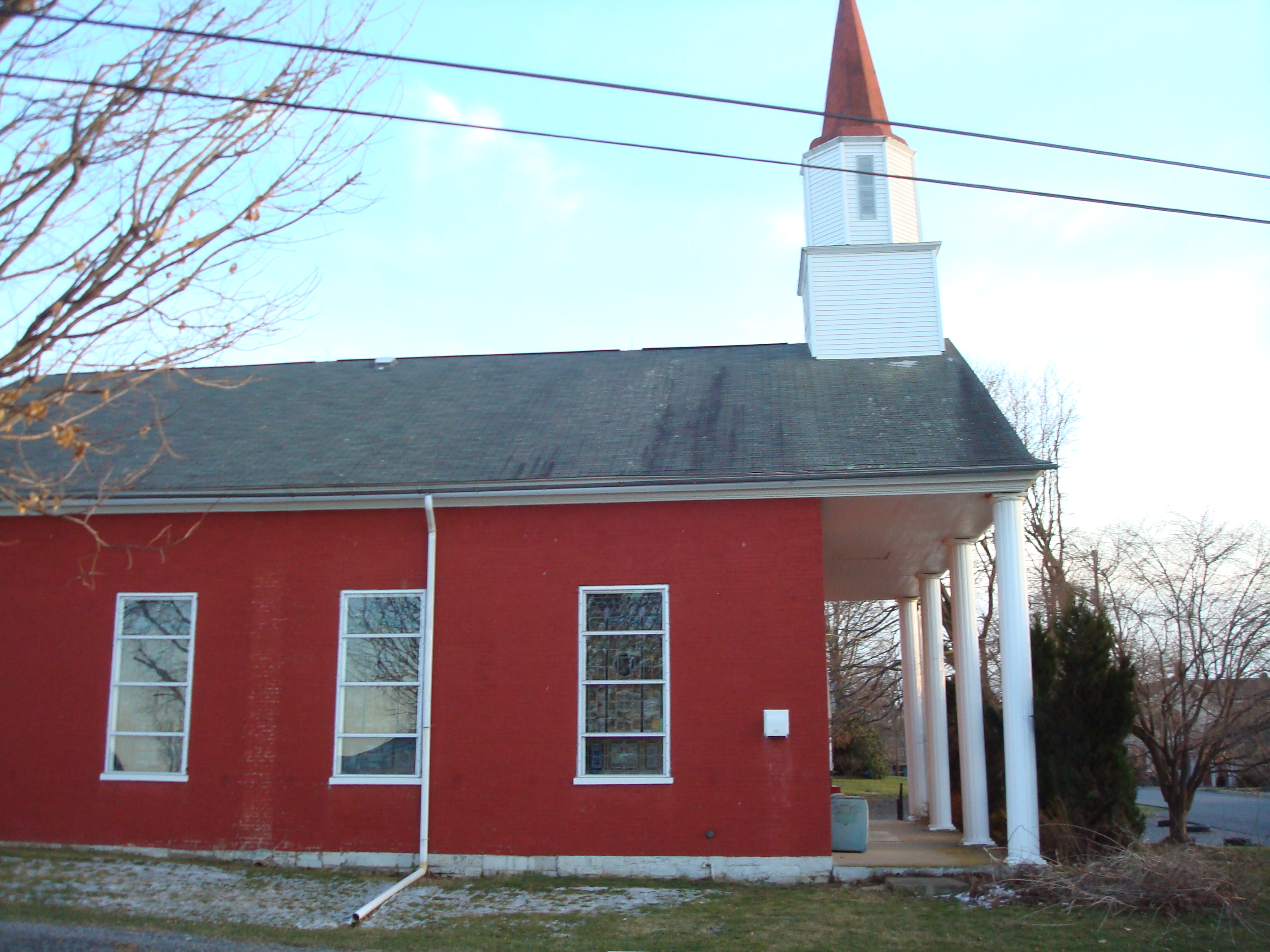
Grandma generally attended the Baptist Church, but Messiah Lutheran Church in McEwensville apparently held a Christmas Eve service each year that community members attended. Grandma also attended the Christmas Eve services at the Lutheran Church in 1911.
(An aside: Grandma’s future husband, Raymond Swartz, attended Messiah Lutheran Church—though he and Grandma weren’t yet an item when this diary entry was written.)
Christmas is a time for memories. I’m going to reprint part of the post that I did on Christmas Eve, 2011 below. It’s equally relevant this year, and I thought that you might enjoy reading (or rereading) it.
—–
When I was a child I regularly went to candlelight services at Messiah Lutheran Church — the same church Grandma attended on Christmas Eve a hundred years ago. I wonder if the services have changed much over the years.
In the middle part of the last century, I remember singing wonderful old-time carols at the candlelight service —We Three Kings, Joy to the World, It Came Upon a Midnight Clear, O Little Town of Bethlehem, O Come All Ye Faithful, Hark the Herald Angels, . .. . ..
We’d end with Silent Night after all of the lights had been extinguished except for the candles we were lighting.
Photo Source: Wikimedia Commons
I don’t know why, but I have strong memories of one year when an elderly woman didn’t extinguish her candle at the end of the service, and took the flickering light out into the cold night.
I remember asking my mother why the woman didn’t follow the directions—and my mother said that the old lady was remembering Christmas’s from long ago and that we should let her be. I looked at the woman and could see how happy she looked as her face was illuminated by the flickering light.
I hope that I have equally wonderful memories of Christamases past when I am her age.
18-year-old Helena Muffly wrote exactly 100 years ago today:
Tuesday, December 23, 1913:Made some more today. It wasn’t so bad. You see I know more about the making from experience.
Her middle-aged granddaughter’s comments 100 years later:
Practice makes perfect. The previous day Grandma tried to make taffy, but it didn’t turn out right.
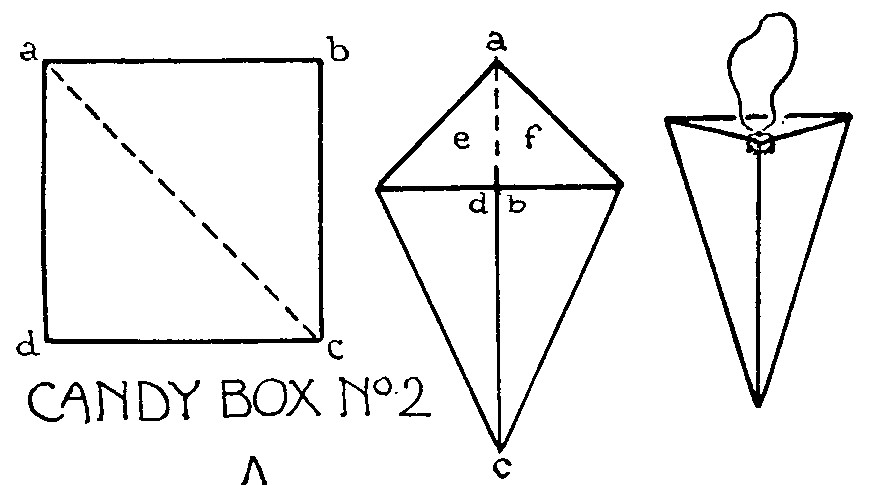
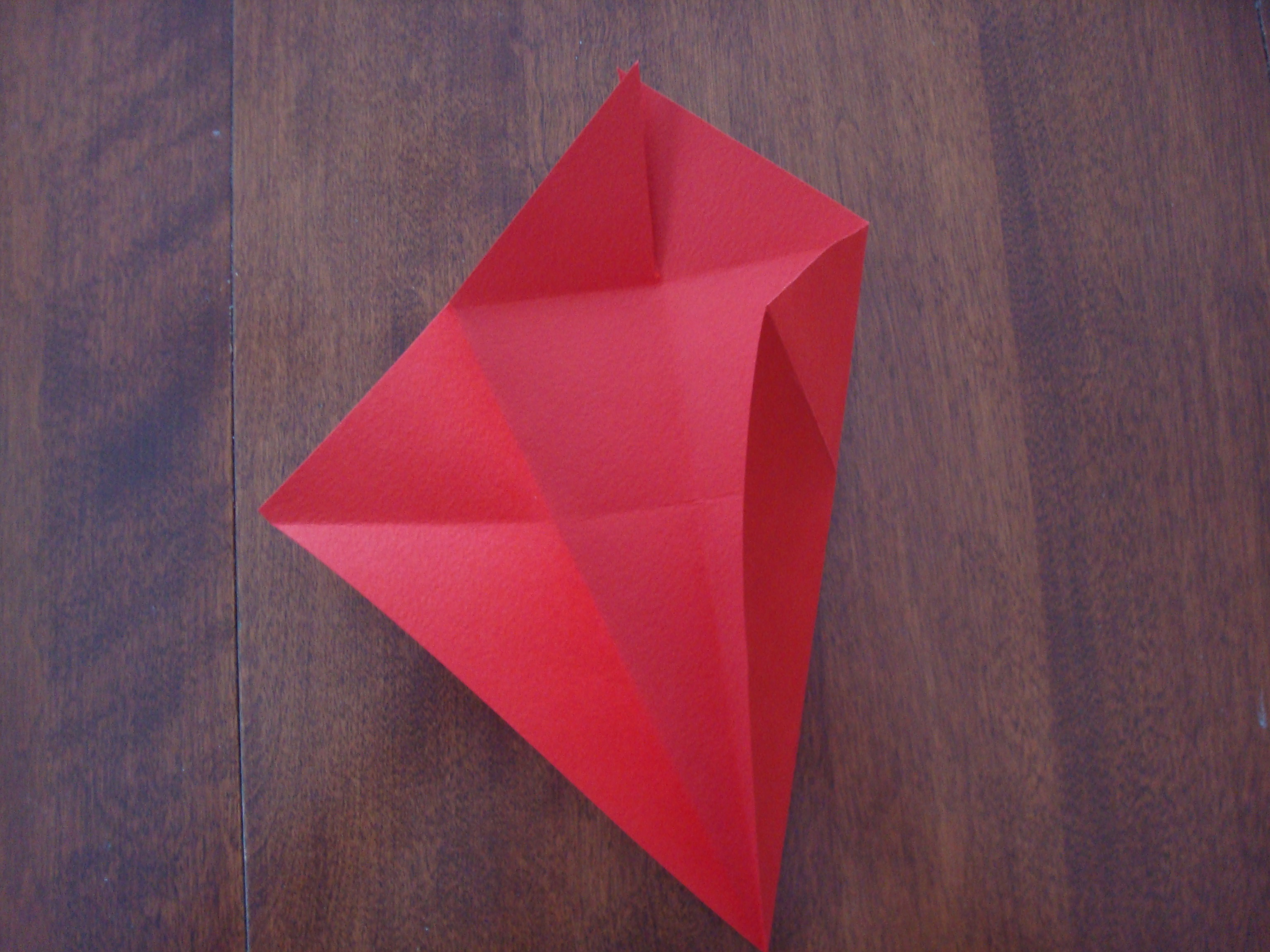
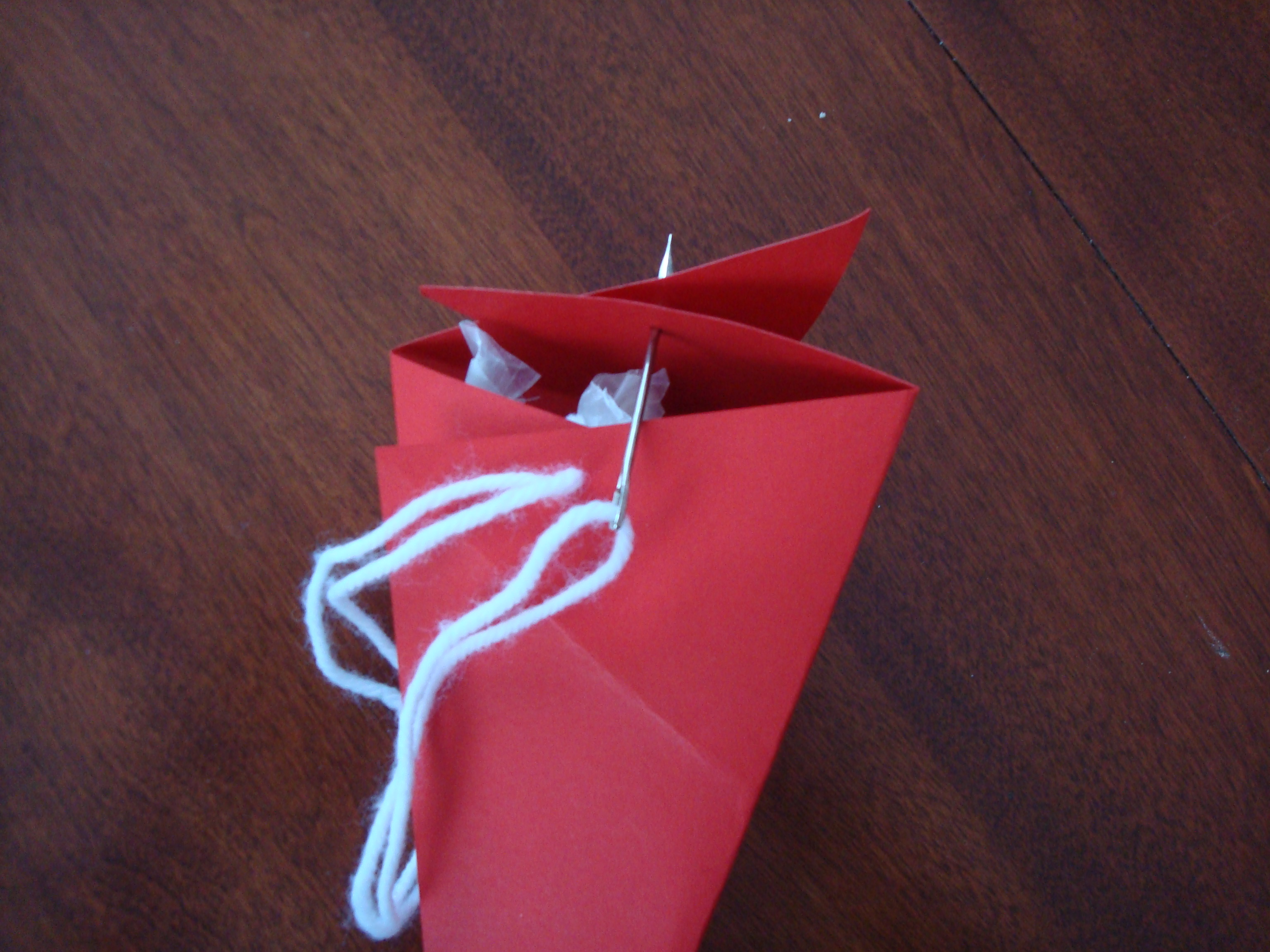
Since my Black Walnut Taffy turned out perfectly yesterday, I’ve moved on to making gift boxes for my candy. The December, 1912 issue of The School Arts Magazine had directions for making a triangular candy box.
Source: The School Arts Magazine (December, 1912)
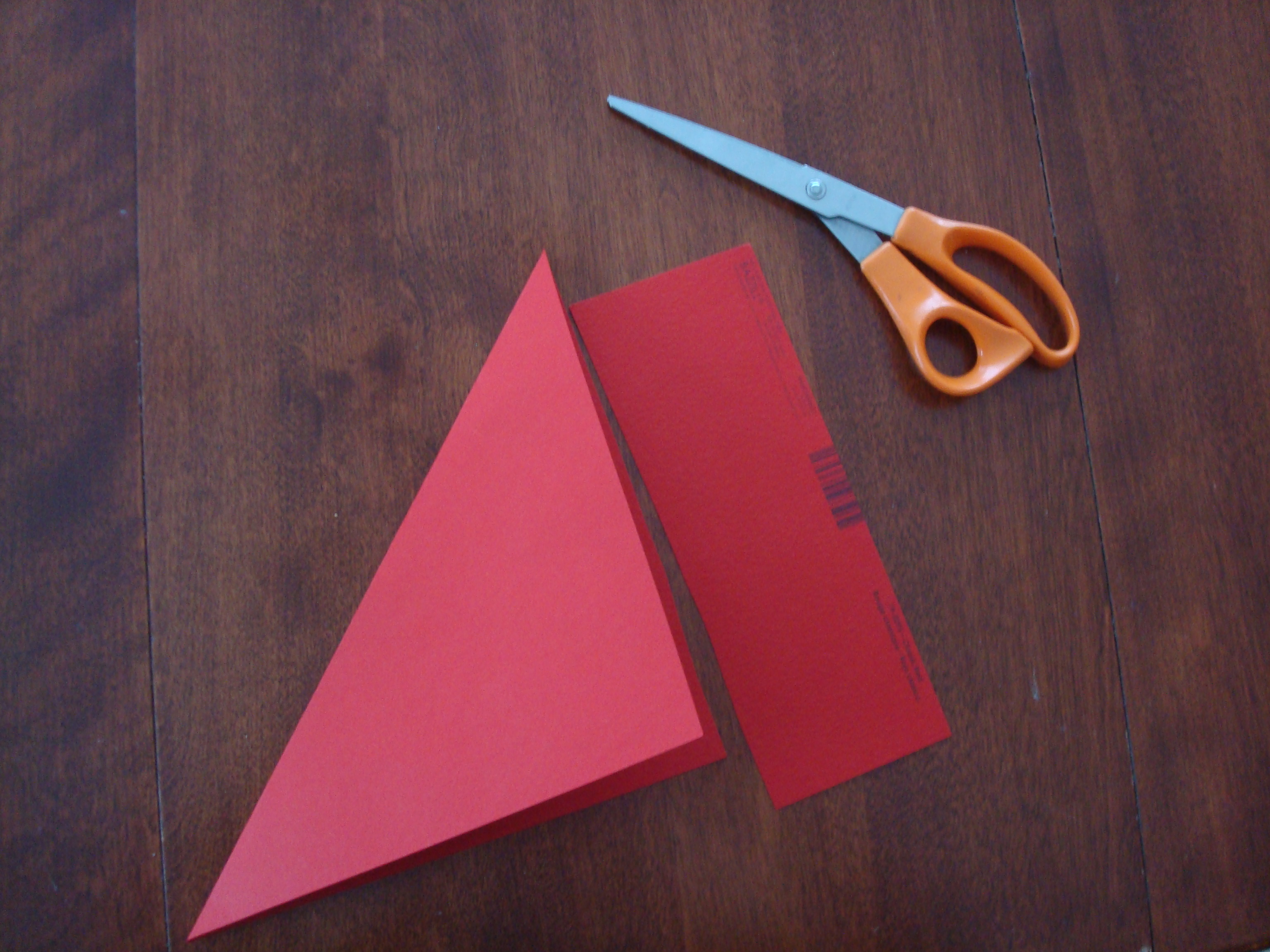
A square piece of heavy craft paper is used to make the box. To measure a square, take one corner of the paper and fold to the opposite side. Cut the paper to create the square.
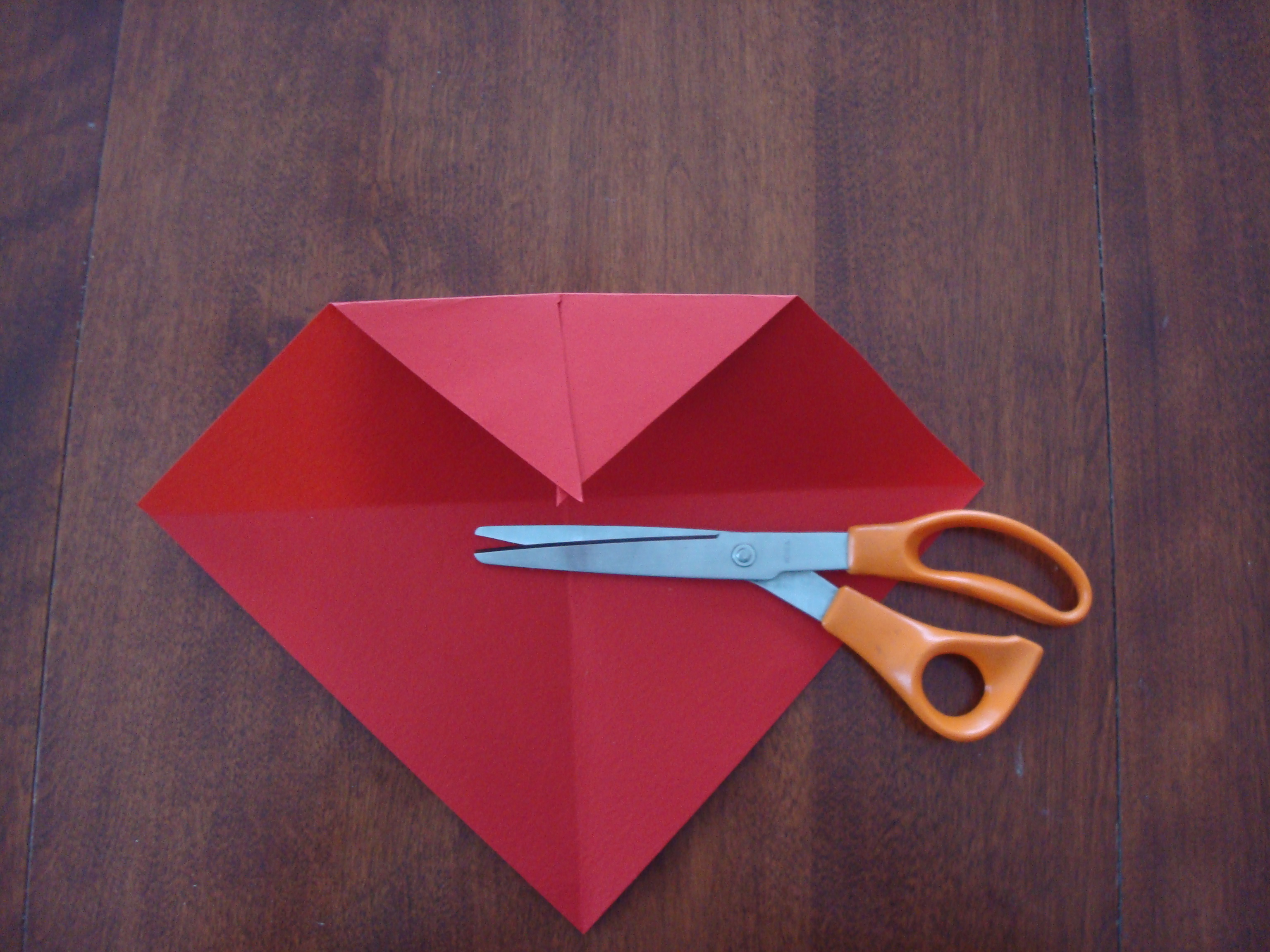
Unfold paper, and fold on the other diagonal. Then, fold one corner of the paper to the crease made by the previous folding. Unfold paper, and cut a slit to the new fold.
Bring a corner to the center of the paper and then fold. Repeat with the opposite corner.
Fold the paper into the triangular shape. Thread a craft needle with yarn. Tie a knot at the end of the double strand, then pull the yarn through the two layers of paper to fasten them together. Fill with candy, then sew through the top of the box to close. Clip the yarn to remove the needle, and tie bow.
These boxes are easy to make, and very attractive. I like them so much that I ended up making several, and used them for small gifts.
18-year-old Helena Muffly wrote exactly 100 years ago today:
Monday, December 22, 1913:Carrie was over this afternoon. We picked out nuts. Made taffy this evening, but it didn’t get good and the nuts were wasted.
Grandma had problems, but my taffy turned out great.The taffy before I wrapped it.
Her middle-aged granddaughter’s comments 100 years later:
Hmm. . . What kind of taffy did Grandma and her friend Carrie Stout make? . . . Maybe they picked black walnuts out of the shells and then made Black Walnut Taffy.
I decided to give it a try. . . and held my breath. My husband and I cracked, and picked out, some black walnuts last week-end. It was a lot of work—and I really hoped that I’d be more successful making the candy than Grandma was.
Old-fashioned Black Walnut Taffy
1 1/2 cups sugar
1/2 cup molasses
1/2 cup water
1 1/2 tablespoons vinegar
1/4 teaspoon cream of tartar
4 tablespoons butter
1/8 teaspoon baking soda
1/2 cup finely chopped black walnuts
Combine sugar, molasses, water, and vinegar in a saucepan. Bring to a boil over medium heat. Stir in cream of tartar. Reduce heat and continue to boil until the mixture reaches the hard ball stage (256 degrees on a candy thermometer).
Remove from heat. Stir in butter and baking soda; then stir in the black walnuts. Pour onto a well-buttered plate or shallow bowl.
As the candy cools along the sides fold into the center.
When cool enough to handle, coat hands with butter, pull the candy using hands until color lightens, and it becomes airier and less sticky.
Shape into strips approximately 3/4 to 1 inch in diameter, and place on wax paper that has been placed on a cookie sheet. Chill slightly, then cut the candy into bit-sized pieces.
Cut rectangles of waxed paper approximately 2 inches X 4 inches. Wrap the candy in the waxed paper and twist ends.
The taffy turned out wonderfully. The two intense flavors– molasses and black walnut—merged to a more nuanced, but awesome, taste sensation. I highly recommend this taffy.
Here are the links to two previous posts that you might enjoy: