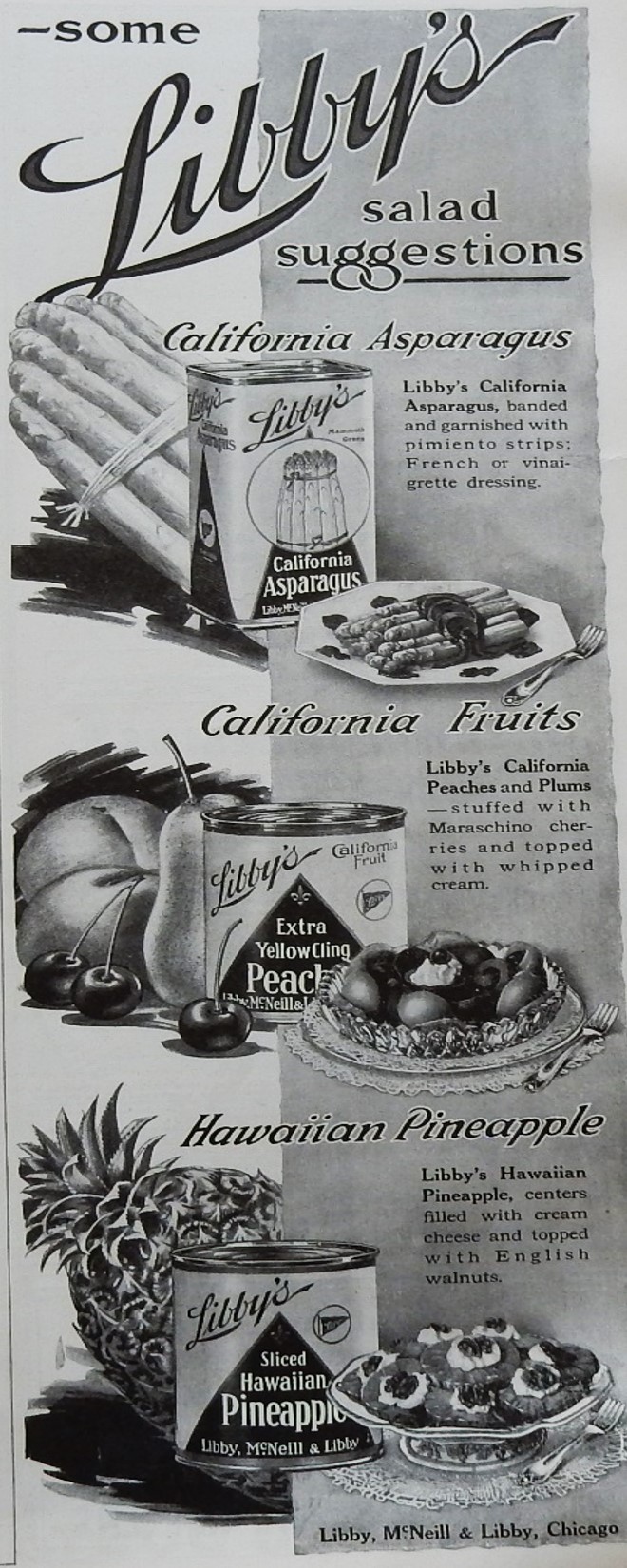
I love old ads. Advertisements in 1916 magazines provide so many insights into foods and food trends a hundred years ago.

I love old ads. Advertisements in 1916 magazines provide so many insights into foods and food trends a hundred years ago.

Visiting with old friends is always special. For the last 15 or 20 years, my husband and I get together a couple times a year with my daughter’s former girl scout leader and her husband to play pinochle. There are shared memories, family updates, and just plain good times.
It recently was my turn to host the gathering, and I wanted to make a special dessert – but something not too heavy. And, of course, my other criteria was that it had to be made using a hundred-year-old recipe. When browsing through an old cookbook, I came across a recipe for a citrus sponge cake called Sunshine Cake that peaked my interest, so I decided to give it a try.
The cake turned out wonderfully and did not disappoint. It was light, tender, and tasted divine. The recipe calls for both orange juice and lemon juice so it has a nicely balanced citrus flavor. The cake requires beating egg whites until stiff peaks form but it is worth the effort.
The trick to getting a really light cake is to cool it upside down. The cake can be inverted on a cooling rack when it is removed from the oven. In the old days, cakes often were inverted on an empty glass 1-quart soda-pop bottle to cool.
Here is the recipe updated for modern cooks:
Cake
6 egg whites
1/2 teaspoon cream of tartar
1/4 teaspoon salt
1 cup sugar
3/4 cup flour
5 egg yolks
1 1/2 tablespoons orange juice
1 teaspoon lemon juice
Preheat oven to 350° F. In a large mixing bowl, beat the egg whites until soft peaks form; then add the cream of tartar and salt while continuing to beat until there are stiff peaks.
In a separate bowl combine the sugar, flour, egg yolks, orange juice, and lemon juice. Beat until combined, then gently fold the whipped egg whites into the mixture.
Gently spoon the batter into an ungreased angel food cake pan. Bake for 50 to 60 minutes or until the cake is lightly browned and the top springs back when lightly touched.
Invert pan until cool (at least 1 hour). Remove cake from pan and place on serving plate, then drizzle with a thin orange frosting (glaze).
Orange Frosting (Glaze)
2 cups powdered sugar
approximately 2 tablespoons orange juice
2 tablespoons grated orange rind
Combine powdered sugar and orange juice in a mixing bowl; beat until smooth. If the mixture to too thick add additional orange juice; then stir in the grated orange rind.
Note: The frosting should be quite thin (and more of a glaze) when used on this cake. A thicker version of it would be lovely on heavier cakes.
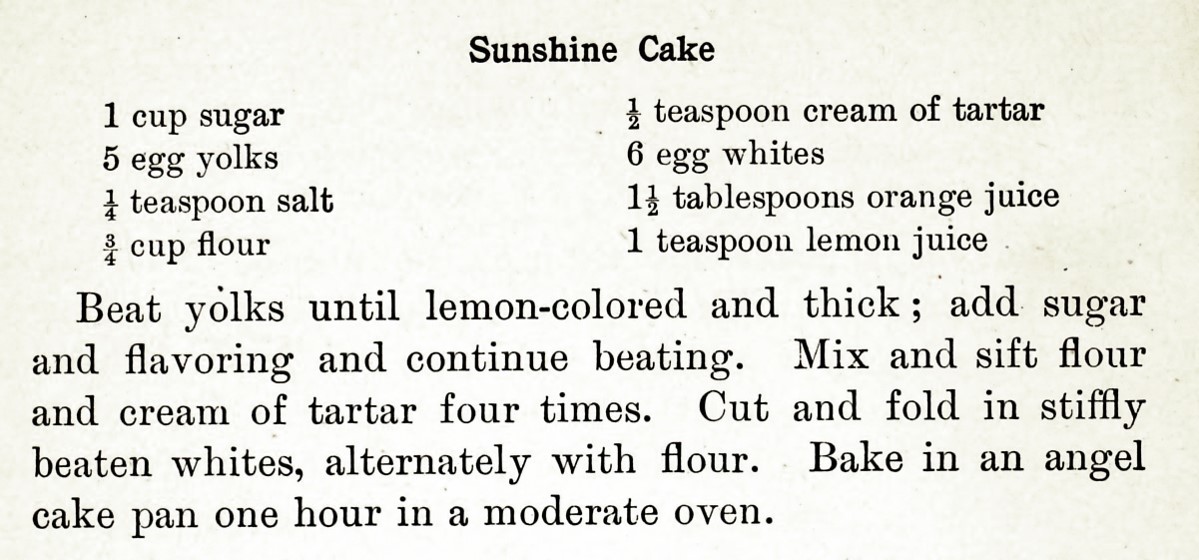
Here are the original recipes:


I am never an early adopter, but I always check out the latest kitchen equipment and gadgets. I recently was dismayed to discover that I only own some of the gadgets that were highly recommended in a 1916 issue of Ladies Home Journal. I obviously have some catch-up to do.


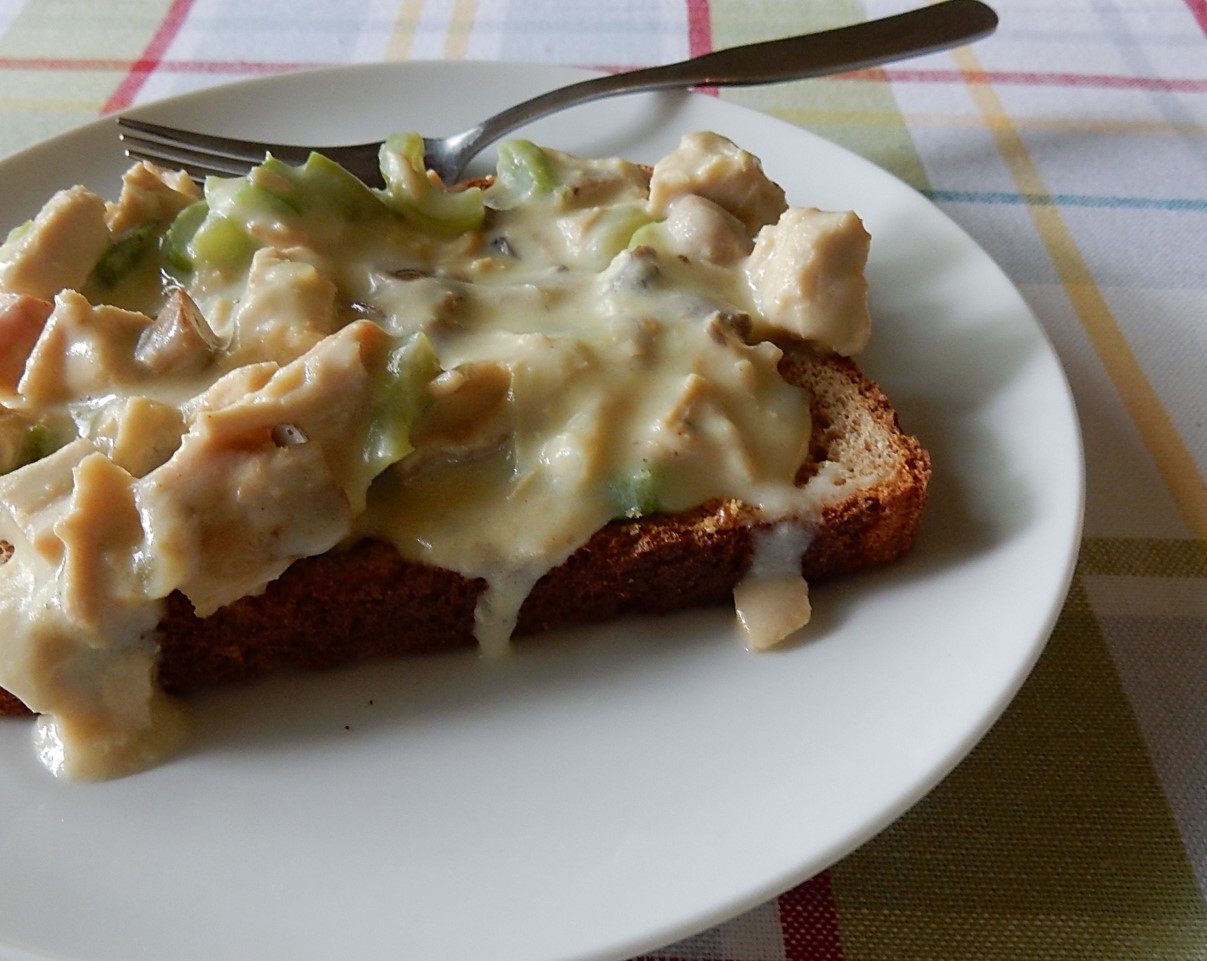
Recently a serendipitous event occurred. I saw a recipe for Chicken a la King in hundred-year-old magazine, and a left-over chicken breast languished in my refrigerator.
My mother and grandmothers often made Chicken (or Turkey) a la King to use left-over poultry – and I suddenly craved this old-time comfort food. The recipe did not disappoint. This delightful dish was both tasty and easy to make. The diced meat was embedded in a lovely thick and creamy sauce that contained mushrooms and green pepper. It is perfect when served over toast, biscuits, rice or pasta.
Here’s the recipe updated for modern cooks:
1 cup half and half cream
1 cup chicken broth
1 teaspoon lemon juice
2 egg yolks, slightly beaten
1/4 cup butter
1/4 pound mushrooms, sliced and coarsely chopped (about 1 cup)
1/2 green pepper, chopped
1 tablespoon onion, chopped
1 cooked chicken breast, diced into 1/2 inch pieces (or use 1 cup diced left-over chicken or turkey)
3 tablespoons flour
1 teaspoon salt
1/4 teaspoon paprika
dash pepper
Combine the half and half, chicken broth, lemon juice, and egg yolks in a mixing bowl; set aside.
Melt butter in a skillet, then stir in mushrooms, green pepper, and onions. Using medium heat, cook until the vegetables are tender (about 5 minutes) while stirring occasionally; then stir in the diced chicken. Stir in the flour, salt, paprika and pepper. While stirring constantly, slowly pour in the combined liquids that previously had been set aside and bring to a boil over medium heat. Remove from heat. May be served over toast, biscuits, rice, or pasta.
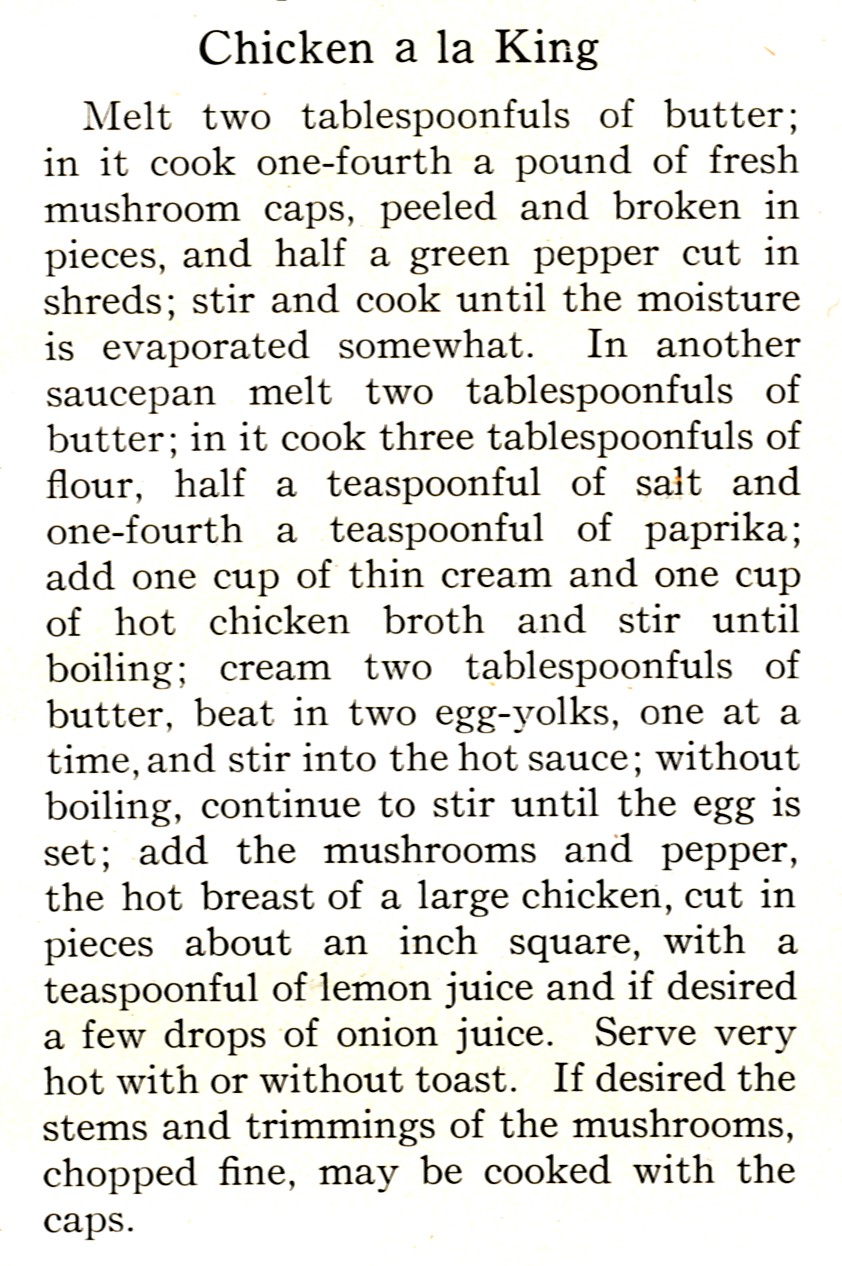
And, here’s the original recipe:
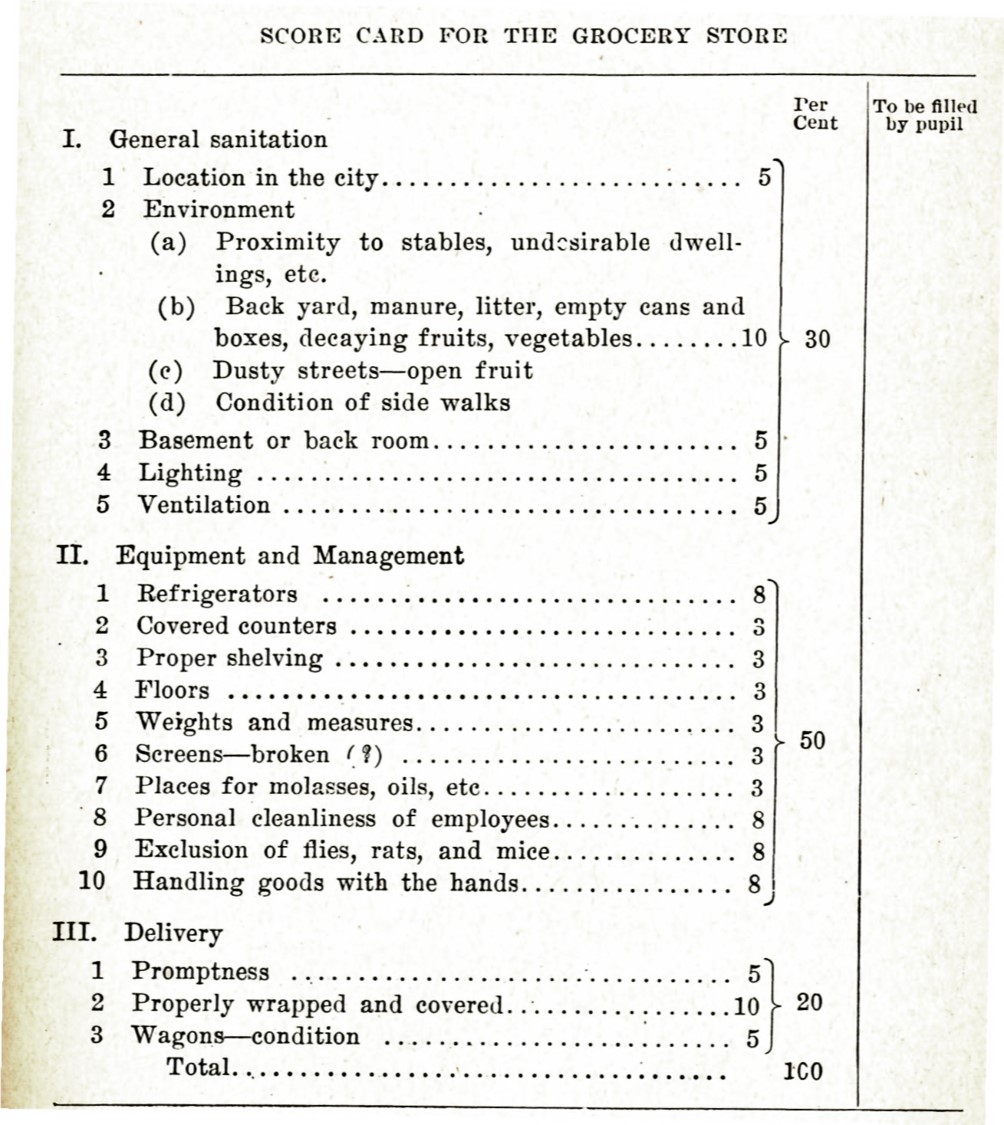
When I walk into a supermarket, I informally evaluate it. Is the produce fresh? Are the clerks friendly? Does it stock all of the grocery items that I regularly buy? Is the location convenient? Does it have good prices? . . . And, if it doesn’t meet my standards, I might go to a different store the next time I shop.
Similarly, a hundred years ago people also evaluated their grocery stores; but that’s where the similarities end. A hundred-year-old home economics textbook had a Grocery Scorecard that students could use to evaluate their grocery stores – but frankly I’ve never considered the proximity to stables, or most of the other old-time criteria.
I tend to look at the past through rose-colored glasses, but when I’m honest with myself, I must admit what while some things were better a hundred years ago, I think I prefer modern food stores.

When browsing though old books and magazines, I always keep a lookout for easy-to-make, hundred-year-old breakfast recipes. So when I saw a recipe for Sour Milk Griddlecakes in a 1915 home economics textbook, I just had to give it a try.
Of course, griddlecakes are just another name for pancakes, but somehow even the name evokes old-fashioned goodness.
The Sour Milk Griddlecakes did not disappoint. Unlike most modern recipes, this recipe doesn’t call for any sugar, so the griddlecakes have a very delicate, slightly tangy, neutral flavor that is ready to soak up the goodness of syrups, jams, or other sweet toppings.
Here’s the recipe updated for modern cooks:
2 1/2 cups flour
1/2 teaspoon salt
1 1/4 teaspoon baking soda
2 tablespoons butter, melted
2 cups milk
1 tablespoons vinegar
1 egg
Put all ingredients in a mixing bowl, beat until smooth. Heat a lightly greased griddle or skillet to a medium temperature, then pour or scoop batter onto the hot surface to make individual pancakes. Cook until the top surface is hot and bubbly, and then flip and cook other side.
Here’s the original recipe:
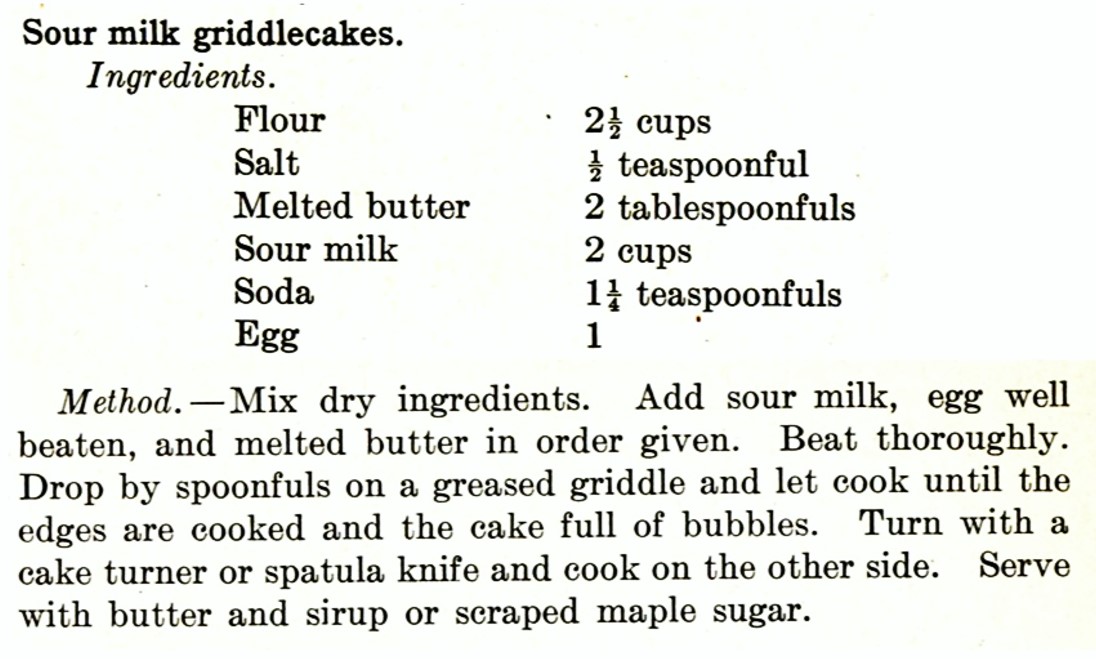
This recipe is from an era when pasteurized milk was not the norm since it calls for sour milk. In the old days raw milk would sour—but still be good for cooking. Vinegar can be used to “sour” pasteurized milk, so I made that adaptation when modernizing the recipe.

There are so many kinds of tea. It’s always challenging to decide which purchase . . . bags or loose? . . . black, green, or herbal? . . . strong or mild? . . . organic, fair trade, or unidentified pedigree? . . . cheap bargain brand or pricey gourmet blend? . . .
I need help. So, when I saw information on how to select tea in a hundred-year-old home economics textbook, I eagerly read the advice:
Selecting Tea
In buying tea, choose the variety most pleasing to your taste. It should be free from stems and from powdered particles. When put in boiling water the leaves should not entirely unroll in a short time. Soak a pinch of tea, unroll the leaves, and note their size and shape. Also note proportion of large to small leaves and stems.
A very low priced tea is not really cheap. More is needed to give the required strength than with more expensive teas and it also yields more tannin, which we wish to avoid. Tea does not keep well, so it should be bought in small qualities and kept in air-tight glass jars.
A good grade of English Breakfast with a flavoring of Orange Pekoe makes a very pleasing tea.
The Science of Home Making: A Textbook in Home Economics (1915)
