One-Hundred-Year-Old Cookbook Glossary

Hundred-year-old ookbook glossary
Source: Lowney’s Cook Book (1912)

I recently came across a glossary in a hundred-year-old cookbook that defined 62 words. I was surprised that several  words that are commonly used now (for example, mayonnaise) needed to be defined in the early 1900s;  that the meaning of several other words had shifted across the years (for example, hors d’oeurves); and that noir was an important food-related word back then.

Even since then I’ve been pondering the following question: If I wrote a cookbook in 2016 and decided to include a glossary, which 62 words would be the most important words to define?

Hundred-year-old Cookbook Glossary 2

Old-Fashioned Plum Pie

Plum Pie

Have you ever eaten a Plum Pie? Until I saw a hundred-year-old for Plum Pie, and decided to give it a try, I’d never had one.

The Plum Pie was awesome. It was tart, but not too tart; and it was sweet, but not too sweet. In other words, it was just right. The pie was beautiful with  a lovely reddish-purple filling.

Now that I’ve eaten Plum Pie, I can say with certainty that it is one of my favorite pies.

But now I’m confused. Plum Pies apparently were more popular a hundred-years-ago than what they are now. Why have they gone out of style?

Here’s the original hundred-year-old recipe:

Plum Pie Recipe
Source: Lowney’s Cook Book (1912)

Here’s the recipe updated for modern cooks:

Plum Pie

  • Servings: 4 - 5
  • Difficulty: moderate
  • Print

2 cups sliced purple plums (plums that are still somewhat  firm work best)

2 tablespoons lemon juice

1/2  cup sugar

1/2 cup flour

1 tablespoon butter

Pastry for 8 inch (small) 2-crust pie

milk

sugar

Heat oven to 425° F.  In a bowl combine the plum slices and the lemon juice. Add the sugar and flour, stir gently to combine .  Turn into pastry-lined pie pan, and dot with butter. Cover with top crust and flute edges. Brush crust with a small amount of milk; sprinkle with sugar.  Bake in oven for 10 minutes; then reduce heat to 350° F. Bake an additional 20 to 30 minutes or until crust is lightly browned and juice just begins to bubble.

1916 Canning Equipment

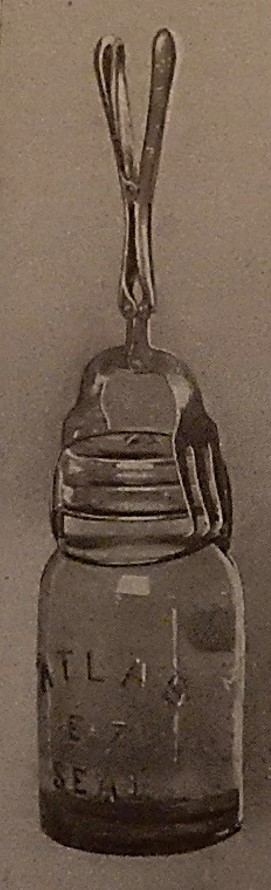
Canning tongs GH 7 1913With its long vise-like fingers this device reaches down into the boiling water and lifts out the jars with safety.

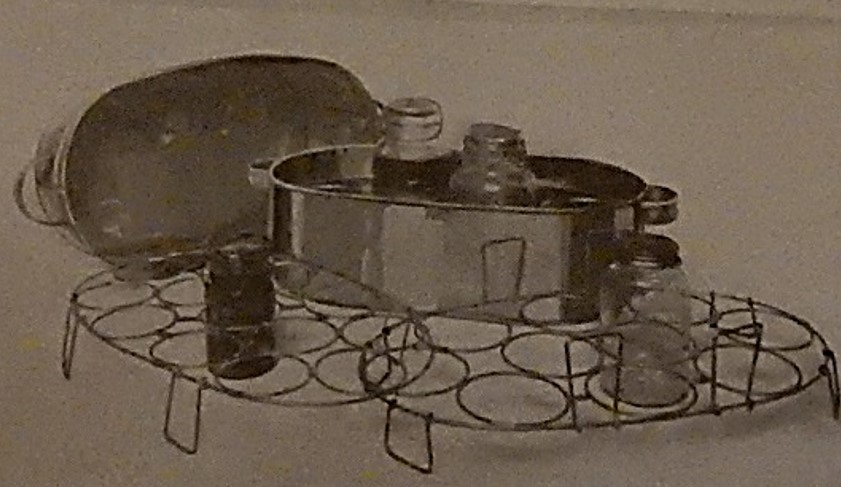
The July, 1916 issue of Good Housekeeping had several photos of canning equipment. Some of the pictures make me think about how much has changed over the past hundred years in how we can; others make me think that it hasn’t changed all that much.

Canner 1 GH 7 1916An excellent improvised canner is a wash boiler with a wire frames which may be purchased separately in sizes to hold gallon, quart, or pint jars. Any other receptacle with a tight-fitting lid may be used or an outfit may be purchased complete.


Pressure CannerThis water-seal canner has a thermometer, a safety valve, and a pet-cock. It confines steam under pressure, and in it vegetables are canned with one cooking.


Hundred-Year-Old Recipe for Pink Lemonade

Pink Lemonade

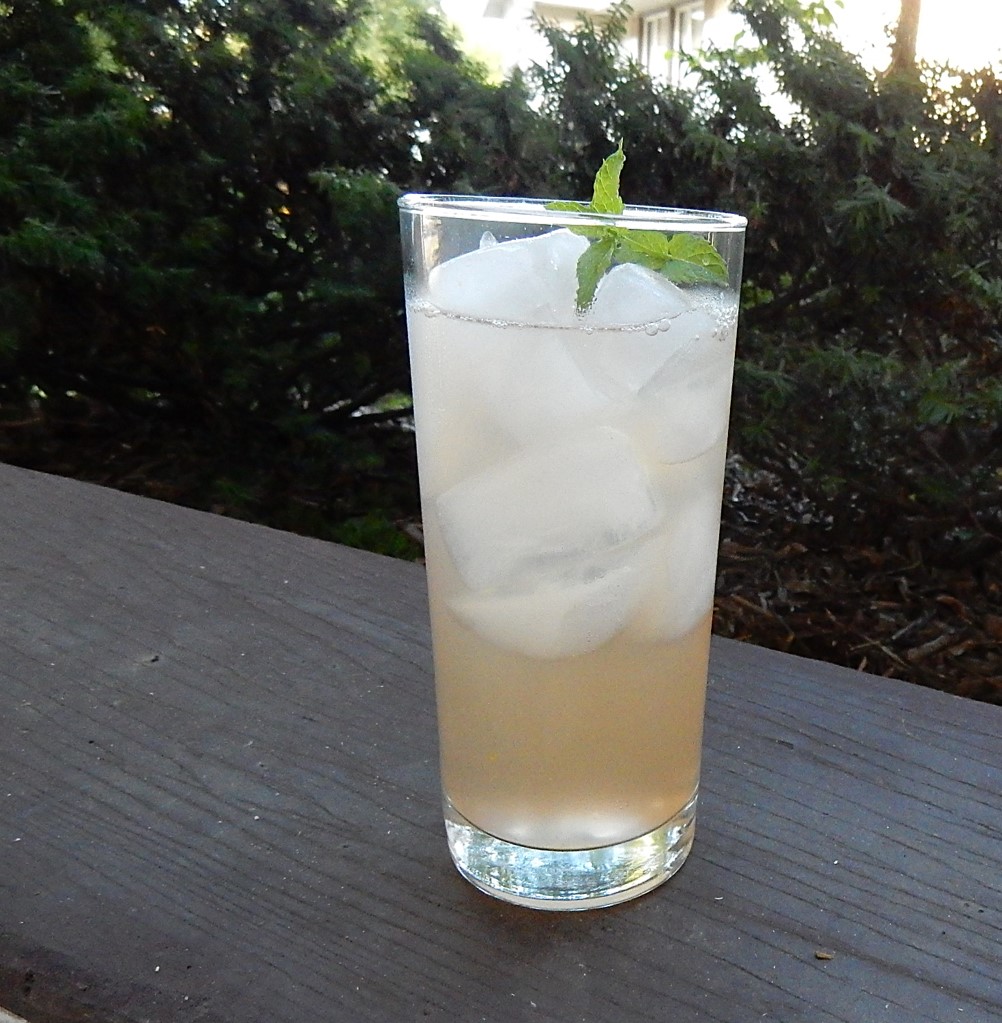
The dog days have summer have arrived – and there’s nothing like sitting in the shade sipping lemonade on a hot summer day. I usually make lemonade using just lemons, water, and sugar – but when I saw a hundred-year-old recipe which suggested that back then they colored pink lemonade by mixing in a little red-colored jelly (currant, crab apple, etc.), I just had to give it a try.

According to the old recipe, the best lemonade is “a little too sweet, and a little too sour.”  Using that criteria, the Pink Lemonade I made was perfect. It was refreshing and delightful . . . and a lovely shade of pink.

Here’s the original recipe:

Good Housekeeping (August, 1916)

Here’s how I adapted the recipe for modern cooks:

Pink Lemonade

  • Servings: 6 - 8
  • Difficulty: easy
  • Print

1 cup sugar

2 cups water + 6 cups water

1/2 cup tart red jelly (currant, crab apple, etc.)

3 – 6 lemons (depending upon size)

mint sprigs or lemon zest for garnish (optional)

Put the sugar and 2 cups of water into a saucepan using medium heat, bring to a boil. Reduce heat, and continue to boil slowly for 3 minutes. Remove from heat,  and cool slightly then beat in the jelly. (I used homemade Crab Apple Jelly, but Currant Jelly or any other tart red jelly would work well). There may be flecks of jelly in the liquid even after beating, that’s okay.

Squeeze lemons, and stir lemon juice into the sugar mixture. Strain the liquid. Some of the jelly (as well as the lemon pulp) will not go through the strainer. Discard this jelly, it will have already colored the lemonade.

Chill the strained syrup. To serve, mix the syrup with  6 cups water, and serve over ice.  If desired, garnish with mint sprigs or lemon zest.

The syrup will keep for several days in the refrigerator. Individual servings of lemonade can be made by mixing some of the  syrup with water in a glass – proportions can vary to taste.

The old recipe called for 3 lemons. When I made this recipe, 3 didn’t seem like enough; so I doubled it and used 6 lemons.


Girls’ Frolics in Woods and by Stream: Merry Times on Hikes and Around Streams

Source: Ladies Home Journal (July, 1913

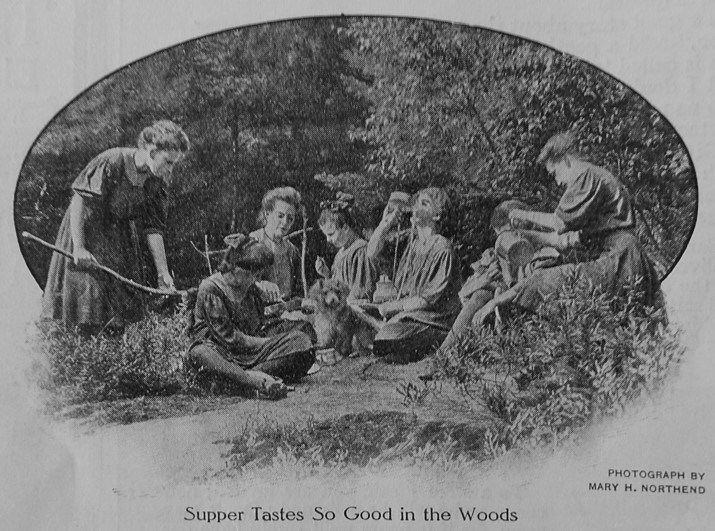
I tend to picture women’s activities a hundred years ago being somewhat constrained by the times and their clothes. I was pleasantly surprised to see an article in the July, 1913 issue of Ladies Home Journal titled, “Girls’ Frolics in Wood and by Stream: Merry Times on Hikes and Around Streams”  that contained lots of picnic and campfire ideas. Here’s a few suggestions for a surprise boat trip:

A surprise boat trip was the pleasure awaiting a crowd of girls invited by their hostess to meet at the boat landing at three p.m. Soon they were moving up the river on a “voyage of discovery.”

A half hour’s ride brought them to a beautiful grove, where they landed, and search parties were sent out in different directions. In a short time triumphant cries were heard over the discovery of large watermelons found hidden in secluded spots. (A boat with supplies had been sent up the river ahead of the party.) After justice had been done to the melons the girls went upstream until they landed and were told to raid the country.

The enthusiasm of the moment sent everyone forth to discover this time ears of corn. These were loaded into the boat, and the party again set forth toward other lands, in search of whatever they might find. . . fruit hanging from branches of trees.

The last voyage brought them to land just about sunset. They did not need to search long before many parcels were found, containing ham, bacon, beefsteak, sandwiches and marshmallows, which, with the corn for the corn roast and the fruit, provided a substantial supper. Further search brought them to a pile of wood for a bonfires, just waiting to have the match put to it.

It was not long before the girls were sitting around a roaring fire, cooking their meal, and last of all, toasting marshmallows and telling stories as they watched the fire die out. The trip down the river by moonlight was not the least of the afternoon’s enjoyment.

Picnic LHJ 7 1913

Hundred-Year-Old Cauliflower au Gratin Recipe

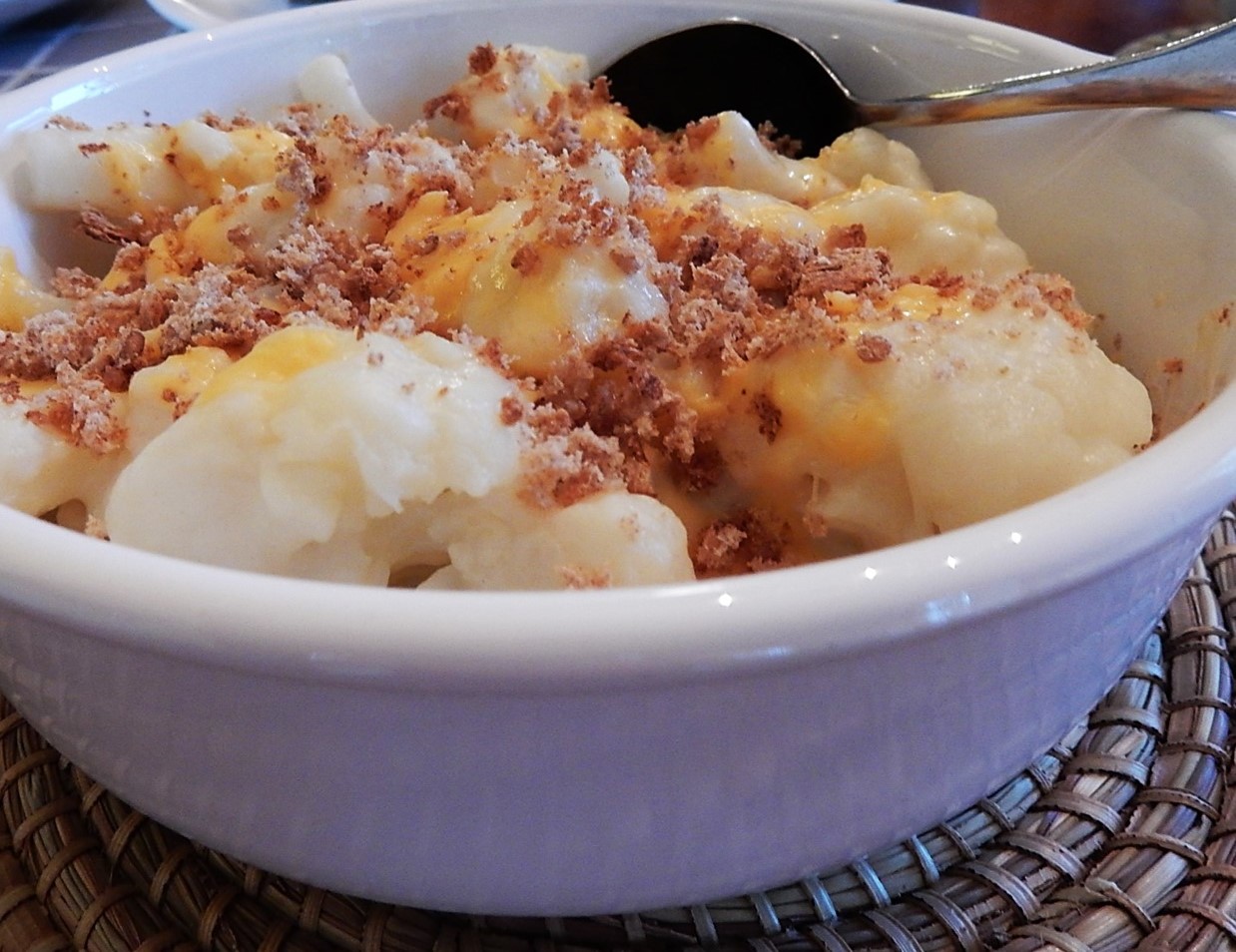
Cauliflower au Gratin 1

Every week when I go to the farmers’ market I mull over which vegetables to purchase. Sometimes I have a recipe in mind and look for specific vegetables – other times I reverse the process and look for the highest-quality freshest vegetables I can find, and then I search for a recipe. This week was one of the latter weeks. The cauliflower looked perfect, and I just couldn’t  resist buying a head.

When I searched for cauliflower recipes in hundred-year-old cookbooks, I came across a recipe for Cauliflower au Gratin and decided to give it a try.

Source: Lowney's Cook Book (1912)
Source: Lowney’s Cook Book (1912)

The Cauliflower au Gratin turned out perfectly. The cauliflower was embedded in a creamy white sauce, co-mingled with rich melted cheese from the cheese topping. I put the cauliflower in a casserole dish instead of using the individual ramekins called for in the old recipe.

Here’s the recipe updated for modern cooks:

Cauliflower au Gratin

  • Servings: 5 - 6
  • Difficulty: easy
  • Print

approximately 3 1/2 cups cauliflower florets (1 head of cauliflower)

3 tablespoons butter

3 tablespoons flour

1/4 teaspoon salt

1 1.2 cup milk

2/3 cup shredded cheddar cheese

1/3 cup bread crumbs

Preheat oven to 350° F.  Put the cauliflower florets into a saucepan and cover with water. Bring to a boil using high heat, then reduce heat to medium and simmer until florets are tender (about 5 minutes). Drain well.

Meanwhile, in another pan, using medium heat, melt butter; then stir in the flour and salt. Gradually, add the milk while stirring constantly. Continue stirring until the white sauce thickens. Gently stir in the cooked cauliflower, and remove from heat.

Place the cauliflower mixture into a 1 quart casserole dish,  and sprinkle with the shredded cheese and bread crumbs. Bake until hot and bubbly (about 15 minutes).

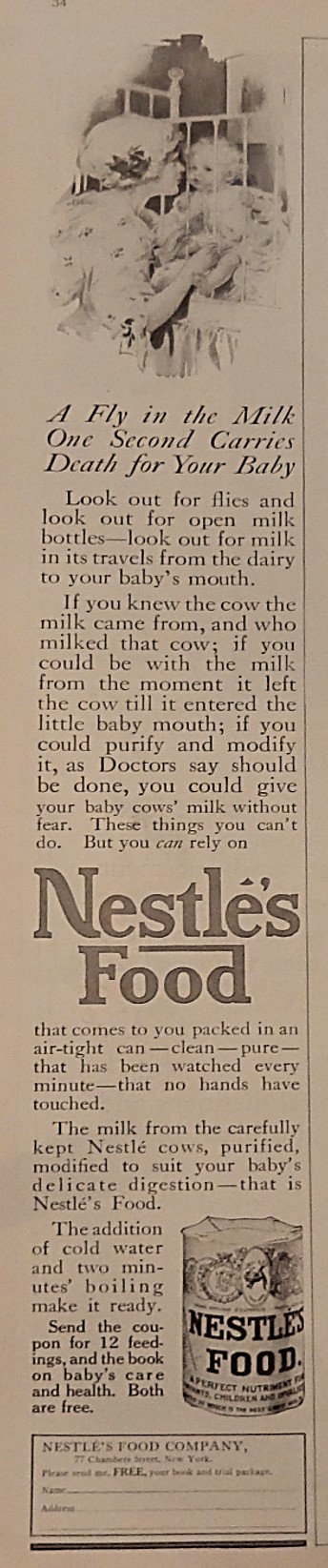
Hundred-Year-Old Nestle’s Food Advertisement

Source: Ladies Home Journal (August, 1913)

Hundred-year-old advertisements that pique my interest generally make me smile. This one didn’t.

I found the ad upsetting., and it raised so many questions:

  • When did companies first start selling commercial products that were advertised for use as a baby formula?
  • What information, other than advertisements, was available to help parents decide how to feed their infants?
  • What was the reaction of new mothers and mothers-to-be to this ad?
  • What percentage of the women breastfed their babies a hundred-years-ago?

I have no answers,  but I  just can’t get this advertisement out of my mind – so I decided to post it.