What’s a cross between peanut butter cookies and pancakes? . . . answer: Peanut Butter Griddle Cakes.
I came across a hundred-year-old recipe for Peanut Butter Griddle Cakes, and decided to give it a try. The recipe was incredibly easy. I whipped the batter up in a couple minutes–and in a couple more minutes I had beautiful golden brown griddle cakes. They were light and fluffy, and a hit at my house. My husband said, as he polished off the last griddle cake, “You should make these again.”
Put all ingredients in a mixing bowl, beat until smooth. Heat a lightly greased griddle or skillet to a medium temperature, then pour or scoop batter onto the hot surface to make individual griddle cakes. Cook until the top surface is hot and bubbly, and then flip and cook other side.
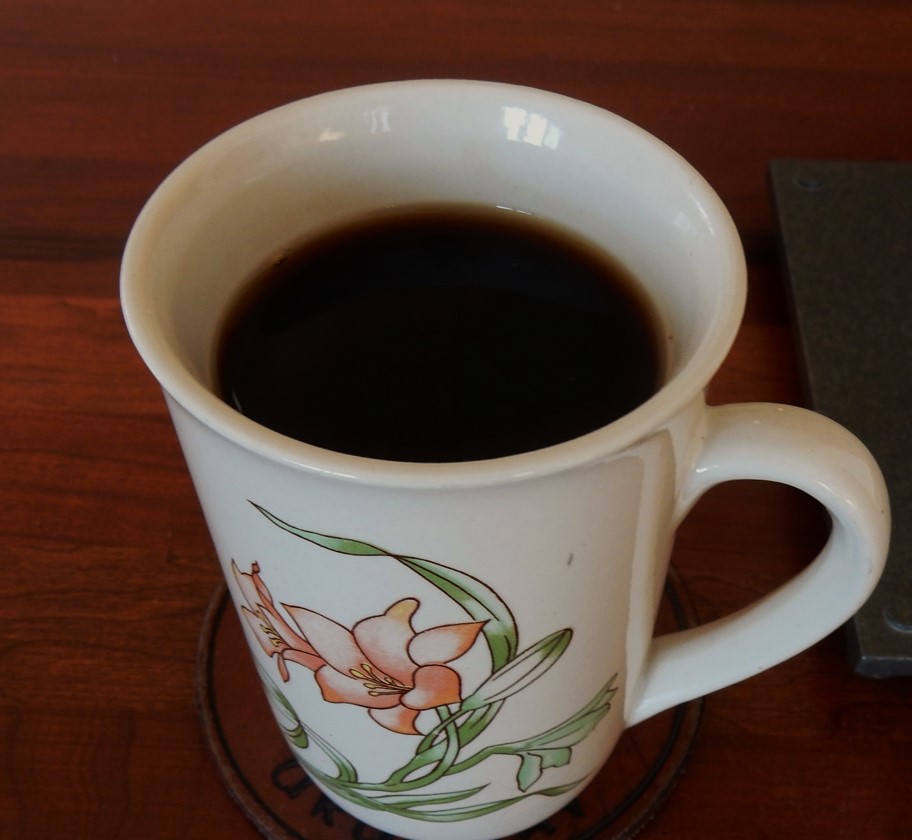
I’m never quite sure whether coffee is good for me, so I was thrilled that the December, 1916 issue of Ladies Home Journal answered a lot of my questions. Here’s an abridged version of the questions and answers:
Does coffee really keep people awake?
It certainly does! The drinking of coffee sometimes serves a useful purpose in emergencies, such as in the case of a train dispatcher who must be possessed of a clear, active brain in order that human lives may be properly safeguarded. Or, to the nurse on night duty it is often found a very welcome beverage. But, in all such cases, the purpose for which coffee is taken is to insure wakefulness; the very condition that the average man or woman seek to avoid.
How does morning coffee with sugar and cream affect the stomach? With sugar or cream alone? What about black coffee?
When you take your cup of coffee at breakfast one thing occurs in the stomach no matter whether the coffee is taken “straight,” or with either cream or sugar, or both. The thing which universally occurs is a stimulation of the glands or workshops in the lining of the stomach, causing the glands to form more gastric fluid. In other words coffee, from this standpoint, acts very much the same as water.
What is the effect of coffee on the nervous system?
After the coffee leaves the stomach it passes into the bowel, from which it is taken and carried by the blood to all parts of the body. The effect on the nervous system is soon seen. The pulse quickens and the hand of the coffee drinker is no longer steady.
Does cold coffee produce the same stimulating effect as hot coffee up entering the stomach?
Yes! So far as the stimulating effect of the coffee in the stomach or the subsequent effect of the coffee upon the nervous system is concerned, it is immaterial whether one takes the coffee hot or cold. In other words, no matter what the temperature of the coffee may be, the stomach sees to it that the temperature is raised or lowered as the case may require, and that in a very few minutes a temperature approximating that of the body is established.
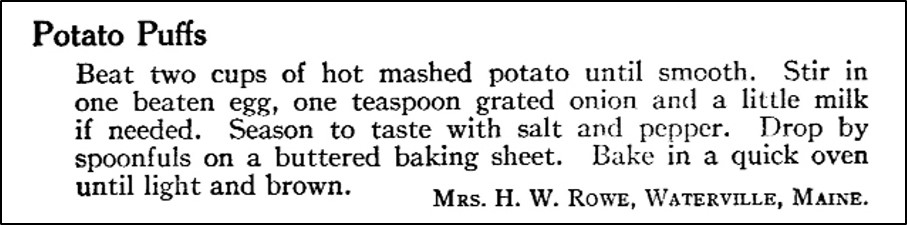
The week after Christmas is left-overs week at my house, so when I saw a hundred-year-old recipe for Potato Puffs I had to give them a try.
The Potato Puffs were light and creamy with just a hint of onion. When, I served the Potato Puffs, my daughter said, “Mom, this recipe is one of your better hundred-year-old recipes.” In other words, this recipe is a winner.
1 teaspoon onion, grated (use additional grated onion if desired)
milk, as needed
salt and pepper, optional
Preheat oven to 425° F. Stir the egg into the mashed potatoes. If too thick, add a little milk. Season to taste with salt and pepper. Drop heaping teaspoons of the potato mixture onto a greased baking sheet. Bakes 20 – 25 minutes or until lightly browned.
Notes: (1) If left-over mashed potatoes have been refrigerated, warm in a microwave or on the stove top, prior to adding the egg. The potatoes only need to be warm, not hot. If the potatoes are quite hot, be sure to immediately start vigorously stirring when the egg is added to keep the egg from beginning to coagulate. (2) Potato Puffs may be refrigerated and reheated. Put in a 400 ° F oven for 20 minutes or until hot.
I’m a black walnut aficionado The bold, rich taste of black walnuts is lovely in candies and baked goods. And, as a bonus black walnuts are quite nutritious. They are a good source of vitamin E and iron, and have lots of protein. They also contain “good” polyunsaturated and monounsaturated fats that can help reduce “bad” cholesterol.
Black walnuts are seldom sold in stores, so each autumn I scope out black walnut trees on nearby public property, and then forage the walnuts. I then hull the walnuts (and walk around for at least a week afterwards with walnut-stained hands), and then spread the hulled nuts out on newspapers to dry for several months.
A couple days ago my husband and I began to crack the walnuts, and then to pick the nut meats out, which is a challenge in itself. I swear that black walnuts are the most difficult nuts (except for maybe hickory nuts) to crack.
Now that I had the shelled nuts, I was ready to begin baking with them. I selected a hundred-year-old nut bread recipe. Any type of nuts could be used in the recipe–but black walnuts would have commonly been used in the early 1900s.
The Black Walnut Bread was easy to make, and it was a taste treat with the embedded, robust, savory pieces of black walnut. This recipe is a keeper.
1 cup black walnuts, chopped (or other type of nut)
Preheat oven to 350° F. Grease two loaf pans. Put the flour, sugar, baking powder, and salt into a mixing bowl, and stir to combine. Add egg and milk, and stir just enough to blend the ingredients. Add the black walnuts, and gently stir to spread the nuts throughout the batter. Pour into the greased pans. Bake about 40 minutes or until a toothpick inserted in the bread comes out clean.
I couldn’t figure out why the old recipe said that after the batter was poured into the loaf pans that they should “stand aside to raise twenty minutes” before baking. Since this recipe called for baking powder (and not yeast), it didn’t seem like it needed to rise prior to baking so I ignored that step.
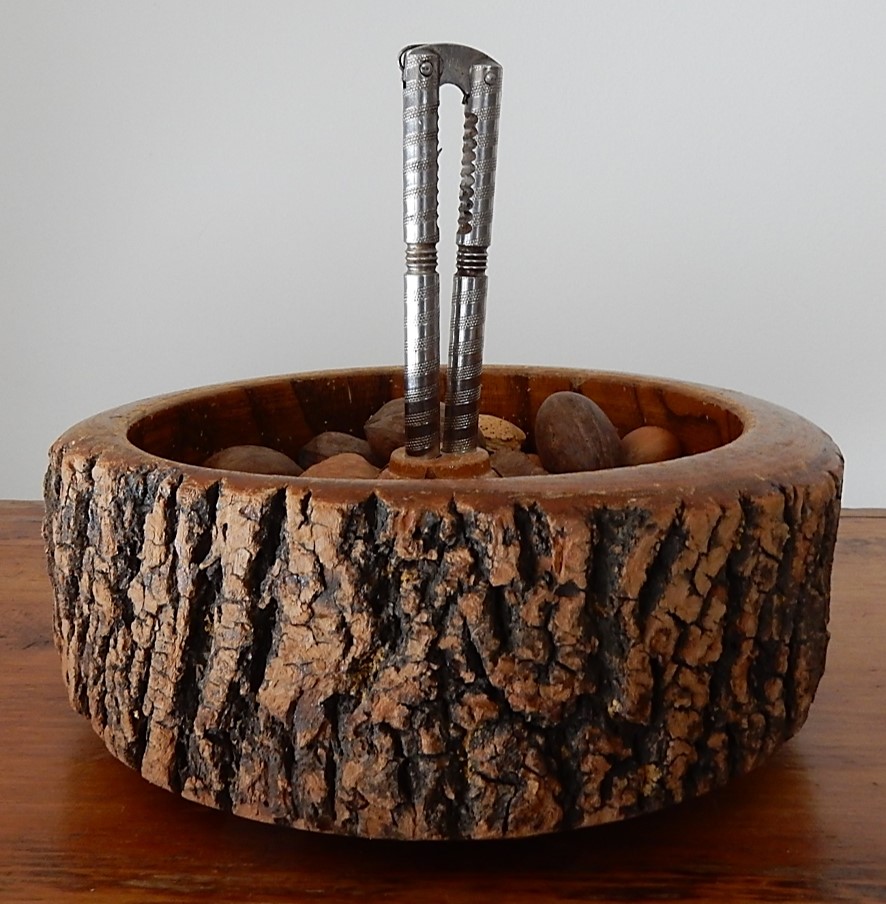
Many of my December memories are linked to food: cut-out cookies, homemade fudge, fruitcake, and nuts in the shell. Yesterday I saw a display of nuts in the shell at the supermarket and bought a bag. When I got home I dug out my mid-century nut bowl. Each time I crack a nut, my thoughts go back to chatting with my mother while cracking, and then nibbling on, nuts in the farmhouse kitchen when I was a child.
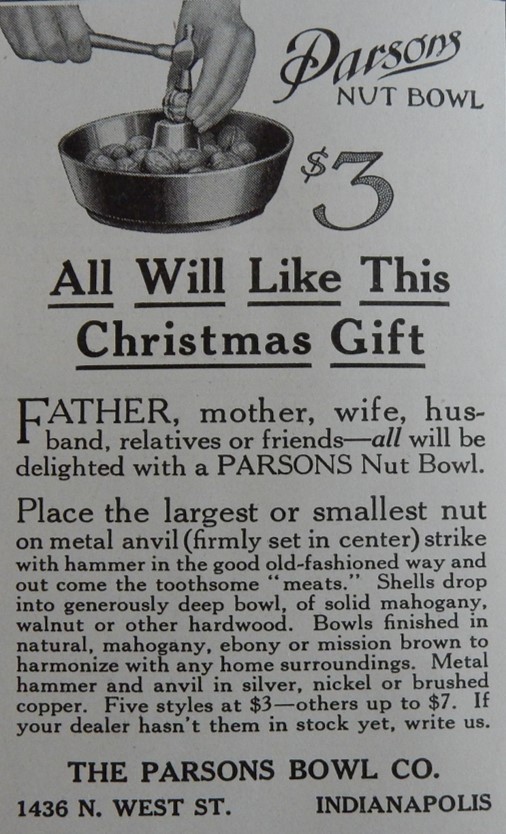
This morning I browsed through a hundred-year-old issue of Ladies Home Journal and saw an ad for a Parsons Nut Bowl. Nuts in the shell have been a holiday tradition for a long time.
Parsons Nut Bowl Advertisement (Ladies Home Journal, December, 1916)
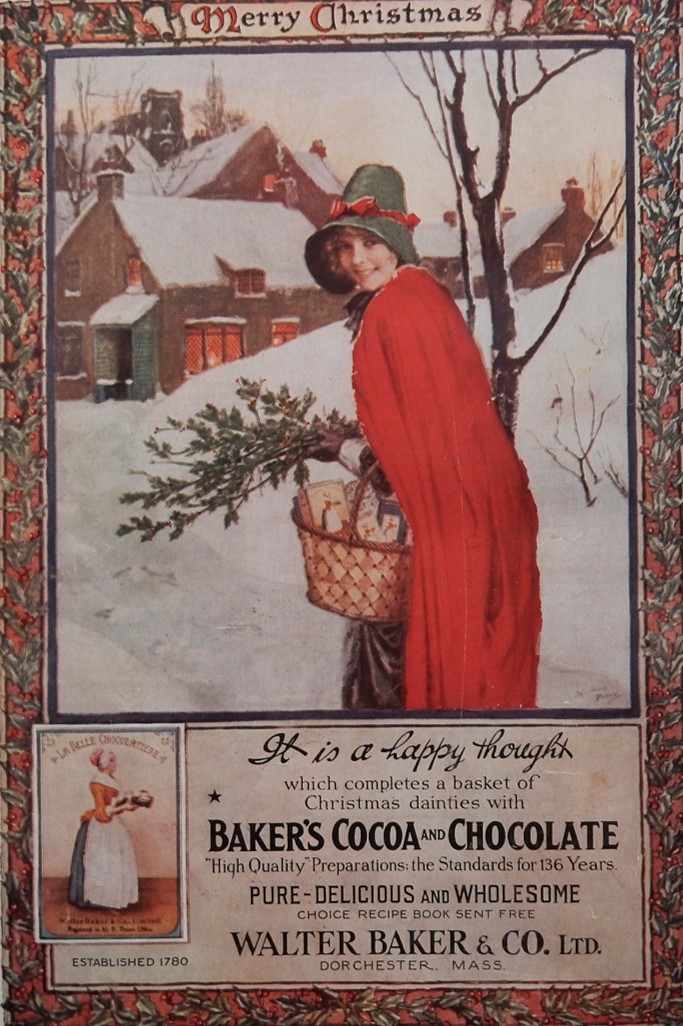
Brrrr, it’s snowy, the temperature outside is in the single digits, and I’m cocooning until the weather improves. Then I remembered seeing a recipe for Cocoa in a hundred-year-old home economics textbook, and knew it was the perfect time to try it.
The Cocoa only took a few minutes to make – and soon I was relaxing with a steamy cup of rich and creamy Cocoa. There was no comparison to the modern pre-mixed cocoa products. The Cocoa made using old recipe was better . . . much, much better.
Here are the old directions for making Cocoa:
Source: Foods and Household Management: A Textbook of the Household Arts by Helen Kinne and Anna M. Cooley (1915)
Put the cocoa and sugar in a bowl, and stir to combine. Add 1 tablespoon and milk and stir until smooth; then add another tablespoon of milk and stir. Set aside.
Put the remainder of the milk in a medium sauce pan. While stirring constantly, heat the milk until hot and steamy using medium heat; then stir in the cocoa mixture. Remove from heat and serve.
When I made this recipe, I looked at the Cocoa recipe on the can of cocoa. The recipe on the can called for more sugar, and had a 2 to 1 ratio of sugar to cocoa, while the hundred-year-old recipe had a 1 to 1 ratio of sugar to cocoa which resulted in a delightful hot drink that featured the nuanced chocolaty notes of the cocoa without being overwhelmed by the sweetness of the sugar.