Boiled Cider Pie

Old-fashioned Boiled Cider Pie is a delightful Fall treat. This pie has a smooth and delicate filling with a mild apple flavor and (even though it contains no milk) a lovely custard-like texture.

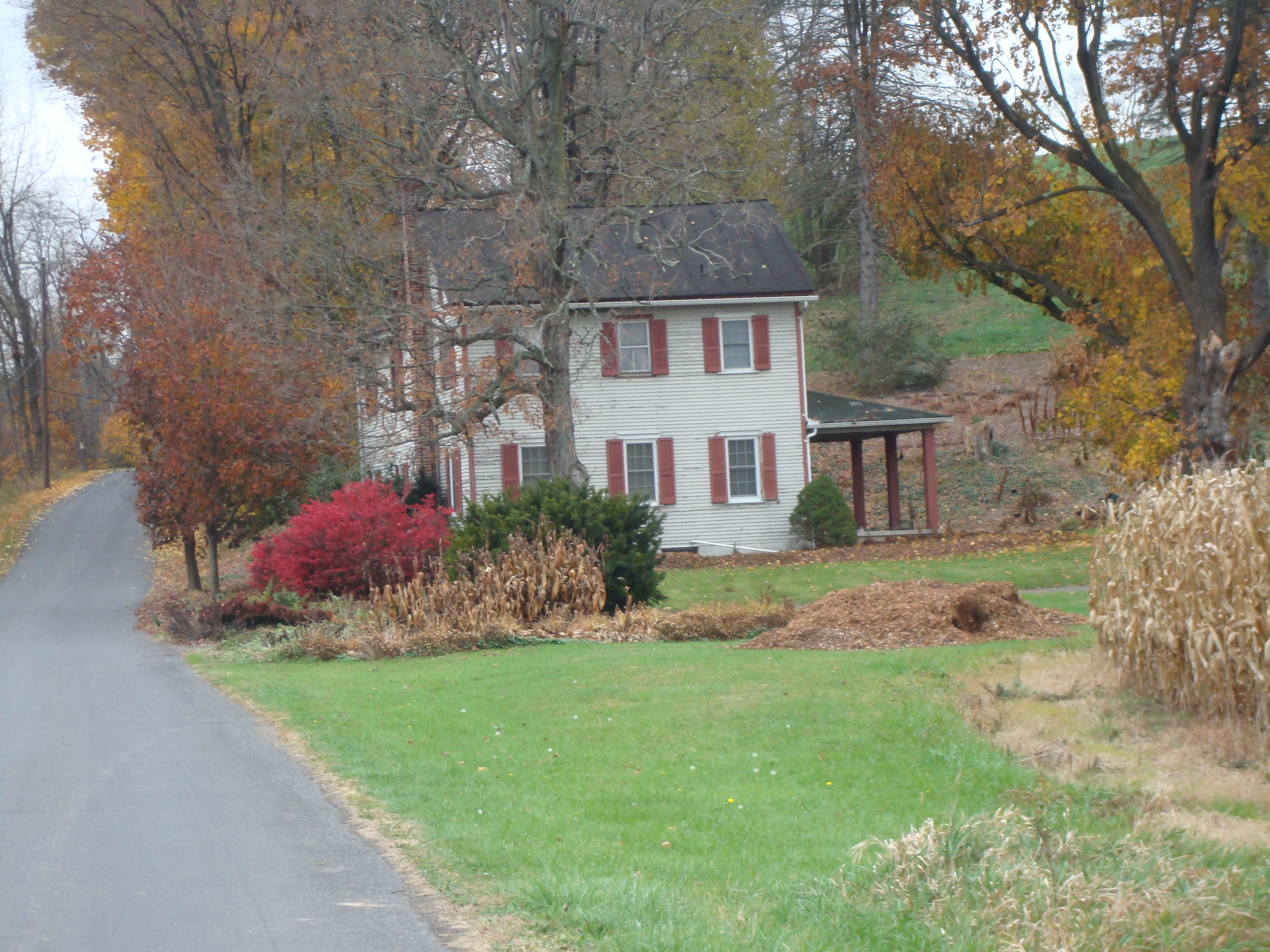
This recipe is from a 1905 cookbook published by a church in Berwick, Pennsylvania. I found the cookbook last summer when I was visiting the area in Central Pennsylvania where I had lived as a child. My husband and I were to meet someone for lunch – but we finished a visit with another friend earlier than anticipated. So when we saw that a tiny country church was holding a rummage sale, we decided to stop in to fill the time.

There was a sign which said, “Donate whatever you think the items you select are worth.” I was immediately drawn to the book table. There were lots of colorful cookbooks from the 1960s and 70s on the tabke. But then I noticed an a small dog-eared cookbook with  pages browned by age. I gently flipped through the book. Several pages were missing. But I could tell that it was old, really old; and that it was a church cookbook compiled by women in the nearby by town of Berwick.  My heart beat a little faster. I really wanted this book.

But there was no price. I was to donate whatever I thought it was worth.  I dug into my wallet, and pulled out a $1 bill, a $5 bill, and a couple 20’s.

I picked up the 1905 Berwick cookbook, and another small pamphlet from the 1930s that contained recipes. I handed the church member serving as cashier $6 for the two items. She said, “Some of the other cookbooks are nicer, are you sure you want these?”

I said,  “I like old cookbooks” and walked out to the car. The woman obviously felt like I paid more than enough for the items I bought. Yet I’ve felt a little guilty ever since. To me, the hundred-year-old cookbook was a find worth much more than what I paid. Should I have made a larger donation?

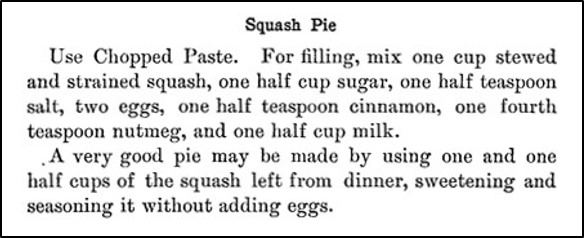
Here’s the original recipe:

Source: Berwick (PA) Cook Book, No. 2 (The Ladies of Directory No. 2 of the Aid Society of the Methodist Episcopal Church, 1905)

And, here’s the recipe updated for modern cooks:

Boiled Cider Pie

  • Servings: 6-8
  • Difficulty: moderate
  • Print

2 cups cider

1 egg

1 1/2 cups sugar

3 tablespoons flour

2 cups water

2 8-inch (small) pie shells or 1 9-inch deep-dish pie shell

Put the cider in a saucepan, and bring to a boil using medium heat. Reduce heat and boil gently until it is reduced to approximately 1/2 cup (about 45 minutes). Stir frequently. Remove from heat. Set aside.

Preheat oven to 350° F. Put egg in mixing bowl and beat until smooth. Add sugar and flour; stir until combined. Then stir in the water and boiled cider. Put in pic shell and place in oven. Bake until the top is lightly browned, and the filling does not move in waves. (This pie takes a long time to bake. Start checking it after 45 minutes, but don’t be surprised it it takes more than 1 1/2 hours for the filling to thicken.)  Remove from oven. Cool pie before serving.

Keep Coffee Warm with a Thermos

Source: Good Housekeeping (October, 1917)

A household hints column in a 1917 issue of Good Housekeeping invited readers to send in their tips for possible publication Readers whose submissions were published received $1 from the magazine. One hint was to keep coffee warm in a thermos bottle when entertaining.

Let the Thermos Help Out

I find my thermos bottle comes in handy when I wish to serve coffee to more people than my percolator will accommodate. My percolator will hold six cups. This I make in the regular way an hour or so before I wish to serve it. Pour it into the thermos bottle, which of course, would keep it hot for hours, and then proceed to make another potful to be ready just in time to serve. The coffee in the thermos bottle I hold in reserve for the second helping.  — Mrs. M.E., Minn.

Good Housekeeping (October, 1917)

Old-Time Baked Apples with Sauce

Baked apples are one of my Fall comfort foods, so I was thrilled to find a delightful hundred-year-old recipe for them. The recipe had a new (old?) twist – serve the apples with a custard sauce.

Here’s the original recipe:

Source: Larkin Housewives Cook Book (1917)

And, here’s the recipe updated for modern cooks:

Baked Apples with Sauce

  • Servings: 6
  • Difficulty: moderate
  • Print

3/4 cup sugar

1 teaspoon cinnamon

6 apples (Use an apple variety that keeps its shape when cooked – Rome, Golden Delicious, Granny Smith, Braeburn, etc.)

1/4 cup water

1/2 cup sugar

1 1/2 tablespoons corn starch

1 1/2 cups milk

1 egg. beaten

1 teaspoon vanilla

Preheat oven to 350° F. In a small bowl, combine the cinnamon and sugar. Set aside.

Core apples, and place in a baking dish. (The baking dish will be easier to clean if it is lined with foil.)  Spoon sugar and cinnamon mixture into the center of the apples. (Depending upon the size of the apples, there may be some left-over cinnamon and sugar.) Drizzle a small amount of water over each apple. Place in oven and bake until tender (about 35 – 45 minutes).

In the meantime, make the sauce by putting the sugar and corn starch in a saucepan; stir to combine. Slowly stir in the milk, then put on the stove and bring to a boil using medium heat. Remove from heat and place a small amount (approximately 1 – 2 tablespoons) of hot mixture into dish with the beaten egg, stir quickly. Add the egg mixture to the hot liquid in the saucepan and return to heat. Cook for 1 minute while constantly stirring.  Remove from heat and stir in vanilla.

To serve, spoon sauce over the baked apples. Serve warm.

Soy: The Coming Bean

Soybean Plan (Source: Good Housekeeping, September, 1917)

According to a 2007 CNN story,  “Soybeans, usually in the form of oil, ­ account for an astonishing 10 percent of our total calories in the United States.” It was very different a hundred years ago when soybeans were a new crop in the U.S.  Here’s some excerpts from a 1917 magazine article promoting the use of soybeans. (Back then “soy” and “bean” were two separate words.)

Soy: The Coming Bean

The soy bean, also called the soja bean, is a native of south-eastern Asia, and has been extensively cultivated in Japan, China, and India since ancient times. The beans are there grown almost entirely for human food, being prepared for consumption in many different ways.

The soy is a coming bean if not the coming bean. It is on its way to arrival in the American kitchen and dining room.

The outstanding fact of importance to consumers of food in the United States today is that a nutritious, palatable, easily grown (and therefore eventually cheap) legume is being recommended by the food experts. Pressure of circumstances has revived interest in foods and combinations of food of which the majority were old and have been forgotten. The soy bean, however, is to practically all American cooks and to the large body of food manufacturers an entirely new product.

Good Housekeeping (September, 1017)

Old-fashioned Stuffed Sweet Potato Recipe

Sweet potatoes are the perfect Fall vegetable – they’re both delicious and nutritious. They are a rich source of vitamins A and C, and contain substantial amounts of calcium and potassium.  So when I saw a hundred-year-old recipe for Stuffed Sweet Potatoes, I had to give it a try.

The recipe was a winner. It was easy-to-make, visually appealing, and most important, tasty. Here’s the original recipe:

Source: Larkin Housewives Cook Book (1917)

And, here’s the recipe updated for modern cooks (I halved the original recipe.):

Stuffed Sweet Potatoes

  • Servings: 3 - 4
  • Difficulty: easy
  • Print

3 medium sweet potatoes

1 tablespoon butter

1/4 teaspoon salt

dash pepper

2 teaspoons minced parsley

1 egg white, beaten

Preheat oven to 400° F. Prick each sweet potato several times with the tines of a fork. Place of a foil-lined baking sheet and bake until tender (about 45 minutes – 1 hour, depending upon size).  Take out of oven, and cut each sweet potato in half. Gently scoop out pulp, and put into a bowl. Mash; then add butter, salt, pepper, and parsley. Mix thoroughly, then refill the skins. (The mixture should be heaped and nicely rounded–which means that not all the potato skins will be needed. ) Brush with beaten egg white. Put under the broiler until the top is lightly browned.

I used less salt than called for in the original recipe because it seemed excessive for my taste.

Hundred-year-old Advice for Avoiding Diabetes

Source of drawing under the “no” symbol: Lowny’s Cook Book (1912)

It’s fascinating to see what people knew a hundred years ago about the relationship between diabetes and the foods they ate. Here’s a Q&A on this topic in a 1917 magazine:

Avoiding Diabetes

Question: Can diabetes be avoided by a proper diet? If so, what food should one avoid to escape the disease?  I was told by a physician that diabetes was often inherited, but I want to try to escape it if it depends upon me. –E.L., New York

Answer:  No one can answer definitively your question in regard to avoiding diabetes. There is a general impression among physicians that diabetes is, to a certain extent, a diet disease; that is, it has been brought on through faults of diet.

This introduces the personal element. Why does one man eating a certain diet have diabetes and another man eating the same diet not have it? The answer is that one man is resistant and the other non-resistant; but this does not solve the problem.

I believe that if we would eat less carbohydrates, especially sugars, we would be less liable to diabetes. I would advise a simple, wholesome diet such as I would give any person who wishes to lead a correct life from the dietary point of view. I would emphasize the importance of avoiding the use of tea, coffee, chocolate, and tobacco. Sugar cakes, ice cream, pudding, and things of that kind would not enter into my diet scheme. Diabetes is not inherited, but the tendencies which make it possible may be. 

Good Housekeeping (September, 1917)

Old-fashioned Spanish Scrambled Eggs

Food for week-end breakfasts and brunches should be special – yet I also want convenience. I found a hundred-year-old recipe that fits the bill.

Spanish Scrambled eggs are colorful, tasty, and easy to make. These savory scrambled eggs have flecks of green pepper, pimento, and onion that delight both the eye and the taste buds. This recipe is a keeper.

Here’s the original recipe:

Source: Good Housekeeping (July, 1917)

And, here’s the recipe updated for modern cooks:

Spanish Scrambled Eggs

  • Servings: 3 - 4
  • Difficulty: easy
  • Print

6 eggs

1/4 cup milk

1/2 teaspoon salt

1/4 teaspoon pepper

2 tablespoons butter

1 medium onion, chopped

1/2 green pepper, chopped

1 2-ounce jar pimento

Whisk the eggs  together in a bowl, then stir in the milk, salt, and pepper. Set aside.

In the meantime,  melt the butter in a skillet, add the onion and green pepper and saute until tender. Add the egg mixture and the pimento. As the mixture begins to thicken, use a spatula to lift and fold the curds. Continue cooking and folding until no liquid remains. Remove from heat. If desired, may be served with toast.

Cook’s note: The old recipe called for 1 teaspoon salt. This seemed excessive to me, so I reduced it to 1/2 teaspoon when I updated the recipe.