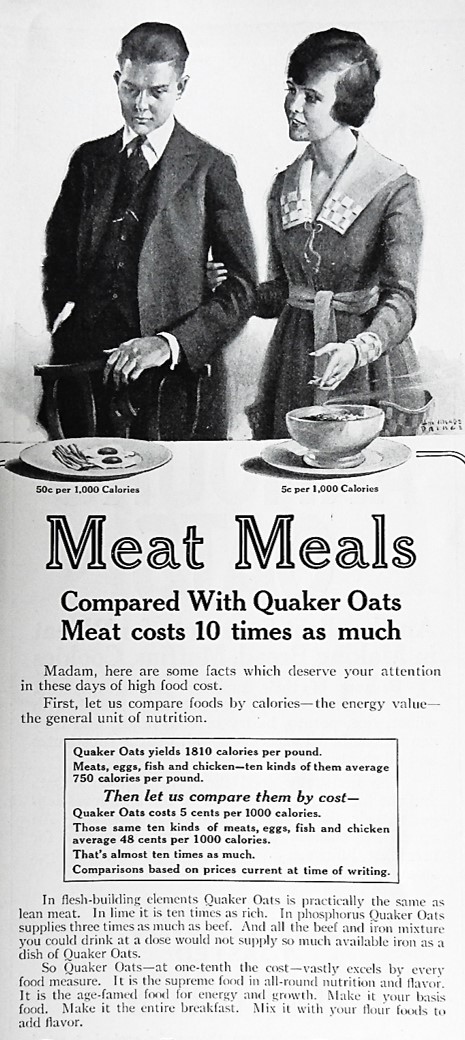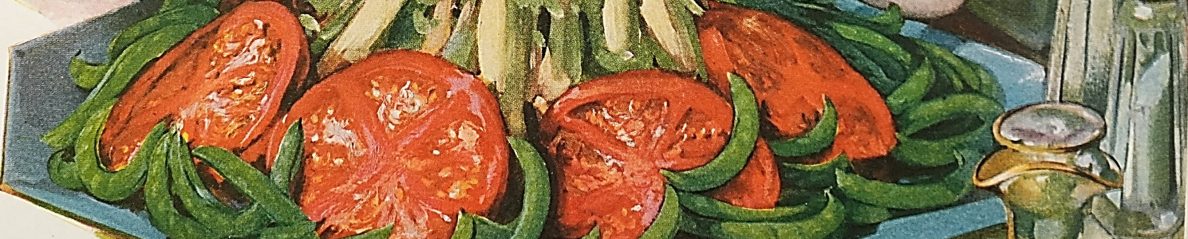
Here’s some tips for homemakers that appeared in a cooking magazine called American Cookery a hundred years ago. Not sure how many of these tips still apply. And, are these tips just for homemakers or are they applicable to most anyone?
Creamed vegetables on toast are one of my favorite comfort foods, so I was thrilled to find a hundred-year-old recipe for a combination that was new to me. Creamed Celery and Green Pepper is delightful. The celery and the green pepper complement each other perfectly. The chunks of green pepper add flavor and reduce any bitterness in the celery. This quick and easy recipe is a keeper.
Here’s the original recipe:

And, here’s the recipe updated for modern cooks:
1 1/2 cups celery, cut in 1-inch pieces
1 small green pepper (1/2 of a typical large supermarket green pepper), cut into vertical slices 3/4 inch wide, then halved
3 tablespoons butter
3 tablespoons flour
1/4 teaspoon salt
dash pepper
1 1/2 cups milk
toast
Put celery in a saucepan, and cover with water. Using high heat bring to a boil, then reduce heat and simmer for about 10 minutes, or until tender. Remove from heat and drain. Stir green pepper pieces into the celery.
In the meantime, in a skillet, melt butter using low heat. Stir the flour into the butter; add salt and pepper. While stirring constantly, slowly pour in milk and bring to a boil over medium heat. Add the celery and green pepper pieces, and bring back to a boil; remove from heat. Serve over toast.

I always find it challenging to interpret hundred-year-old bread recipes. The old recipes generally call for cakes of yeast, and I’m never quite sure how that translates when using modern dry yeasts.
So I was amazed when I saw a hundred-year-old advertisement for Fleischmann’s Yeast in the back of a 1917 cookbook. Was Fleischmann’s Yeast a cake back then? Perhaps the product has been refined and modernized across the years, but the same company has been around for at least a century.
Meat loaf is the ultimate comfort food, so I was thrilled to find a hundred-year-old beef loaf recipe. This recipe is different from modern meatloaf recipes. In addition to ground beef, it contained ripe olives, oatmeal, canned tomatoes, and onion; and brought back memories of some meatloaf recipes served at family reunions when I was a child.
Here’s the original recipe:

And, here’s the recipe updated for modern cooks:
Meatloaf
2 pounds ground beef
3/4 cup old-fashioned oatmeal
12 ripe olives, chopped
1/2 small white onion, chopped
2 cups canned tomatoes (1 one-pound can diced onions)
1 teaspoon salt
1/4 teaspoon pepper
Gravy
meat drippings from pan (approximately 1/4 cup)
2 tablespoons flour
1 cup water
Preheat oven to 375° F. Thoroughly combine all ingredients in a mixing bowl. Shape meatloaf in a 9″ X 13″ or similar-sized baking dish (or put in a large bread pan). Place in oven, and bake until done (approximately 1 hour).
If desired, serve with gravy. To make gravy, put meat drippings from the baking pan in a small skillet. Heat to boiling. Sprinkle with flour and stir to combine. Slowly pour in the water while stirring constantly. Continue stirring until the gravy thickens, then remove from heat and serve.
Cook’s note: My meatloaf had relatively few drippings which limited the amount of gravy that I could make. I used ground beef that contained very little fat. Ground beef with a higher fat content probably would provide more drippings.
I used less salt than called for in the original recipe. It called for 3 teaspoons of salt. I used 1 teaspoon of salt which seemed like plenty.
I tend to think of vegetarian diets as a relatively new way of eating, but it actually is a traditional way of eating. Here’s what a hundred-year-old cookbook says:
Meatless Meals
While authorities disagree as to the advisability of adopting a strictly vegetarian diet, there are increasing numbers who believe that such a diet is wholesome and beneficial. Be that as it may, vegetable menus are so much in demand that it behooves the housewife who caters to vegetarians to see that the necessary food elements are present. While fruits and vegetables are rich in starch, sugar, mineral salts, and acids, there are only a few that are rich in protein and fats.
For those who do not object to animal products, milk, cream, butter, cheese and eggs should be generously used. Cheese naturally suggests itself as a meat substitute as it is a highly concentrated protein food. Weight for weight, it contains twice as much protein as meat and its fuel value is almost double.
Dried peas, beans and lentils are the vegetables conspicuous in protein and therefore are excellent as meat substitutes. There is a Hindu proverb, “Rice is good, but lentils are my life.” Mushrooms are also valuable meat substitutes.
Nuts may also be regarded as meat substitutes, especially peanuts, almonds and Brazil nuts. Nuts, however, are rich in fat. No other vegetable food is so rich in fats as nuts. On account of their high fat content, an excessive consumption is likely, sooner or later, to derange digestion. They should be combined with foods having a low fat content. If properly combined with other foods, they furnish valuable food.
The cereals, such as oatmeal and whole wheat preparations, contain from 13 to 16 percent protein and therefore may be regarded as protein supplying foods. Combining them with milk increases the protein content and furnishes a happy balanced combination.
The Housewife’s Cook Book by Lilla Frich (1917)
I recently had a roast in the oven, and was looking for a side dish to accompany it, so when I happened upon a hundred-year-old recipe for Onion Souffle, I decided to give it a try.
Onion Souffle contains onions and bread crumbs, and reminds me a little of stuffing. This side dish had a robust onion flavor and nicely complemented the roast, though it was a little dry. The next time I make this Souffle, I’ll probably drizzle a little gravy or other sauce over the top.
Here is the original recipe:

And, here is the recipe updated for modern cooks:
1 tablespoon butter, melted
1/2 cup soft bread crumbs
1/2 cup onion, finely chopped
1/4 teaspoon salt
1/8 pepper
1 egg, separated
Preheat oven to 350° F. Put bread crumbs and melted butter in a bowl, then stir. Add onions, salt, pepper, and egg yolk; stir to combine.
Put the egg white in a small mixing bowl, beat until stiff peaks form. Then fold the beaten egg whites into the onion and bread mixture.
Spoon into buttered custard cups (small ramekins). The souffle does not rise much during cooking, so the custard cups can be filled to within 1/2 inch of the top. Place in oven and bake until set and lightly browned (about 30 minutes). Removed from oven and serve. If desired, the onion souffle can be unmolded.
Here’s a tip for preparing soups in a hundred-year-old magazine:
Soup Seasoning and a Tea Ball
In adding peppercorns and other whole flavorings to soups that are not to be strained, place them in a tea ball and drop the tea ball into the soup. It may be removed before the soup is served and the seasonings with it. All of the desired flavor is thus obtained without the chance of anyone getting a mouthful of hot pepper.
Good Housekeeping (September 1917)