Drink Pure, Safe Water: Hundred-Year-Old Advice

I don’t generally worry about the safety of the water I drink. That wasn’t always true a hundred years ago. Here’s  an abridged version of what a home economics textbook from the early 1900’s  had to say:

Pure water is the most important of our foods. Water may contain impurities that come from decaying vegetable or animal matter, or it may carry the germs of disease, or minute insects or their eggs. Where shallow wells are used, water may wash filth into them. In deep wells, properly protected from insects and animals by high curbs, the water is usually pure because the many layers of soil, gravel, and rock through which it has filtered have taken out the impurities.

Even apparently pure water may contain germs only visible under the microscope. If there is any questions as to the purity of the water, send a sample to the state health laboratory or to a chemist for analysis.

If water is muddy let it settle, then pour off the clear water and boil it hard for five minutes. Put it into clean glass jars or bottles, cover it, and keep it cool. Boiled water is flat because the air is driven off, and may be aerated by being poured from a pitcher held at some height into a drinking receptacle. Distilled water, if bottled under clean conditions, is very useful in times of typhoid or epidemics of like nature. 

The Science of Home Making: A Textbook in Home Economics (1915) by Emma E. Pirie

Hundred-year-old Chocolate Mint Fudge Recipe

Chocolate and mint combine beautifully to create delectable taste treats – think Girl Scout cookies, and mint chocolate chip ice cream – so I was thrilled to find a hundred-year-old recipe in a vintage issue of Good Housekeeping for Chocolate Mint Fudge. This lovely fudge has just the right amount of chocolate and mint to create a delightful candy.

The Chocolate Mint Fudge recipe calls for Mint Syrup. Both the Fudge and Mint Syrup recipes were provided in the old magazine.

Here are the original recipes:

Source: Good Housekeeping (August, 1917)

Here are the recipes updated for modern cooks:

Chocolate Mint Fudge

  • Servings: 25-30 pieces
  • Difficulty: moderate
  • Print

Chocolate Mint Fudge

4 tablespoons cocoa

1 1/2 cups milk

1 tablespoon butter, melted

4 cups light brown sugar

1/2 cup mint syrup (see recipe below)

Put cocoa in a small bowl, add 2 tablespoons of the milk and stir until smooth. Set aside.

Put butter, brown sugar, the remaining milk, and mint syrup in a mixing bowl stir to combine. Put in a saucepan and using medium heat bring to a boil. Stir in the cocoa mixture. Reduce and gently boil until the mixture reaches the soft ball stage (238° F.). Put saucepan in cold water, and beat the fudge mixture until it thickens. Put into a 8 inch X 8 inch buttered pan. (If desired, line with parchment paper to make it easier to remove fudge). When cool, cut into pieces and remove from pan.

Mint Syrup

1 cup sugar

1/2 cup water

1/2 cup mint leaves

Combine the sugar and water in a saucepan; then add the mint leaves. Bring to a boil using medium heat. Reduce heat and simmer until the liquid begins to thicken to a syrup consistency (about 20 minutes). Remove from heat; strain and cool.

Cook’s note: This recipe makes more Mint Syrup than is needed for the Mint Chocolate Fudge. Extra syrup can be used in coffee or tea, or in other recipes.

Inexpensive Ways to Make Lemonade

Image Source: Ladies Home Journal (May, 1916)

Here’s a “Dollar Stretcher” tip for making lemonade that appeared in a hundred-year-old magazine:

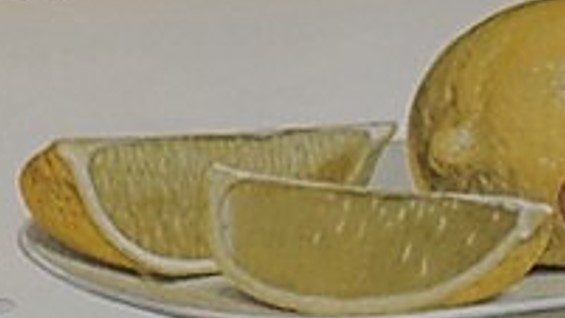
If you add a teaspoonful of cream of tartar for each lemon, you can make double the amount of lemonade for the number of lemons you use. Another way to make your lemonade cheaper is to put the lemon rinds through the food chopper, pour ice water over them and drain. By doing this fewer lemons are needed.

Ladies Home Journal (January, 1918)

Old-fashioned Banana Sour Ice Cream

Looking for a tasty and easy-to-make ice cream for your 4th of July bash? Banana Sour Ice Cream fits the bill. I found this delightful recipe in a hundred-year-old issue of Good Housekeeping magazine.

Banana Sour Ice Cream is refreshingly tart, and almost reminds me of a sherbet. The recipe calls for both bananas and lemon juice, and the ice cream contains the nuanced flavors of both fruits. It also contains sour cream which enhances the tartness.

Here’s the original recipe:

Source: Good Housekeeping (July, 1917)

And, here’s the recipe updated for modern cooks:

Banana Sour Ice Cream

  • Servings: 4 - 6
  • Difficulty: moderate
  • Print

1 cup sugar

juice of 2 lemons

1 1/4 cups sour cream

3 bananas

Put sugar and lemon juice in a mixing bowl; stir until the sugar is dissolved. Stir in sour cream. Set aside.

Peel bananas, then mash until smooth. (A food processor or blender can be used to get a smooth puree.)

Add the mashed bananas to the sugar, lemon juice, and sour cream mixture; beat until smooth. Chill the mixture in the refrigerator for several hours, then place in ice cream maker and freeze. (I used a 2-quart ice cream maker.)

Hundred-year-old Salad Suggestions

Source: Larkin Housewives’ Cook Book (1915)

Since I’m always on the outlook for great salads. I was thrilled to find these hundred-year-old salad suggestions.

What makes a salad special? I’m constantly surprised by the wide variety of salads on restaurant menus. There are traditional green salads, salads with lots of interesting veggies, dried or fresh fruits, nuts, pastas and grains.  And, the base of the salad it just the beginning. There are so many wonderful dressings from simple vinaigrette to heavy mayonnaise-based dressings. But this hundred-year-old list makes me realize that there are also some salad options that (for better or worse) I seldom see in modern salad recipes. When is the last time you had a Maraschino cherry in a salad . . . or, for that matter, bananas?


Hundred-Year-Old Recipe for “Mother’s” Salad Dressing

Old cookbooks often contain recipes with names that memorialize someone, but provide almost no clue about the food. For example, I’ve seen recipes for Grandma’s Cake and Mrs. Johnson’s Dessert. I usually shy away from these recipes because of the unhelpful title – but I recently made an exception. I decided to give “Mother’s” Salad Dressing a try, and I’m glad I did This tangy, creamy, old-fashioned milk, vinegar, and egg dressing was delightful.

Source; Larkin Housewives Cook Book (1915)

And, here is the recipe updated for modern cooks:

Mother's Salad Dressing

  • Servings: 6 - 8
  • Difficulty: easy
  • Print

3 hard-cooked eggs

1/2 of a 5-ounce can of evaporated milk

1/2 cup apple cider vinegar

1 tablespoon sugar

1/2 teaspoon salt

dash pepper

lettuce or cabbage

Cut hard-boiled eggs in half and remove yolks; mash yolks with a fork until fine. Set aside.

Put evaporated milk in a small bowl; slowly add vinegar while stirring. Add mashed egg yolks, sugar, salt, and pepper; stir until combined.

Serve with lettuce or cabbage. If desired garnish with pieces or rings of the egg whites.

I only used half as much salt as called for in the old recipe. One teaspoon seemed like it would make the dressing too salty.

1918 Poem About Bread and WWI

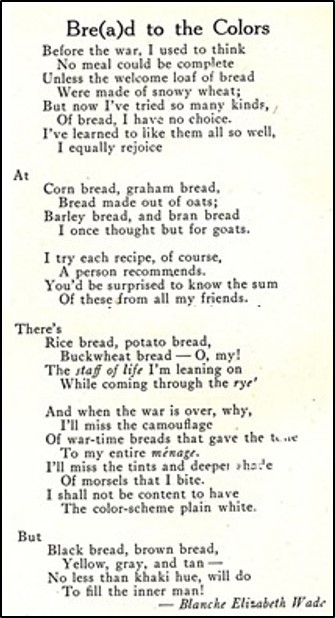
Abridged version of a poem that appeared in the June/July, 1918 issue of American Cookery magazine.

I can learn a lot about what it was like a hundred years ago by reading old poems. For example, this fascinating poem provides lots of details about what people in the U.S. ate during World War I.

Wheat was in short supply during the war. Much of the wheat flour was shipped to Europe to feed the troops – so it was difficult (and expensive) to make white bread.  And, cooks in the U.S. had to substitute other foods.