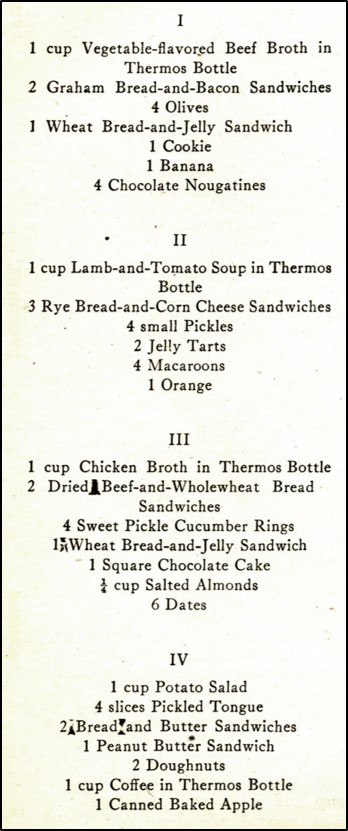
I often struggle to come up with good ideas for packed lunches, so was pleased to find some new (old) ideas for “box luncheons for office or school” in a hundred-year-old magazine.

I often struggle to come up with good ideas for packed lunches, so was pleased to find some new (old) ideas for “box luncheons for office or school” in a hundred-year-old magazine.

Banana Fritters are a wonderful comfort food, so I was thrilled to find a hundred-year-old recipe for them. The fritters were crispy; and, when served with a little confectioners sugar sprinkled on top, had just the right amount of sweetness. The fritters are made using banana slices or chunks, and when I bit into them, the embedded fruit was pure delight. This recipe is a keeper.
Here’s the original recipe:

And, here’s the recipe updated for modern cooks:
1 1/2 cups flour
2 teaspoons baking powder
1/4 teaspoon salt
1 egg
2/3 cup milk
2 medium bananas, sliced or cut into small chunks (I sliced the bananas.)
shortening or lard
confectioners sugar (optional)
Put flour, baking powder, salt, egg, and milk in a mixing bowl; beat until combined. Add sliced or cubed bananas, and gently stir until the bananas are evenly distributed throughout the batter.
Heat 1/2 inch of shortening or lard until hot in large frying pan. Drop heaping teaspoonfuls of batter into hot shortening. Fry for about 2 minutes. Flip fritters and fry until golden brown on both sides. Remove from heat and drain on paper towels. If desired, sprinkle with confectioners sugar. Serve immediately.

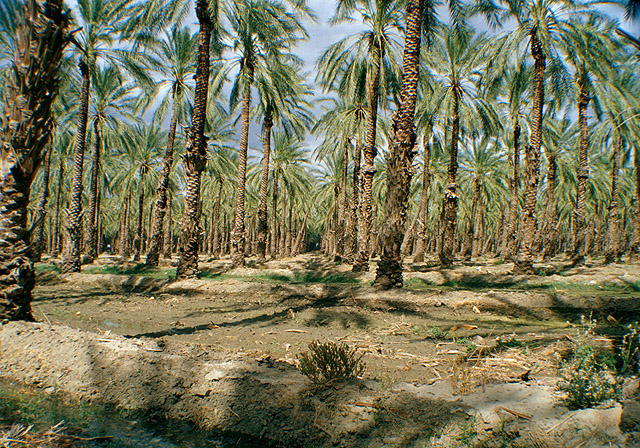
When I hear the word “Coachella” I think of the annual music festival at Indio, California, so I was surprised when I recently came across an article in the April, 1919 issue of Farm Journal about Coachella – but it wasn’t about the music festival. Instead it described how the Coachella Valley in California was the perfect spot for raising dates. Here are a few excerpts.
Now, thanks to our wise Government, it is possible to obtain home-grown dates. Our agricultural experimenters found a bit of real Sahara Desert in Southwestern California, the Coachella Valley, only eight miles wide and twenty miles long. This strange little valley is 250 feet below sea-level.
The Algerian tree was dug up and carried to the newly established agricultural station named Mecca, and of course, it felt itself quite at home there. In 1904 it was fifteen feet high; now it is thirty feet high and each year bears great quantities of splendid fruit. It has become the parent tree of a great date colony of 500 acres. The trees are flourishing, thanks to the irrigation system that supplies an abundance of water to their roots.
Four hundred pounds of fruit to a tree is possible each year, and the trees live to be 200 years old.
The U.S. Department of Agriculture is still doing research in Coachella. The Agricultural Research Service is conducting research on how to improve the productivity of “old” date trees in the valley. I don’t know whether any of these old trees are from the original Algerian date tree described in hundred-year-old Farm Journal article – but somehow I want to believe they are.
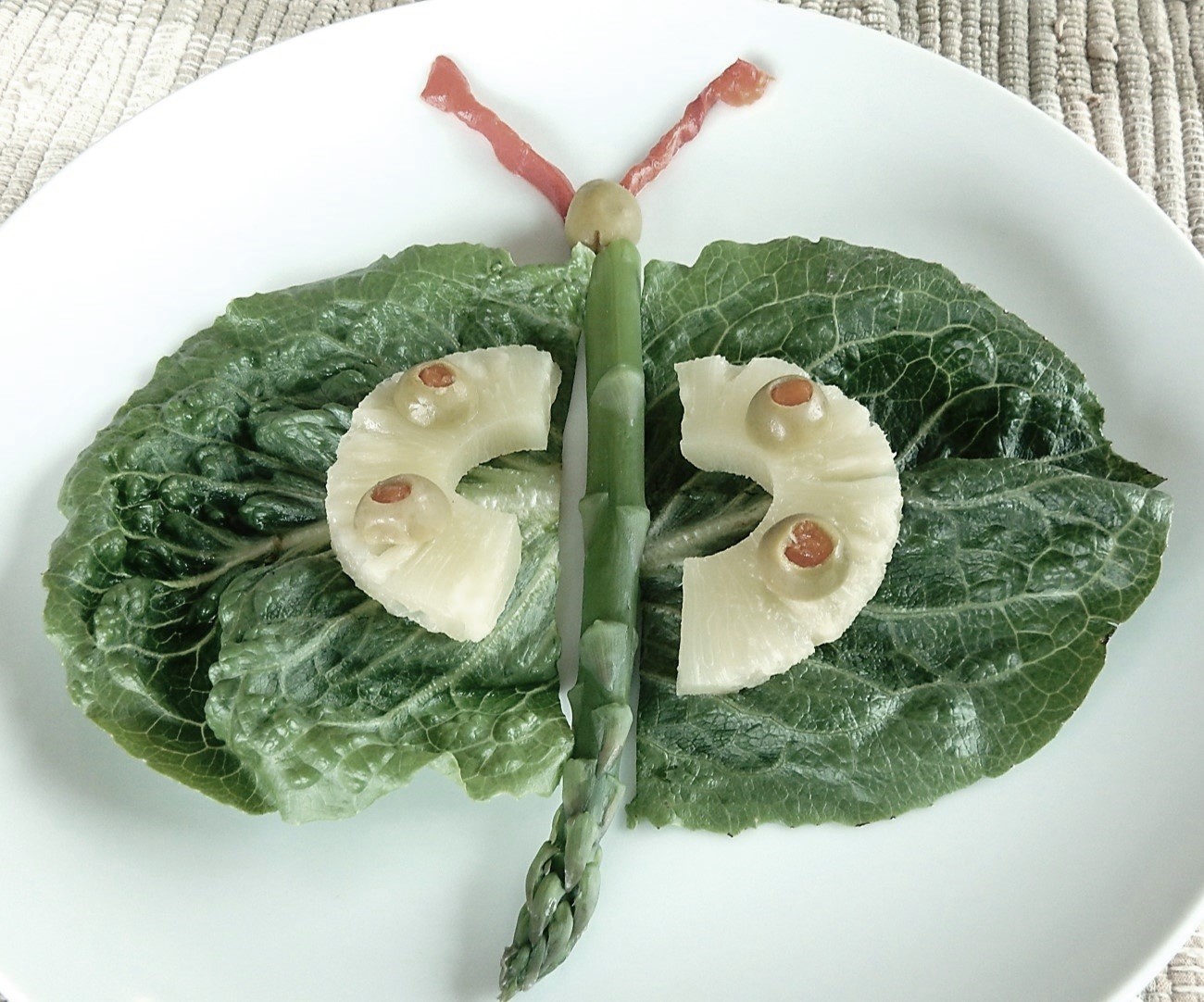
It’s always a challenge to get kids to eat healthy foods, but one trick that parents have been using for a long time is to dress foods up so they look like animals or other creatures. I recently came across a fun hundred-year-old recipe for Butterfly Salad that is quick and easy to make.
The recipe called for asparagus, lettuce, pineapple slices, olives, and pimento strips. This combination of ingredients sounded a bit unusual to me, but it actually was very tasty. The olives added a nuanced saltiness to the other ingredients, but did not overwhelm them.
Here’s the original recipe:
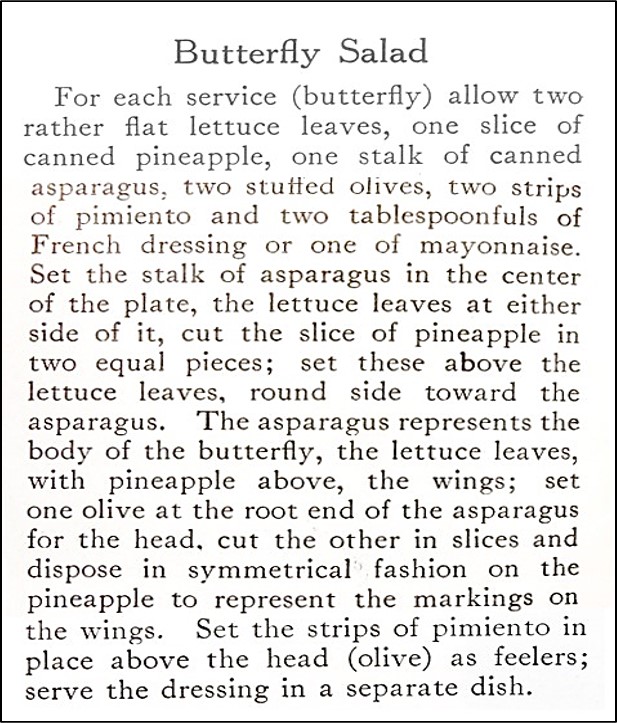
And, here’s the recipe updated for modern cooks:
For each serving:
2 flat lettuce leaves (I used the top portion of the outer leaves from a head of Romaine lettuce.)
1 slice canned pineapple
1 spear cooked asparagus (chilled)
2 – 3 stuffed green olives
2 strips pimento
2 tablespoons French dressing or mayonnaise (optional)
To make a butterfly set the asparagus spear in the center of the plate to represent the body. To make the wings place the lettuce leaves on either side of the asparagus spear. To make the head, set an olive at the base of the asparagus spear. Cut the pineapple slice in half, and symmetrically set each half on a lettuce leaf. Slice the other olive(s), and place slices on the pineapple to decorate the leaf “wings”. Put the strips of pimento above the olive head to represent the butterfly’s antennas. If desired, serve with French dressing or mayonnaise.

A balanced diet helps maintain health – though I’m never exactly sure how to determine whether a particular meal is balanced. There are the five food groups, and once upon a time the U.S. Department of Agriculture’s food pyramid was used to help balance meals, but that has been relegated to the nutritional dust bin and now USDA’s MyPlate can be used to balance meals. Is meat good or bad? – Maybe it doesn’t matter as long as we follow the current mantra and eat five fruits and vegetables a day.
A hundred years ago cooks also tried to prepare balanced meals. According to a 1919 home economics textbook:
A “balanced” meal is one in which the various food principles are combined in a proper proportion. The “balanced” meal must contain some protein, some carbohydrate, some fat, some mineral salts, some water, and some bulk. This combination or “balance” should be present in all meals both for the needs of the body and for good digestion. In other words, it will not do to eat nearly all starch at one meal, and nearly all protein at the next.
Household Engineering: Scientific Management in the Home by Mrs. Christine Frederick (1919)
 Asparagus and eggs pair beautifully, and hum of spring, so I was thrilled to come across a hundred-year-old recipe for Eggs, Grand Duc which is a delightful, surprisingly modern, egg and asparagus recipe.
Toast is topped with long, graceful spears of asparagus, which is immersed in a creamy cheese sauce. And, it all is topped with a perfectly poached egg.
The presentation is lovely, and would be perfect for a small Spring brunch.
Here’s the original recipe:
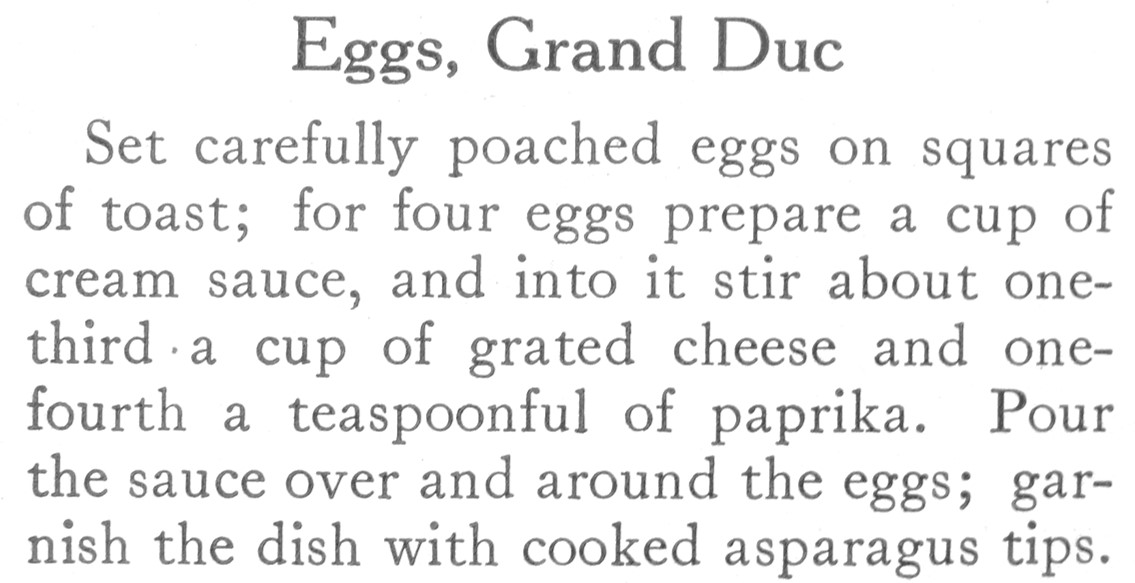
Here’s the recipe updated modern cooks. To make this dish more visually appealing, I used whole slices of toast instead of the toast squares called for in the original recipe. I also assembled the ingredients in a different order than called for in the original recipe.
1/2 pound asparagus
4 eggs
2 tablespoons butter
1 cup milk
2 tablespoons flour
1/2 teaspoon salt
1/4 teaspoon paprika
1/3 cup grated cheese (I used cheddar.)
4 slices of bread, toasted
Asparagus
Trim asparagus spears to remove the tough sections at the bottom of the stalks. Place asparagus in a pan with a steamer. Put water in the bottom of the steamer, and cover. Heat to a boil; then reduce heat until the water simmers. Steam for about 5 minutes or until the asparagus is tender. (If preferred the asparagus can be roasted instead of steamed.)
Poached Egg Directions
Bring 1 1/2 to 2 inches of water to a boil in a skillet, then reduce to a simmer. Break each egg into a small bowl or cup, then slip into the water. Cook for 5 minutes. Remove the poached eggs from the water using a slotted spatula, and drain on paper towels.
Cheese Sauce Directions
Using medium heat, melt butter in a saucepan; then stir in the flour and salt. Gradually add the milk while stirring constantly. Then add the cheese; continue stirring until the sauce thickens.
To Assemble
On the top of each slice of toast, arrange one-fourth of the cooked asparagus. Spoon cheese sauce on top of the asparagus, and top with a poached egg.
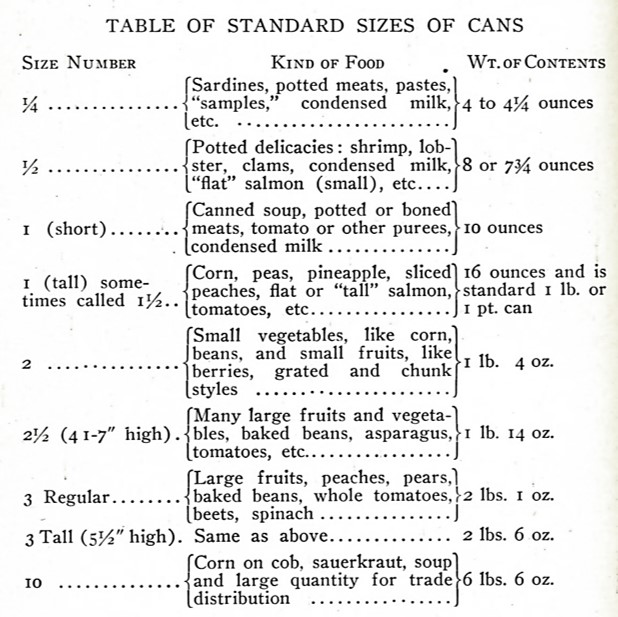
Can sizes today seem like they change constantly. I remember when tuna came in 6 3/4 ounce cans, more recently the cans were 6 ounces, and now they are just 5 ounces. Similarly, I remember when commercially-canned peaches were in 1 pound (16 ounce) cans; now the cans are only 15 ounces.
A hundred years ago there were standard can sizes, and people often referred to cans by their size number. For example, I’ve seen old recipes which call for 1 – No. 3 can of tomatoes. There actually still are standard can sizes, but the size numbers aren’t something on the tip of consumers’ tongues like they once were.

