Poem in Hundred-year-old Cookbook

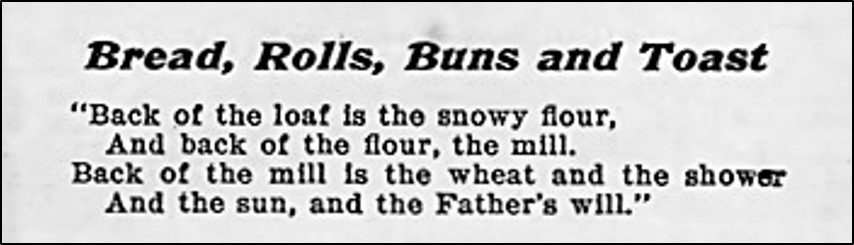
poem titled, "Bread, Rolls, Buns and Toast"
Source: The Old Reliable Farm and Home Cook Book (1919)

Old cookbooks sometimes have poems, such as this one in a 1919 cookbook. It was at the beginning of a chapter containing bread recipes. The poem lays out the path involved in creating a bread ingredient (flour). People were so much closer to agrarian life back then, and had a clear understanding of relationship between the weather, wheat production, the milling process, and flour. Would a similar poem resonate with cookbook users today?

Old-fashioned Fried Corn

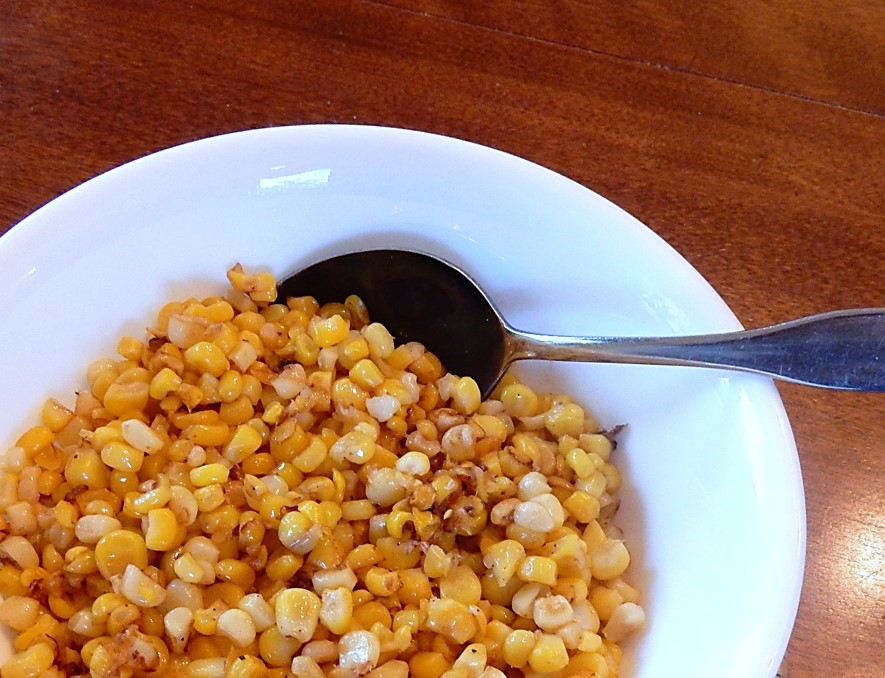
fried corn in bowl with spoon

August is my favorite month when it comes to cooking and eating. Gardens and farmers markets are filled with a bounty of fresh vegetables and fruits at their prime – and, to me, corn on the cob is the quintessential August vegetable.  But, I also am always looking for different ways to serve corn. So I was pleased to find a classic, very easy, hundred-year-old recipe for Fried Corn.

The corn is fried in a little butter, then seasoned with just a bit of cream, salt and pepper. Frying the corn, removes some of the liquid and brings out its natural sweetness Sometimes simple is best.

Here’s the original recipe:

fried corn in bowl
Source: The Old Reliable Farm and Home Cook Book (1919)

And, here’s the recipe updated for modern cooks:

Fried Corn

  • Servings: 3-4
  • Difficulty: easy
  • Print

1 tablespoon butter

4 ears of corn (about 2 cups after cut off cobs)

1 tablespoon cream

salt and pepper

Cut corn off the cob. Melt butter in a skillet. Add corn then, using medium heat, fry the corn until browned, while stirring frequently (approximately 8-10 minutes). Add cream, and sprinkle with salt and pepper to season; stir. Remove from heat and serve.

Hundred-Year-Old Recommendation to Eat Bread Crusts

two bread crusts on a cutting boardSome people eat bread crusts and consider them the best part of a loaf of bread; others toss them in the trash. Apparently, the value of bread crusts is a long-standing question. Here are some excerpts from a 1919 magazine article:

“Eat the Crusts”

“Eat the crusts, dear,” grandfather used to say to me when on those delightful never-to-be forgotten childhood visits to grandpa’s house.

Whether it was because of the dear old man’s admonition and the love I bore I don’t know, but I do know that I have always eaten crusts and do yet.

In childhood I ate crusts because my elders said it was right to eat them, and as I grew up and went to high school and college, I took a more than passing interest in chemistry, and then I discovered the real reason why one should eat bread crusts. The heat of the oven has a particular effect on the starch and sugar contained in the flour of the wheat and changes it into dextrine, and the greatest amount of dextrine is found in the crusts, so that the crusts of bread are the most easily taken care of by the stomach.

American Cookery (October, 1919)

Old-fashioned Deviled Tomatoes

Fried tomato slices with deviled egg topping

I recently found a delightful hundred-year-old recipe for Deviled Tomatoes. Tomato slices sautéed in butter are topped with a lively deviled egg mixture.

Here is the original recipe:

recipe for deviled tomatoes
Source: American Cookery (November, 1919)

Here’s the recipe updated for modern cooks:

Deviled Tomatoes

  • Servings: 5 - 7
  • Difficulty: moderate
  • Print

4 medium tomatoes, sliced

1/3 cup flour

3 tablespoons butter + 1 tablespoon butter, softened

1 teaspoon powdered sugar

2 teaspoons dried mustard

dash salt

dash cayenne pepper

yolk of 1 hard-boiled egg, mashed

1 tablespoon vinegar

2 tablespoons green pepper, finely chopped

2 tablespoons onion, finely chopped

2 tablespoons parsley, finely chopped

Coat the tomato slices with flour. Then, melt 3 tablespoons butter in a large skillet, and sauté the flour-coated tomato slices for two minutes on each slide or until lightly browned. Drain on paper towels.

In the meantime, in a small bowl cream together 1 tablespoon butter, powdered sugar, dried mustard, salt, cayenne pepper, and mashed hard-boiled egg yolk. Add vinegar and stir to combine. Stir in green pepper, onion, and parsley. Heat until warm (on stove or in microwave).

To serve, put a heaping teaspoonful of the egg mixture on top of each tomato slice.

1919 Swans Down Cake Flour Advertisement

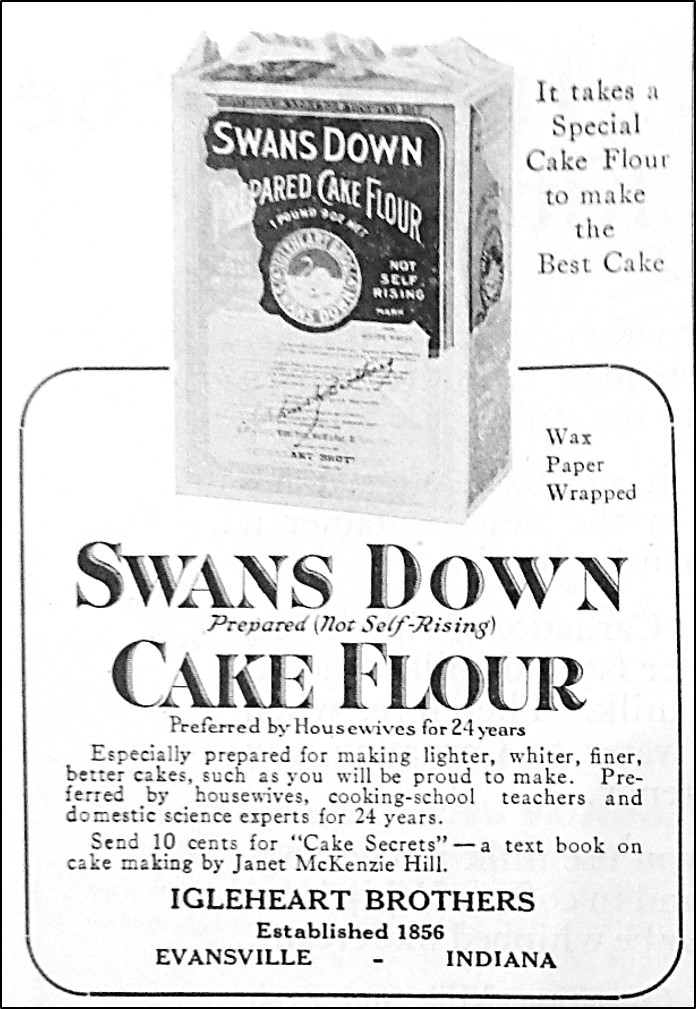
image of box of cake flour in an advertisement
Source: American Bakery (August/September, 1919)

Old advertisements provide lots of information about which cooking ingredients were available at different periods of time – and they also sometimes provide information about how those goods were packaged. The waxed paper wrapper surrounding the Swans Down Cake Flour package was obviously seen as a key selling point in this 1919 advertisement.

Old-fashioned Blueberry Pie with Meringue

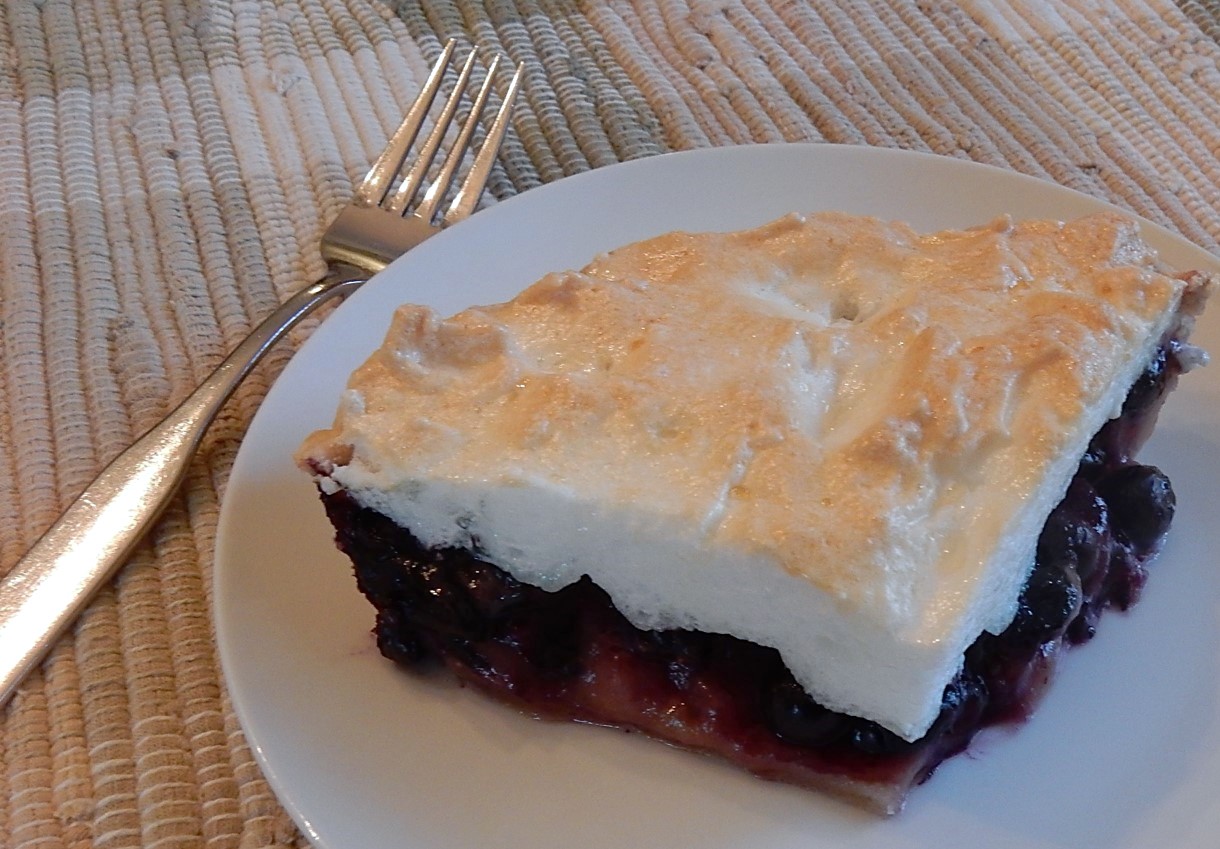
slice of pie

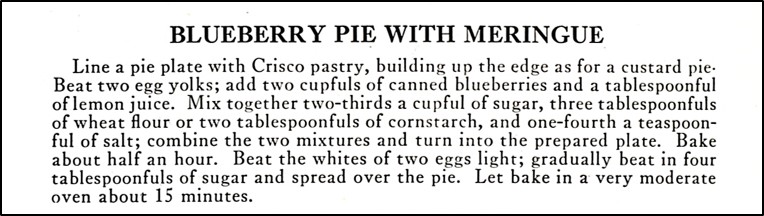
I recently found a 1919 recipe for Blueberry Pie with Meringue that made my mouth water – yet it called for canned blueberries (which didn’t seem very appealing to me). A hundred years ago blueberries were available only a few weeks a year, and to preserve the goodness of the berries for later use, many were canned. As a result, cooks needed recipes that called canned blueberries.

recipe for blueberry pie with meringue
Source: Recipes for Everyday by Janet McKenzie Hill (1919)

I generally permit myself to make only minimal changes when making old recipes, but there exceptions to every rule.  Since I just couldn’t bring myself to use canned blueberries – and since I really wanted to try this recipe, I decided to substitute fresh berries for the canned ones.

The recipe turned out well – though the baking time was longer when fresh blueberries are used. The blueberries in the filling were embedded in a lovely, almost custard-like sauce; and, when topped with an airy meringue, it created an irresistible pie.

Here is the recipe updated for modern cooks.

Blueberry Pie with Meringue

  • Servings: 5-7
  • Difficulty: moderate
  • Print

2 cups blueberries

2 egg yolks

1tablespoon lemon juice

2/3 cup sugar

3 tablespoons flour or 2 tablespoons corn starch

1/4 teaspoon salt

1 8-inch (small) pie shell

Meringue

2 egg whites

4 tablespoons (1/4 cup) sugar

Preheat oven to 425° F. Put egg yolks, lemon juice, sugar, flour (or corn starch) and salt in a mixing bowl; beat until thoroughly combined.  Crush about a quarter of the blueberries with a fork or your fingers, then stir all the blueberries into the sugar mixture. Pour the blueberry mixture into the pie shell. Place in oven, and bake for 10 minutes. Reduce heat to 350° F. Cook an additional 35 minutes or until the filling thickens. (As the filling cooks, it will first be very juicy; and then will become thicker.)

In the meantime, make the meringue. Place egg whites in a bowl, and beat the egg whites until they form stiff peaks. Gradually add sugar while continuing to beat. Then spoon on top of the pie and swirl. Reduce oven temperature to 325 ° F. Place pie back in the oven and bake for an additional 15 minutes or until the meringue is lightly browned.

Kitchen Cabinets a Hundred Years Ago

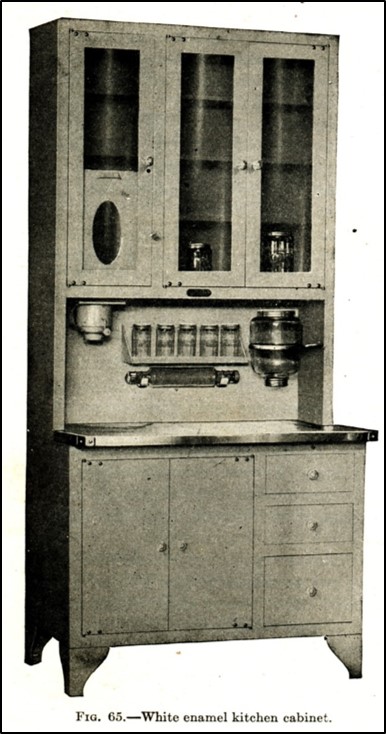
enambled metal kitchen cabinet
Source: Lippincott’s Home Manuals: Housewifery by Lydia Ray Balderston (1919)

Today built-in kitchen cabinets are the norm. A hundred years ago “modern” kitchen cabinets were moveable.

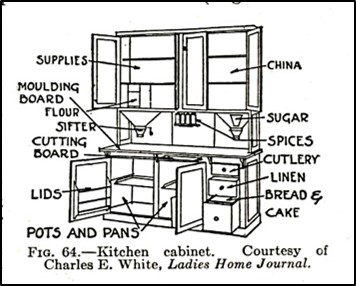
diagram of kitchen cabinet
Source: Lippincott’s Home Manuals: Housewifery (1919)

Here are some excerpts from the description of kitchen cabinets in a 1919 book:

Kitchen cabinets are combined tables and closets which have been constructed as the outcome of efficiency methods. They represent grouping about the working center the supplies and tools that belong to the work of that center.

Such cabinets may be purchased today in wood or in metal which has an enamel painted or enameled. The wood cabinets were the first on the market, and represent the same points in capacity and convenience that the metal ones do, but the question of cleanliness rather turned the attention to the metal ones. The metal cabinets are more noisy than the wooden ones, but are more likely to be proof against vermin, rats, and mice, and may be easily cleaned by water without becoming water-soaked. Metal cabinets are also nonabsorbent to odors and to any spilled food.

Lippincott’s Home Manuals: Housewifery by Lydia Ray Balderston (1919)