Source: The Daily Argus-Leader Home Economics and Cook Book, Sioux Falls, South Dakota (1925)
Old cookbooks have lots of hints and tips. A 1925 cookbook supplement in the Sioux Falls, South Dakota newspaper tells readers to wait to form an opinion of an egg until something happens with the lid. But the old newsprint is blurry and I’m not sure what the last word says. Is it “off”? . . . or “on”? . . or perhaps “of”? (which makes no sense). It may be trying to say that you can’t tell how well fried eggs are going to turn out until the pan lid is removed (assuming that a lid was put on the pan as part of the process of frying the eggs). Or maybe the egg’s lid” is the shell, and cooks can’t really judge the quality of an egg until the egg is cracked.
Bottom line, I have no idea what this tip means, but I’ve spent much more time than I should have trying to decipher it.
A hundred years ago alcohol was prohibited in the United States. The prohibition era went from 1920 to 1933. Cookbooks published during that time period seldom contain recipes that call for alcohol, but there are recipes for lots of nonalcoholic drinks. I recently came across a recipe for Dry State Punch in a 1925 cookbook. I was intrigued, and decided to give it a try.
I made this recipe on a 90° day and it was delightful. It’s a perfect summer drink. The Dry State Punch was zesty and refreshing. It contains grapefruit juice, orange juice, lemon juice, and pineapple juice.
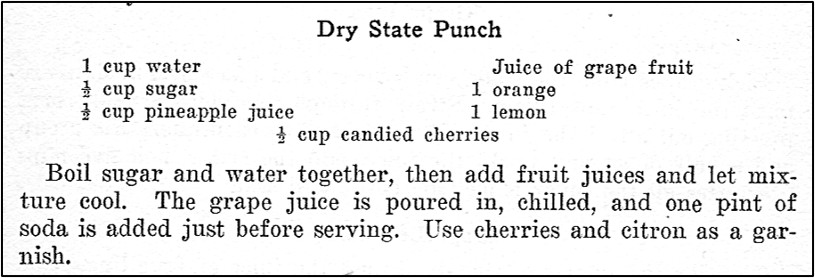
Here’s the original recipe:
Source: Home Makers’ Cooking School Cook Book (1925)
It is a little confusing how the list of ingredients calls for “juice of grape fruit,” but the directions call for adding “grape juice.” I decided to go with grapefruit juice, but am not absolutely certain that is what the recipe author intended. I added all the fruit juices to the sugar syrup while it was still hot, and did not wait until it cooled to add the grapefruit juice.
I used lemon-lime soda when I made this recipe. Either candied cherries or Maraschino cherries would work as a garnish. Citron is listed as a garnish in the directions, but I didn’t use it.
I didn’t fresh-squeeze either the grapefruit or orange juice, but rather used juice that I bought at the store. I did an online search and found out how much juice a typical grapefruit and orange contain, and then went with that amount. For the pineapple juice, I opened a can of pineapple chunks and poured the juice off and used it. (I did squeeze the lemon to get the lemon juice.)
Put the sugar and water in a saucepan, bring to a boil using medium heat. Remove sugar syrup from the heat, and add the grapefruit juice, orange juice, and lemon juice. Chill. Just before serving, add lemon lime soda. Garnish with cherries.
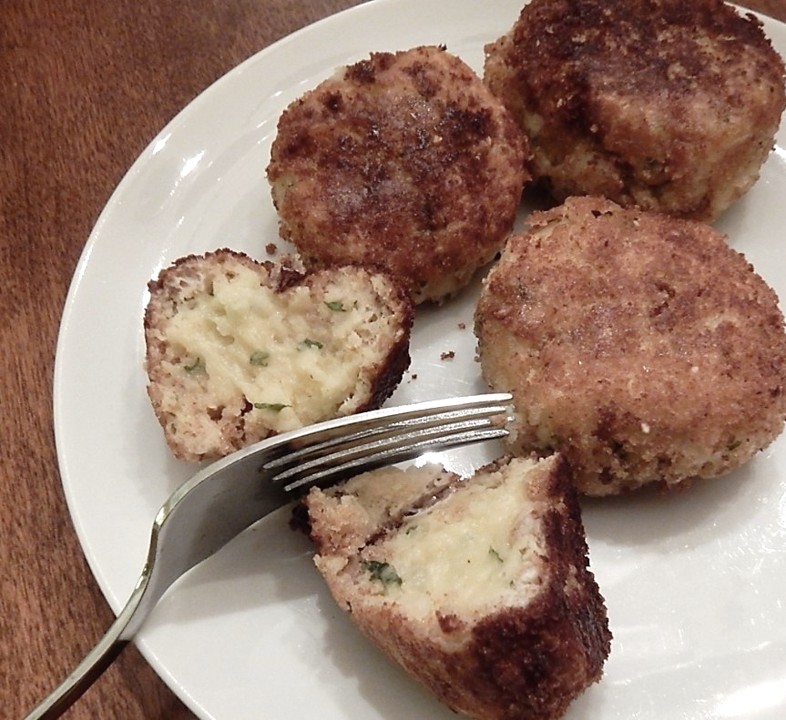
A hundred-years-ago croquettes were considered a great way to use up left-overs. The texture and taste of croquette was very different from the original food, and “the crisp crust make these little bits acceptable.”
Here are some tips in a 1925 cookbook for making croquettes:
The shape of a croquette adds to its attractiveness or takes away from it. It should never look like a meat cake. If they are meant to be balls, they should be perfectly shaped, or if they are meant to be cone shaped, they should be so carefully handled that they will hold up. It takes considerable practice to make really good looking croquettes.
To make good croquettes, the meat or fish must be minced quite fine and all the ingredients so well combined that the flavors are thoroughly blended. The mixture must be as moist as it is possible to handle without spoiling the shape of the croquette. The cork shaped ones are the easiest to handle. The mixture should be dipped in egg and breaded carefully and then chilled. They are easier to handle in the frying basket if taken out of the refrigerator and will hold together in the fat better.
The sweet croquette is often served as a dessert. After a luncheon of a simple salad, the sweet croquette is just heavy enough to round out the meal.
Home Makers’ Cooking School Cook Book (1925)
I looked through my old croquette posts to find a photo for this post, and realized that none of the croquettes in my pictures are perfectly shaped. Sigh . . .I have only made croquette recipes a few times for this blog because I think that they might not be very healthy since they generally are fried in fat, and because I worry that they will fall apart while cooking. Maybe I’ll have to try making a croquette recipe again sometime and follow the tips in the old cookbook.
In case you are interested, here are the croquette recipes that I have previously made:
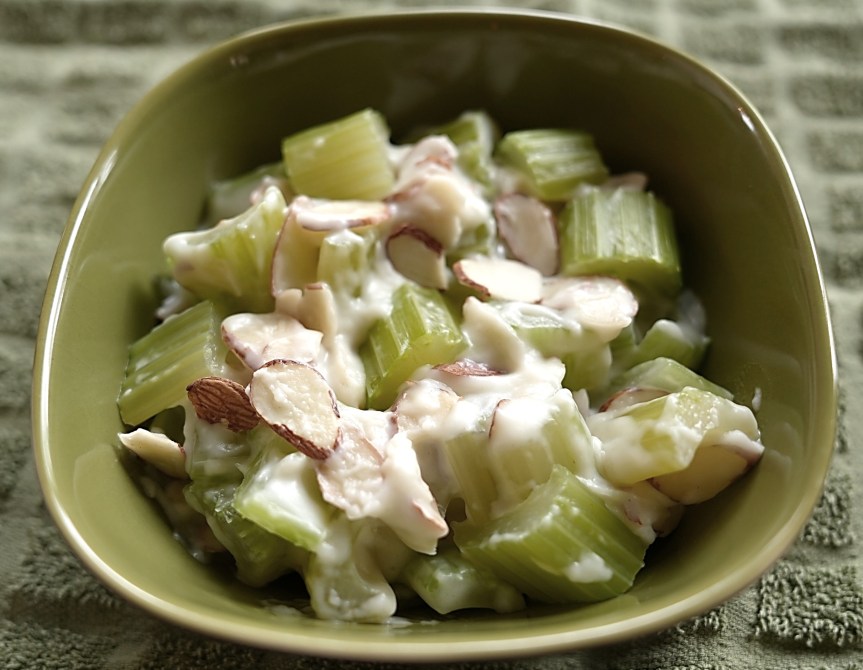
A hundred years ago, cooked celery was a commonly served vegetable. Today, not so much. But, when I saw I hundred year old recipe for Creamed Celery with Almonds, I decided to give it a try. The subtle sweetness of the celery was lovely, and sliced almonds added a bit of crunch. I feel certain that I’ll make this recipe again. Making this side dish reminded me how much I enjoy this tasty and nutritious vegetable.
Here’s the recipe updated for modern cooks:
Source: The Home Makers’ Cooking School Cook Book
I used half milk and half celery stock when I made this recipe. This made the sauce lighter and more flavorful.
1 cup celery stock (Reserve 1 cup of the liquid that the celery was boiled in.)
1/3 cup almonds, sliced
Put the sliced celery in a saucepan; barely cover with water. Bring to a boil using high heat, then reduce heat and simmer until the celery is tender (about 10 minutes). Remove from heat and drain, reserving 1 cup of the liquid.
In the meantime, melt butter in another saucepan, then stir in the flour, salt, and pepper. Gradually, add the milk and celery stock while stirring constantly. Continue stirring until the white sauce begins to thicken. Stir in the cooked celery and the almonds.
I have way too many kitchen utensils with a disorganized drawer filled with soup ladles, spatulas, a pizza cutter, a can opener, plastic and wooden mixing spoons, knives, vegetables peelers, a nutcracker with nut picks, a meat thermometer, and much more. And, that’s just the beginning. I also have a plastic container on a shelf in a bottom cupboard filled with less used kitchen utensils, while my least used utensils are stashed in a box in the basement. A hundred-year-old cookbook stressed the importance of having a few good utensils (and not having a plethora of seldom used ones):
Adequate equipment does not mean having a large number of utensils for every process; it does mean, however, having enough so that the business of cooking does not become too irksome. Beating egg whites with a fork is a long process. It takes so long that as a rule the woman usually becomes tired long before the eggs are beaten enough and the result is an inferior product. An egg beater should be among her kitchen utensils. Hundreds of examples could be given to illustrate just that one point. The other extreme of course is just as bad, and burdening yourself with useless utensils is something to be guarded against. Good housekeeping does not consist of a well-stocked utensil closet. It is better to have a few good utensils and then make each one do as many tasks as possible. It isn’t the number of utensils that counts, but the number of uses to which each can be put that determines the wise choice.
Whew – It’s zucchini season and I’m overwhelmed with the squash. So, I started looking through my hundred-year-old cookbooks for a summer squash recipe. I was pleased to find directions for making a Sautéed Summer Squash Casserole. It called for sautéed squash, grated cheese, chopped hard-boiled eggs, and tomato sauce. The casserole directions were part of a recipe for Sautéed Squash, which also contained a possible luncheon menu that included the squash dish.
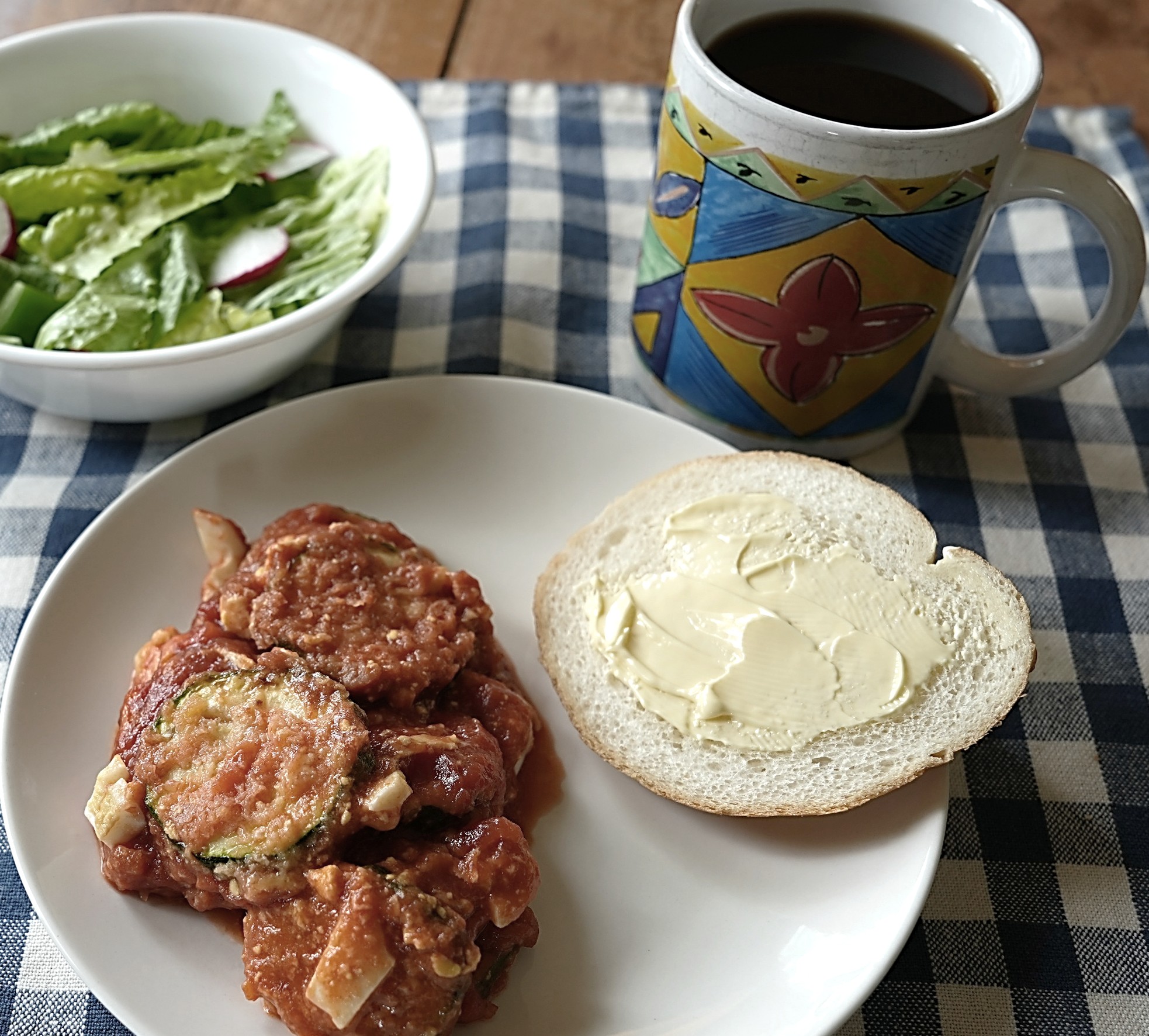
I decided to make the suggested menu for lunch recently. My husband and I had the Sautéed Summer Squash Casserole, a green salad, bread with butter, and coffee. It was a nice lunch. The casserole was good, with the tomato flavor predominating. Personally, I might have liked the flavor better if the cheese and some of the other flavors had been more noticeable.
My mother-in-law had a zucchini casserole recipe that called for boiling sliced zucchini before adding to the casserole, while this recipe called for sautéing the slices. The squash slices are definitely firmer when sautéed rather than boiled, which makes a nice texture.
Here’s the original recipe:
Source: The Home Makers’ Cooking School Cook Book (1925)
When I updated the recipe, and throughout this post, I spelled “sauted” as “sautéed.” I believe that is the preferred spelling, though both spellings can be found on current websites.
Since the original recipe does not include amounts, I took a stab at guessing the amounts when updating the recipe.
2 small summer squash (zucchini, yellow squash, etc.)
1 egg, beaten
1 cup fine white bread crumbs (I tore up 2 slices of bread, and put them in a blender to pulverize them.)
shortening/oil
2 hard-boiled eggs, chopped
1 cup grated cheese (I used cheddar.)
1 1-lb. can tomato sauce
Preheat oven to 375° F. Wash and cut the squash into 1/2-inch slices; dip in the beaten eggs, and coat with bread crumbs. Set aside.
Heat 1/2 inch of shortening or oil in a large skillet. Carefully place the breaded squash slices in the pan in a single layer. Depending upon pan size, the slices may need to be cooked in several batches. Sauté for about two minutes or until the bottom side of each slice is lightly browned, then gently turn and fry until the other side is browned. Remove from pan and drain on paper towel.
Put a thin layer of tomato sauce in the bottom of a casserole dish. (I used a 1-quart dish.) Add a layer of the fried squash slices, then add layers of chopped hard-boiled eggs and grated cheese; cover with tomato sauce. Fill the casserole with additional layers of fried squash slices, chopped hard-boiled eggs, grated cheese, and tomato sauce. Bake in the oven until the mixture is hot and bubbly.
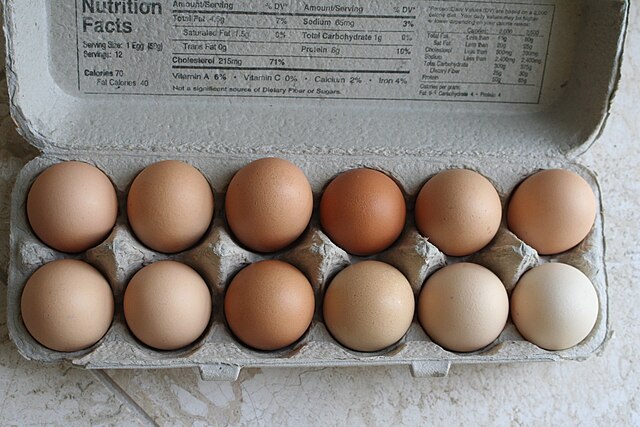
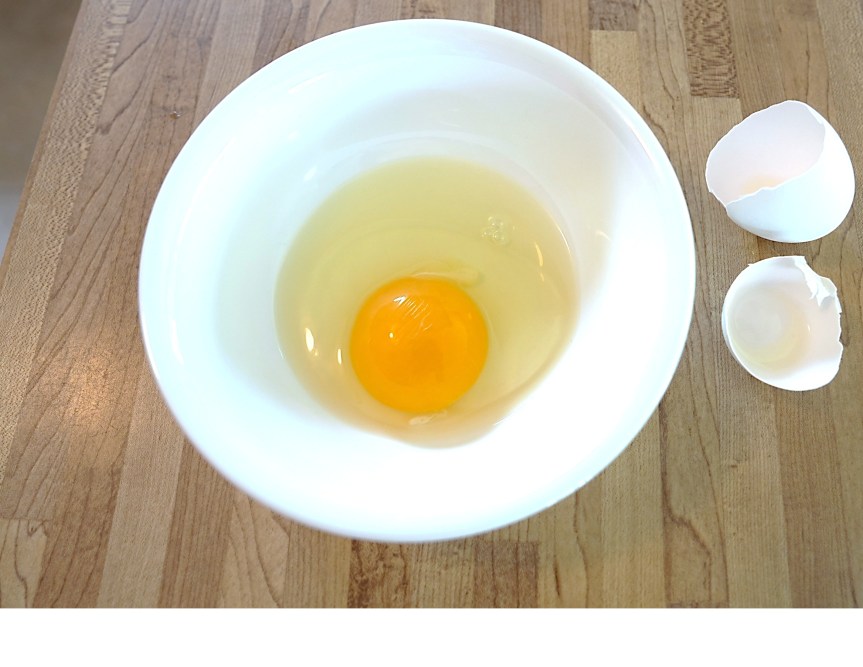
Today, there is wide variation across countries in whether eggs are washed. Eggs naturally have a coating on them called a cuticle that seals pores in the shell and keeps bacteria out. When eggs are washed, the eggs are very clean, but the cuticle coating is removed and the eggs must be refrigerated to prevent spoilage. In the United States, federal regulations require that eggs be washed and sanitized; therefore, they need to be refrigerated. In many other countries, including much of Europe and Asia, as well as much of Africa and South America, eggs are not washed or refrigerated.
Practices have changed in the U.S. over the last century. A hundred years ago, eggs were not washed until just before using. According to a 1925 home economics textbook that was published in the U.S.:
Washing removes a coating on eggs-shells. This coating prevents the entrance of microorganisms. Hence eggs should not be washed until they are to be used.
School and Home Cooking (1925) by Carlotta C. Greer




 I have way too many kitchen utensils with a disorganized drawer filled with soup ladles, spatulas, a pizza cutter, a can opener, plastic and wooden mixing spoons, knives, vegetables peelers, a nutcracker with nut picks, a meat thermometer, and much more. And, that’s just the beginning. I also have a plastic container on a shelf in a bottom cupboard filled with less used kitchen utensils, while my least used utensils are stashed in a box in the basement. A hundred-year-old cookbook stressed the importance of having a few good utensils (and not having a plethora of seldom used ones):