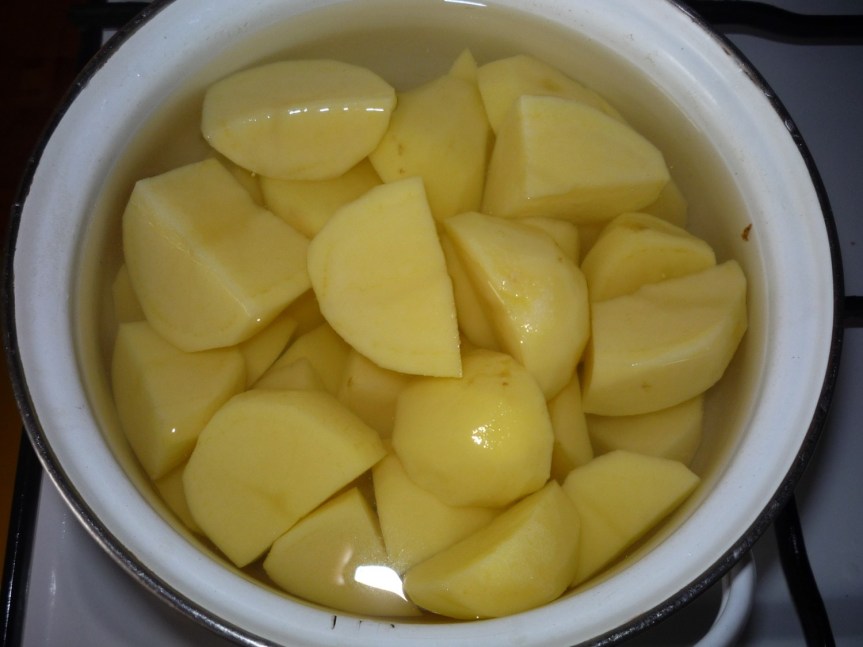
 I often make boiled potatoes. I think that they are out of style and considered old-fashioned; but, to be totally honest, I enjoy meals that feature meat and boiled potatoes. A hundred years ago boiled potatoes were more popular than they are now. Here are some 1921 tips for cooking potatoes:
The method used in cooking potatoes has much to do with the food value. Baking or boiling “in their jackets” saves the food value. Peeling and then boiling causes some loss of the mineral matter and protein, since these foodstuffs are found just under the skin of the potato and may be lost when it is pared, unless very thin peelings are removed.
Potatoes, to be cooked, should be put in boiling water, not in cold, as soaking peeled potatoes in cold water draws out the starch and also causes a loss of protein and mineral matter. Potatoes should never soak in cold water after they are peeled, if all of the food value is to be saved. If they are old and withered, they should be freshened by soaking before the skin is removed. Potatoes should be removed from the boiling water as soon as they are done.
Baked potatoes, when done, should have the skin broken or pierced with a fork to all the escape of the steam, which would cause the potato to be soggy.
Elementary Home Economics (1921) by Mary Lockwood Matthews
I just realized that I don’t follow these directions. I generally peel potatoes before boiling them – and I put them in cold water which I then heat. For holidays, such as Thanksgiving, when I make a lot of boiled potatoes to mash for mashed potatoes, I’ll peel the potatoes several hours ahead of time, and let them sit in cold water until it is time to cook them. Probably many of the nutrients are probably lost . . sigh.
And, when I make baked potatoes, I pierce the potatoes with the point of a sharp knife prior to baking – to allow steam to escape and keep the potatoes from exploding – rather than waiting until they removed from the oven.


 A century ago people believed that it was better eat different foods in different seasons. Here’s what a hundred year old cookbook said:
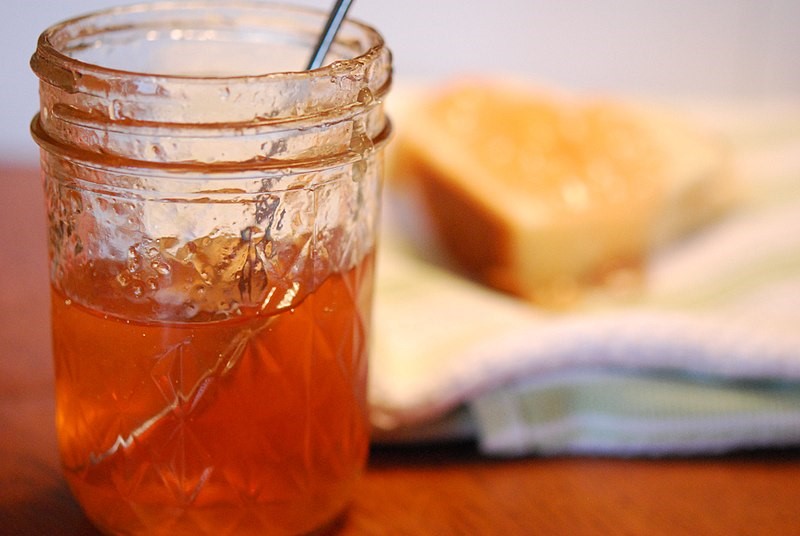 When making jams and jellies, pectin helps make the juice “jell.” A hundred years ago commercial liquid and powdered pectin was not available. Rather cooks used fruits with naturally occurring pectin – and often combined several fruits, including one with a lot of pectin, when making jelly. Here’s what it said in a hundred-year-old home economics textbook:
 Until I saw directions for packing sandwiches in a hundred-year-old cookbook, I never thought about how people packed sandwiches to take to school or work back then:
 I’ve seen several hundred-year-old articles which state that coffee is bad for your health, so I was surprised to see information in a 1921 cookbook about the benefits of coffee. Here is what it said: