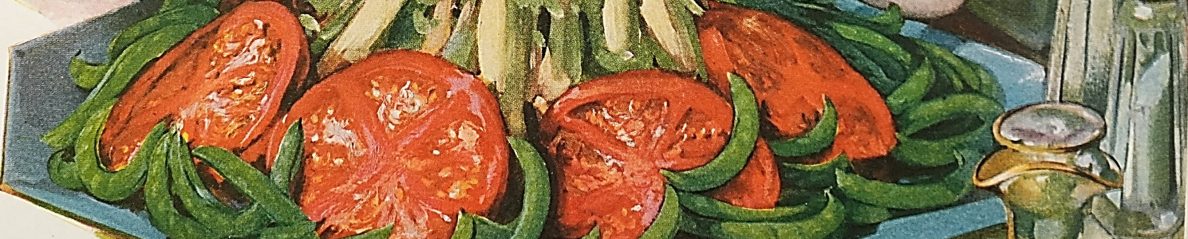

The 1921 edition of the Boston Cooking-School Cook Book lists 12 ways to preserve food. Some still are commonly used – others less so.
Ways of Preserving
- By Freezing. Foods which spoil readily are frozen for transportation, and must be kept packed in ice until used. Examples: Fish and poultry.
- By Refrigeration. Foods so preserved are kept in cold storage. The cooling is accomplished by means of ice, or by a machine where compressed gas is cooled and then permitted to expand. Example: meat, milk, butter, eggs. etc.
- By Canning. Which is preserving in air-tight glass jars, or tin cans hermetically sealed. When fruit is canned, sugar usually added.
- By Sugar. Examples: fruit-juices and condensed milk
- By Exclusion of Air. Foods are preserved by exclusion of air in other ways than canning. Examples: grapes in bran, eggs in lime water, etc.
- By Drying. Drying consists in evaporation of nearly all moisture, and is generally combined with salting, except in vegetables and fruits.
- By Evaporation. There are examples where considerable moisture remains, through much is driven off. Example: beef extract.
- By Salting. There are two kids of salting, –dry, and corning or salting in brine. Examples: salt, codfish, beef, pork, tripe, etc.
- By Smoking. Some foods, after being salted, are hung in a closed room for several hours, where hickory wood is allowed to smother. Examples: ham, beef, and fish.
- By Pickling. Vinegar, to which salt is added, and sometimes sugar and spices, is scalded, and cucumbers, onions, and various kinds of fruit are allowed to remain in it.
- By Oil. Examples: sardines, anchovies, etc.
- By Antiseptics. The least wholesome way is by the use of antiseptics. Borax and salicylic acid, when employed, should be used sparingly.
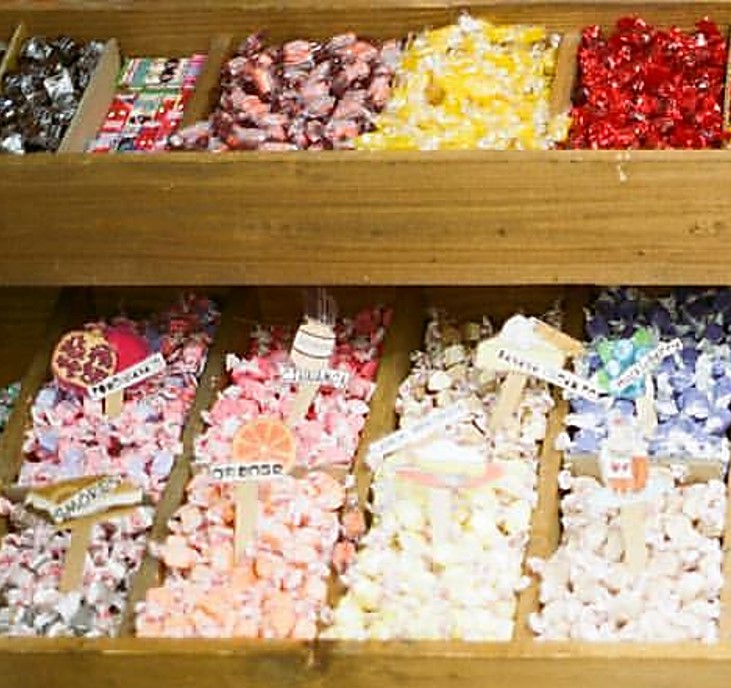 When my children were younger, I always worried that they would get sick from eating too much candy after trick or treating. I wondered – how much candy is too much? And, should I be firm and ration the candy they’d collected? . . . or was it okay if I let them binge? Here’s what a hundred-year-old home economics textbook says:
 A hundred years ago people believed that food should be well-chewed before swallowing, and that eating food too rapidly was not healthy. Here is what it said in a 1921 book:
 Here’s what a 1921 cookbook had to say about how to substitute various sweets for sugar in recipes:
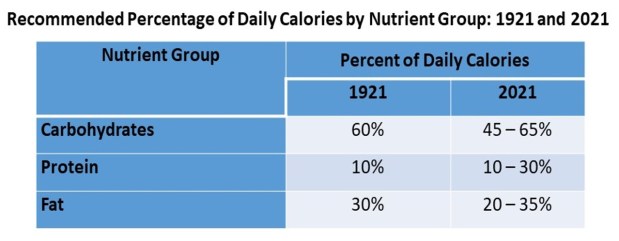 Both a hundred years ago and now, there were recommendations for distributing calories across nutrient groups.
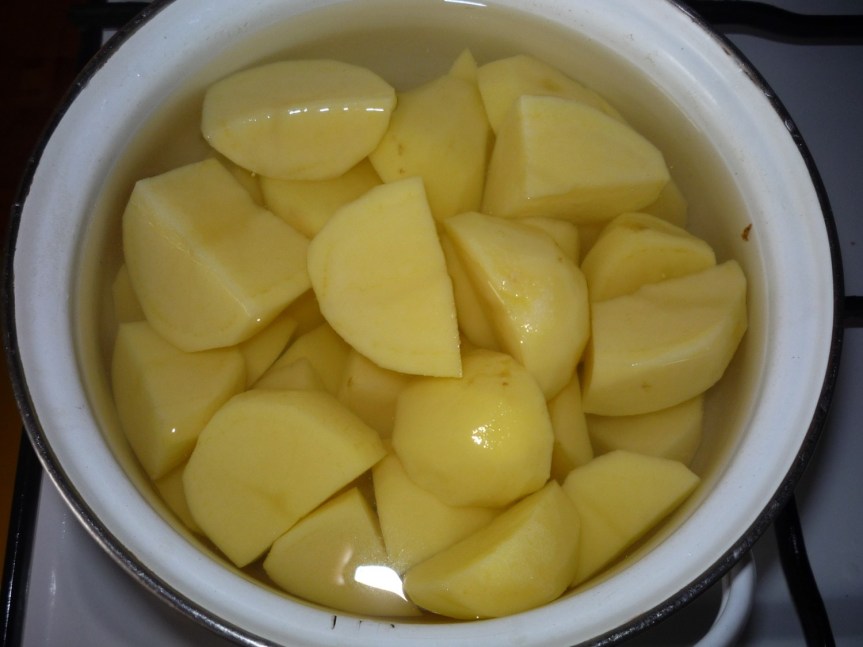 I often make boiled potatoes. I think that they are out of style and considered old-fashioned; but, to be totally honest, I enjoy meals that feature meat and boiled potatoes. A hundred years ago boiled potatoes were more popular than they are now. Here are some 1921 tips for cooking potatoes: