How to Crack Black Walnuts

16-year-old Helena Muffly wrote exactly 100 years ago today: 

Thursday, November 9, 1911: Nothing to write.

Her middle-aged granddaughter’s comments 100 years later:

A few weeks ago Grandma mentioned hulling walnuts. At that time I gathered some black walnuts and hulled them. I then spread them out to dry. My husband I have now cracked some of them and taken the nut meats out.

We put them into a vice to crack them–and had problems with the walnuts flying all over the garage.

We then covered the walnuts with a piece of cloth before cracking. This worked really well at containing everything. Once the shell was cracked it was easy to get the nuts out.

The walnuts tasted great–just like I’d remembered from my childhood. The flavor is more intense than grocery store walnuts–but it is really good.

Traditional Apple Betty Recipe

16-year-old Helena Muffly wrote exactly 100 years ago today: 

Thursday, October 19, 1911: That’s all.

Her middle-aged granddaughter’s comments 100 years later:

Since Grandma didn’t write anything of substance a hundred years ago today, I’m going to share another very old recipe.

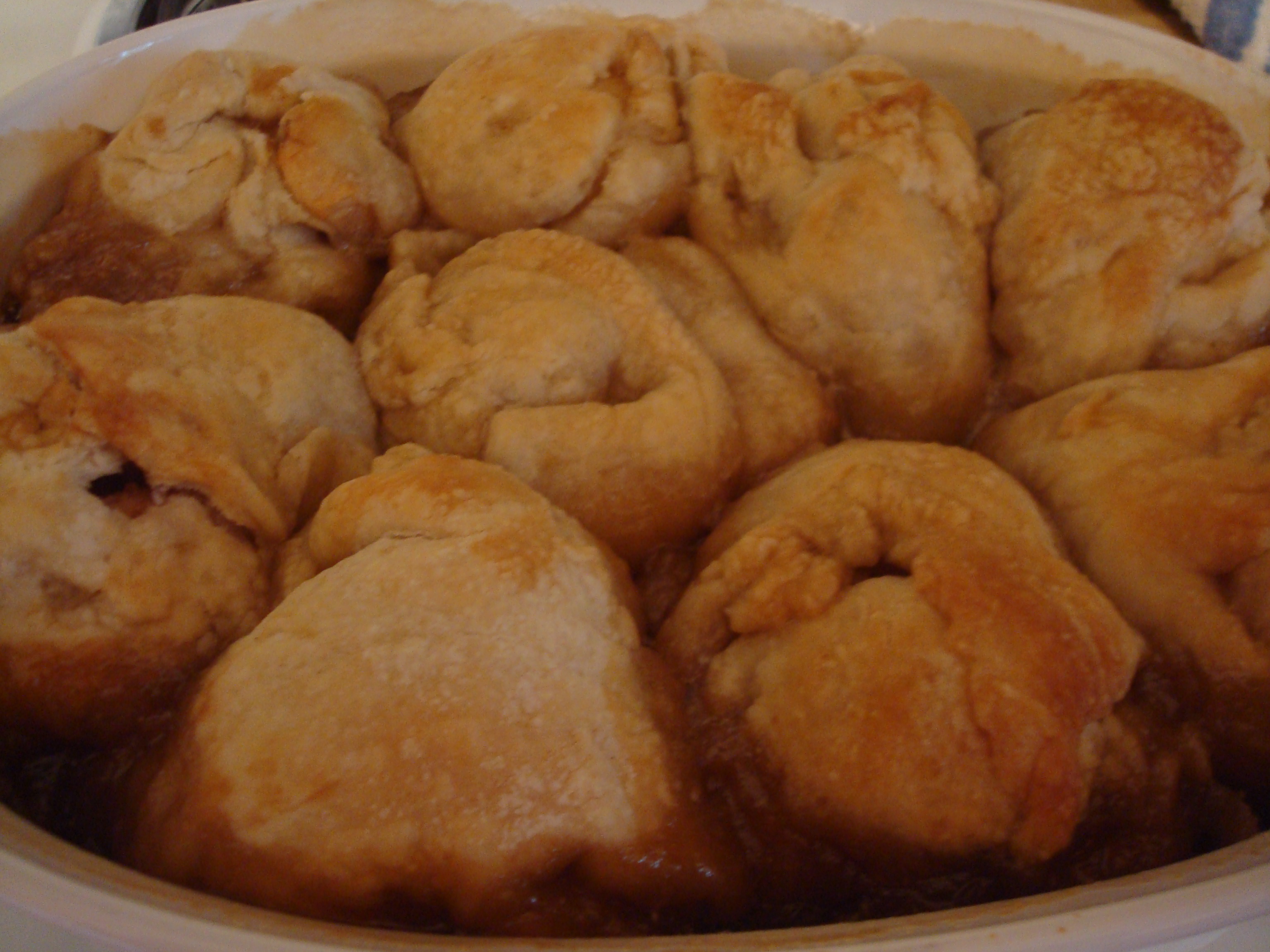
We often ate Apple Betty during the fall and winter when I was a child. It always seemed very old-fashioned and I’d guess that Grandma ate similar dishes when she was young.

When I was small, we’d save bread crusts and tear them into small pieces. We’d put the torn bread into an open canister to dry. Whenever we got enough for Apple Betty, we’d make it.

Farmers always had lots of apples in those days from their orchards, and I guess this was a way to use both the apples and the leftover bread crusts.

We’d eat Apple Betty as a side dish during the main meal–though it could be eaten as a dessert. After I got older. I guess our family felt more prosperous and we generally threw bread crusts out—and we no longer made this recipe.

 Apple Betty

2 cups coarse dry bread crumbs

4 cups, sliced, peeled tart apples (5 to 7 medium apples)

1/2 cup sugar

1/4 teaspoon cinnamon

1/4 teaspoon salt

3 tablespoons lemon juice (1 lemon)

1/4 cup water

2 tablespoons butter

Preheat oven to 350 degrees. Put 1/3 of the bread crumbs into the bottom of a buttered 6 to 8 cup casserole dish, then cover with half of the apples. Mix the sugar, cinnamon, and salt together, and sprinkle half the mixture over the apples. Add another layer of bread crumbs and another of apples, and sprinkle with the rest of the sugar mixture. Top with remaining crumbs, pour lemon juice and water all over, and dot with butter. Cover and bake for 25 minutes.

Yield: 6 to 8 servings

When I recently made this recipe, rather than sitting the bread crumbs out to dry, I tore several slices of fresh  bread into pieces and put them on a cookie sheet. I then dried the very coarse crumbs for about one-half  hour in a 175 degree oven.

My husband Bill said that the Apple Betty reminded him of bread pudding—though the bread is definitely drier with this recipe than is typical of a bread pudding.

The dish can be eaten either hot or cold.  I prefer it hot, but Bill ate cold left-over Apple Betty and in no time it was gone. This historic recipe is a keeper.

Old Fried Winter Squash Recipe

16-year-old Helena Muffly wrote exactly 100 years ago today: 

Tuesday, October 17, 1911: Not so very much to write about. It is raining tonight.

Her middle-aged granddaughter’s comments 100 years later:

On days when Grandma wrote little, I often wish that she’d somehow known that someone would be reading the diary a hundred years later who wanted to know more about the mundane, routine aspects of her life—like what did her family eat for supper on a rainy evening in October?

Since she didn’t tell us what they ate, I’ll take a guess–

When I was growing up we often ate fried winter squash during the fall and winter. My sense is that this is a very traditional Pennsylvania food that Grandma would have eaten when she was young:

Fried Winter Squash

3/4  pound winter squash (butternut, hubbard, etc.), peeled and thinly sliced (approximate)

Lard or other shortening

salt and pepper

Melt shortening in skillet. It should be about 1/4 inch deep. Put 1 layer of squash in pan. Cook for about 5 minutes; turn squash with a fork. Cook  another 5 – 8 minutes; or until squash is tender. Remove squash from pan and drain on paper towels. Put on serving plate. Sprinkle with salt and pepper; serve immediately.

Yield: 2 servings

My husband and I really enjoy this recipe. It is very simple—and it really brings out the wonderful taste of the squash. The amounts are very flexible for this recipe. I usually slice enough squash to cover the bottom of the skillet.

In Grandma’s day they would have fried the squash in lard, but shortening works just fine.

I use butternut squash when I make this recipe—but butternut squash (somewhat surprisingly to me, since it’s so ubiquitous today) was not widely available until the 1940s. A hundred years ago, they probably used hubbard squash, Long Island cheese squash (this is a white squash that looks sort of like a pumpkin), or other traditional variety.

Old-Fashioned Brown Sugar Cookie Recipe

16-year-old Helena Muffly wrote exactly 100 years ago today: 

Saturday, September 23, 1911: Mosey got me started in the arts of cookie making. As a whole the result wasn’t’ so bad for all that matters any way I don’t like that kind of employment very well because my achievements in that direction would be very apt to prove failures oftener than successes.

Her middle-aged granddaughter’s comments 100 years later:

I love all the different names Grandma uses when writing about her family and friends. You can get a sense how Grandma is feeling based upon what she calls people. Sometimes she calls her sister Ruth, “Rufus” and today her mother is Mosey. Mosey sounds like an affectionate term–though it sounds like Grandma didn’t like to cook.

I wonder what kind of cookies she made.. . . Mmm . . . Maybe she made Brown Sugar Cookies.

Here’s a wonderful old recipe for Brown Sugar Cookies.  This is one of my children’s favorite cookies. They are more raised and softer than is typical of many modern drop cookie recipes—but they are superb.

Brown Sugar Cookies

1 cup lard (or other shortening)

2 cups brown sugar

2 eggs

1/2 cup sour milk*

1 teaspoon baking soda

1/2 teaspoon salt

3 1/2 cups flour

Preheat oven to 400 degrees. Mix the lard/shortening, brown sugar, eggs, sour milk, baking soda, and salt together. Add flour and stir until combined. Chill 1/2 hour. Drop rounded teaspoons of dough on greased cookie sheet. Bake 8 – 10 minutes, or until light browned.

Makes approximately 4 dozen cookies

*Add 1 1/2 teaspoons vinegar to regular milk to create sour milk.

I often add chocolate chips or walnuts into the batter before making the cookies.

I got the recipe from my mother-in-law, but it would be typical of cookie recipes from years ago—though obviously it’s been adapted for use with a modern range.

This recipe is from an era when pasteurized milk was not the norm since it calls for sour milk. In the old days raw milk would sour—but still be good for cooking. Vinegar can be used to “sour” pasteurized milk.

A hundred years ago lard would have generally been used in this recipe–though Crisco was rolled out in 1911  by Proctor and Gamble.

Threshing and Old-time Pickled Cabbage (Pepper Hash) Recipe

16-year-old Helena Muffly wrote exactly 100 years ago today: 

Wednesday, September 13 , 1911: Was in such terrible trepidation this morning, lest I would have to miss school and help Ma with the work, but Besse came to my relief. So glad I was. I missed those stacks and stacks of dishes for dinner, but have to confront them tonight.

Her middle-aged granddaughter’s comments 100 years later:

Besse was Grandma’s married sister who lived nearby. The previous day Grandma wrote that the threshers were at the farm.  All the farmers in the community probably were at the Muffly farm helping with the threshing. And, I bet that all the hard work made them very hungry.

Early 20th century photos of steam-operated threshing machine. Photo was taken in the midwest, so the machine in the photo was probably a little larger than what would have been used in central Pennsylvania. (Photo source: Library of Congress, Fred Hultstrand and F.A. Pazandak Collections)

I’m on a roll remembering traditional Pennsylvania sweet and sour foods that might have been served to the threshers. Yesterday I wrote about spiced crab apples.  Another fall sweet and sour food is pickled cabbage (pepper hash).

Pickled Cabbage (Pepper Hash)

1 medium head cabbage, shredded (approximately 4 cups)

1 green bell pepper (green mango), coarsely chopped

1 red  bell pepper (red mango),  coarsely chopped

1/2 cup vinegar

1/2 cup sugar

1/2 teaspoon salt (optional)

Mix all ingredients together and let  stand at least 1 hour. This salad may be kept covered and refrigerated for several weeks. Drain before serving.

I got this recipe from my sister-in-law, Linda— and she says that she got it from her mother.  It is a very typical old-fashioned central Pennsylvania dish.

This recipe is very adaptable and can easily be made in larger or smaller quantities. Just use equal proportions of vinegar and sugar to make as much dressing as needed.

Linda says that the original recipe called for green and red mangos rather than green and red bell peppers. Traditionally people in central Pennsylvania and other parts of Appalachia referred to bell peppers as mangos. Of course, the mango fruit doesn’t grow in Pennsylvania, and until recent improvements in transportation the tropical  fruit wasn’t sold there, so there never was any confusion.

Old Spiced Crab Apple (Pickled Crab Apple) Recipe

16-year-old Helena Muffly wrote exactly 100 years ago today: 

Tuesday, September 12, 1911:   Had to run around town this morning and accomplished some errands. Have to sleep with Rufus tonight as the threshers are here.

Her middle-aged granddaughter’s comments 100 years later:

Rufus refers to Grandma’s sister Ruth. The wheat and oats would have been harvested in last July. It would have been tied into shocks and left to dry in the field. Now a threshing machine would separate the grain from the straw.

The threshing machine would have been a huge steam operated contraption –and lots of labor was required.  The owner of the machine would take it from farm to farm —and all of the farmers in the neighborhood would help.

Lots of food would have been needed to feed the men. People in central Pennsylvania used to say that a meal should have seven sweets and seven sours.  I wonder if the Muffly women made Spiced Crab Apples for one of the sours to feed the threshers.

Here’s the old recipe that I use to make spiced crab apples. In the old days a large amount of spiced crab apples would have been prepared—and some would have been canned. I’ve adapted the recipe to make a smaller amount—and just store them in the refrigerator rather than canning them.

Spiced Crab Apples (Pickled Crab Apples)

2 pounds crab apples

1 3/4 cup apple cider vinegar

1 1/2 cup water

3 cups sugar

1 1/2 teaspoons whole cloves

2 sticks cinnamon

1 piece fresh or dried ginger (approximately 1/2 inch cube)

Wash crab apples, and remove blossom ends; do not remove stems. Prick each crab apple with a fork several to prevent apple from breaking apart while cooking.

Stir vinegar, water, sugar, and spices together in a large saucepan. Bring to a slow boil. Add prepared crab apples and simmer for 15 minutes.  Remove from heat and put the mixture into a large glass bowl. Refrigerate overnight.  Remove spices from syrup.

The crab apples will keep in the refrigerator for several weeks.

My husband really likes this recipe. He says that it tastes just like Spiced Crab Apples that his Aunt Gertrude made when he was a child–and that they bring back wonderful memories of sitting in her kitchen eating them.

Lynne and Jim–Thank you for the crab apples!

Old-Fashioned Apple Sauce Recipe

16-year-old Helena Muffly wrote exactly 100 years ago today: 

Saturday, September 2, 1911: Had to pick apples today. Almost a whole wagon load it was. Was rather hard on my hands for they were just about as sore as I cared to have them by the time I got through with the dreaded thing.Her middle-aged granddaughter’s comments 100 years later:

Whew, a wagon load is a lot of apples. Early varieties aren’t generally very good for long-term storage. Maybe they made cider or sold some of them.  Perhaps Grandma used a few of the apples to made apple sauce.

Here’s how I make apple sauce:

Apple Sauce

Cut any bad sections from the apples, then quarter and core. Do not peel (The peels of red-skinned apples give the sauce a nice pinkish color).

Place the quartered apples in a medium sauce pan. Use as many apples as needed to fill pan about two-thirds full. Add a small amount of water to keep apples from scorching.Place on medium heat. Stir occasionally.  If needed, add additional water. Reduce heat after it begins to boil.  Cook until apples are soft and mushy (about 15 minutes).

Press the cooked apples through a sieve or strainer. I use a Foley Mill—though they would not have existed a hundred years ago. (Foley Mills were invented in 1933.)If desired, stir cinnamon and sugar into the sauce. For each cup of apple sauce, I usually use about 1/2 teaspoon cinnamon and (depending upon how tart the apples were) approximately 1/8 – 1/4 cup sugar. Chill and serve.