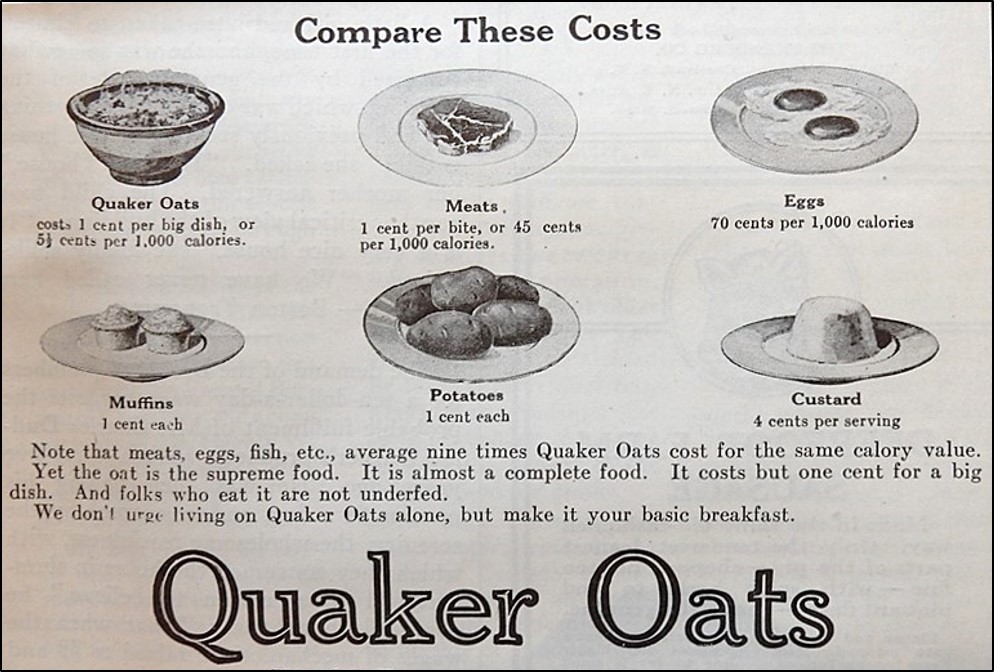
Source: From a Quaker Oats advertisement, American Cookery, January, 1920
Food is expensive today. A hundred years ago people also worried about the high price of food. A 1920 Quaker Oats advertisement compared the costs of different foods, and (of course) determined that Quaker Oats was an inexpensive source of calories. Somehow I don’t think that the relationship between calories and cost would be featured in an advertisement today . . . but on second thought, maybe it still works. Not sure.
Is drinking coffee a good or bad habit? People have been asking this question for more than a hundred years. A 1920 promotional advertisement by a coffee trade association called the Coffee Trade Publicity Committee of the United States claimed that the debate was over – and that coffee is good for us.
However, a quick online search suggest that the trade association was over-optimistic, and, that the debate continues. According to the Mayo Clinic there are both benefits and risks related to drinking coffee:
Coffee may offer some protection against:
Parkinson’s disease
Type 2 diabetes
Liver disease, including liver cancer
Heart attack and stroke
Coffee still has potential risks, mostly due to its high caffeine content. For example, it can temporarily raise blood pressure. Women who are pregnant, trying to become pregnant or breastfeeding need to be cautious about caffeine. High intake of boiled, unfiltered coffee has been associated with mild increase in cholesterol levels.
Only six more days until Christmas – and shoppers are rushing to complete their holiday shopping. A hundred years ago shoppers were also purchasing last minute gifts. Judging by the advertising old magazines, waffle irons were a popular gift in 1919.
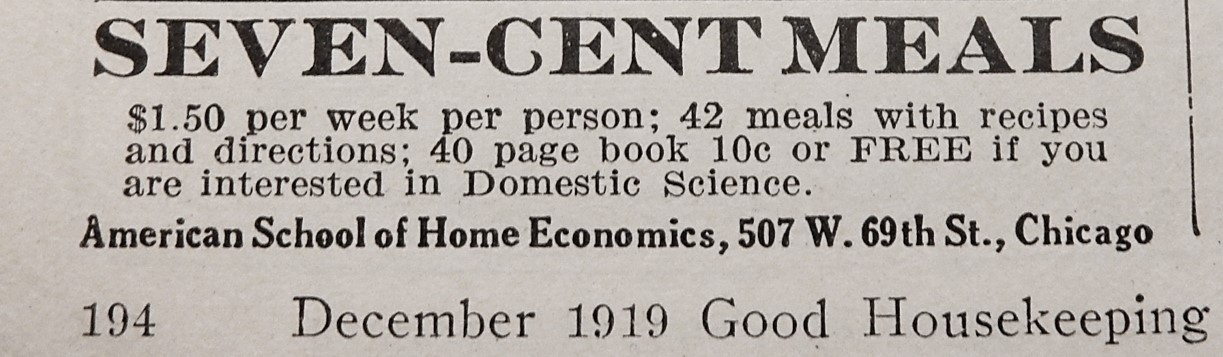
Holiday meals can be expensive to prepare, so I’m always looking for budget-friendly recipes and meals that I can use to keep my food expenditures in check. A classified ad in a hundred-year-old issue of Good Housekeeping offers a solution – serve meals that only cost seven cents. I’d be willing to pay a dime to learn how to make seven-cent meals (or I might even consider telling a white lie and claiming that I’m interested in Domestic Science so that I can get the book for free).
Thanksgiving is a day for family, memories, and traditions. Even the most mundane parts of the day have meaning. I roast my turkey in a granite-ware roasting pan that is similar to my grandmother’s – though I have memories of a beautiful stainless steel roasting pan that my mother used, and sometimes think I should use a stainless steel pan like hers. And, then I come across a hundred-year-old advertisement for an aluminum roasting pan that will “last forever,” and wonder if any are still around.
The big day will soon be winding down, and I’ll be using lots of elbow grease to wash my roasting pan. Maybe I’m too wedded to tradition. One friend swears that disposable roasting pans that only cost a few dollars are the way to go; another insists that plastic roasting bags make the best juicy, tender turkeys- and that cleanup is a breeze.
Whatever foods you are eating today; and, however they were prepared, have an awesome day!
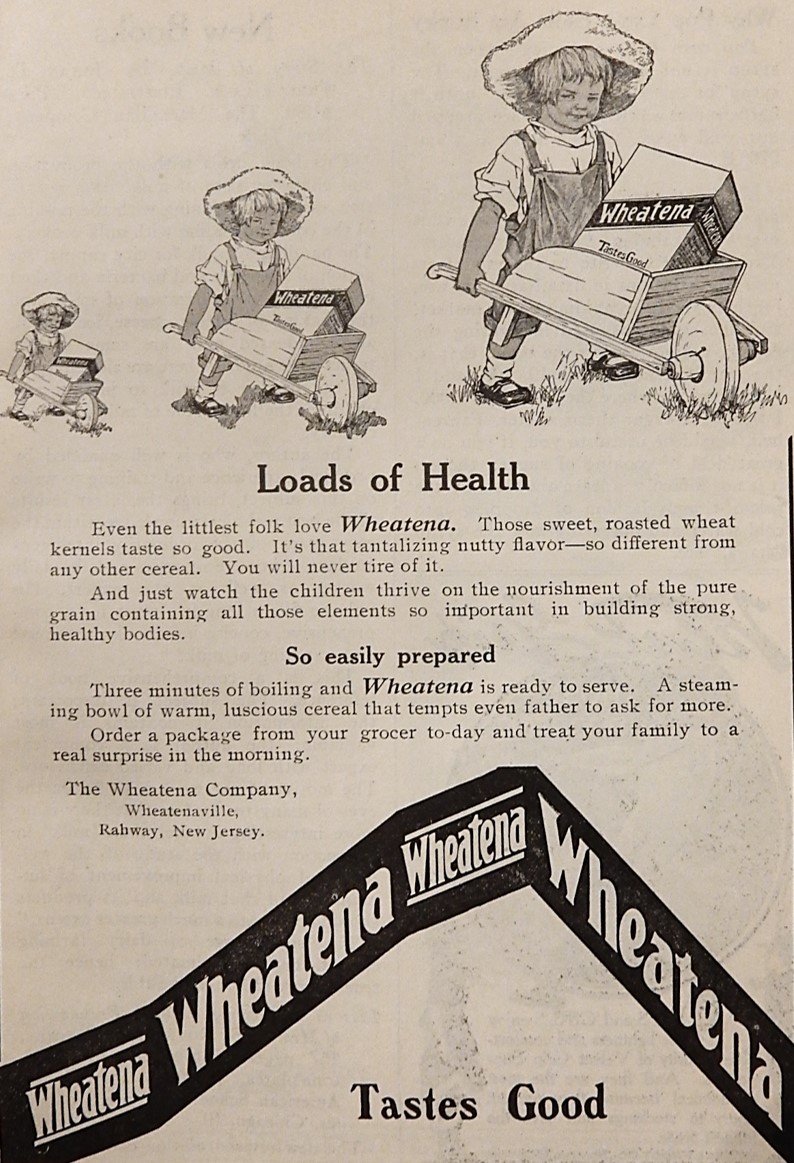
Many cereals come and go over the course of a few years – remember Cinnamon Mini Buns cereal? . . . or Dinersaurs? But a few cereals have been around for more than a hundred years. For example, Wheatena has been produced since the 1880s.
I’ve never actually eaten Wheatena – but this 1919 advertisement makes me want to give this old-time cooked cereal a try. What’s not to like? It has a tantalizing nutty flavor, is nourishing, is easy to prepare, AND it tastes good.
Advertising is supposed to convince people that they should buy a product. Sometimes an ad that apparently worked well a hundred years ago doesn’t work quite as well today.
If I wanted to promote salt, I won’t say “white as hoar-frost on pumpkins.” Is it just me, or do others not know what “hoar-frost” is? Of course, I could google the term – but by then I’ve lost all interest in buying the product.
And, would an ad today promote the “sanitary package”?