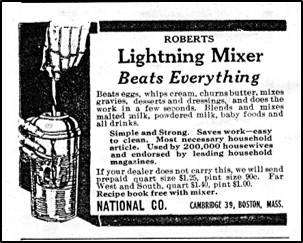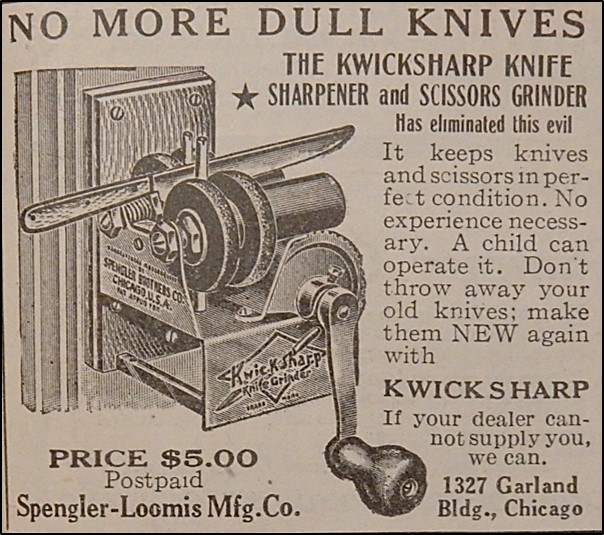
I’ve baked (and sliced) lots of bread this year – and still struggle to consistently get thin, even slices. This 1920 advertisement has me sold. I’m ready to buy a Lightening Thin-Slice Bread Knife. And, what a deal! It only costs 50 cents. Do they still make Lightening Knives?
By 1920, lemons were readily available across the U.S. Trains quickly transported them across the country. And, the California Fruit Growers Exchange had even branded lemons produced by its growers as Sunkist Lemons.
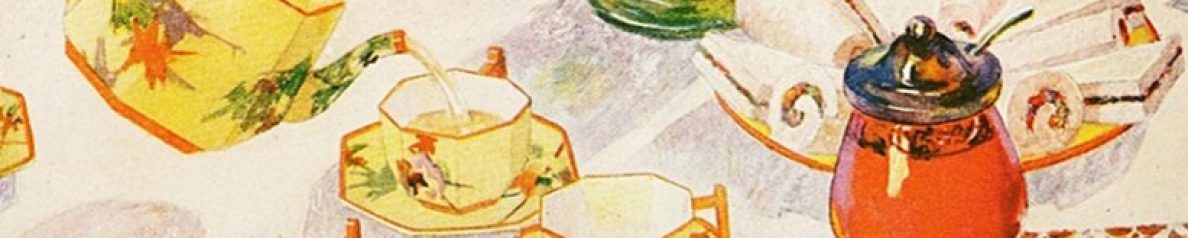
I enjoy eating old-fashioned foods. Many others prefer trendy foods. Apparently people have wanted to eat “modern” foods for a long time. According to this advertisement, the modern way to serve tea is with lemon instead of cream – which suggests that the ad copy writer believed that promoting modern food combinations was a winning strategy for an ad campaign.
It’s fun to read the small advertisements in the back of old magazines. They often are quirky – and sometimes I scratch my head when I read them. This 1920 advertisement by Mrs. Grace Osborn about the Osborn Cake Making System is one of those ads.
Does the square angel food cake in the picture look nice enough to make someone want to learn Mrs. Osborn’s cake making system? (Personally, round angel food cakes work just fine for me.)
And, exactly what is Mrs. Osborn selling? . . . a book for directions? . . . recipes? . . . cake pans and baking supplies? It apparently was a two-step process for her to sell anything. First, she would have to send people who responded to the ad free information about the particulars, and she would have to pay postage to send the materials (in addition to the cost of the ad ). Then some of them might actually buy the product she was selling. I’m no marketing expert, but somehow this doesn’t feel like a good model for financial success.
Some things haven’t changed across the years. Both a hundred years ago and now, when people want to make a quick, easy, inexpensive dish, they sometimes reach for a can of Van Camp’s Baked Beans.
When I saw this hundred-year-old advertisement for Mapleine, my first thought was – Is this product still made? I thought that I had a vague memory of seeing Mapleine in the spice and extract section at the supermarket, but wasn’t sure.
Well, the answer is yes. It is still made. Mapleine has been around since 1908. According to Wikipedia, Mapleine was even part of a court case:
An early enforcement action of the United States Pure Food and Drug Act in 1909 concerned a shipment of Mapleine confiscated in Chicago. The case was “United States of America v. Three Hundred Cases of Crescent Mapleine” in which it was found that the product was misleadingly labeled to represent actual maple extract. The case was cited as a precedent for the United States Supreme Court 1916 decision in United States v. Forty Barrels and Twenty Kegs of Coca-Cola.
By 1920, the Crescent Company, which made Mapleine, clearly knew that advertising needed to make it clear that Mapleine did not actually contain maple syrup. The advertisement says it is a “pure vegetable flavoring” – though I’m not exactly sure what that means.
On a recent hot summer day, I lazily flipped through the pages of 1920 issues of Good Housekeeping. There were the usual advertisements for baking powder, canned fruit, bacon, and other foods. And, then I flipped another page – and saw this1920 Swift & Company advertisement defending the large size of this corporation. Discussions about the size of businesses have been taking place for a long time!