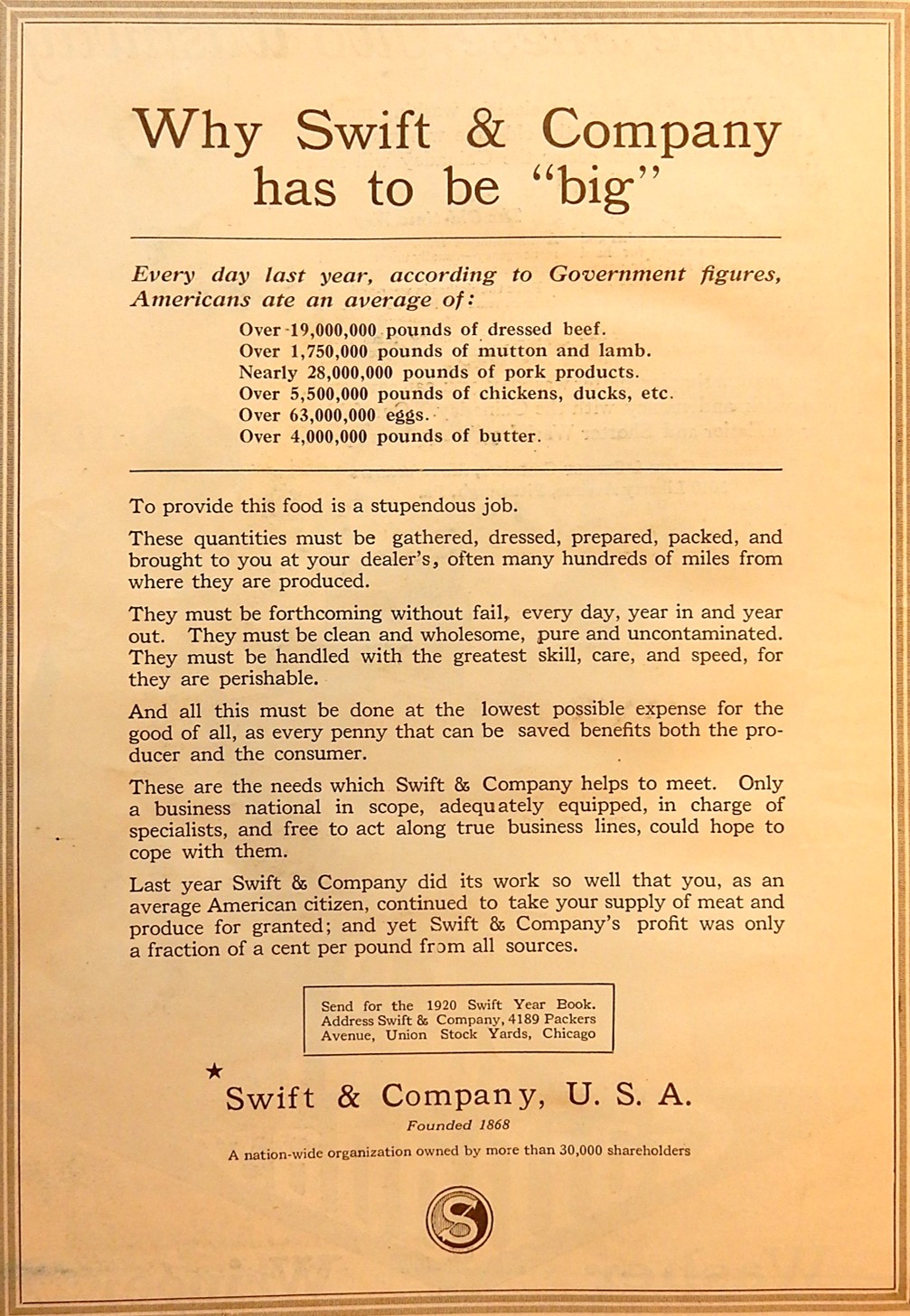
On a recent hot summer day, I lazily flipped through the pages of 1920 issues of Good Housekeeping. There were the usual advertisements for baking powder, canned fruit, bacon, and other foods. And, then I flipped another page – and saw this1920 Swift & Company advertisement defending the large size of this corporation. Discussions about the size of businesses have been taking place for a long time!
Some fruits bring back warm memories of my younger days. Huckleberries are one of those fruits. I haven’t seen a huckleberry in decades, but they are a fruit of memories.
My father loved to pick huckleberries – or, as we often called them, wild blueberries. Dad worked hard all week farming, but found picking huckleberries relaxing and would often go to the mountains on sunny Sunday summer afternoons to pick them. He’d bring home buckets of the most lush berries. The huckleberries were smaller than store-bought blueberries and bursting with taste. We ate the fresh huckleberries by the handful, and made many wonderful baked goods. A favorite was huckleberry muffins.
So. when I recently came across a hundred-year-old recipe for Blueberry or Huckleberry Muffins, I had to give it a try for memory sake – even though I used blueberries instead of huckleberries.
The recipe was a winner. The muffins were easy to make and delightful.
Here is the original recipe:
Source: The New Royal Cook Book (1920), published by Royal Baking Powder Co.
One teaspoon salt seemed like a lot of salt for this recipe, so I reduced the salt to 1/2 teaspoon. I also used butter instead of shortening.
If desired, first coat the blueberries/huckleberries with flour. (Some assert that berries are less likely to sink to the bottom of the batter if coated in flour). To coat: In a separate bowl, toss the berries in flour to coat. Set aside
Preheat oven to 400° F. Combine flour, baking powder, salt, and sugar in a bowl. Add milk, eggs, and shortening; stir until combined. Then gently stir the blueberries or huckleberries into the batter.
Grease muffin tins (or use paper liners), and then fill each muffin cup approximately 2/3 full with batter. Bake for approximately 30 minutes or until lightly browned.
Source: Household Arts for Home and School (1920) by Anna M. Cooley and Wilhelmina Spohr
Is it important to wash fruit before eating? Of course, the answer is “yes.” According to the National Health Service:
It is always advisable to wash all fruit and vegetables before you eat them to ensure they are clean and to help remove bacteria from the outside.
Similar advice has been around for a long time. According to a 1920 home economics textbook:
All fruits that are eaten raw should be thoroughly washed. One never knows what has come in contact with the fruit through the handling or from exposure to the dirt and dust of the streets.
Even oranges, grapefruit, lemons, bananas, and melons, whose skins are to be discarded, should be washed and wiped to remove surface dirt. Small fruits such as grapes and berries should be thoroughly rinsed just before serving; they should never be allowed to stand in water.
Household Arts for Home and School (1920) by Anna M. Cooley and Wilhelmina H. Spohr
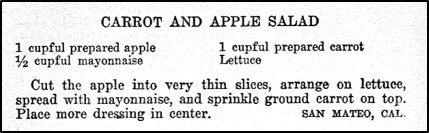
Summer is the perfect time for salads to take center stage, so I was intrigued by a hundred-year-old recipe for Carrot and Apple Salad. The recipes called for arranging apple slices that are spread with mayonnaise on lettuce, and then sprinkling with grated carrot. The recipe also called for putting additional mayonnaise in the middle plate. Based on the recipe description, I couldn’t quite picture what the salad would look or taste like, so I decided to give it a try.
The Carrot and Apple Salad was fun to make. I enjoyed arranging the apple slices on the lettuce – then garnishing with grated carrot. This is a recipe that a child might enjoy helping make.
The salad was bright and sunny. And, it met the taste test with a delightful combination of textures. There was just the right balance due to the crispness of the apples, the crunchiness of the lettuce, the sweetness of the carrots, and the hint of a dressing. (My husband and I didn’t add any of the additional mayonnaise that was in the center of the plate when we ate the salad).
Here is the original recipe:
Source: Good Housekeeping’s Book of Recipes and Household Discoveries (1920)
When I made this recipe, 1 cup of apple slices were not quite enough to make an attractive arrangement on the plate so I used additional slices. Similarly, 1 cup of grated carrot seemed like too much, so I only used about 1/2 cup.
1 – 1/2 cups thinly sliced peeled apples (I put the apple slices in a mixture of 1 cup water + 1 tablespoon lemon juice for 5 minutes to prevent browning; then drained and dried using paper towels.)
mayonnaise
1/2 cup grated carrot
Arrange lettuce pieces on plate. Lightly spread mayonnaise on the top of each slice; then arrange the slices attractively on the lettuce. Sprinkle with the grated carrot. If desired, put additional mayonnaise in a small bowl in the center of the plate.
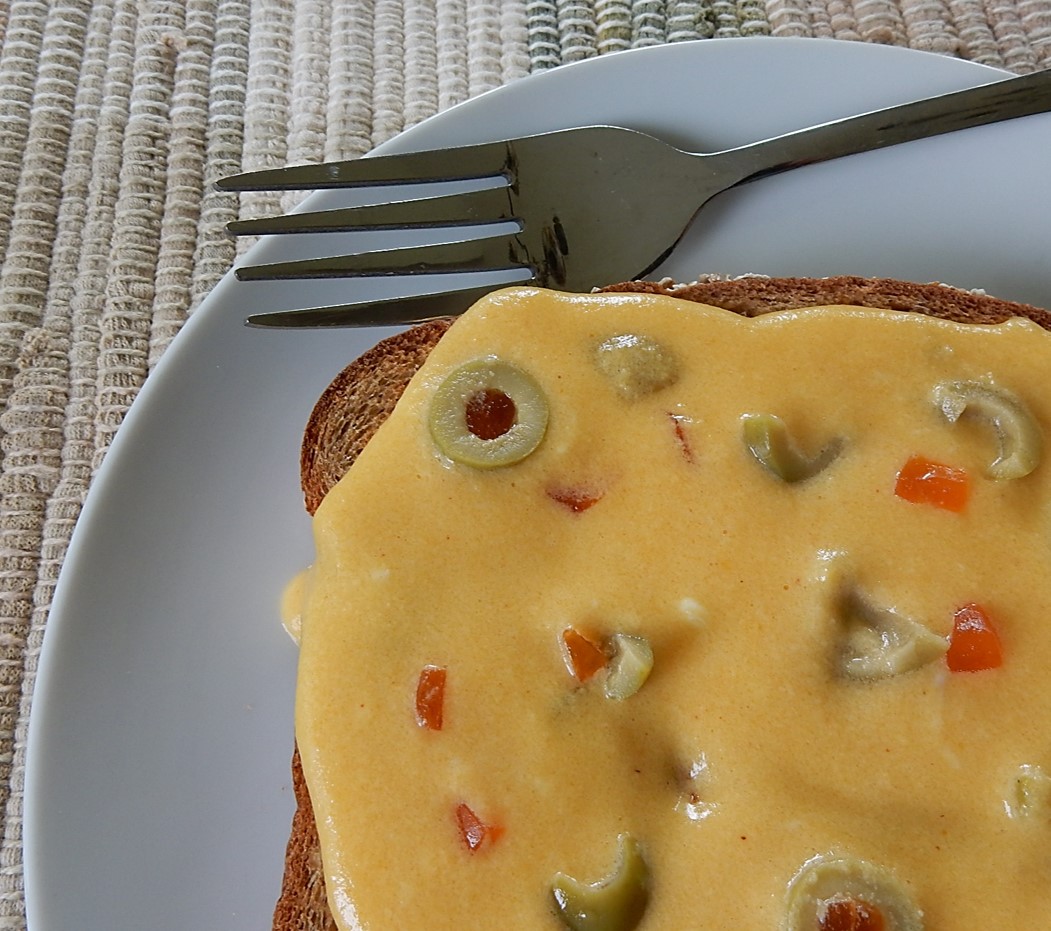
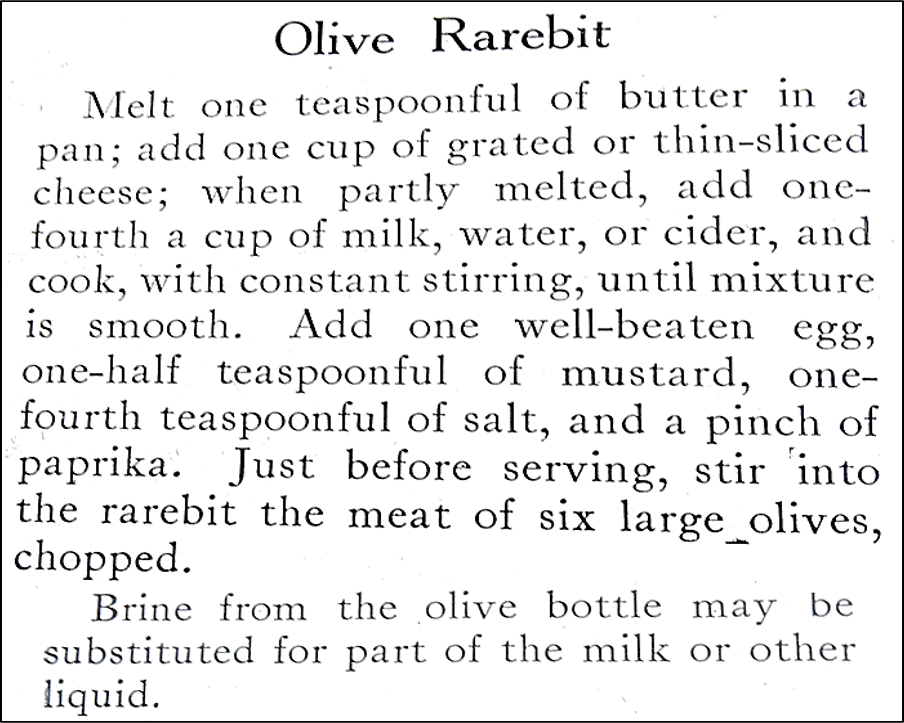
Welsh Rarebit over toast is one of my comfort foods, so I was intrigued when I came across a hundred-year-old recipe for Olive Rarebit. This recipe is nice variation on the classic. It contains chopped olives embedded in a savory cheese sauce.
1/4 cup milk, water, or apple cider – If desired, olive brine from the jar may be substituted for part of the liquid (I used milk – and no olive brine.)
1 egg, beaten
1/2 teaspoon ground mustard
1/4 teaspoon salt
dash paprika
6 olives, coarsely chopped (I used pimento stuffed green olives.)
Put butter in a saucepan; melt using medium-low heat. Stir in the cheddar cheese; continue stirring until the cheese is partially melted. Then add the milk and continue stirring until the mixture is smooth. While continuing to stir, add the egg, mustard, salt, and paprika. Heat until hot, then stir in olives. Remove from heat. Serve over toast, English muffins, or other bread.