Source: School and Home Cooking (Carlotta C. Greer, 1925)
It can be challenging to make an omelet. I often struggle to successfully fold them. Here are directions in a 1925 home economics textbook for folding an omelet:
To Fold an Omelet
Run a spatula underneath the omelet to loosen it. Make a slight incision with a knife through the middle of the omelet at right angles to the handle of the pan, and fold the omelet over upon itself away from the handle of the pan. Grasp the handle of the pan in the right hand, placing the back of the hand underneath with the thumb pointing away from you. then turn the omelet upon a platter (see Figure 40).
School and Home Cooking by Carlotta C. Greer (1925)
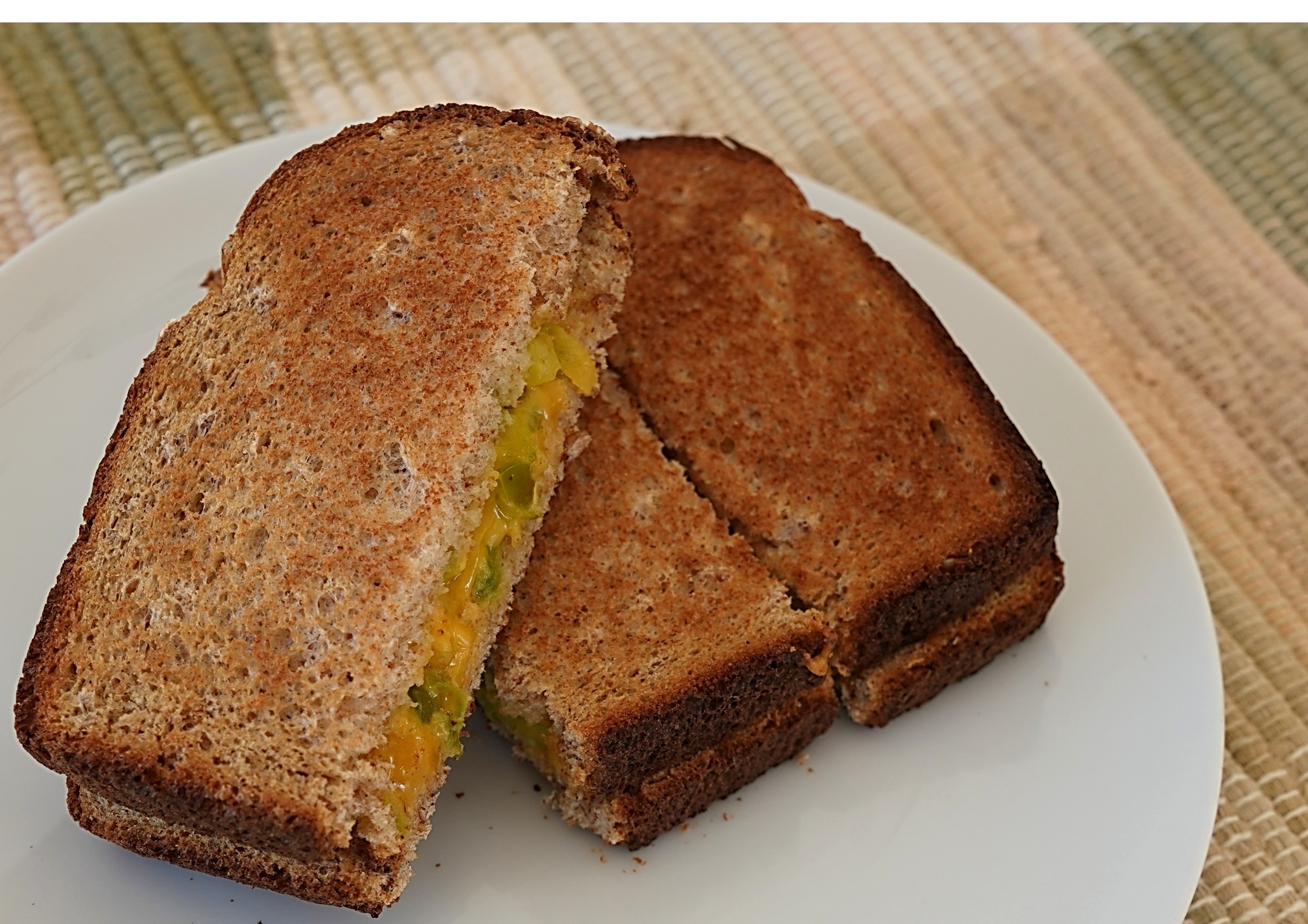
Grilled cheese sandwiches can get a little boring, so when I saw a recipe in a hundred-year-old cookbook for Cheese and Green Pepper Sandwiches that were toasted, I decided to give it a try.
The sandwiches were delightful. The crunchiness, slight sweetness, and subtle tanginess of the green peppers co-mingled nicely with the melted cheese.
The old recipe said to cut the toasted sandwiches into strips. I have never previously cut a sandwich into strips, but I decided to give it a try and it made a nice presentation.
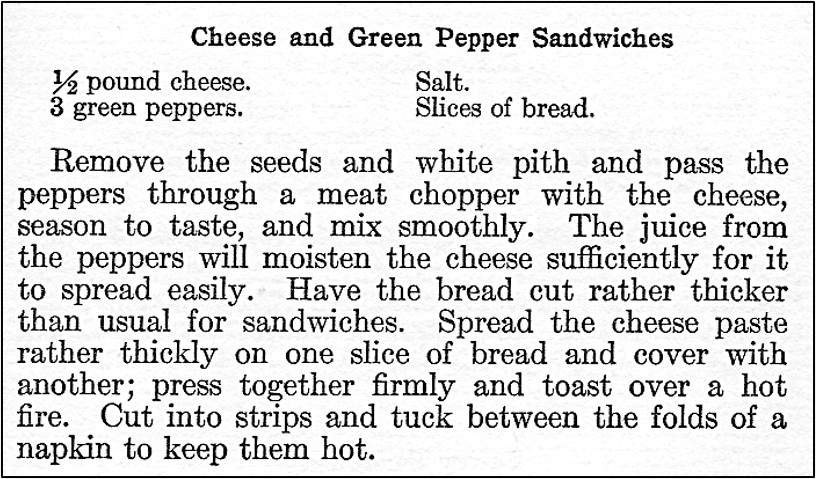
Here’s the original recipe:
Source: Rumford Complete Cook Book (1925)
The ingredient list indicates that salt is an ingredient in this recipe, but it is not mentioned in the cooking instructions. Since cheese already contains salt, and it was not mentioned in the instructions, I did not add any salt when making this recipe.
Maybe most people had meat choppers a hundred years ago, but today I don’t think that many cooks have one. I know that I don’t. Instead, I decided to use my grater to grate the green pepper. That worked fine and there was some green pepper juice similar to what was described in the old recipe. It would also work to finely chop the green pepper, though there might be less juice, but I think that it would still work since the cheese will melt and hold everything together when the sandwich is heated.
This recipe is very specific regarding the amounts for the cheese and green papers, but very vague about the number of slices of bread to use. I decided to make three sandwiches, and adjusted the amount of green pepper and cheese to make an appropriate amount of filling. Three green peppers sound like a lot of green pepper. I think that green peppers often were much smaller a hundred years ago than what they typically are today, so I decided to use 1/2 cup of shredded or grated green pepper. I also thought that 8 ounces of cheese was more than was needed to make 3 sandwiches, so I used 4 ounces of cheese.
The original recipe says to “toast over a hot fire,” so I toasted the sandwiches using the broiler in my oven; but, it would also work well to put butter on the bread slices and grill in a skillet.
I didn’t think that there was any need to tuck the toasted sandwich strips in the folds of a napkin to keep them warm. I just served the hot sandwiches immediately.
4 ounces cheese, grated or shredded (I used cheddar cheese)
1/2 cup green pepper, grated or finely chopped
6 slices bread
Put the cheese and the green pepper in a bowl; stir until the cheese and green pepper pieces are evenly distributed. Put half of the bread slices on a baking sheet, then spread with the cheese mixture. Top with the remaining slices of bread.
Set the rack 7-8 inches under the broiler. Put the baking sheet with the sandwiches under the broiler. Broil until the top slice of bread is lightly browned; gently flip the sandwiches, continue broiling until the other side is lightly browned. (Another option for browning the bread would be to lightly butter the bread slices, then grill in a skillet.) Remove from heat. If desired, cut each sandwich into three strips. Serve immediately.
I was flipping through a hundred-year-old issue of American Cookery magazine and near the back was a page showing free premiums that new subscribers to the magazine could select. I almost fell over when I saw a set of card suit sandwich cutters. I have a similar (but not identical) set that I use as cookie cutters.
My cookie cutters were once my mother’s, and she had them for as long as I can remember. The metal on my cutters is a little worn and some parts are shinier than other parts, but I really like them. They are a nice size and nicely cut the cookie dough. I’m now wondering if my cutters were originally intended to be sandwich cutters – though I tend to think that they probably are cookie cutters since they have metal on the top and it might be difficult to cut a thick sandwich with them.
I never really thought about it before, but assumed mine were mid-20th century cookie cutters. Now I am wondering if they are older than that and something that my mother originally got from her mother.
Where I live March came in like a lion, and I wanted to make a cheery dessert. I found a hundred-year-old recipe for Apricot Souffle that fits the bill. It was light and had a lovely apricot flavor with a hint of almond.
Here’s the original recipe:
Source: Rumford Complete Cook Book (1925)
I got this recipe out of a cookbook that I bought off eBay. It had a penciled checkmark at the top which suggests that the original owner of the cookbook made it.
I used a 15-ounce can of apricots. I drained them, and then measured the apricots and had about 1 cup of them which I then pureed. I baked the apricot souffle in custard cups. I did not grease and sugar the cups because I thought it might make the top portion of the cups that was above the apricot mixture look messy. It worked fine not to grease them.
Preheat oven to 350◦ F. Drain apricots and puree. Put pureed apricots in a saucepan and bring to a boil using medium heat. Remove from heat and stir in the sugar and almond extract. Put a small amount of the apricot mixture (1 – 2 tablespoons) in the beaten eggs whites, and fold in. (The egg white is first combined with a little of the hot mixture to prevent it from immediately cooking when introduced into the hot combination.) Fold the egg whites into the remaining apricot mixture, then put into individual custard cups. Put the custard cups in a pan containing enough hot water to come halfway up the cups. Bake until set and just beginning to brown (about 20 minutes).
Often hundred-year-old cooking tips and advice still are relevant today, but sometimes the old advice is very different. Here are some tips for cooking poultry in a 1925 cookbook:
No poultry should be cooked before it has hung for at least eight hours. In many large cities there are live poultry markets and each bird is killed as it is bought. These birds should be hung overnight before they are drawn and prepared for cooking.
When any fowl or game is being prepared for cooking, it should be thoroughly washed inside and out, and if there is an unpleasant odor from the inside, rub it with a little cooking soda. If the odor disappears quickly the bird is good to eat. If the odor persists it is best to cut the bird open to see whether there are any bruises or recognizable bad places. A fowl that has a bad odor had better not be eaten.
—
The young chicken lends itself to many kinds of savory cooking. The older chickens are better for soups, stew, and salads. If a fowl is very old it will hardly make even a good salad because the white meat is apt to be coarse and somewhat tasteless.
Leftover fowl and game is excellent for pies, stew, croquettes and any number of casserole dishes. They should be combined with a rich gravy to give the best results.
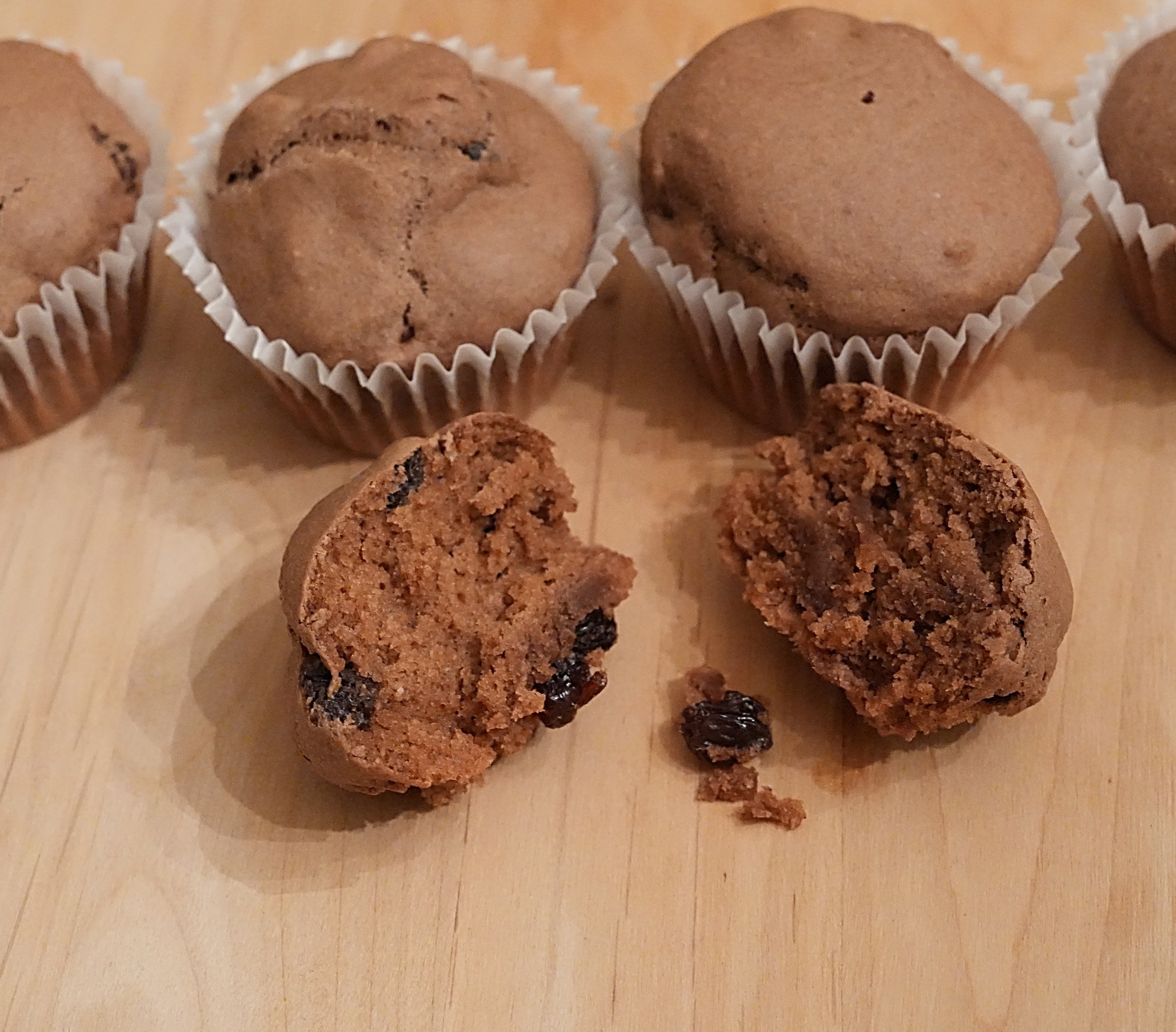
There is a fun children’s book that contains both a story and recipes called Billy in Bunbury. It was a promotional book that was published in 1925 by the Price Baking Powder Company. I decided to make a recipe in the book for Cocoa Raisin Muffins.
The muffins were delicious. They were chocolatey with a hint of cinnamon, and had a nice texture with lots of raisins. And, the recipe does not call for any eggs – an added bonus during this time of exorbitant egg prices. Here’s the original recipe:
Source: Billy in Bunbury (1925)
It is a little surprising that a recipe in a children’s cookbook calls for 7/8 cup of milk. I seldom see recipes that call for eights of a cup, and it seems like an especially complex measure for a child to navigate when making this recipe.
Raisins were the last ingredient I added when I made this recipe, and that worked fine.
The recipe indicates that this recipe will make 16 muffins, but when I made this recipe, it only made 12 muffins. The number of muffins is very dependent upon the size of the individual muffin cups in the muffin tin. Apparently, muffins were fairly small a hundred years ago.
Preheat oven to 400◦ F. Sift together flour, cocoa, sugar, salt, cinnamon and baking powder. Slowly add milk while stirring. Continue stirring until the batter is smooth, then add butter or shortening, and stir until combined. Stir in raisins. Put batter into prepared muffin tins. Fill each muffin cup about 3/4th full. Bake for approximately 20 minutes or until lightly browned.
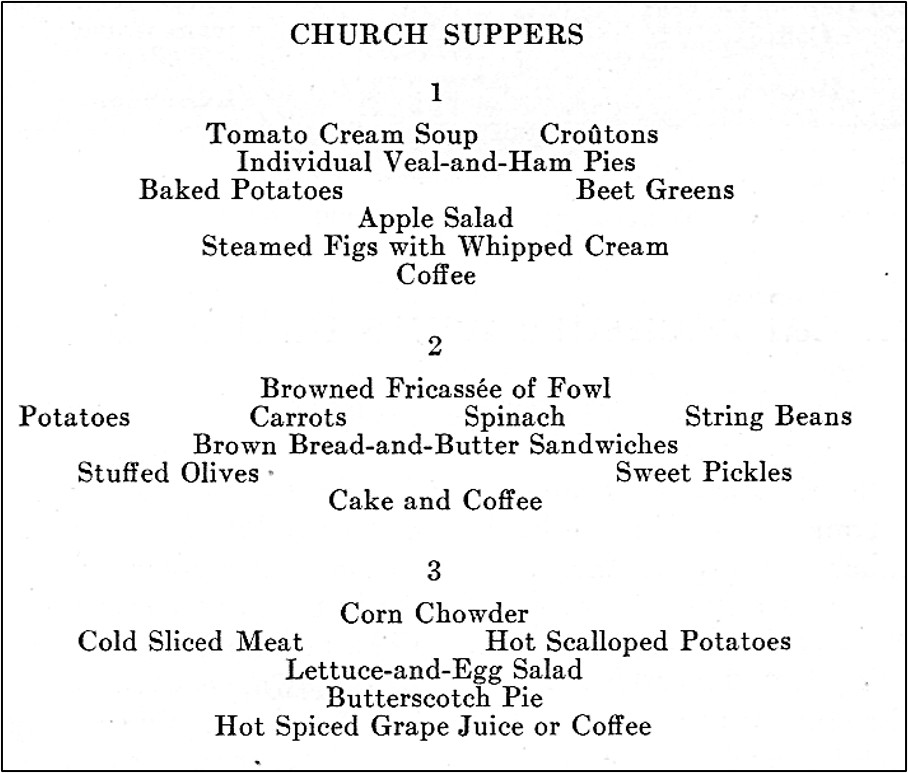
Most churches I’ve attended had potluck dinners and picnics where people bring a dish to share, but some churches have dinners with menus. Sometimes these dinners might be fund-raisers. A hundred years ago churches also held dinners. Here’s some church supper menus in a 1925 magazine.



 Where I live March came in like a lion, and I wanted to make a cheery dessert. I found a hundred-year-old recipe for Apricot Souffle that fits the bill. It was light and had a lovely apricot flavor with a hint of almond.