Oh dear, I’m never memorized most of these cooking facts that a hundred-year-old cookbook says I should commit to memory. I generally just look at a recipe rather than memorizing all sorts of relationships between various ingredients.

Oh dear, I’m never memorized most of these cooking facts that a hundred-year-old cookbook says I should commit to memory. I generally just look at a recipe rather than memorizing all sorts of relationships between various ingredients.
In some ways it is hard to believe that it is already February, and time to start thinking about Valentine’s Day. I have warm memories of helping my children prepare valentines to distribute at school and baking heart-shaped cookies, so when I saw a hundred-year-old recipe for Valentine Wafers, I decided to give them a try.
The Wafers were delightful. Each cookie has half of a candied cherry in the center. A unique feature of the recipe is that it calls for whole wheat flour, so I guess that the cookies are marginally healthier than the typical cut-out cookie.
Here’s the original recipe:


Here’s the recipe updated for modern cooks:
1 egg white
1/3 cup butter, softened
1 cup sugar
2 teaspoons cream of tartar
1/2 teaspoon baking soda
1 teaspoon vanilla
1/2 cup water
2 cups whole wheat flour
candied cherries, cut into halves (approximately 18 cherries needed; may be more or less depending upon size of cookie cutters)
Preheat oven to 400◦ F. Put egg white into a bowl and beat until stiff peaks form. Set aside.
In another bowl, cream together the butter and sugar. Add cream of tartar, baking soda, and vanilla; stir to combine. Then add half the water and half the flour; stir. Add remaining water and flour; stir until thoroughly combined, then fold in the beaten egg white. If the dough is sticky, add additional flour to get it to a good consistency for rolling. Roll out the dough on a prepared surface to 1/4 inch thick; then cut into heart shapes. Place on greased baking sheets. Put half a candied cherry in the center of each heart, and press firmly. Bake 8-10 minutes or until lightly browned.
Here’s some abridged tips for caring for wood and coal stoves from a hundred-year old magazine:
- Stove grates will last ten years, or longer, if well cared for (that is if the ashes were removed once or even twice daily).
- Grates should not be kept red hot with ashes banked up against them.
- Do not bank the fire overnight with the ashpan fun of ashes, thereby keeping the grated heated all of the twenty-four hours, never giving them a chance to cool.
- A cheap stove is poor economy. Therefore, always purchase a stove of a well-known make, and then take care of it.
- Clean out the soot from underneath the stove.
- Brush the soot and ashes from around the sides of the stove. The butterfly, in the back of the stove, should be opened, and the stove rake, or poker, slipped in, so that the soot may be pushed downward into the space below the oven, where it may be taken out through the opening made for that purpose. This pipe is often entirely clogged or closed by the unburned particles of carbon deposited there from the coal.
- Clean the stove pipe, which may be responsible for lack of draught and may be half full of soot, especially if it is a long pipe, or has more than one turn in it.
- Keeping the stove red hot, for any length of time. will warp the lids, and burn out the various parts. After a fire is started, the drafts should be adjusted, so that it burns well, but not so as to permit the stove to become red hot.
- Piling up coal until it is against the top of the stove will also cause the lids to warp.
- Another cause of injury to a stove is the burning of wet garbage. Coffee grounds or liquids should not be poured on the red hot lining of the stove. This may produce cracking.
- If one is going away for some time, the stove should have a liberal coating of grease, or liquid black shellac, to prevent rusting; or otherwise the dampness of a closed house may cause serious damage. Under such conditions the stove pipe should be taken down, oiled and left down, or else rain, coming down the chimney may cause the pipe to rust out in one season.
- Even if one is at home and does not use the coal stove in summer, papers should be burned in it occasionally to dry out the stove pipe and inner parts of the stove.
- If the stove has an enameled back or trimmings, these may be cleaned with a scouring powder, which is not gritty.
- Foods, grease, etc. must not be allowed to collect on the surfaces, or these will be burned on from the intense heat, and cannot be removed without injury to the surface.
- Clinkers will not form so readily if the fire is made every day.
Excerpts from American Cookery (March, 1925)

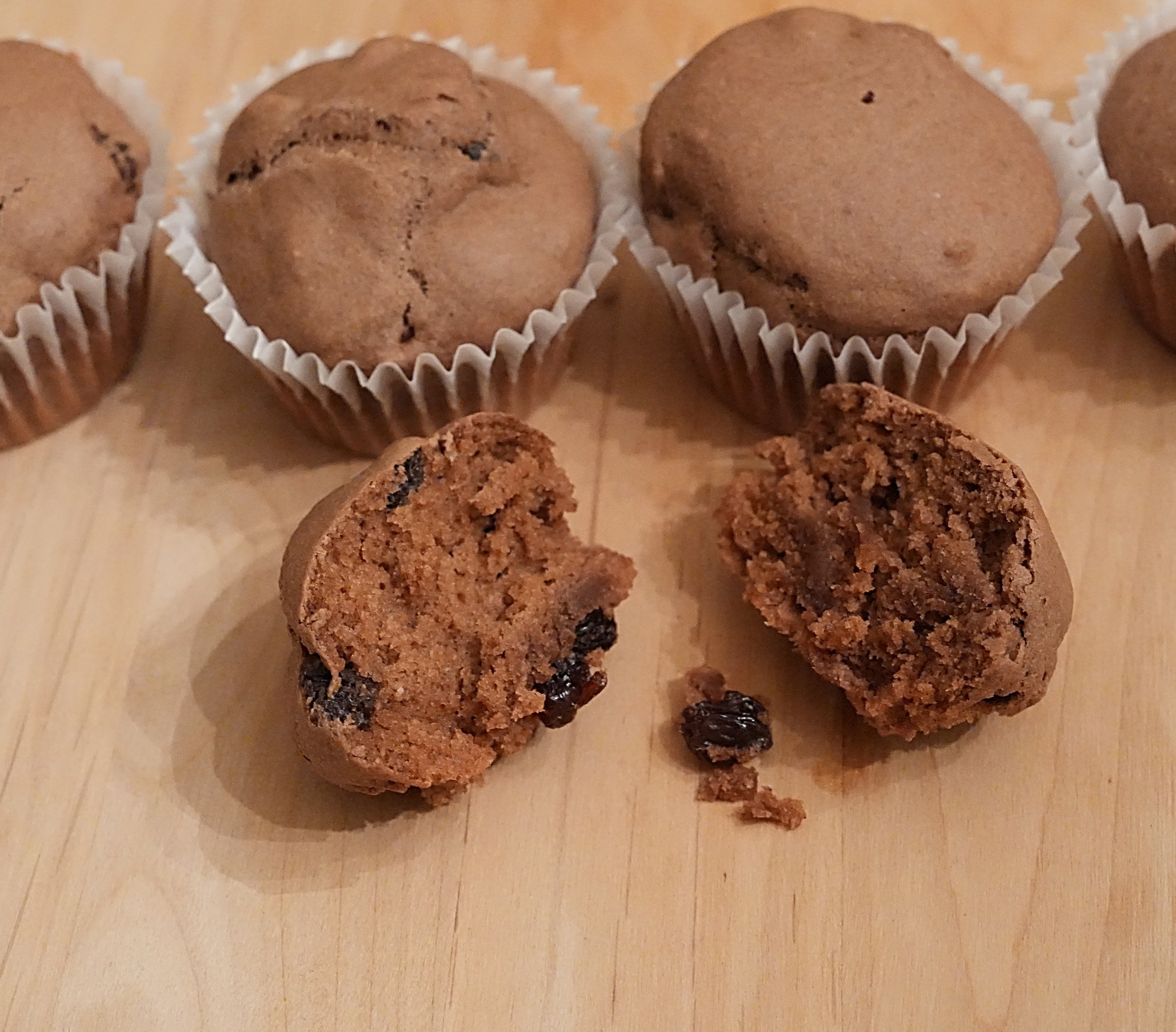
I love Spice Cakes, so when I saw a recipe for Clove Cake in a hundred-year-old cookbook I was intrigued. Was it similar to Spice Cake or quite different? I decided to give it a try and see what it was like.
The verdict– The recipe makes a small loaf cake. I have mixed feelings about this cake. It was tasty, but not very aesthetically pleasing. The cake had an old-fashioned goodness with the warm, sweet, spiciness of cloves. The flavor is more intense than the typical spice cake, but it was good. My husband said that the worst thing about the cake was that there was not enough of it. The texture of the cake was nice, however, the cake fell when I took it out of the oven, so it did not look that great. The recipe called for a really high ratio of sugar to flour, and I think that this might be the issue.
Here’s the original recipe:

I am unclear why the recipe calls for adding the raisins before adding the baking soda and some of the flour. It’s difficult to get a well-mixed batter when there are chunky raisins in the mixing bowl, so I updated the recipe to add the raisins last.
When I made this recipe, the chopped raisins sank to the bottom. In hindsight I realized that I probably should have tossed them in flour prior to stirring them into the batter. This probably would have helped keep them dispersed throughout the cake. When I updated the recipe, I indicated that the raisins should be floured.
Sweet milk is just regular milk. In the days before pasteurized milk, some cake recipes called for sour milk. I’m not sure why the recipe author felt the need to clarify that milk that had not soured should be used.
Here’s the recipe updated for modern cooks:
1/2 cup butter
1 cup brown sugar
2 eggs
1/4 cup milk
1/2 cup flour + 2 tablespoons flour
1/2 teaspoon baking soda
1 teaspoon ground cloves
3/4 cup chopped raisins
Preheat oven to 350◦ F. Grease and flour a loaf pan (bread pan). In a small bowl, toss the raisins with two tablespoons to flour. (This will help keep them from sinking to the bottom). Set aside.
Put butter and sugar in a mixing bowl and cream. Add the eggs, milk, 1/2 cup flour, baking soda and cloves; beat until combined. Stir in the chopped raisins. Pour into prepared pan.
Bake 35 minutes, or until wooden pick inserted in center comes out clean. If desired, glaze or frost cake after it has cooled.

When I make waffles, I’m sometimes surprised by how much the texture varies from one batch to the next. Sometimes they are nice and crisp; other times they limp and almost soggy. I recently was browsing through a hundred-year-old magazine and came across some advice that still is helpful and relevant:
Crisp Waffles
Several small points affect the crispness of the waffle. First, we would put a hot iron. The iron should be hot enough immediately to cook the batter, it should be sizzling and more than sizzling hot. Equally important is it that too much batter shall not be poured into the irons, for a thick waffle is never crisp. Most of the waffles served to us in restaurants are, we regret to say, too thick. A strong bread flour tends to toughness, so does too much egg, unless balanced by a good deal of butter. Pastry flour helps to make a tender waffle, and so does rich milk. If you use skimmed milk it inclines to toughness, while water and butter are aids to tenderness. Further, if you pile the waffles on a plate, while they are smoking hot, they will be sure to lose crispness from the absorption of moisture from the steam.
American Cookery (April, 1925)

I was surprised to find a Chicken Curry recipe in a hundred-year-old St. Paul, Minnesota church cookbook compiled by the Sisters of St. Joseph. Chicken Curry is a traditional Indian dish, and I would not have expected it to be commonly made in the U.S. in 1925. But, maybe one of Sisters had been a missionary in India, or maybe I just did not realize how small the world already was becoming.
The Chicken Curry was lovely and had a very nice sauce.
Here’s the original recipe:

Two teaspoons of salt seemed like a lot, so when I updated the recipe, I changed it to 1 teaspoon.
The recipe called for covering the chicken with water and then thickening with flour. When I made this recipe I had a lot of broth, so a measured out 2 cups of broth and only thickened that amount.
The original recipe called for a whole chicken that was cut into pieces. These days rather than selling chicken parts for the entire chicken, they are often sold by the particular type (thigh, breast, leg), so when I made this recipe I decided to use chicken thighs.
Here’s the recipe updated for modern cooks:
1 3-lb. chicken cut into pieces (or 3 pounds of chicken pieces) – I used thighs.
1/4 cup vegetable oil
1 medium onion, thinly sliced
1 teaspoon vinegar
1 teaspoon salt
1 tablespoon curry powder
2 tablespoons butter
1/4 cup flour
water
Put vegetable oil in skillet and heat using medium heat. When hot, add the chicken pieces; cook for 10 minutes. Turn the pieces of chicken. Make a space at one side of the skillet and add the onion slices. Cook for another 10 minutes.
In the meantime, combine vinegar, salt, curry powder and 1 cup water in a small bowl. Then add to the chicken and onions. Add enough additional water to just barely cover the chicken. Bring to a boil and cover. Cook until the chicken is tender (about an additional 20 minutes).
Remove lid and measure out 2 cups of broth. Set aside.
Melt butter in saucepan then stir in the flour. Gradually add the broth while stirring constantly. Bring to a boil and when the mixture has thickened remove from the heat. Strain the sauce.
To serve, put the chicken pieces on a plate. Top with the sauce. Serve with rice.
Addendum: After this post was published, a reader discovered that I’d previously done a post in 2019 with another Chicken Curry recipe. I added “Recipe 2” to the title of this post. Not quite sure how I had forgotten doing the original one. In any case, both versions are nice. Here’s the link to the other version:

Sanka Coffee has been around for more than a hundred years. It is one of the oldest decaffeinated coffees. Sanka is considered a healthy alternative since it does not have caffeine. The advertisement recommends it for children as young as six, which seems extremely young to me. Should children really be drinking any kind of coffee?
It is also intriguing that the ad refers to caffein. Apparently that is an archaic spelling of caffeine.