Old-fashioned Flemish Carrots

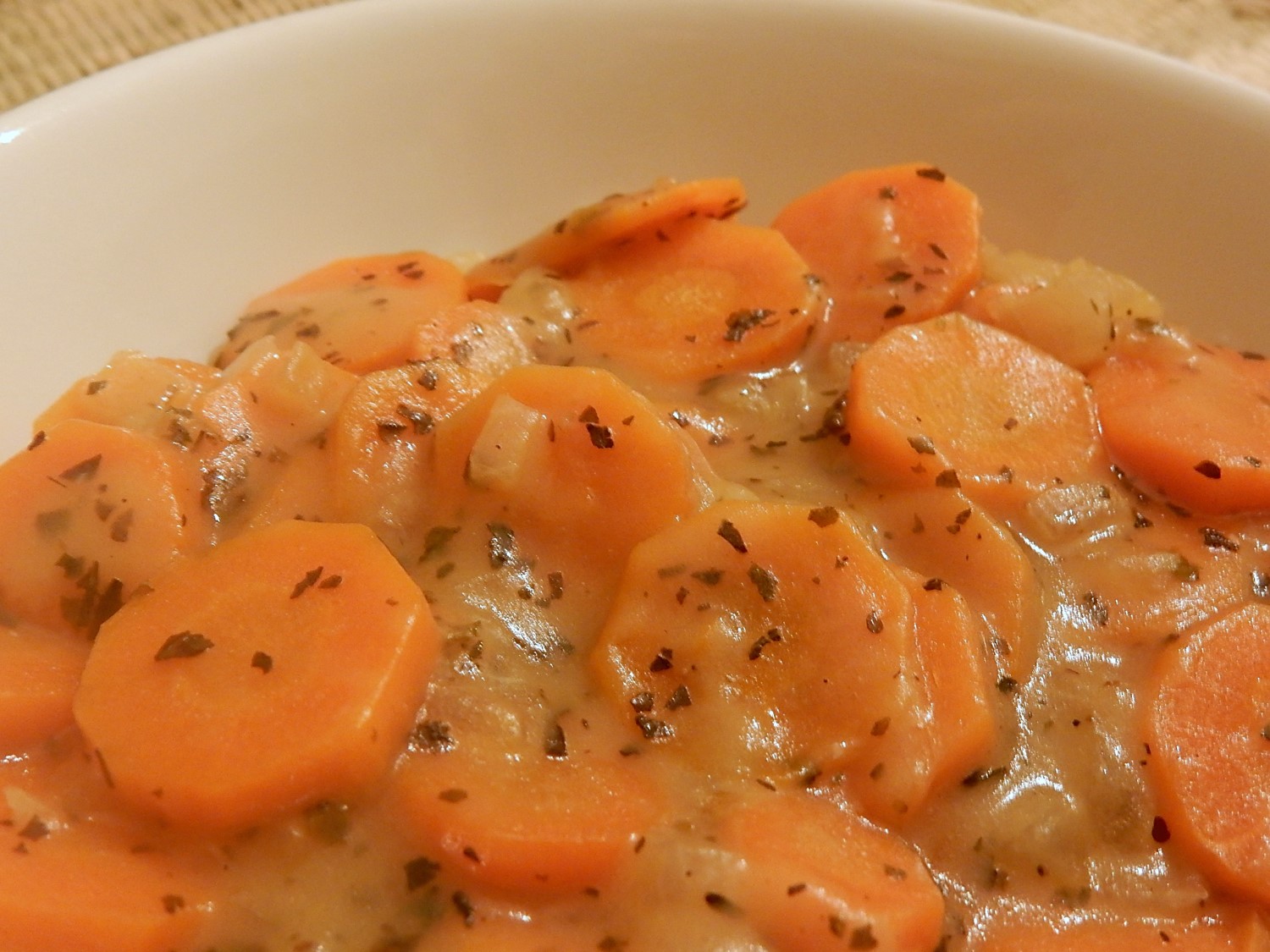
Carrots are one of the most nutrient-packed vegetables. They contain lots of vitamins A, K, and B6, as well as potassium and other minerals, so I was thrilled to find a hundred-year-old recipe for Flemish Carrots. This dish contains a mixture of carrots and onions that is served in a lovely beef-broth sauce which brought out the natural sweetness of the carrots.

I always find March to be a difficult month for cooking. I like to serve locally-grown, seasonally-appropriate food – yet I’m tiring of the same-old, same-old winter vegetable dishes. This recipe is a nice twist on sautéed carrots.

Here is the original recipe:

Source: Recipes for Everyday by Janet McKenzie Hill (1919)

Here’s the recipe updated for modern cooks:

Flemish Carrots

  • Servings: 3 - 4
  • Difficulty: easy
  • Print

2 cups carrots, sliced

2 tablespoons butter

1/4 cup onion, chopped

1 tablespoon parsley

2 tablespoons flour

1/2 teaspoon salt

1/2 teaspoon sugar

1/4 teaspoon pepper

1 cup beef broth

Using medium-low heat, melt butter in a skillet that has a lid. Add carrots, onion, and parsley; cover skillet. Stir occasionally and cook until tender (about 20 minutes). Add flour, salt, sugar, and pepper; stir gently until blended. Increase heat to medium. Gradually add beef broth while stirring constantly; heat until hot and bubbly. Remove from heat and serve immediately.

When I made this dish,  I substituted butter for the Crisco shortening that was listed in the original recipe.

1919 Tayler Oven Thermometer Advertisement

Source: American Cookery (February, 1919)

I was surprised to see an advertisement for a oven thermometer in the February, 1919 issue of American Cookery magazine. Cooks had a bit more information about oven temperatures than I’d previously realized.

Cooking with wood and coal stoves a century ago could be challenging. Hundred-year-old recipes never indicated the exact temperature that should be used when baking food in the oven. Instead the recipes said things like use a “high temperature” or a “medium temperature.” And, the cook was left to her (it was generally a woman in those days) own devices to figure out how to regulate the temperature. For example, more wood or coal might be thrown on the fire to get increase the temperature.

Old-fashioned Cheese and Rice Fritters

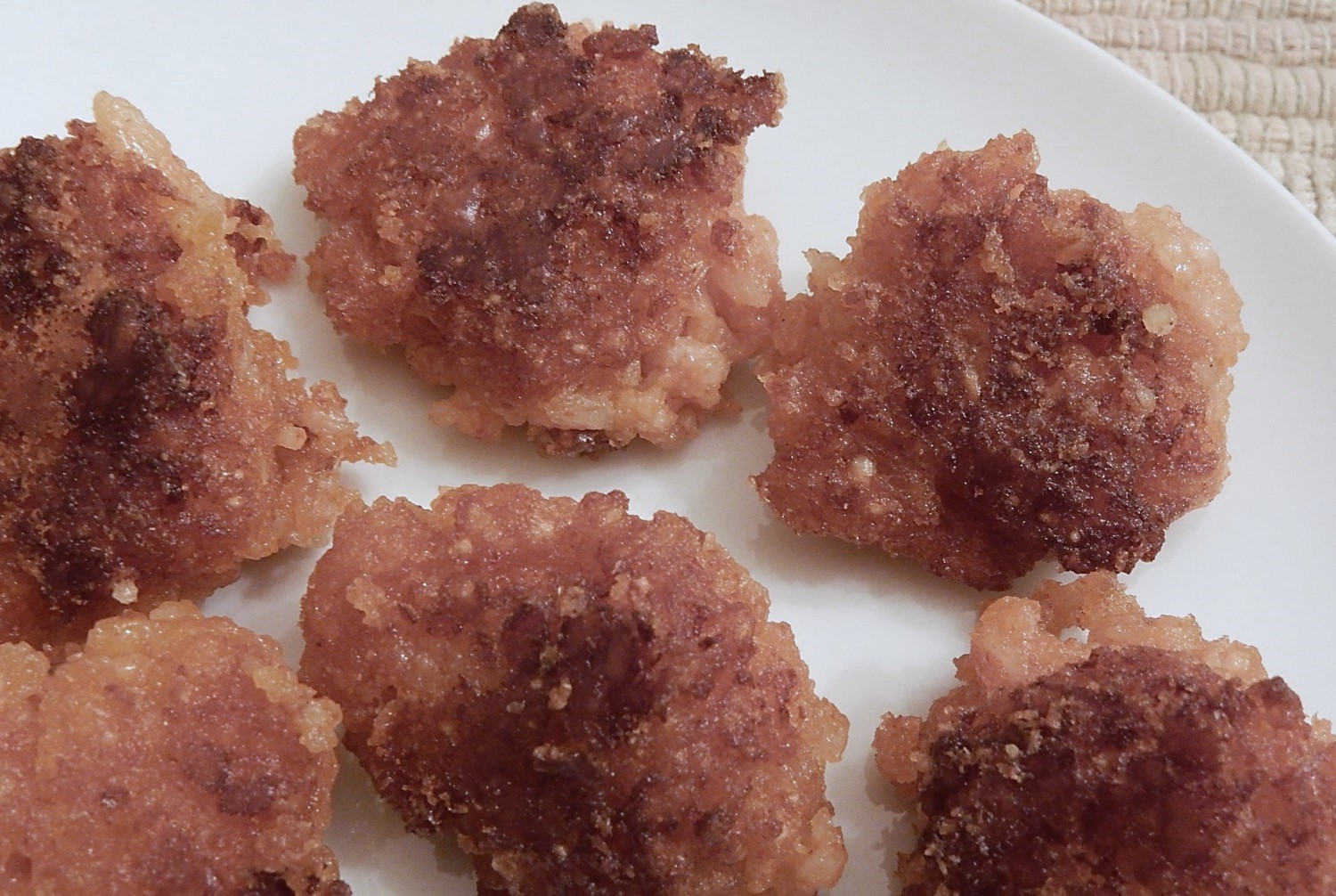
I’m always on the outlook for hundred-year-old snack and appetizer recipes. I recently found a recipe in a 1919 cookbook for Cheese and Rice Fritters.  They were crispy on the outside and tender on the inside, with a subtle cheese and tomato flavor. And, they were amazingly similar to  an hors d’oeuvre that I recently had at a catered event.

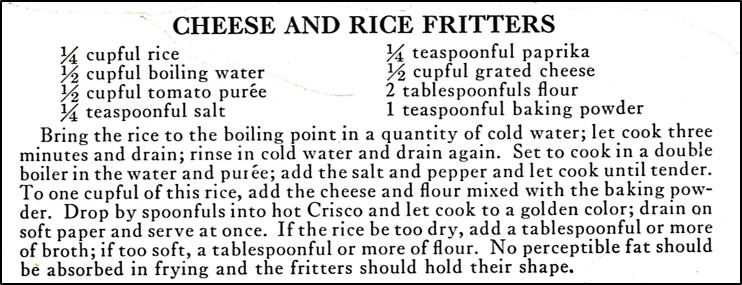
Here is the original recipe:

Recipe for Cheese and Rice Fritters
Source: Recipes for Everyday by Janet McKenzie Hill (1919)

And, here’s the recipe updated for modern cooks:

Cheese and Rice Fritters

  • Servings: 2 - 4
  • Difficulty: moderate
  • Print

1/2 cup rice

1 4-ounce can tomato sauce

water

1/4 teaspoon salt

1/4 teaspoon paprika

1 teaspoon baking powder

2 tablespoons flour

1/2 cup cheddar cheese, grated

shortening or lard

Cook rice following package directions with the following substitution – replace half of the water called for on the package with tomato sauce. (Any remaining tomato sauce can be saved and used in another recipe.) Puree cooked rice. (Cook’s note:  I’m not sure how the rice was pureed a hundred years ago. I used a blender to puree the rice – and that did not work very well. I think that a food processor might work better.)

In a mixing bowl, combine approximately 1 cup of pureed rice, salt, paprika, baking powder, and flour; stir until thoroughly mixed. (There may be extra rice that can be eaten or used in another recipe.)  Add grated cheese and stir until the cheese is evenly distributed throughout the dough. If dough is too dry, add 1 – 2 tablespoons of water; if too moist, add 1 or tablespoons of additional flour.

Heat 1/2 inch of shortening or lard until hot in large frying pan. Drop heaping teaspoons of dough into hot shortening. Flip fritters and fry until golden brown on both sides. Remove from heat and drain on paper towels. Serve immediately.

I used more rice than called for in the original recipe because 1/4 cup did not seem like enough to end up with 1 cup of pureed rice.

There’s Excess Flour and Sugar in Europe – No Worries, Eat Cookies

Source: Wikimedia Commons (Imperial War Museums), Women at a flour mill, public domain

1919 magazines were filled with articles about World War I, and how the U.S. and other countries were returning to normalcy following the end of war.

During the war, Americans conserved food and were able to send huge amounts of flour and sugar to Europe to feed the troops and others in need.

At the end of the war there was lots of sugar stockpiled in Europe, and people wondered what should be done with it.  Here’s what the February, 1919 issue of American Cookery had to say about this:

Cookies! Yanks Eat Millions

More than 6,000,000 old-fashioned American cookies have been manufactured in France and distributed with the compliments of the American Red Cross to the soldiers in service, the wounded in hospitals and to scores of canteens. Within a month it is expected that 700,000 will be made a day. At present the output is 200,000 a day.

It is the belief of Red Cross officials that the manufacture of cookies will not be affected by the cessation of hostilities.

It is pointed out that there is a six-months stock of sugar and one and a half years’ supply of flour in storage for making the cookies.


Old-fashioned Blueberry Duff

I recently came across a hundred-year-old recipe for Blueberry Duff in the February, 1919 issue of Good Housekeeping. Duffs often are steamed puddings – but this recipe is very easy to make and calls for baking the duff in the oven.

This Blueberry Duff is moist, rich, and spicy. It contains molasses, well as cinnamon, ginger, and cloves.

The recipe calls for canned blueberries. I’m fascinated by what people ate during the winter months in the days before modern transportation allowed produce to be shipped thousands of miles.  In 1919, fresh blueberries, were not available; but people regularly ate canned (either home canned or commercially canned) blueberries.

Here is the original recipe:

Source: Good Housekeeping (February, 1919)

And, here’s the recipe updated for modern cooks:

Blueberry Duff

  • Servings: 6 - 8
  • Difficulty: easy
  • Print

1 15-ounce (1 pint) can of canned blueberries (DO NOT use blueberry pie filling. This recipe calls for canned blueberries.)

2 cups all-purpose flour

1 cup barley flour

1/2 teaspoon ground ginger

1/2 teaspoon ground cloves

1/2 teaspoon cinnamon

1/2 baking soda

1/2 teaspoon salt

1 cup molasses

whipped cream, optional

Drain canned blueberries; reserve both juice and berries.

Preheat oven to 350° F. Put all-purpose flour, barley flour, ginger, cloves, cinnamon, baking soda, salt, molasses, and blueberry juice in a mixing bowl; beat until thoroughly combined. Stir the blueberries into the batter. Pour batter into a well-greased 1 1/2 quart casserole dish; put lid on dish. Bake in oven for 1 hour or until a toothpick inserted in the center comes out clean. Remove from oven, and let sit for 10 minutes, then remove from dish by running a knife around the edge of the dish and inverting on a plate.

Serve either warm or cold. If desired, serve with whipped cream.

“Mineral Matter in the Diet” Poem

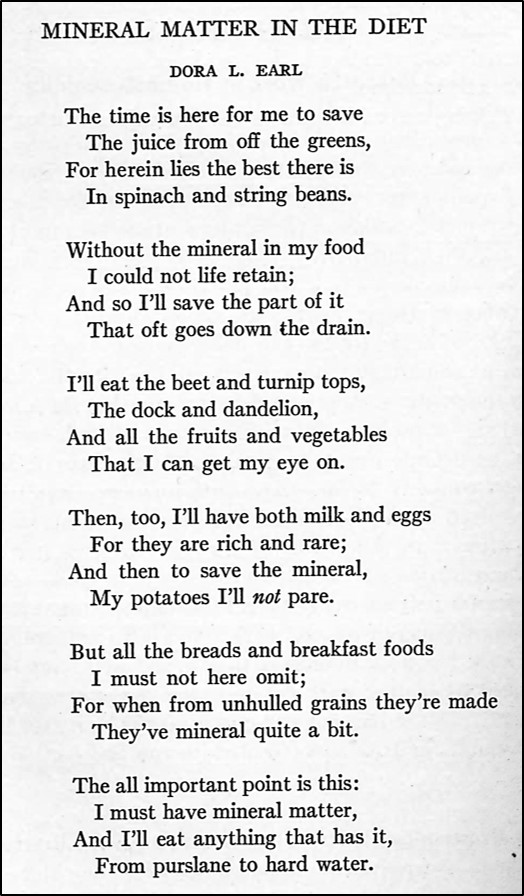
Poem titled: Mineral Matter in the Diet
Source: The Journal of Home Economics (April, 1919)

A hundred years ago, there was a lot of food-related research, and people were beginning to understand the important role of vitamins and minerals in our diet. I was amazed to even find a poem in the Journal of Home Economics which encouraged cooks to prepare foods which contained lots of minerals.

Old-fashioned Fig Meringue Pie

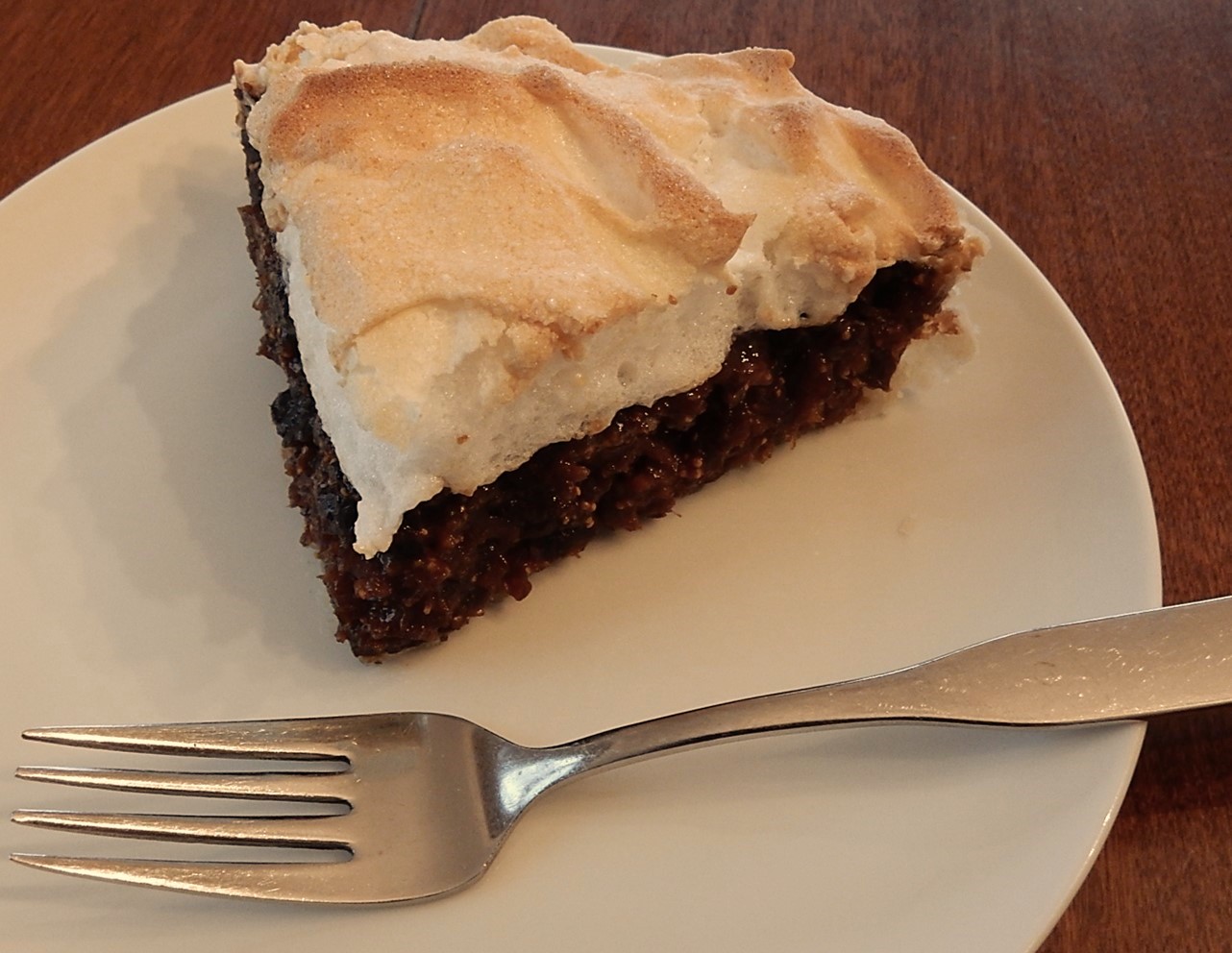
A hundred years ago, fresh fruit was scarce during the long winter months, so pies were often made using dried fruit.  I found a wonderful recipe for a Fig Meringue Pie in a 1919 cookbook. The delectable fig filling is topped with a creamy meringue.

Here’s the original recipe:

Source: Recipes for Everyday by Janet McKenzie Hill (1919)

And, here’s the recipe updated for modern cooks:

Fig Meringue Pie

  • Servings: 5-6
  • Difficulty: moderate
  • Print

12 ounces dried figs

1 1/2 cups water

2 eggs separated

2 tablespoons sugar + 4 tablespoons sugar + a small amount of additional sugar

dash salt

1 8-inch (small) baked pie crust

Remove stems from figs, then chop. (There should be approximately 2 1/2 cups of chopped figs.) Put chopped figs in a saucepan, add water. Bring to a boil using high heat, then reduce heat and simmer for 30 minutes while stirring occasionally. Remove from heat.

In the meantime, preheat oven to 325° F. Place egg yolks, 2 tablespoons sugar, and salt in a bowl; beat together. Place a small amount (approximately 1 – 2 tablespoons) of hot fig mixture into bowl with beaten egg mixture, stir quickly to prevent eggs from coagulating. Then put this mixture in the saucepan with the cooked figs while stirring. Return to heat (medium), and cook until the mixture thickens while stirring continuously.  Pour into a pie shell which had been previously baked.

In a separate bowl make the meringue. Place egg whites in the bowl, and beat the egg whites until they form stiff peaks. Gradually add 4 tablespoons sugar while continuing to beat. Then spoon on top of the pie and swirl; sprinkle with sugar. Bake for 20 minutes or until the meringue is lightly browned.