Mud! Had to Walk the Rails to Town

16-year-old Helena Muffly wrote exactly 100 years ago today:

Sunday, December 17, 1911: Went to Sunday School this afternoon taking the longer way up the railroad on account of the awful roads. Besse was out this afternoon to see Ruth’s outfit. Gaugers came down this evening. Must get up early tomorrow morning because Ruthie must depart early. 
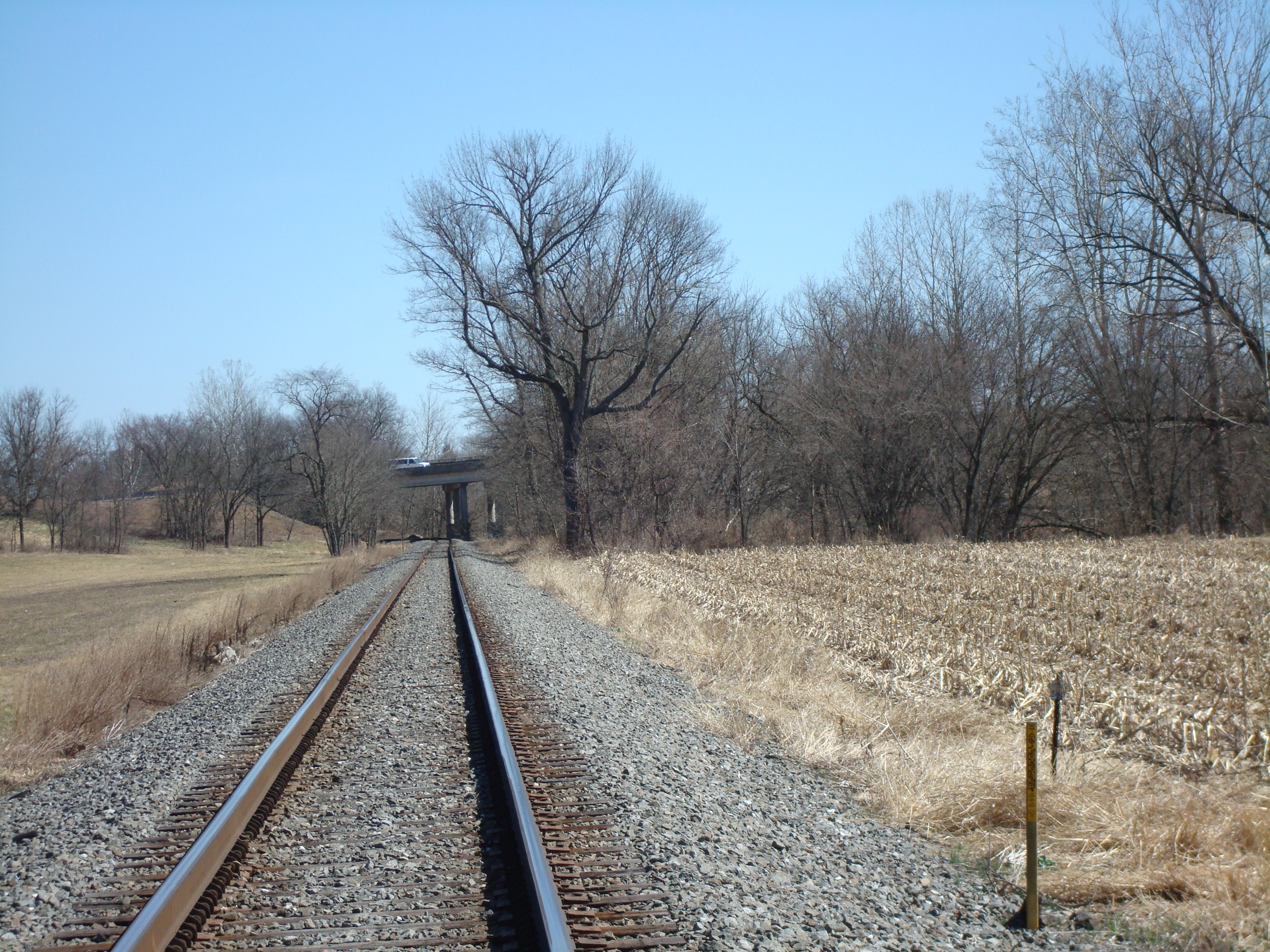
A hundred years ago Grandma would have walked this track from the Muffly farm to McEwensville. In those days the train track wouldn't have gone under an interstate highway underpass like it does today.

Her middle-aged granddaughter’s comments 100 years later:

The mud must still be horrific. The roads between the Muffly farm and McEwensville were not paved in 1911—but the Susquehanna, Bloomsburg, and Berwick railroad tracks crossed the farm, so Grandma sometimes walked the tracks to town when the roads were muddy. People frequently walked the rails a hundred years ago—though it was considered a somewhat dangerous practice.

Grandma’s married sister Besse must have come out to the farm from the nearby town of Watsontown to see the outfit of their other sister, Ruth.

A previous post mentioned that Ruth was going to an institute. Ruth was a teacher at a nearby one-room school house and I think that she was going to a short teacher professional development institute for part of the holiday break. (Schools had a longer winter break back then.)

The Gauger family lived on a farm that was located between McEwensville and Turbotville. That farm was about two miles from the Muffly farm.  Ruth married one of the Gauger children (Bill) several years after the end of this diary . Based upon the diary entries, I don’t think that Ruth was dating Bill Gauger in December, 1911. Also based upon previous posts, I do think that Grandma may have had a crush on Bill in 1911.

Old Tips for Making Tucks and Pleats (Plaits)

16-year-old Helena Muffly wrote exactly 100 years ago today: 

Saturday, December 16, 1911: Mater is making a skirt for me. Had it fitted this afternoon. It is navy blue and am going to wear it to school. While doing a little bit of sashing, which took some rubbing this afternoon I had the misfortune to make four blisters grow on four fingers. One blister pains somewhat in hot water. It is rather hard on the dishwasher, who has blistered fingers.

Source of Pictures: Ladies Home Journal, January 1912
Source of drawings: Ladies Home Journal, January 1912

Her middle-aged granddaughter’s comments 100 years later:

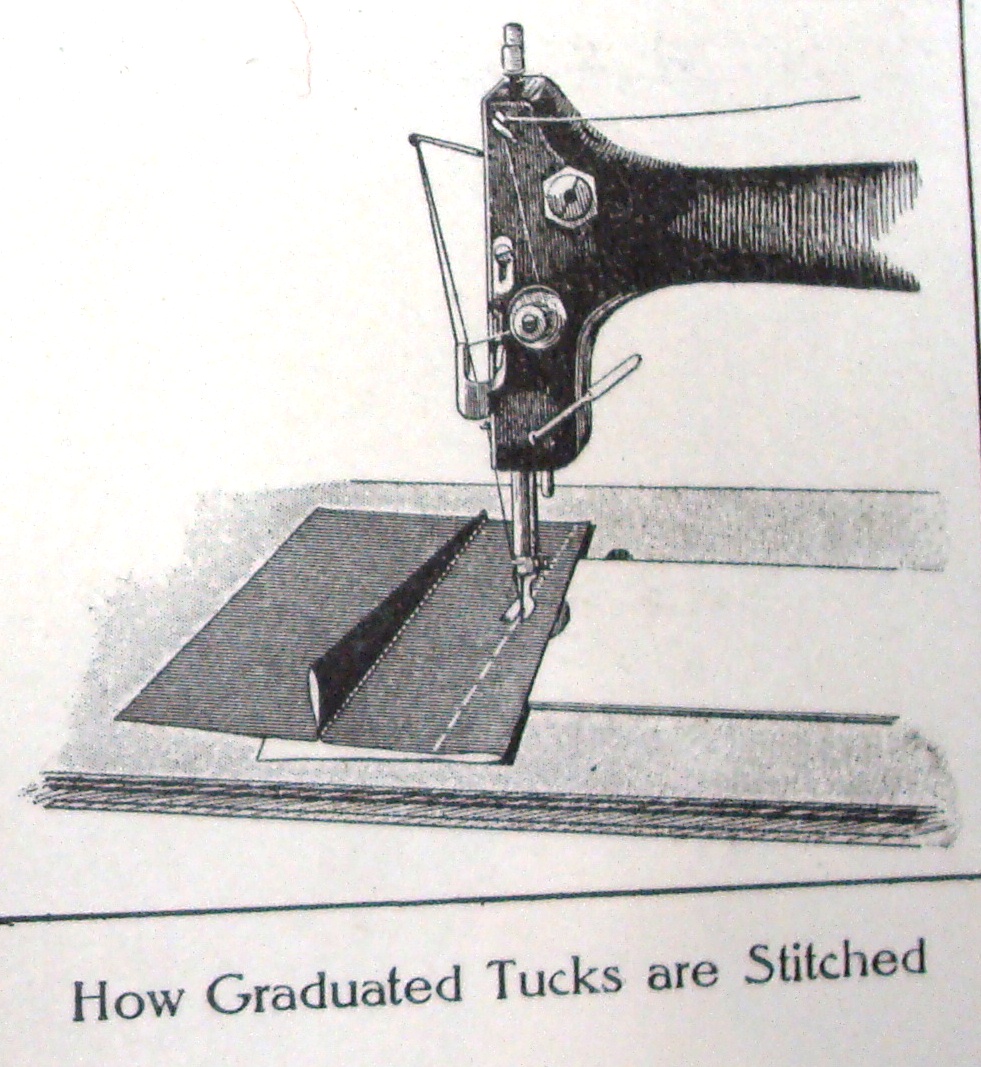
Grandma’s mother (Mater) probably used a treadle sewing machine to make the skirt. I wonder if the skirt had any tucks or pleats.  The January 1912 issue of Ladies Home Journal had an article titled, “How to Make Tucks and Plaits.”  (A hundred years ago pleats were often called plaits.)

Here a few quotes:

  • When using a pattern there must be taken up in each tuck or plait the exact amount that was allowed by the maker of the pattern.
  • Patterns are perforated; that is, holes are punched through them at the points where the allowances have been made for forming the tucks or plaits, so that the goods may be marked at these points. . .
  • Tucks and plaits that are marked by two lines of perforations which are to be brought together in forming are easily handled as follows: Lay the goods with the marks on the wrong side up, and put a pin from the under or right side of the good up through one point and down through the other, pinning the two points together. Proceed in like manner with the other points forming the lines, and you will have the fold securely pinned and extending on the right side of the goods. Baste of the right side of the goods in line with the row of pins, and try on the garment before stitching or pressing the tucks or plaits, for the tucks or plaits may be taken up or let out so as to make the garment conform to the shape of the individual.
  • As forms vary so much in shape it may be necessary to take up goods in one tuck or plait and let out the goods in another, thus changing the shape of the garment but not changing the size.

What Was the Teacher’s Last Name?

16-year-old Helena Muffly wrote exactly 100 years ago today: 

Tuesday, December 12, 1911: Jake says we have to study harder. It seems to me such tiresome work, but I suppose I could if I tried hard enough. I guess I staid up longer tonight than I did last night, although it is not so very late now.

Lots of resources--none of which answer my question.

Her middle-aged granddaughter’s comments 100 years later:

I’m continually amazed how many mysteries about Grandma’s life as a teen-ager I’ve been able to resolve (at least to my own satisfaction) with a little research. However, occasionally I’m totally baffled by things that I feel like I should be able to figure out. Today is one of those days–.

What was Jake’s last name?

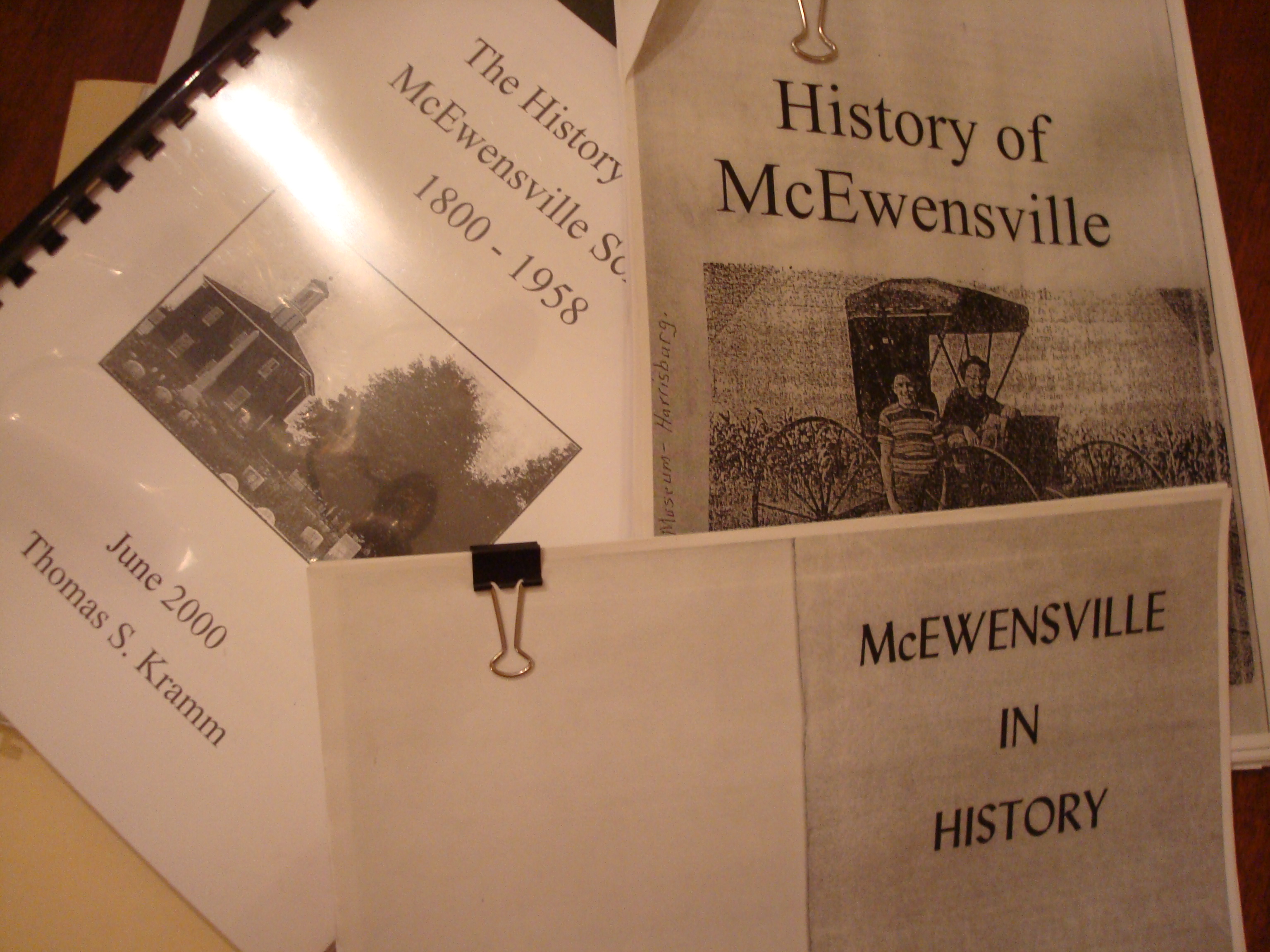
The History of the McEwensville Schools by Thomas Kramm indicates that the teacher during the 1910-11 school year was Howard Northrop; and that there were two teachers during the 1911-12 school year—Howard Northrop and D. Forest Dunkle.  And, Leon Hagenbuch in his History of McEwensville lists the same teachers. I suppose they both used the same source—sigh.

I’m not getting anything close to Jake out of those names –but maybe Howard went by a nickname. Grandma’s referred to her teacher several times in the diary as Jake or Jakie. I wonder if she called him Jake to his face or it he was Mr. ____.

Jake seems to be very young for a teacher and almost one of the gang. For example, in the fall Grandma and other girls teased him about drawing a picture of a diamond ring, and the previous winter he fell through the ice while skating one evening with students.

Another 1911 Christmas Gift Idea: Make a Handbag

16-year-old Helena Muffly wrote exactly 100 years ago today: 

Monday, December 11, 1911: Nothing much to write about.

Her middle-aged granddaughter’s comments 100 years later:

Since Grandma didn’t write much today, I’ll share some more photos of Christmas gift ideas from the 1911 issue of Ladies Home Journal.

“Girl’s handy bag for school. It is crocheted of mercerized thread and lined with heavy green linen.”

(An aside—I love this bag. I had one that looked almost like it when I was in junior high. I think that a great aunt made it for me—though I can’t remember with certainty which one.

“A Japanese silk handkerchief was used to make this pretty bag. The handles are embroidery hoops.”

Craft Idea: Make an Old-Fashioned Paper Christmas Tree

16-year-old Helena Muffly wrote exactly 100 years ago today: 

Friday, December 8, 1911: Had such a vexatious time with Jimmie. He fell down in the mud at noon and he was covered from top to toe, but I succeeded in making a slight improvement on him. Then coming home he lost one of his rubbers and I had to go back after it.

Her middle-aged granddaughter’s comments 100 years later:

The primary school was on the first floor of the McEwensville School building–and the high school was on the second floor. Grandma’s 6-year-old brother Jimmie was a first grader at the school. I suppose someone came upstairs and got her when Jimmie got muddy.

Little brothers can be a pain sometimes—but Grandma probably also sometimes did fun things with Jimmie. Maybe Grandma helped Jimmie make Christmas crafts.

Here are directions to make a paper Christmas tree.

Fold two sheets of green construction paper together and cut out 2 Christmas trees.

Unfold the trees and staple together on the fold. (A hundred years ago, they may have sewed the trees together on the fold.)

Cut “decorations” out of the old Christmas cards and glue on the tree. Glue the small buttons on the tree to make ornaments (Don’t use too many or the tree might get top-heavy and not stand properly.)

Stand the tree up, and use a small piece of decorative cord or other bric-a-brac to make a garland.

(An aside–One thing that I really like about the old days is how people routinely re-purposed items that were around the house to make decorations.)

1911 Advertisements for Christmas Gifts

16-year-old Helena Muffly wrote exactly 100 years ago today: 

Wednesday, December 6, 1911: Have my part of the dialogue well under way. You may think I’m smart, but I haven’t much to say. I’m commencing to get streaks of thinking what I’ll buy for Xmas presents. My pocketbook is limited so I’ll have to make a careful list beforehand.

Maybe Grandma thought about buying bracelets for her sisters. (Ad Source: A portion of a Merry Mason Company  advertisement in The Youth’s Companion, December 7, 1911)

Her middle-aged granddaughter’s comments 100 years later:

Grandma was memorizing a dialogue for a school “entertainment” that was to be held before the Christmas break.

Let’s see—Grandma probably needed to buy gifts for at least seven people: her mother, her father, her sister Ruth, her little brother Jimmie, her married sister Besse, her brother-in-law Curt, and her best friend Carrie Stout.  Whew, I can see how that it could be expensive.

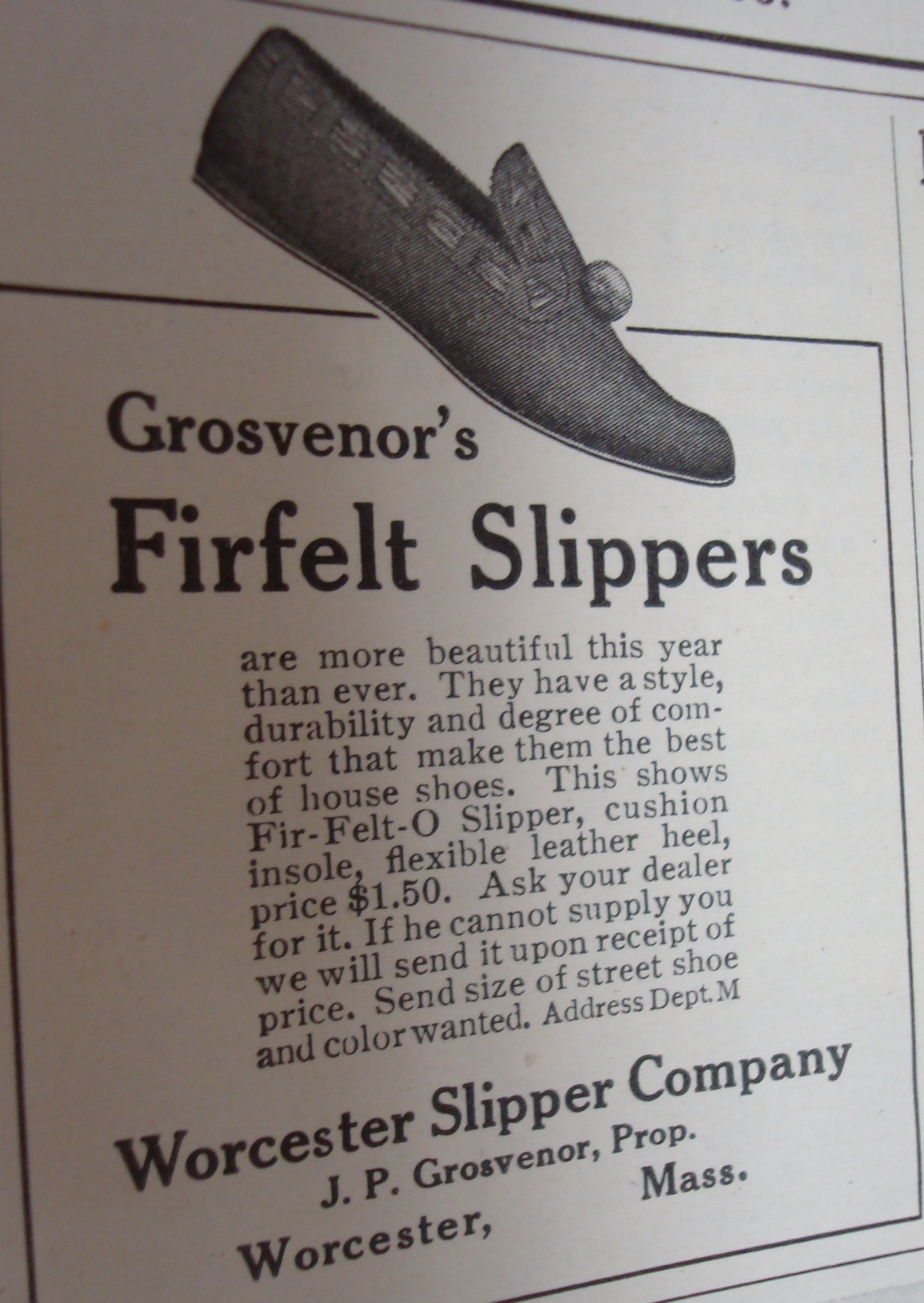
How about slippers for brother-in-law Curt? (Ad source: Ladies Home Journal, December, 1911)

In many ways the young woman who wrote the diary seems very different from the elderly grandmother that I remember—but this is one place where I can really recognize my grandmother. She always worried about money and I can picture her carefully planning what she would purchase before she went shopping.

And, maybe a glass candle holder for Mother? (Ad source: Ladies Home Journal, December, 1911)

Had to Walk Home in the Snow

16-year-old Helena Muffly wrote exactly 100 years ago today: 

Sunday, December 3, 1911: Went to Sunday School this afternoon. Coming home it was snowing and I was rather dubious as to whether my new hat would take it all right or not, but it did.

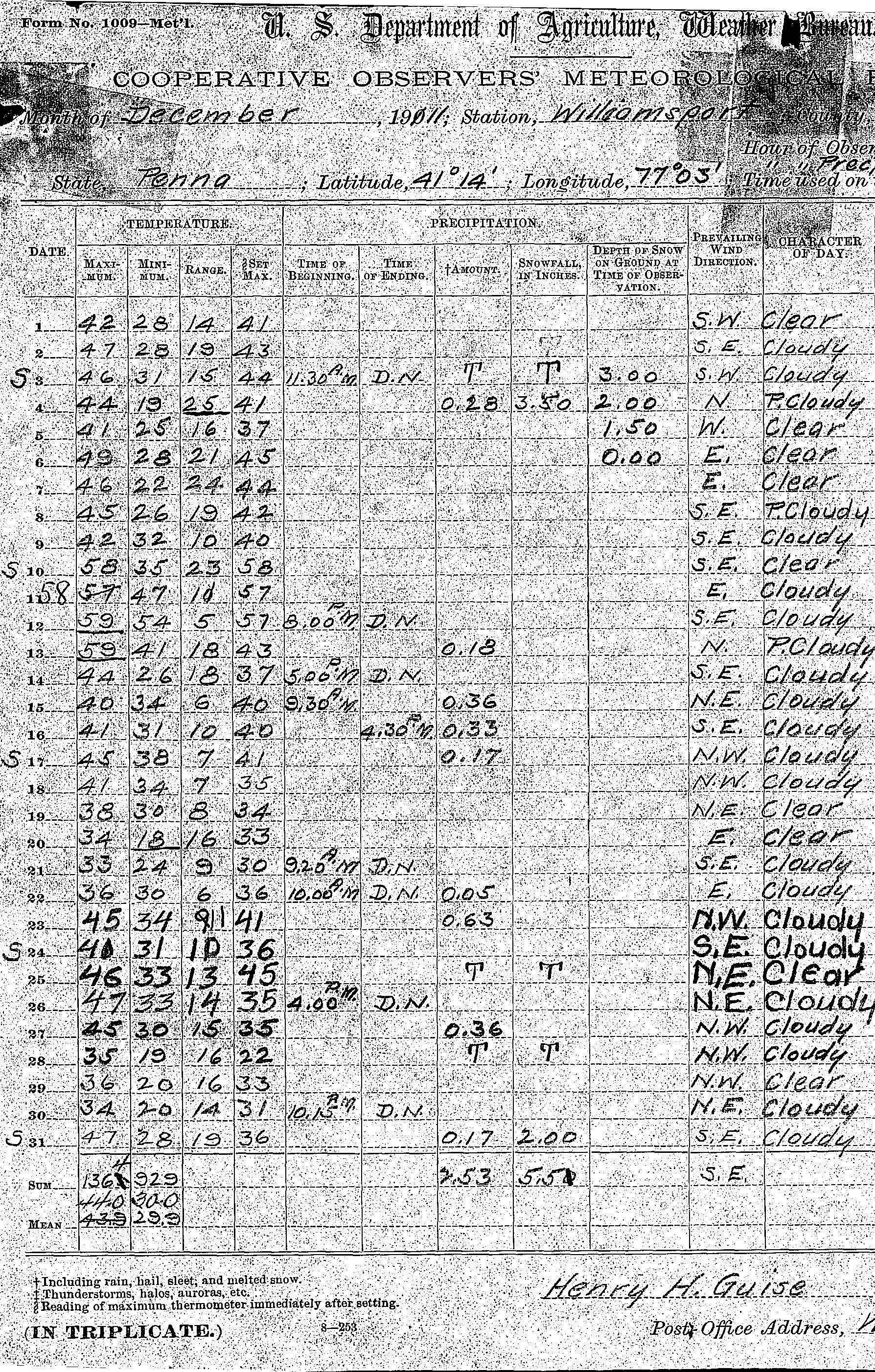
Source: National Climatic Data Center

Her middle-aged granddaughter’s comments 100 years later:

It sounds like a blustery winter day. I found the weather data for December, 1911 for Williamsport, Pennsylvania on the National Climatic Data Center website.

Williamsport is about 20 miles northwest of McEwensville. According to the observation sheet, on December 3, 1911 the high was 46 degrees and the low was 31. It also indicated that there was a trace of snow  and that the wind was coming from the southwest.

The sheet said that there was 3 inches of snow on the ground—which seems somewhat surprising because the previous day’s entry did not indicate any snow on the ground.

Williamsport is across a mountain from McEwensville—so maybe the weather wasn’t as bad there as it was where Grandma was walking. But I wouldn’t expect there to be major differences in the weather between the two towns (and in general I think that it would be a little warmer in McEwenville).

I suppose that it really was just a raw day with some snow flurries—but that the mile or so walk between the church in McEwensville and the Muffly farm was pretty miserable (especially if you were worried that your new hat might get ruined).