How Long is a Rod?

16-year-old Helena Muffly wrote exactly 100 years ago today: 

Thursday, February 22, 1912:  Such a time as I had getting to school this morning. It was terribly icy. Pa went along to help Jimmie along. They both went down together. It looked so comical. We observed Washington’s Birthday today by some pupils reciting different accounts of his life. Coming home tonight my cap flew off my head and I had to race after it four or five rods before I captured it.

Saw a possum tonight. That was after he met his fate.

Did Grandma's cap look like this? (Source: Ladies Home Journal--November, 1911)

Her middle-aged granddaughter’s comments 100 years later:

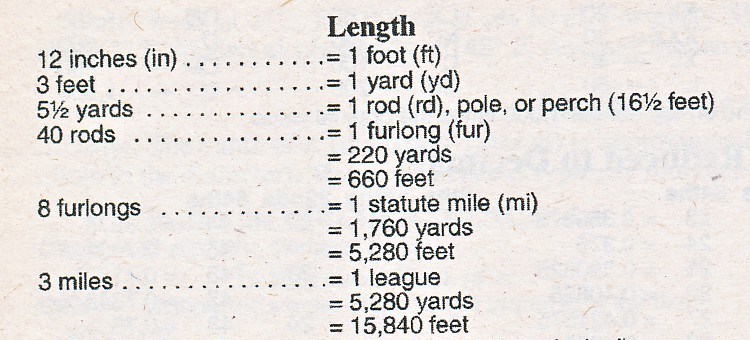
Wow, Grandma actually thought about distances in terms of rods. A rod equals 5 1/2 yards.  So Grandma had to chase the cap about 22 – 27.5 yards.

The use of rods as a unit of measurement apparently was widely used early in the 20th century—but had become largely archaic prior to the latter half of the 20th century. I have never, ever thought in terms of rods.

I can remember having composition books when I was a child that listed all sorts of mysterious weights and measures on the back—rods, perches, and so on. But word problems in math class only referred to inches, feet, yards and other commonly used units. 
Miserable Weather–Rained and Snowed

16-year-old Helena Muffly wrote exactly 100 years ago today: 

Wednesday, February 21, 1912:  It rained and snowed today. Pa came for us tonight. He got there too soon. Made me so mad. Had to miss a class as he didn’t want to wait.

Her middle-aged granddaughter’s comments 100 years later:

Sounds like a miserable, raw late winter day. It’s interesting that Grandma didn’t want to miss a class, but that her father won’t wait. Was the weather that bad? . . . or was he just in a hurry?

I assume that he took Grandma and her brother Jimmie home in a horse-drawn buggy.

Sugar and High Fructose Corn Syrup Per Capita Availability: 1912 and 2012

16-year-old Helena Muffly wrote exactly 100 years ago today: 

Tuesday, February 20, 1912:  I hardly know what to write.

Click on chart to make larger.

Her middle-aged granddaughter’s comments 100 years later:

Since Grandma didn’t write much a hundred years ago today, I’ll tell you about some interesting statistics that I found.

We hear so much about how we eat too many sweets today. The US Department of Agriculture (USDA) has one hundred years of trend data about per capita availability of sugar and high fructose corn syrup.

In 1912 there was enough sugar for every man, woman and child in the US to eat 76 pounds of sugar per year. Sugar availability was 102 pounds in 1972. By 2012 there were 64 pounds per person.

A hundred years ago people ate a small amount of corn syrup per capita, but it was not high fructose corn syrup. Prior to the late 1960s corn syrup was either glucose or dextrose.

In 1972 there was 1 pound of high fructose corn syrup per person. By 1992 there was 63 pounds per person.  It decreased to 50 pounds per person in 2012.

2009 data are the most recent year available on the USDA website. When making the chart, I assumed that per capita availability of sugar and high fructose corn syrup is the same in 2012 as it had been in 2009.

Liked New Teacher

16-year-old Helena Muffly wrote exactly 100 years ago today:

Monday, February 19, 1912:  I believe our teacher is just as good as the other one. He goes slow with our studies but explains so they will be more apt to stay.

Building that once housed the McEwensville Schools. The high school was on the second floor.

Her middle-aged granddaughter’s comments 100 years later:

It’s always difficult when a teacher quits mid-year, but Grandma seemed pleased with the new teacher, Forest Dunkel, after the first day.

School Had Financial Problems

16-year-old Helena Muffly wrote exactly 100 years ago today: 

Sunday, February 18, 1912:  Went to Sunday School this afternoon. The roads are rather muddy. Went over to see Carrie this afternoon. I mean I went to Sunday School this morning. I wonder what will happen tomorrow at school I just wonder if Mr. Forest Dunkel (that’s his name) is going to be stern and terrible.

Grandma would have walked down this road to church--EXCEPT in those days it wasn't paved.

Her middle-aged granddaughter’s comments 100 years later:

Forest Dunkel was going to be the new teacher at McEwensville High School. The previous teacher had quit mid-year.

As I told you several days ago, McEwensville School had a difficult time keeping teachers because of the low teacher salary. Here’s a little more information about the school’s financial problems:

Sometimes the school board was unable to pay the teachers at the appropriate time and could do so only when there was again enough money in the treasury. The McEwensville school board had difficulty collecting tuitions due from the directors for pupils attending from Delaware Township. At one time McEwensville even considered going to court to collect these monies, but concluded that it would not be worth the legal expense involved.

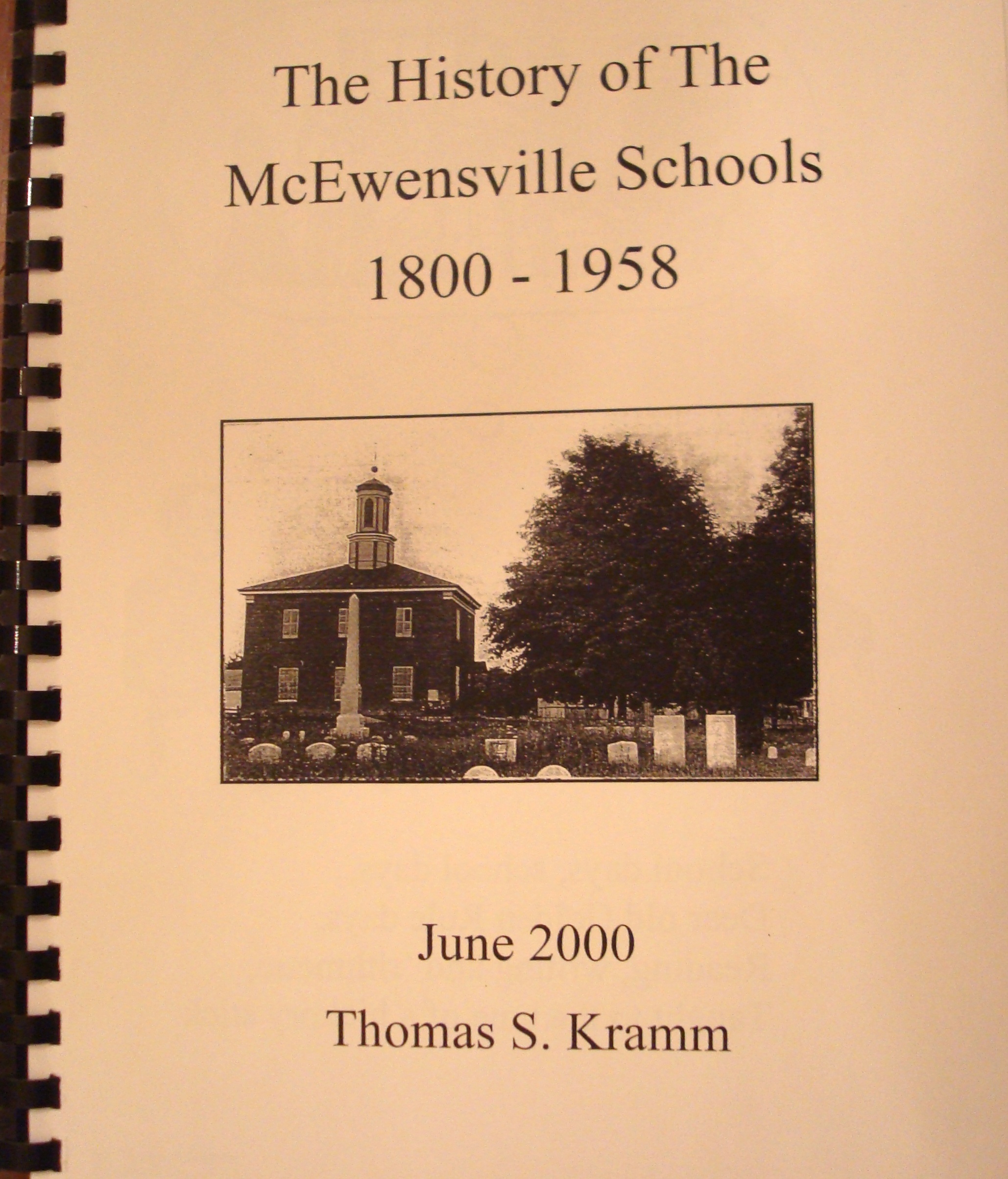
The History of the McEwensville Schools (2000)  by Thomas Kramm

Grandma’s family lived in Delaware Township, so she would have been one of the students that the school was having difficulty getting the township to pay for in a timely manner.

Carrie Stout was a friend of Grandma’s who lived on a nearby farm.

High Teacher Turnover

16-year-old Helena Muffly wrote exactly 100 years ago today: 

Friday, February 16, 1912: And this is the last day of that wonderful teacher of ours. I wonder how he felt this afternoon. I expected he would give some kind of an address, but he didn’t. Oh well, I don’t think I’ll be sorry of his leaving if the next one comes up to the average.  

Her middle-aged granddaughter’s comments 100 years later:

Grandma wrote the previous Friday that her old teacher was staying for one more week.

I learned a little more about the mid-year change in teachers in the  History of the McEwensville Schools by Thomas Kramm:

. . . The high teacher turnover rate, especially in the high school prior to 1916, resulted in a new teacher almost every year. At least one teacher, and perhaps more, would not return to teach the following school year because the school board refused to increase the teacher’s salary. Although it did not occur often, when a teacher resigned in mid-term it was sometimes a challenge to find a replacement. During the 1911-12 school year, when high school teacher Howard Northrop wanted to resign mid-term, his resignation was not permitted until he personally recruited his own replacement.

Whew, it doesn’t sound like the school board did much vetting of teachers. Hopefully the new teacher will be good.

Valentine’s Day

16-year-old Helena Muffly wrote exactly 100 years ago today: 

Wednesday, February 14, 1912:  I didn’t get any valentines today, although they would have been accepted if I had. Our future teacher arrived at school this morning, but he isn’t going to commence until next Monday. Gee whiz, but he is tall. I wonder if I will like him, but I think I will.

Grandma didn't get any, but here is an example of a nice 1912 valentine postcard.

Her middle-aged granddaughter’s comments 100 years later:

Grandma sounds kind of sad that she didn’t get any valentines.  Though getting nothing was probably better than she deserved since she only sent ugly, vinegar valentines.

Is it worse to be ignored than to get a vinegar valentine?