16-year-old Helena Muffly wrote exactly 100 years ago today:
Thursday, March 14, 1912: I wrote out the meaning of that wonderful poem today. I hope I have it as it should be. Am coming to some terrible hard propositions in geometry. The one we have for tomorrow seems so hard for me.
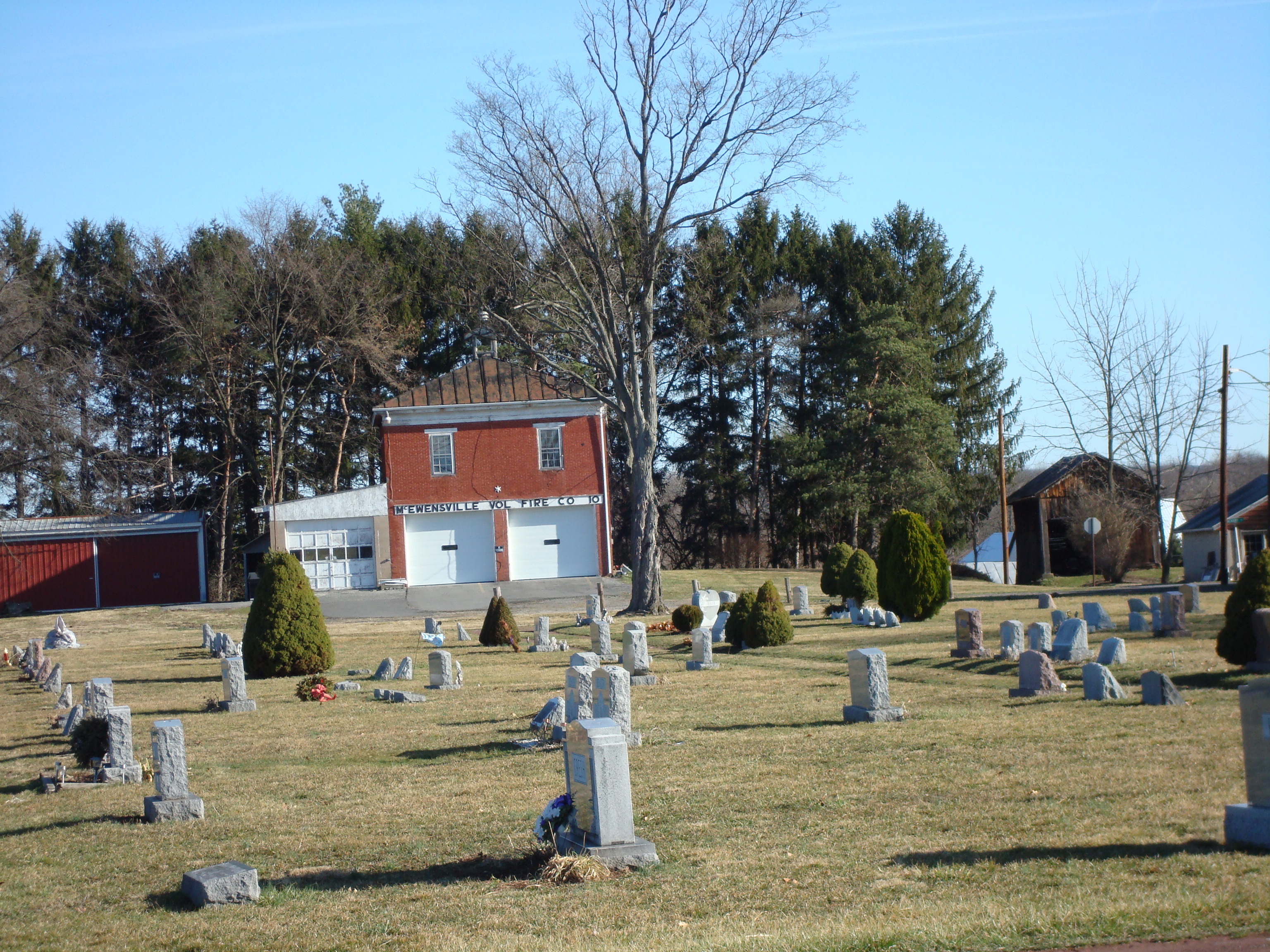
Recent photo of building that once housed McEwensville High School.
Her middle-aged granddaughter’s comments 100 years later:
Did Grandma’s high school courses prepare her for the life she lived?
Grandma attended McEwensville High School—a small classical 3- year high school. She studied geometry (and Latin)—and literature. Grandma did not go to college—and never had a career.
In the early 1900’s there was a lot of discussion about whether a classical high school education met the needs of some students.
About five miles from McEwensville a modern high school was being built in Milton. There was a movement towards larger 4-year general high schools that offered a wider range of courses and different tracks (commercial, home economics, etc.).
Over the next few years, more students from McEwensville attended the more modern high school in Milton (as well as the high school in Watsontown). And, in 1921, McEwensville high school closed because of lack of students.
(The building continued to house an elementary school until 1958.)
16-year-old Helena Muffly wrote exactly 100 years ago today:
Sunday, March 9, 1912: Blanche slept with Ruth and me. I slept on the rail part of the time. Made me kind of stiff. Went to Sunday School this afternoon. B. was there. Hat blew off coming home, but by luck didn’t land in the mud.
Her middle-aged granddaughter’s comments 100 years later:
Grandma had a crush on B. in the diary but doesn’t use the complete name. I think that B. refers to Bill Gauger. Grandma’s sister Ruth married Bill several years after the diary ended.
Blanche Bryson was a friend of Grandma and Ruth. The previous day’s entry indicated that their friend had arrived by train.
I assume that rail refers to the edge of a wooden bed frame. A hundred years ago, people didn’t have nearly the amount of privacy or space that they do today. Grandma and her sister Ruth shared a double bed—and it sounds like when they had an overnight guest they managed to squeeze a third person in.
I wonder how late they stayed awake talking. What did they talk about? Did their parents tire of the noise and tell them to go to sleep?
16-year-old Helena Muffly wrote exactly 100 years ago today:
Saturday, March 9, 1912: Ruthie’s friend, Miss Bryson, arrived here on the train. I had to do my sister’s milking. They went to a play in Watsontown this evening. I coughed so today that Ma said I might be getting the whooping cough. It did scare me some.
Recent photo of downtown Watsontown. Where were plays once held?
Her middle-aged granddaughter’s comments 100 years later:
Grandma’s cough sounds bad. Hopefully she didn’t have whooping cough.
Maybe Grandma tried some home remedies. Here are some old-time cough remedies in the Compendium of Everyday Wants (1908):
COUGH – Below will be found a number of cough cures and syrups that are unfailing and will relieve the worst forms.
Treatment No. 1—One of the most simple remedies is flaxseed lemonade, made by adding two or three tablespoons of flax seed to a lemonade made of two lemons, two tablespoonful’s of sugar and about a quart of water; boil it.
Treatment No. 2—COUGH SYRUP—Mix together one-half pint of honey, 1/2 pint of gin, 1/2 oz. of oil of tar, 1/2 oz. of balsam fir. Take a teaspoonful three times a day. This is one of the most effective and valuable remedies known for coughs and will break up a cold where other remedies fail.
Treatment No. 3—An efficacious remedy for continued cough is found in chewing the bark gotten from the root of sumac. Chew the bark. Several kinds of sumac are poisonous, but use the common upland sumac, having cone-shaped bunches of berries and from which a milky fluid comes when leaves are broken.
I don’t know where to get all of the ingredients for any of these remedies. And, even if I could find Sumac bark—I won’t want to risk something that requires warnings about avoiding the poisonous types.
Miss Bryson refers to Blanche Bryson. She was mentioned several times in the dairy during during 1911. At that time it seemed like she lived in either in or near McEwensville. She apparently had moved somewhere more distant by 1912.
Wow, I never would have guessed that Oreos were a hundred years old. Part of me thinks it’s awesome that this cookie has been around so long—and that Grandma probably enjoyed them as a teen.
However, another part of me is sad that processed foods like Oreos were available a hundred years ago. I want to believe that people ate wholesome, homemade, locally produced foods a hundred years ago—when the reality is that by 1912 the world was rapidly industrializing and “modern” foods were readily available.
16-year-old Helena Muffly wrote exactly 100 years ago today:
Tuesday, March 5, 1912: I’m trying to commit that abominable piece of poetry to memory and it’s no easy task either, although it is short in the extreme. I only hope I know it, when the time comes to say it.
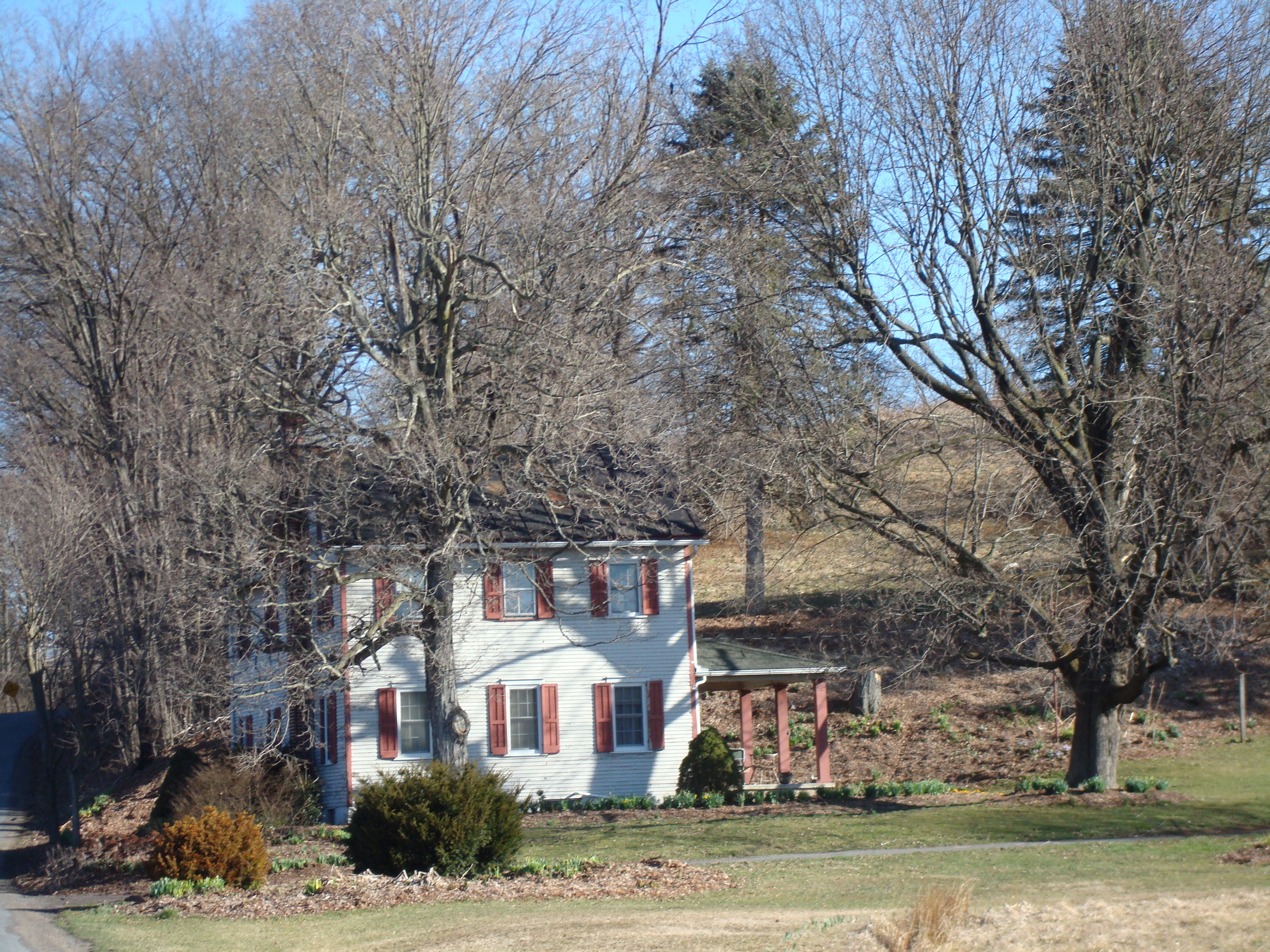
A hundred years ago Grandma was sitting inside this house trying to memorize an abominable poem.
Her middle-aged granddaughter’s comments 100 years later:
What could the abominable poem have been? A hundred years ago people memorized recitations, poems, and Bible verses more than they do today.
Grandma generally did not complain about needing to memorize something. For example, one Sunday she memorized 27 Bible verses. This poem must have had some very difficult text (a dialect perhaps??).
The Poem of Quotes website provides information about lots of 18th and 19th century poets and poems. I browsed through it, but am not familiar enough with old poetry to even guess which poem Grandma was trying to memorize.
16-year-old Helena Muffly wrote exactly 100 years ago today:
Monday, March 4, 1912: I have my first cold of the winter now. It seems to have all gone to my throat. We are going to have recitations next Friday, but our teacher instead of having some interesting speeches favors dried up pieces of poetry. Oh it will be stupid from beginning to end.
Her middle-aged granddaughter’s comments 100 years later:
Colds aren’t fun. Maybe Grandma used some cough drops to soothe her throat. Amazingly Smith Brothers’ Cough Drops were available a hundred years—and are still available today.
Rainy Day
Cough at Night
5 cents a box
Never be without a box of S.B. cough drops during the Fall and Winter– during damp, chilly weather when sore throats, coughs and hoarseness are so prevalent. Take a few of these drops on your way home from the heated theatre, dance hall, office, etc. Far better than medicine, more pleasant, too. Good to take before the “forty-winks.” They loosen the phlegm.
Smith Brothers’
S.B. Cough Drops
Containing Only Pure Medicinal Oils–No Glucose
Makers of S.B. Chewing Gum and Lasses Kisses
Smith Brother of Poughkeepsie
Your Grandpa Knows Us
I absolutely love the last line of the ad–“Your Grandpa Knows Us.” Smith Brother cough drops have been around for a long, long time if that’s how they were advertising them in the early 1900s!
16-year-old Helena Muffly wrote exactly 100 years ago today:
Tuesday, February 27, 1912: Quite uneventful. Ruth went up to Oakes this evening, but I staid at home and studied my lessons.
Devil's Food Cake (Hundred-Year-Old Recipe)
Her middle-aged granddaughter’s comments 100 years later:
Since this diary entry is self-explanatory, I’m going to go off on a tangent.
I recently bought a 1912 cookbook off EBay. My daughter glanced through it and noticed that the devils food cake recipe seemed very different from today’s recipes.
So we decided to compare a devils food cake made with a modern recipe with one made using a hundred year old recipe.
In the early 1900s angel food cakes and devils food cakes were seen as the polar opposites—one was white and light; the other dark and heavy.
The cake made with the hundred year old recipe was a dense chocolate spice cake. The recipe called for mashed potatoes (mashed potatoes ?!?!), cinnamon, nutmeg and nuts. It reminded us of gingerbread–though ginger was not an ingredient. I’ve never eaten anything exactly like it—but the cake was very good and I’d make it again.
100 Year-Old-Recipe
Calumet Devil’s Food Cake (Chocolate Spice Cake)
2 cups flour
2 level teaspoons Calumet (or any other brand) baking powder
2 level teaspoons cinnamon
1/2 teaspoon nutmeg
1 3/4 cups granulated sugar
1/2 cup milk
3/4 cup butter
2 eggs
1 cup warm mashed potatoes
2 squares unsweetened chocolate
1 cup chopped nuts
Preheat oven to 350 degrees. Grease and flour baking pan, 13 X 9 X 2 inches. Melt butter and chocolate. Combine with all of the other ingredients except nuts. Beat until well-blended. Stir in nuts.
Pour into pan. Bake approximately 45-50 minutes or until pick comes out clean.
Adapted from the recipe in Calumet Baking Powder Reliable Recipes (1912)
The modern devils food cake recipe that my daughter made was from my Betty Crocker Cookbook. The recipe called for red food coloring—but otherwise seemed similar to other modern chocolate cake recipes. The cake was awesome.
Devils Food Cake
1 3/4 cups all-purpose flour
1 cup granulated sugar
1/2 cup brown sugar (packed)
1 1/2 teaspoons soda
3/4 teaspoon salt
1 1/4 cups buttermilk
1/2 cup shortening
2 eggs
2 ounces melted unsweetened chocolate (cool)
1 teaspoon vanilla
1/2 teaspoon red food color
Heat oven to 350 degrees. Grease and flour baking pan, 13x9x2 inches, or two 9-inch or three 8-inch round layer pans. Measure all ingredients into large mixer bowl. Blend 1/2 minute on low-speed, scraping bowl constantly. Beat 3 minutes high-speed, scraping bowl occasionally. Pour into pan(s).
Bake oblong about 40 minutes, layers 30-35 minutes or until wooden pick inserted in center comes out clean. Cool.
(Recipe suggests using chocolate or cream cheese frosting.)