18-year-old Helena Muffly wrote exactly 100 years ago today:
Wednesday, January 28, 1914: Ruth and I went up to town this evening. I am in some kind of a thing that’s to be given in the church. Went up to practice. We had quite a bit of fun even if we did have to work some at making crosses.
Her middle-aged granddaughter’s comments 100 years later:
What fun!. . . Spending a winter evening with friends sounds wonderful. What was the upcoming event at the church that Grandma was practicing for? And, what were the crosses she was helping make?
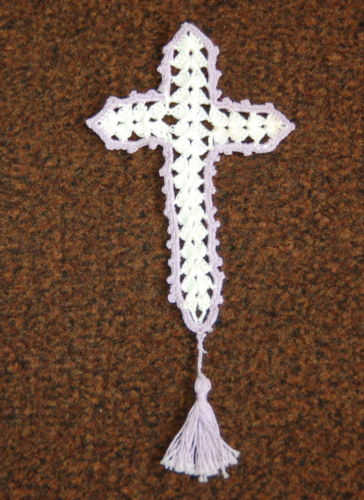
Maybe they were making crocheted cross bookmarks. I can remember occasionally getting crocheted crosses that church members made when I was a child.
There are lots of different types of crocheted crosses. Directions for making one type are at Moms Love of Crochet.
18-year-old Helena Muffly wrote exactly 100 years ago today:
Tuesday, January 27, 1914: Read and practiced and vice versa this afternoon, and so the hours sped on.
Source of Pictures: Trees in Winter
Her middle-aged granddaughter’s comments 100 years later:
Reading and practicing the piano—sounds like a nice way to pass a cold winter day. As Grandma transitioned between activities, did she ever glance out the window and see the haunting beauty of trees swaying in the winter wind?
I found an interesting old book called Trees in Winter about how to identify trees during the winter months. (I can’t identity most trees even during the summer—and was amazed that some people can identify them even without their leaves).
Here’s some of the information that the book had about identifying White Oaks during the winter:
White Oak
Habit—A large tree with average height of 50-75 ft. and a trunk diameter of 1-6 ft. somewhat various in habit, tending in the open to show a broad outline, sometimes 2-3 times as broad as high, with short trunk and lower limbs horizontal or declined, characteristically gnarled and twisted.
Bark—Light gray or nearly white, whence its name; broken by shallow fissures into long, irregular, thick scales which readily flake off. On some trees ridges broken into short oblongs give a rougher appearance to bark. Bark up to 2 inches thick in older trees, inner bark light. The bark is rich in tannin, is of medicinal value and is used in tanning.
Twigs—Of medium thickness, greenish-reddish to gray, smooth sometimes covered with a bloom. Lenticels forming conspicuous, light-colored, minute, rounded, raised dots. Leaves frequently remaining on tree throughout winter.
Buds-Broadly ovate, blunt, about 3 mm. long, reddish-brown, sometimes slightly hairy.
Fruit-Maturing in autumn singly or in pairs. Nut-ovoid to oblong rounded at apex, shiny, light chestnut brown, 1.5-2.5 cm. long, enclosed 1/3-1/4 of its length by deep saucer-shaped cup. Meat sweet, edible, sometimes roasted and used as a substitute for coffee, or when boiled said to be a good substitute for chestnuts.
Distribution-On moist or dry ground and in various soils sometimes forming nearly pure forests. Quebec and Ontario, south to the Gulf of Mexico; west to Minnesota, Nebraska, Kansas, Arkansas and Texas.
Wood-Strong, very heavy, hard, tough close-grained, durable, light brown, with thin lighter colored sapwood; the most valuable of the Oaks for timber, used in shipbuilding, for construction and in cooperage, the manufacture of carriages, agricultural implements, baskets, the interior finish of houses, cabinet making, for railroad ties and fences, and as fuel.
Trees in Winter (1916) by Albert Francis Blakeslee and Chester Deacon Jarvis
18-year-old Helena Muffly wrote exactly 100 years ago today:
Monday, January 26, 1914: Nothing to write.
Her middle-aged granddaughter’s comments 100 years later:
Since Grandma didn’t had “nothing to write” a hundred years ago today, I’ll share pictures of hairstyles in the February, 1914 issue of Ladies Home Journal.
This is the third time that I’ve posted hairstyles. It’s fun to see how the styles have changed–and are starting to look a bit more modern– in subtle ways since 1911:
18-year-old Helena Muffly wrote exactly 100 years ago today:
Sunday, January 25, 1914: We didn’t have church this afternoon as there isn’t any preacher yet. Staid a while after Sunday school and then came home.
Her middle-aged granddaughter’s comments 100 years later:
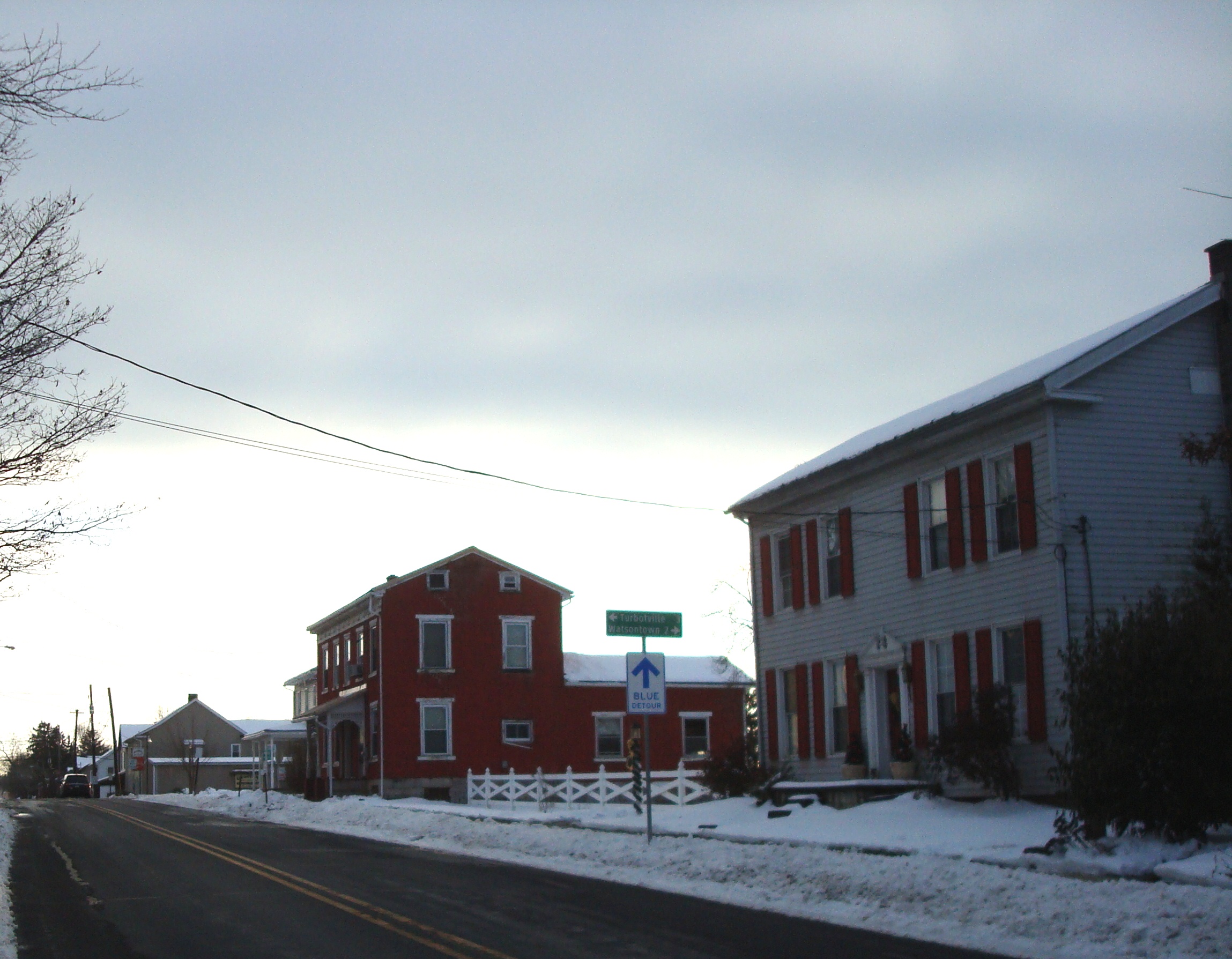
Recent photo of McEwensville–Was it beginning to get dark when Grandma started walking home from Sunday school? She would have needed to get home in time to milk the cows.
What did Grandma do when she “staid a while after Sunday school?”
Did she chat with her girlfriends? . . .
Hmm . . . another random thought. . . On January 16 Grandma wrote that she had a good time at a party because “he” was there. Did “he” attend her church? . . . Maybe she “staid” to talk with him.
—
This is the third Sunday that Grandma’s church didn’t have a minister. On January 4, 1914 she wrote:
Our minister is going to leave soon. He preached his farewell sermon today.
Was it difficult to get—and keep—ministers in small country churches a hundred years ago? . . . They probably couldn’t pay very much.
18-year-old Helena Muffly wrote exactly 100 years ago today:
Friday, January 23, 1914: Don’t remember what I did today. My memory is rather leaky.
Source: Ladies Home Journal (January, 1914)
Her middle-aged granddaughter’s comments 100 years later:
Sounds like a slow day. Since Grandma didn’t write much a hundred years ago today, I’ll share some dress pictures from 1914 issues of Ladies Home Journal.
Source: Ladies Home Journal (October, 1914)Source: Ladies Home Journal (October, 1914)Source: Ladies Home Journal (October, 1914)
This is the fourth year that I’ve shared dress pictures from Ladies Home Journal. You might also enjoy some of the previous posts.
18-year-old Helena Muffly wrote exactly 100 years ago today:
Thursday, January 22, 1914: Ruth and I went to town this evening to hear a talk given by a Jew in the Reformed Church.
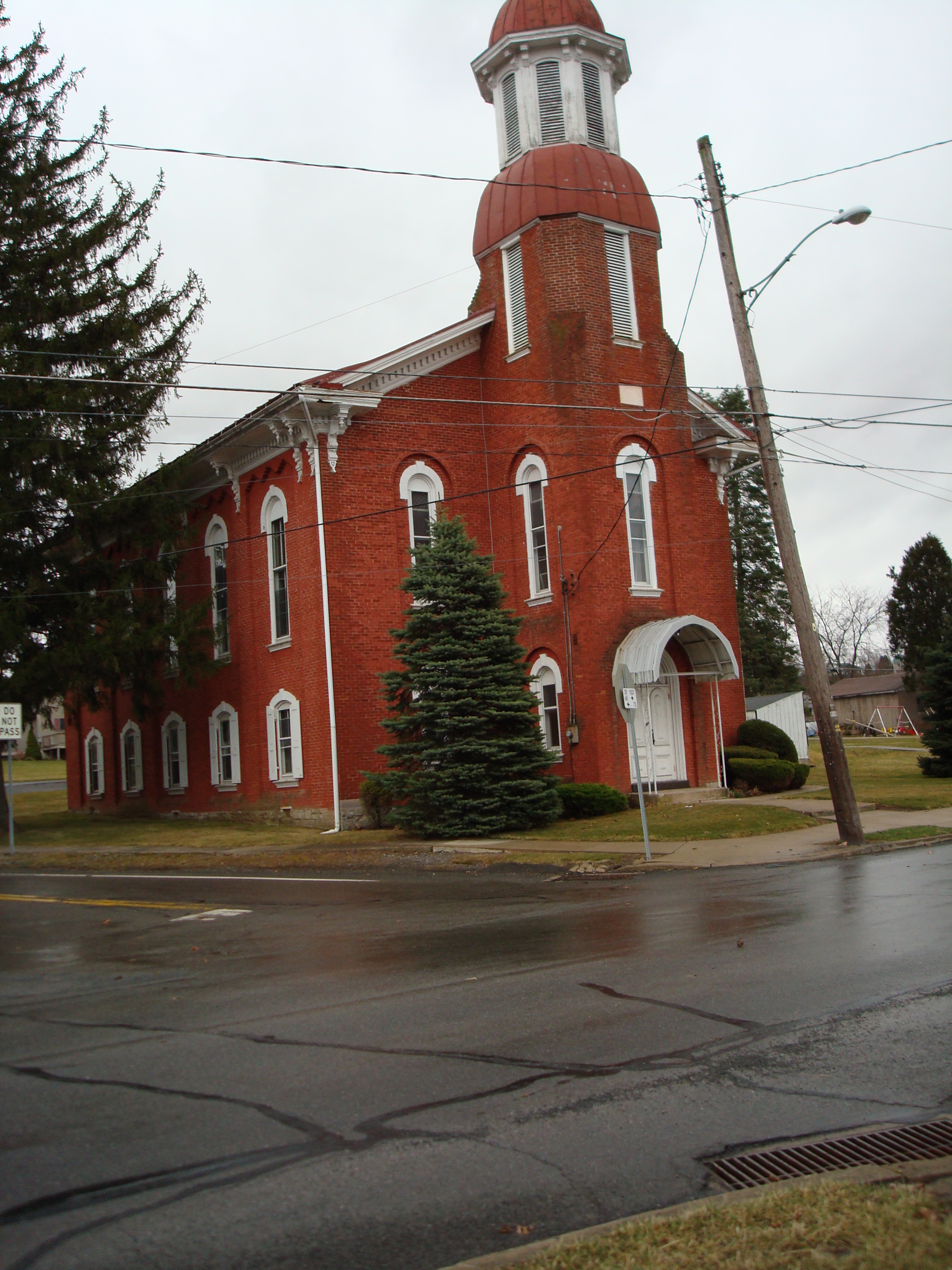
St. Johns’ United Church of Christ, McEwensville (It was St. John’s Reformed Church in Grandma’s day.)
Her middle-aged granddaughter’s comments 100 years later:
The previous summer, on June 1, 1913, Grandma wrote a diary entry that was very similar to this one:
Went to Sunday school this afternoon. Took my time a getting home. I heard some of the best speaking I have ever listened to this evening. A converted Jew talked about some of the customs of the Jewish people in the Reformed Church at McEwensville.
I can’t figure out why a church would have two presentations less than eight months apart about Judaism, and why Grandma would be interested enough in the topic to attend both presentations even though she was a Baptist.
These diary entries make me want to learn more about Jewish culture in the US a hundred years ago, and how Jews were perceived by Christians in the early 20th century. Of course, these diary entries were written years before World War II and the holocaust. . . .
18-year-old Helena Muffly wrote exactly 100 years ago today:
Wednesday, January 21, 1914: Can’t give much of an account of myself for today.
Source: National Food Magazine (April, 1914)
Her middle-aged granddaughter’s comments 100 years later:
Winter gets long. It’s time to start thinking about a vacation. During the 3+ years that I’ve been posting the diary entries, Grandma has never traveled more than 15 miles or so from her home. Did Grandma ever dream of visiting a city? . . . Maybe New York City?
Since Grandma didn’t write much a hundred years ago today, I’ll share a fun advertisement for the Biltmore Hotel in New York City that was on the back cover of the April, 1914 issue of National Food Magazine.
I’ll take one of those $2.50 a night rooms. . . . well, now that I’m thinking about it, I’d be willing to pay a little extra for a room with a bath. 🙂