Shift From Classical High Schools to Modern 4-Year Ones

16-year-old Helena Muffly wrote exactly 100 years ago today: 

Thursday, March 14, 1912: I wrote out the meaning of that wonderful poem today. I hope I have it as it should be. Am coming to some terrible hard propositions in geometry. The one we have for tomorrow seems so hard for me.
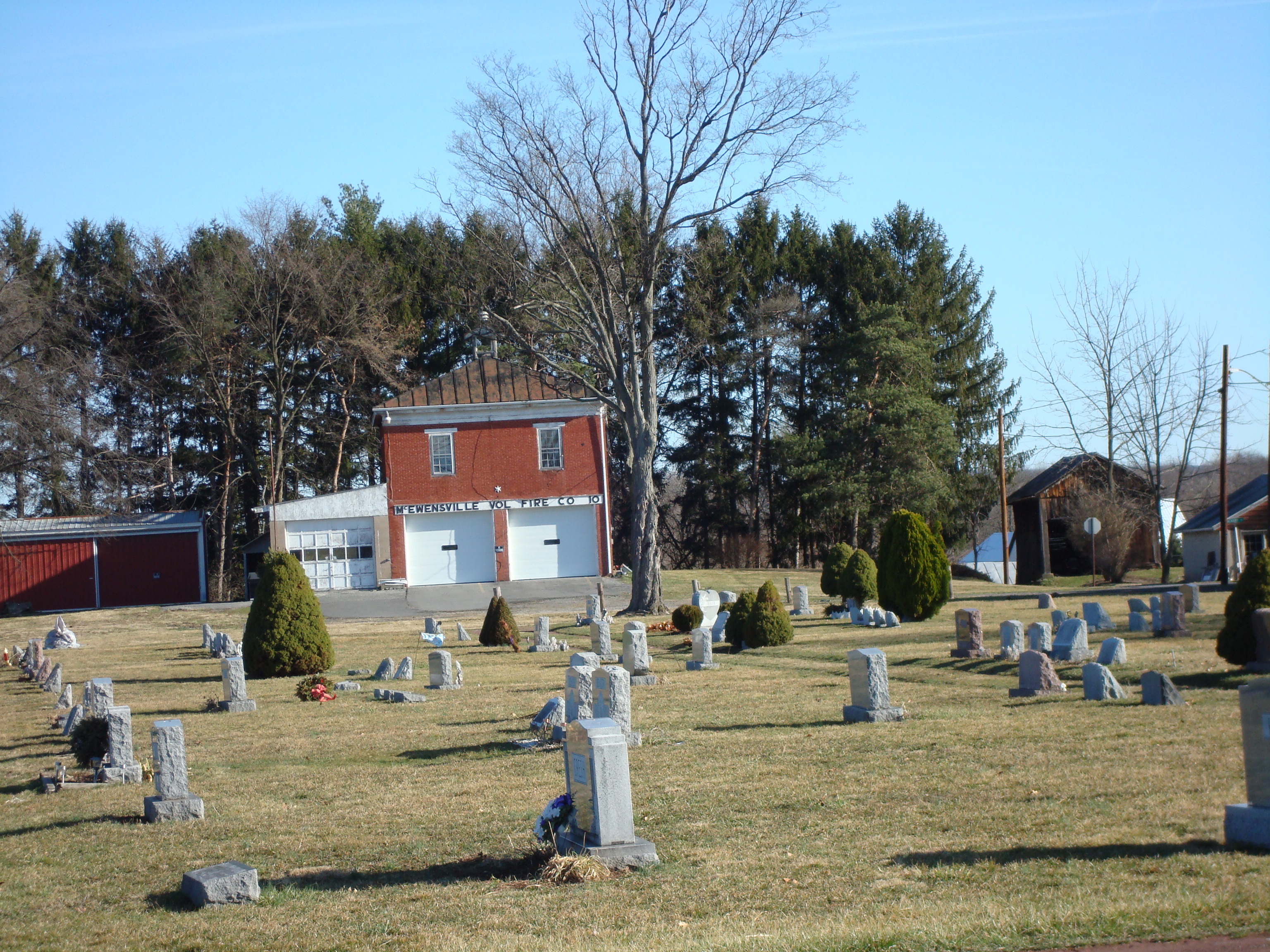
Recent photo of building that once housed McEwensville High School.

Her middle-aged granddaughter’s comments 100 years later:

Did Grandma’s high school courses prepare her for the life she lived?

Grandma attended McEwensville High School—a small classical 3- year high school.  She studied geometry (and Latin)—and literature. Grandma did not go to college—and never had a career.

In the early 1900’s there was a lot of discussion about whether a classical high school education met the needs of some students.

About five miles from McEwensville a modern high school was being built in Milton. There was a movement towards larger 4-year general high schools that offered a wider range of courses and different tracks (commercial, home economics, etc.).

Over the next few years, more students from McEwensville attended the more modern high school in Milton (as well as the high school in Watsontown). And, in 1921, McEwensville high school closed because of lack of students.

(The building continued to house an elementary school until 1958.)
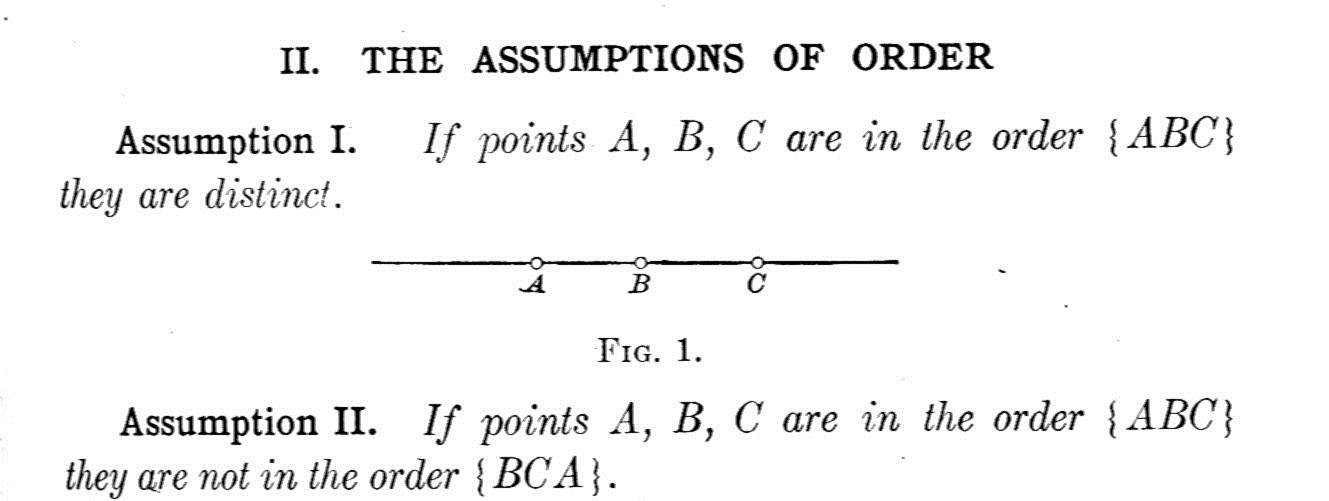
Geometry: Definition of a Point

16-year-old Helena Muffly wrote exactly 100 years ago today: 

Monday, March 11, 1912:  I heave a sigh of relief when I think examinations are past for this month. I have my doubts about what I will get in geometry.

II. THE ASSUMPTIONS OF ORDER

Assumption I. If point A, B, C are in the order {ABD} they are distinct.

Assumption II. If points A, B, C are in the order {ABC} they are not in order {BCA}.

Modern Mathematics (1911), Edited by J.W.A. Young

Her middle-aged granddaughter’s comments 100 years later:

I suppose that Grandma had to do some proofs in geometry. Do students do proofs any more in high school? I get a head-ache just thinking about them.

Here’s the definition of a point in a hundred –year-old mathematics book. It was the first term defined in the book. (I assume that Grandma’s examination was on something more complicated—but I enjoyed reading this definition.)

In geometry a great many technical terms are defined, and each is defined in terms of others. Hence at the beginning of a book on geometry at least one term must be undefined; otherwise the book would have no beginning. We have to leave the undefined term point.

This implies that the reader is free to carry in his mind any image of a point which he can reconcile with what is said about it. We may try to import a notion of our image of a point by saying it has no length, breadth, or thickness, or by like phrases, but these are no part of our book on geometry; they have nothing to do with the logical steps by which the theorems are derived.

Modern Mathematics (1911), Edited by J.W.A. Young

A Sleepover

16-year-old Helena Muffly wrote exactly 100 years ago today: 

Sunday, March 9, 1912:  Blanche slept with Ruth and me. I slept on the rail part of the time. Made me kind of stiff. Went to Sunday School this afternoon. B. was there. Hat blew off coming home, but by luck didn’t land in the mud.

Her middle-aged granddaughter’s comments 100 years later:

Grandma had a crush on B. in the diary but doesn’t use the complete name. I think that B. refers to Bill Gauger.  Grandma’s sister Ruth married Bill several years after the diary ended.

Blanche Bryson was a friend of Grandma  and Ruth. The previous day’s entry indicated that their friend had arrived by train.

I assume that rail refers to the edge of a wooden bed frame. A hundred years ago, people didn’t have nearly the amount of privacy or space that they do today. Grandma and her sister Ruth shared a double bed—and it sounds like when they had an overnight guest they managed to squeeze a third person in.

I wonder how late they stayed awake talking. What did they talk about? Did their parents tire of the noise and tell them to go to sleep?

Old-time Cough Remedies

16-year-old Helena Muffly wrote exactly 100 years ago today: 

Saturday, March 9, 1912:  Ruthie’s friend, Miss Bryson, arrived here on the train. I had to do my sister’s milking. They went to a play in Watsontown this evening. I coughed so today that Ma said I might be getting the whooping cough. It did scare me some.

Recent photo of downtown Watsontown. Where were plays once held?

Her middle-aged granddaughter’s comments 100 years later:

Grandma’s cough sounds bad. Hopefully she didn’t have whooping cough.

Maybe Grandma tried some home remedies. Here are some old-time cough remedies in the Compendium of Everyday Wants (1908):

COUGH – Below will be found a number of cough cures and syrups that are unfailing and will relieve the worst forms.

Treatment No. 1—One of the most simple remedies is flaxseed lemonade, made by adding two or three tablespoons of flax seed to a lemonade made of two lemons, two tablespoonful’s of sugar and about a quart of water; boil it.

Treatment No. 2—COUGH SYRUP—Mix together one-half pint of honey, 1/2 pint of gin, 1/2 oz. of oil of tar, 1/2 oz. of balsam fir. Take a teaspoonful three times a day. This is one of the most effective and valuable remedies known for coughs and will break up a cold where other remedies fail.

Treatment No. 3—An efficacious remedy for continued cough is found in chewing the bark gotten from the root of sumac. Chew the bark. Several kinds of sumac are poisonous, but use the common upland sumac, having cone-shaped bunches of berries and from which a milky fluid comes when leaves are broken.

I don’t know where to get all of the ingredients for any of these remedies. And, even if I could find Sumac bark—I won’t want to risk something that requires warnings about avoiding the poisonous types.

Miss Bryson refers to Blanche Bryson. She was mentioned several times in the dairy during during 1911. At that time it seemed like she lived in either in or near McEwensville. She apparently had moved somewhere more distant by 1912.


Dehorning a Cow

16-year-old Helena Muffly wrote exactly 100 years ago today: 

Friday, March 8, 1912:  I think I came out fairly in General History today. I remembered all of my speech, but as my custom is I never get enough pauses and proper way of speaking in the thing. This time it was too fast. Are going to have them again next Friday. They ought to be pretty well digested by that time.

Mollie was shorn of her horns today. Poor thing, I hope she won’t kick the bucket. But I don’t think she will.

Photo source: The Farm Dairy (1908) by H. B. Gurler

Her middle-aged granddaughter’s comments 100 years later:

Mollie was Grandma’s cow. Based on previous diary entries it seems as if each of the Muffly girls owned one the family’s cows.

Mollie had her first calf the previous August, so probably was about 2 1/2 years old when this diary entry was written.

I’m surprised that Mollie’s horns were removed when she was so old. I think that typically horns would either be removed when the cow was younger than this—or the cow would never be dehorned. My gut feeling is that Mollie was acting aggressively toward other cows with her horns—and that as a result ended up being dehorned.

The horns would have been cut off with a tool designed for that purpose. Mollie probably bled quite a bit afterwards—and there would have been the risk of infection.

Dehorning would have been very painful for a few days—though I doubt that there was much chance that the dehorning might actually cause a cow to die (kick the bucket).

The Tennessee Extension Service has a publication that explains how cattle are dehorned. See page 6 for a description of how older cattle are de-horned. I don’t think that the process has changed much in the last hundred years.

Exams, Recitations, and Spring Approaching

16-year-old Helena Muffly wrote exactly 100 years ago today:

Wednesday, March 6, 1912:  Examinations are slowly approaching the horizon, and they will soon be in sight. We have one next Friday just before the awful recitations.

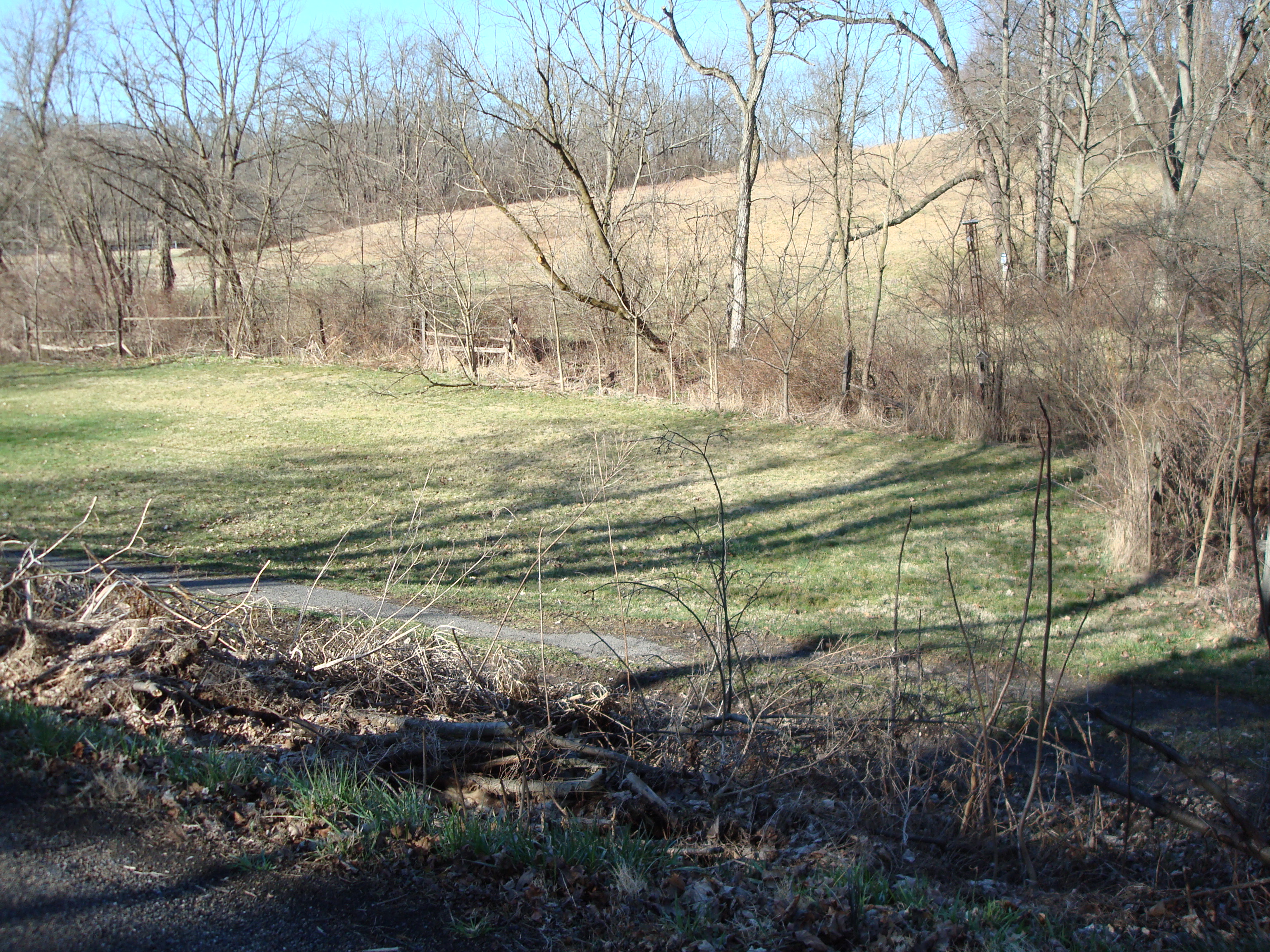
Recent view of field across the road from the house that Grandma lived in.

Her middle-aged granddaughter’s comments 100 years later:

Grandma had a lot on her plate when she wrote this entry. Her February grades were lower than she’d hoped so she wanted to do better on the upcoming exams—and she was struggling to memorize an “abominable piece of poetry.”

At least spring was approaching– and, maybe the essence of spring in the air compensated a little for all of the school drudgery.

Trying to Memorize an Abominable Poem

16-year-old Helena Muffly wrote exactly 100 years ago today: 

Tuesday, March 5, 1912: I’m trying to commit that abominable piece of poetry to memory and it’s no easy task either, although it is short in the extreme. I only hope I know it, when the time comes to say it.

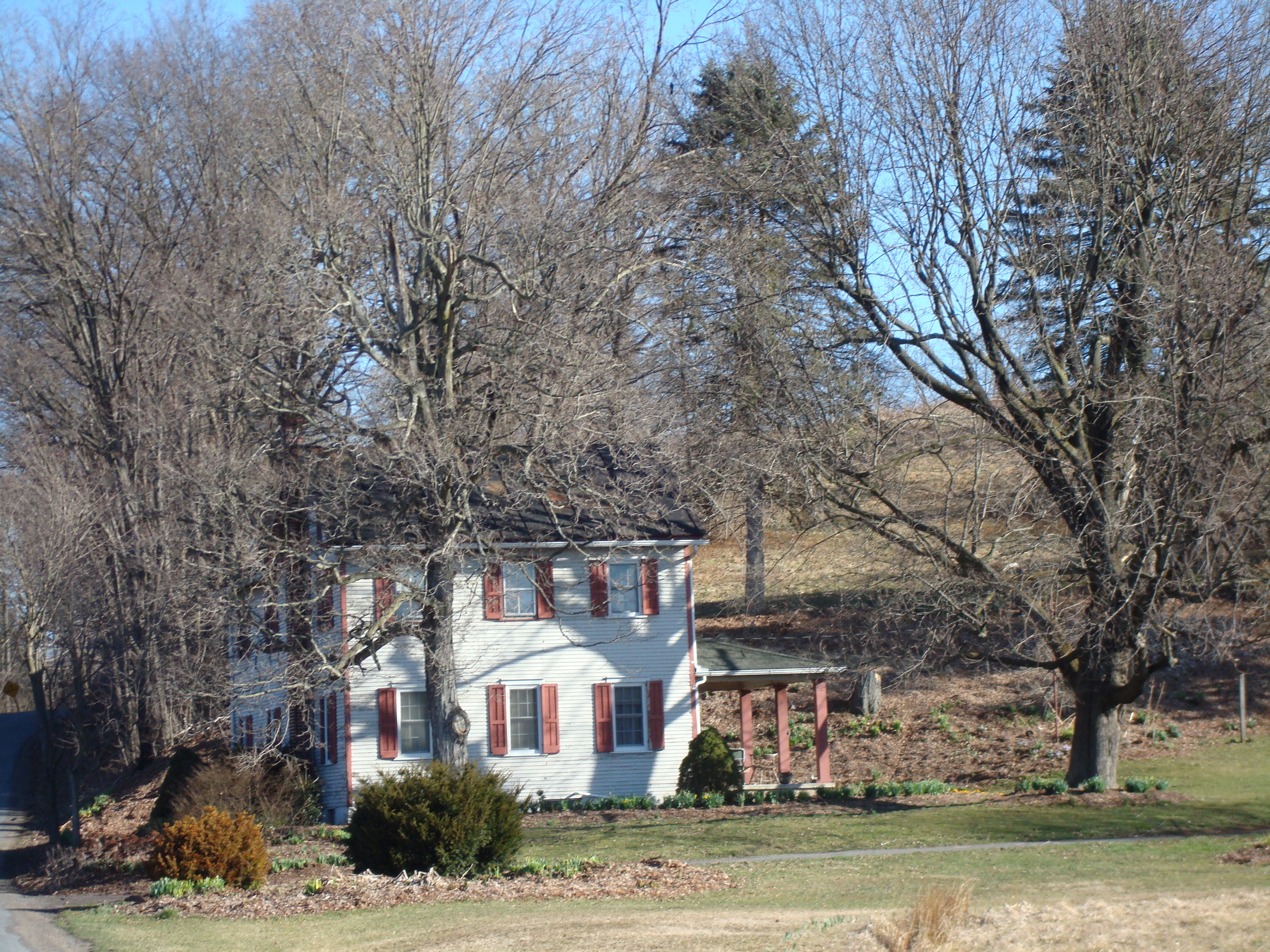
A hundred years ago Grandma was sitting inside this house trying to memorize an abominable poem.

Her middle-aged granddaughter’s comments 100 years later:

What could the abominable poem have been?  A hundred years ago people memorized recitations, poems, and Bible verses more than they do today.

Grandma generally did not complain about needing to memorize something. For example, one Sunday she memorized  27 Bible verses. This poem must have had some very difficult text (a dialect perhaps??).

The Poem of Quotes website provides information about lots of 18th and 19th century poets and poems.  I browsed through it, but am not familiar enough with old poetry to even guess which poem Grandma was trying to memorize.