Ranking Old-fashioned Candy Recipes

17-year-old Helena Muffly wrote exactly 100 years ago today: 

Thursday, March 28, 1912:Nothing really of great importance. Now that Ruth is at home I don’t have to do as much in the morning as I was accustomed to doing. Ruth made some fudge this evening. It was Jimmie’s earnest desire.
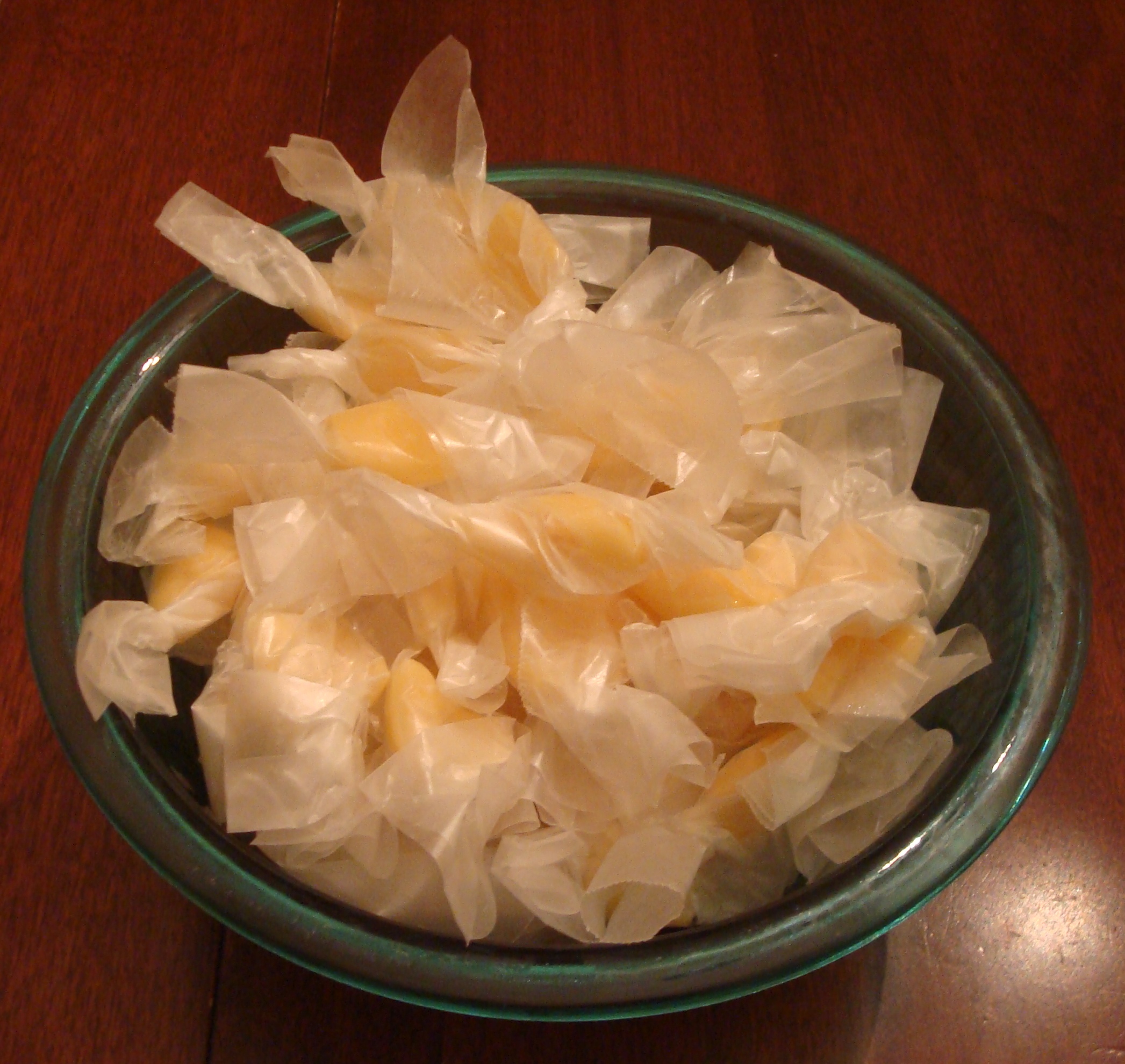
Sugar Taffy

Her middle-aged granddaughter’s comments 100 years later:

Whew, I’m amazed how often fudge or other candies are mentioned in the diary.

Over the past 15 months, I’ve made 7 different candy recipes. Below I rank them from my personal favorite to my least favorite—and provide links to the post that contains the recipe.

1. Sugar Taffy—This recipe turned out fantastically and tastes much better than modern taffy. My family ate all of the taffy within a day or so.

Cocoa Fudge

2. Cocoa Fudge—This fudge recipe was excellent—however, the recipe only made a small amount of fudge. I’d double (or triple or quadruple) the recipe if I made it again.

3. Chocolate Fudge- No. 1—This is also a very good fudge recipe. I had a difficult time deciding whether to rank Cocoa Fudge or this one higher.

4. Butterscotch— Old-fashioned butterscotch isn’t anything like the artificially-colored orange butterscotch disks that they make today. Instead it is rather it is similar to Werthers Original Candy.

5. Chocolate Fudge No. 2—This fudge contains molasses and has a very old-fashioned taste, but I  loved the complex undertones. I especially liked it when I added walnuts.

6. Sour Cream Fudge—This is a light-colored fudge that does not contain any chocolate. It had a good taste although I had to cook it a very long time (over an hour) and even then it seemed a bit soft.

7. Coffee Candy—This candy  had a great taste, but I didn’t get something quite right because it crumbled. A reader suggested that it might make a good ice cream topping.

Read Evangeline

17-year-old Helena Muffly wrote exactly 100 years ago today: 

Wednesday, March 27, 1912: I read Evangeline today and found it very interesting. This was the last day of Ruth’s school term. She has so many things mapped out to do, but whether they will ever be accomplished I cannot tell.

Statue of Evangeline, Nova Scotia, Canada (Source: Wikipedia)

Her middle-aged granddaughter’s comments 100 years later:

Evangeline is an epic poem by Henry Wadsworth Longfellow that tells the story of an Acadian girl named Evangeline who was separated from her beloved Gabriel by circumstances beyond their control. Evangeline traveled throughout America in search of him. After years of searching she finally found him when he was gravely ill and he died in her arms.

You can find the entire poem on the University of Virginia Library’s website.

___

Grandma’s sister Ruth was a teacher at one of the one-room schoolhouses near McEwensville. It sounds like this was the last day of the school year for that school. I suppose that the children were needed at home to help with the spring planning. It’s amazing how short the school year once was at some schools.

Kinda Afraid Sitting Alone at Night

17-year-old Helena Muffly wrote exactly 100 years ago today: 

Tuesday, March 26, 1912:  Seems I have more work to do tonight than I usually do. I have most of it done now and am ready to lay it aside. I get kinda afraid sitting here all by myself.

Photo Source: Wikimedia Commons

Her middle-aged granddaughter’s comments 100 years later:

What time it was when Grandma wrote this entry?  It must have been really late—and the rest of the family had gone to bed hours before.

I wonder what Grandma worried about as she sat there alone. . . things that go bump in the night?.  . . her future? . . . her school work? . . . tramps possibly lurking outside? . . .???

Hundred-Year-Old List of Qualities Needed to Succeed in Business

17-year-old Helena Muffly wrote exactly 100 years ago today: 

Sunday, March 24, 1912:I haven’t much to write today.

Recent photo of two small businesses in McEwensville–a beauty/barber shop and a bicycle shop.

Her middle-aged granddaughter’s comments 100 years later:

Since Grandma didn’t write much today,  I’m going to go off on a tangent—

I happened upon a list of qualities needed to succeed in business in a 1912 magazine, and was surprised how relevant the list still seems today.

Qualities Needed to Succeed in Business

  1. Health
  2. Honesty
  3. Ability
  4. Initiative
  5. Knowledge of the Business
  6. Tact
  7. Sincerity
  8. Industry
  9. Open-Mindedness
  10. Enthusiasm
  11. Organization

The most important thing is to organize ourselves—make ourselves do the important work. We succeed only in proportion as we get the best work from other people. So I say let’s not drive tacks with a sledge hammer. Let the people who are carrying tack hammers do tack hammer work. If you are carrying a sledge hammer, do heavy work. Do the most important things in your business. Leave the details to other people.

Rural Manhood Magazine, Jan. 1912 (Published by the Young Men’s Christian Association (YMCA)

Worried About Whooping Cough

17-year-old Helena Muffly wrote exactly 100 years ago today: 

Sunday, March 24, 1912: Went to Sunday School this afternoon. It was slushy walking and kept on drizzling.

Jimmie threatened with the whooping cough. I don’t want him to get it, nor do I want to get it myself. I would have to stop school if I do, and that I shouldn’t like to.

Her middle-aged granddaughter’s comments 100 years later:

Sounds like miserable weather.  Grandma had worried in her March 9 post that she was getting whooping cough—now she had similar worries about her six-year-old brother Jimmy.

Downtown Milton–Then and Now

17-year-old Helena Muffly wrote exactly 100 years ago today: 

Saturday, March 23, 1912:Ruth and I went to Milton this morning on a shopping tour. I needed a pair of new shoes and so I got them. We went in and came out on the train so you can see we weren’t gone long.

Another view of downtown Milton.

Her middle-aged granddaughter’s comments 100 years later:

Milton was about five miles from the Muffly farm. There was a whistle-stop for the Susquehanna, Bloomsburg, and Berwick Railroad near their farm. Grandma and her sister Ruth probably needed to change trains at Watsontown.

A hundred years ago Milton had a thriving downtown. Today better transportation, nearby malls, and several floods have all taken a toll–though hopefully the recent movement toward shopping local will help revive it.