
Book Review: Daddy-Long-Legs

17-year-old Helena Muffly wrote exactly 100 years ago today: 

Thursday, November 7, 1912:  I just finished reading a book a few minutes ago. I have ever so much stuff to read now, but I don’t like to neglect my studies too much. I don’t get them any too well as it is.
Her middle-aged granddaughter’s comments 100 years later:

Grandma was a member of the recently organized Literary Society at her school.

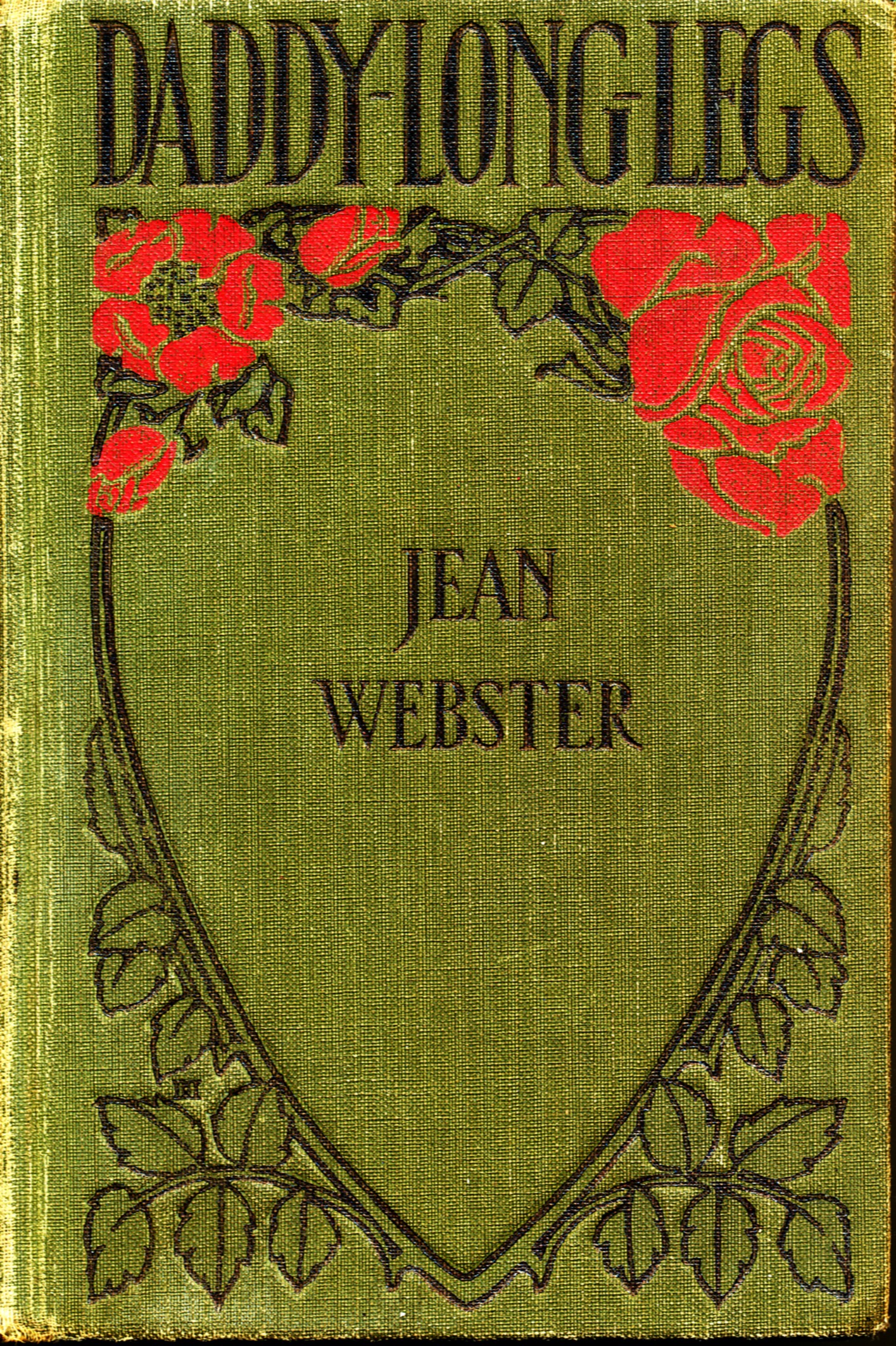
I recently came across a copy a book published in 1912—Daddy-Long-Legs by Jean Webster. I wonder if Grandma read it.

Daddy-Long-Legs is a good-old-fashioned story with a happy ending. It was a fun, relaxing read compared to the many depressing modern books; and I couldn’t put it down. But the novel also touched upon important issues—Should women have careers?  What role does fate (and hard work) play in success?

The book tells the story of Jerusha, a bright young orphan who wrote humorous stories in her high school English class.

An anonymous trustee of the orphanage where Jerusha lived recognized her brilliance—and offered to pay for her to attend college so that she could become a writer. There was only one requirement—she needed to write him a letter each month to tell him how school was going.

Jerusha did not meet the trustee—but saw his shadow reflected on a wall the evening he agreed to send her to college. The shadow was tall and slender, and looked like a Daddy-Long-Legs spider.

The format of most of the book is letters that Jerusha wrote to her anonymous benefactor—Daddy-Long-Legs.

A developing romance, and Jerusha’s transformation from an orphan into an interesting young woman who went by the name of Judy, kept me turning the pages. The book also gave me a better understanding of the college and career opportunities that women had a hundred years ago.


Old-fashioned Croup Cure

17-year-old Helena Muffly wrote exactly 100 years ago today: 

Sunday, November 3, 1912:  Saw some snowflakes yesterday. Had croup this evening so you see that put my studies back somewhat.

Her middle-aged granddaughter’s comments 100 years later:

Croup is no fun. It’s awful to have a bad cough that sounds like a seal!

The old- fashioned way to treat croup was to bring some water to a boil on the stove. The ill person would then very, very carefully lean over boiling water and breathe deeply for several minutes. The steam would calm the coughing.

I can picture Grandma leaning over a pot of boiling water on a wood or coal stove trying to sooth her cough—while thinking about the homework that needed to be done.

What Were Sunday School Classes Like a Hundred Years Ago?

17-year-old Helena Muffly wrote exactly 100 years ago today: 

Sunday, November 3, 1912:  Went to Sunday School this afternoon. Besse and Curt were out. Wasn’t here when they came.

Her middle-aged granddaughter’s comments 100 years later:

Grandma seldom missed Sunday School. What was it like? She attended a small church—probably a Baptist one—in the small village of McEwensville. Most weeks there probably were only a few other students in her class.

A book published in 1911 called Practical Pedagogy in the Sunday School described what an engaging class looked like:

The class was seated in three double pews at the rear of the auditorium of the church. Standing in front of the rows of well-dressed young women was a teacher not much older than her pupils.

She had her Bible open in her hand and proceeded to ask questions therefrom and give explanations. Although she frequently looked at the Bible, it seemed as if her eyes were continuously on her class, taking them all in as she glanced along row after row.

When she noticed the least tendency to inattention, she quietly leaned over the pew in front of her and lifted up something in such a way that on one could tell just what it was.

Her very action was intended to appeal to the curiosity of the young ladies. It did not take many seconds for every eye to be riveted upon her. The she showed what was in her hand—a picture illustrating that part of the lesson text on which she was engaged.

When the picture was laid down the teacher proceeded with her conversational instruction.

In conversation with this instructor it was ascertained that she never makes an appeal twice in exactly the same way.

Every Sunday she has something to excite the curiosity of her pupils, which she satisfies in such a way as to leave an impression of the truth she has to teach.

No formula can be given nor rules laid down. The alert, intelligent instructor, who is fully conscious of the power that lies in the appeal to curiosity, will devise her own methods in accordance with the age of her pupils and the circumstances under which she labors.

 Besse and Curt

Besse and Curt refer to Grandma’s married sister Besse and her husband Curt Hester. They lived near Watsontown, about a mile from the Muffly farm.

Organized Literary Society

17-year-old Helena Muffly wrote exactly 100 years ago today: 

Sunday, October 20, 1912:  

November brings us many things

And among them is Thanksgiving

The first of the snow

The winds that blow

And all that makes life worthwhile.

We organized a Literary Society at school this afternoon. I am one of the committee. Just what I wanted to be.

Her middle-aged granddaughter’s comments 100 years later:

Assuming that Grandma wrote the poem—and didn’t copy it from somewhere—it’s amazing how enthusiastic she was about November. It seemed like she was feeling down in several October diary entries. I hope that November proves to be a better month.

Was the Literary Society like a modern book club? Was it a school club . .  . or did a group of friends organize it? Did both males and females belong. . . or was it a girl’s only club?

I’m glad Grandma got the position she hoped to get. Committee member sounds like a worker bee position. Did the committee members help select books to read? . . bring desserts? . . . clean up after the meetings?

1912 Christian Endeavors Convention

17-year-old Helena Muffly wrote exactly 100 years ago today: 

Wednesday, October 30, 1912:  Wish I could write something that would really be something, but as for this I call it nothing.

Her middle-aged granddaughter’s comments 100 years later:

Since Grandma didn’t write much a hundred years ago today, I’ll tell you what I found out about several previous posts.

Several days ago Grandma mentioned a “convention” that she attended in McEwensville, but she never provided any details.

She also wrote that she’d resolved to do something that would be beneficial to herself.

I was in the McEwensville area last week-end and found a little time to dig through the old Milton Evening Standard microfilms at the  Milton Public Library. I scrolled through the film–hoping to find a temperance society convention. . . or a lively political rally.

Instead I found a dull newspaper article (with lots names) about a Christian Endeavors convention.  Christian Endeavors was a youth ministry. Here’s what the October 23, 1912 Milton Evening Standard had to say:

Endeavorers in Annual Session at McEwensville

Open Twenty-Third Convention with Services of Song

Rev. I.P.Zimmerman Chief Speaker Today

The twenty-third annual convention of the Northumberland County Christian Endeavor Union begun a two days session today at McEwensville with a large attendance.

Delegates from all parts of the county are in attendance. The convention was opened this afternoon with a service of song. Miss Ida McWilliams of McEwensville led the devotional service and Carl Watson delivered the address of welcome to which Miss Leah Lark on Shamokin responded on behalf of the delegates.

Rev. I.P. Zimmerman, of this place, was the principal speaker at the service this afternoon. He spoke on the pastor’s relation to C.E, and pointing out how the minister’s aid can be a great benefit to the work of the C.E. and gave instances of how a great deal had been accomplished through the instrument of progressive pastors.

Practical Plans and Methods was an illuminating address delivered by C.W. Winery of Bellefonte who is the president of the Centre County C.E. Union. An open discussion following several members taking part in telling how the society does things. The women will adjourn at 4:30 this afternoon.

Milton Evening Standard (October 23, 1912)

Had Some Peace

17-year-old Helena Muffly wrote exactly 100 years ago today: 

Tuesday, October 29, 1912:  That kid is away for tonight, so I had some peace this evening. Had an exam today.

Jimmie Muffly, circa 1913

Her middle-aged granddaughter’s comments 100 years later:

I wonder where Grandma’s 7-year-old brother Jimmie was. . . Maybe at a friend’s house for a sleep-over?

Grandma seldom mentioned Jimmie in the diary—yet she commented on his absence.

On a typical evening—when she doesn’t have “peace” –I wonder what types of things Grandma and Jimmie did together.

Did Grandma ready stories to Jimmie?  Did they tease each other? When Grandma was trying to do her homework, did Jimmie beg Grandma to play games with him? . . .

Need to Find Time to do Research!!

17-year-old Helena Muffly wrote exactly 100 years ago today: 

Monday, October 28, 1912:  Got mad at the Rufus tonight. I think she can be so mean sometimes.

Her middle-aged granddaughter’s comments 100 years later:

When Grandma was annoyed with her sister Ruth, she called her Rufus. How was Ruth mean to Grandma?

The past week has had many high points and low points for Grandma. She also has seemed frustrated with herself and other family members. But there are very few specifics in the diary entries.

There’s a need for research here! I haven’t worked ahead—this post needs to be published in less than 24 hours.

I want to tie it all back to the “convention” that Grandma attended on October 24:

Didn’t have school this afternoon so we could go without missing. It was very entertaining. Enjoyed it much.  Would like to have gone to the convention again tonight, but it was raining.

And, the next day, she wrote:

I’ve resolved to do something if carried out, I think will prove very beneficial to me at least. I’m going to try any way and see the result.

My Questions—What was the convention? Did the convention somehow affect Grandma’s mood and how she was interacting with her family?

____

Note to Readers–Thanks for all of your wonderful suggestions about what the convention may have been.

Note to Self—(1) Try to find time to research this. (2) Try to get further ahead on writing posts. . . or at least remember to look ahead further so that there is time to do research before posts need to be written.