Old-Fashioned Red Cabbage and Apples

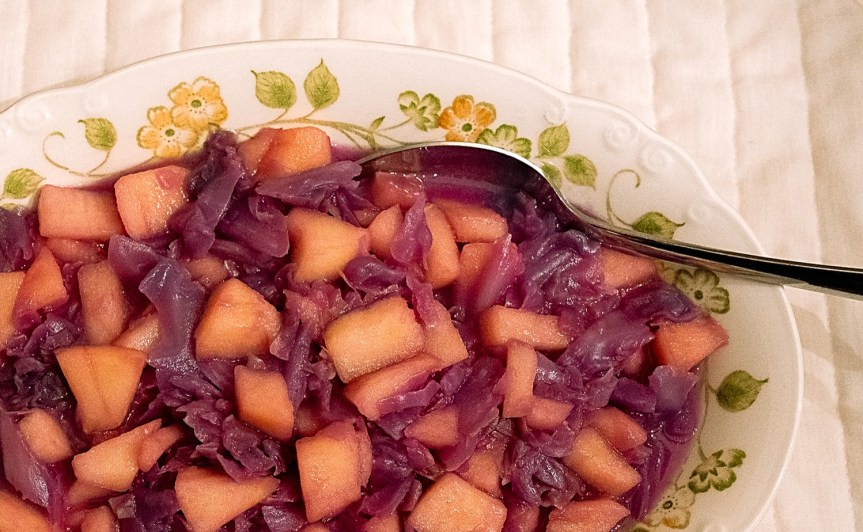
I recently was browsing through a hundred-year-old cookbook and came across a recipe for Red Cabbage and Apples, and decided to give it a try.

The Red Cabbage and Apples are a delightful combination. The slightly bitter cabbage works well with the sweet, tartness of the apple. It is a vibrant, attractive, tasty, side dish.

Here’s the original recipe:
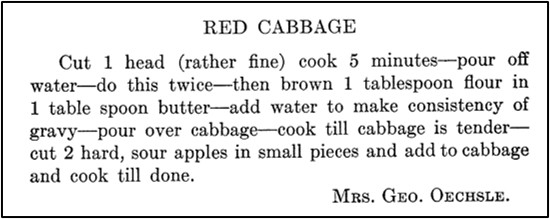
Recipe for Red Cabbage and Apples
Source: 1926 cookbook compiled by the Domestic Science Class of the Peoria (IL) Women’s Club

My sense is that  cabbage heads and apples typically were smaller a hundred years ago than they often are today, so instead of using a whole cabbage, I used  1/2 head of cabbage; and I used one apple rather than two.

The original recipe calls for flour browned in butter. I interpreted this to mean that the butter is browned and then the flour is stirred into it.

The old recipe does not call for any salt, but the flavor of the Red Cabbage and Apples is enhanced if a little salt is added.

Here’s the recipe updated for modern cooks:

Red Cabbage and Apples

  • Servings: 3 - 4
  • Difficulty: moderate
  • Print

1/2  head red cabbage, shredded (approximately 4 – 5 cups)

water

1 tart apple (such as Granny Smith or Braeburn), peeled, cored, and coarsely chopped

1 tablespoon butter

1 tablespoon flour

1/4 teaspoon salt

Step 1. Put the shredded cabbage in a large saucepan; add 1/2 inch of water. Using medium high heat, bring to a boil, then reduce heat and simmer for 5 minutes. Stir the cabbage once or twice while it is cooking.

Step 2. Remove from heat, and drain using a strainer. (Keep the cabbage in the pan.) Reserve the drained cabbage water.

Step 3. Add 1/2 inch of water to the cabbage.  Heat again. Using medium high heat, bring to a boil, then reduce heat and simmer for 5 minutes. Stir the cabbage once or twice while it is cooking.

Step 4. Remove from heat and drain using a strainer. (Keep the cabbage in the pan). Again, reserve the drained juice, and add to the other reserved juice.

Step 5. In the meantime. put the butter in a skillet. Heat using medium heat.  Allow it to bubble, while stirring occasionally. Continue heating until the butter turns a light brown, then stir in the flour. Gradually add some of the reserved cabbage water (about 1/2 cup), while stirring constantly. Continue stirring until it thickens. It should be about the consistency of gravy. If it is too thick add additional cabbage water. Stir in the salt.

Step 6. Pour the thickened cabbage “gravy” over the cabbage in the saucepan. Add the chopped apples.  Heat until hot and bubbly (and the apples pieces are heated through), while stirring constantly. Remove from the heat and serve.
http://www.ahundredyearsago.com

1925 “Charles Dickens” Christmas Menu + Recipe for Apples Stuffed with Prunes and Nuts

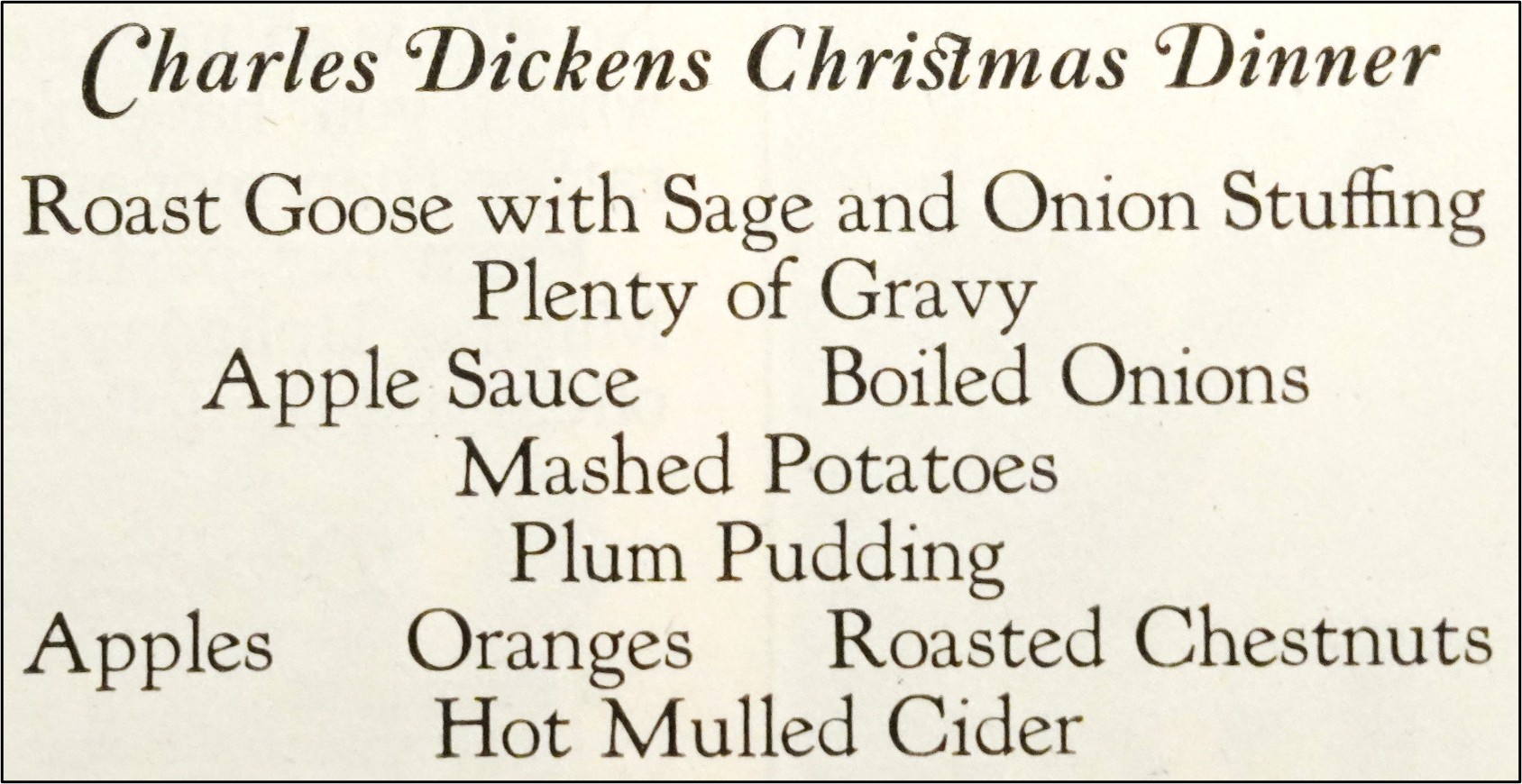
Menu
Source: Ladies Home Journal (December, 1925)

For close to two hundred years, the story of A Christmas Carol by Charles Dickens has been told and repeated. It was published in 1843, and its story of redemption and transformation has resonated ever since. Some people today even host Dickens’ themed dinners with classic foods based on the cuisine in the book. For example, Food and Wine provides guidance on how to serve Scrooge’s menu on Christmas.

Amazingly, people have been hosting dinners with menus based on the foods in A Christmas Carol for at least a hundred years. A menu for a Charles Dickens Christmas Dinner appeared in the December, 1925 issue of Ladies Home Journal. It included roast goose, boiled onions, mashed potatoes, plum pudding, and other foods. A companion article described how to roast and carve a goose.

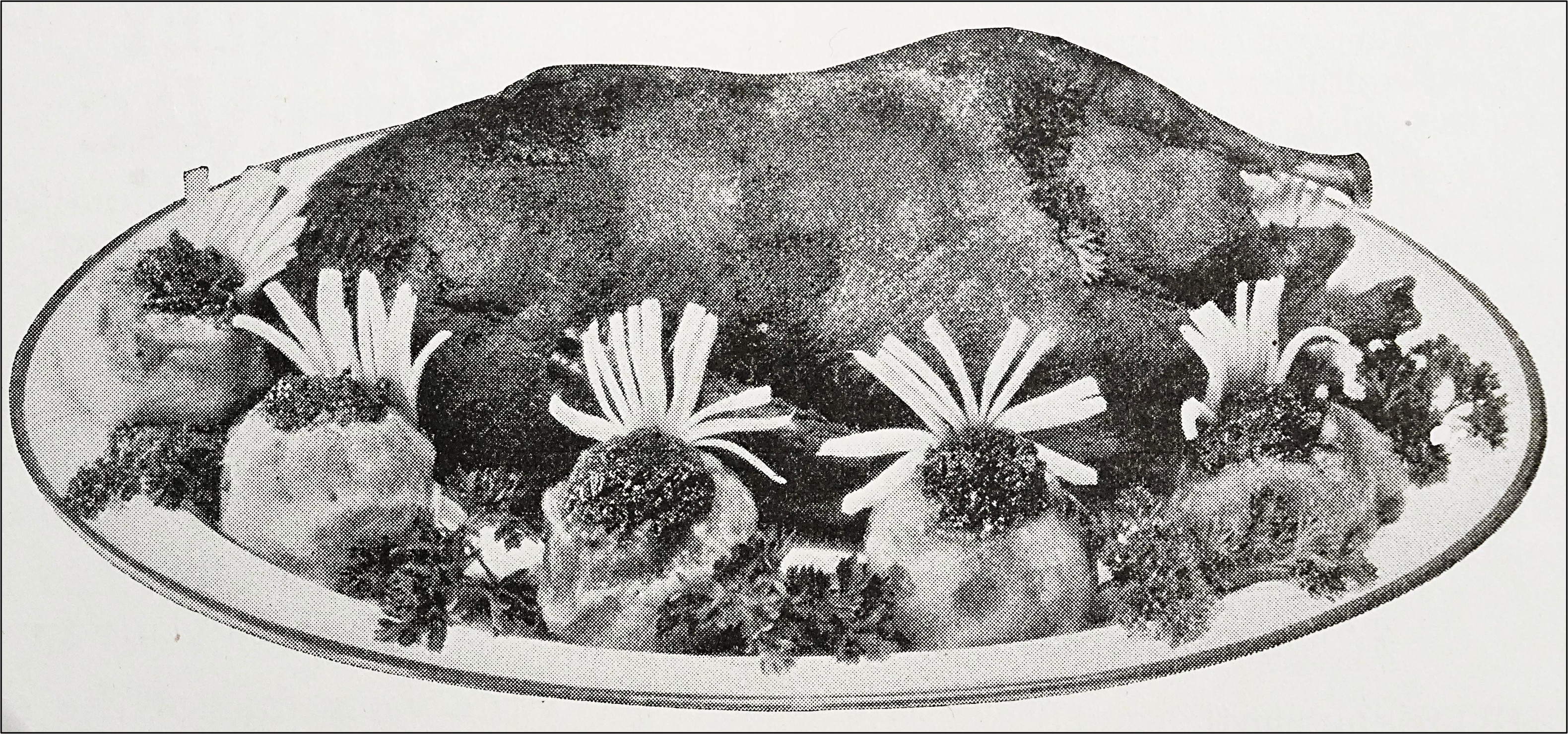
Roast Goose
Source: Ladies Home Journal (December, 1925)

In the old magazine, there were red-tinted apples stuffed with chopped prunes and nuts in the foreground of an image of the roast goose. The articles included directions for making the stuffed apple garnish:

Recipe for Stuffed Apples
Source: Ladies Home Journal (December, 1925)

I had no desire to roast a goose, but I was fascinated by the stuffed apple garnish. The directions called for tinting peeled apples red, poaching them, and then stuffing them with chopped prunes and nuts. I  decided to try making a few stuffed apples.

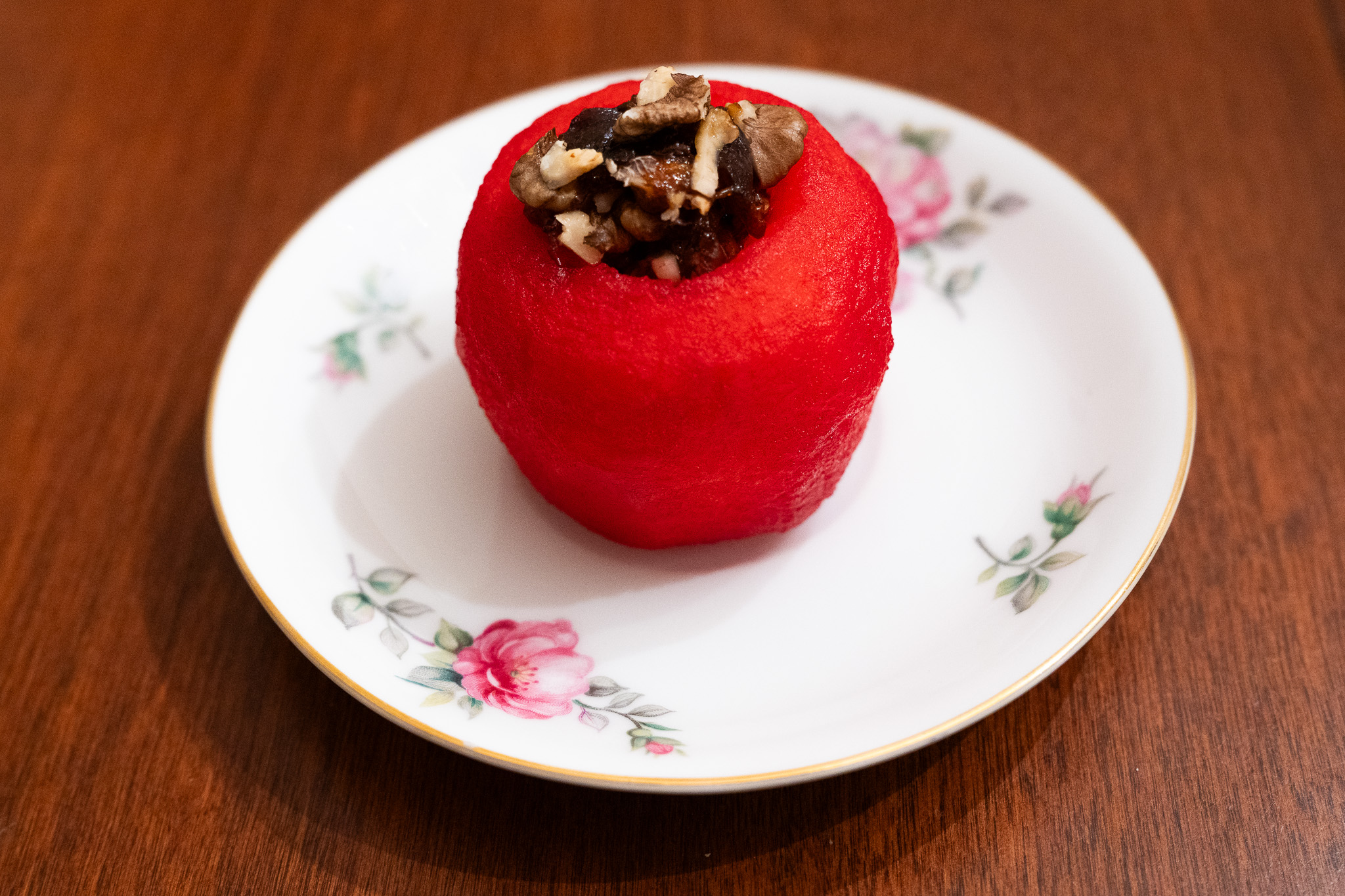
Stuffed Apple

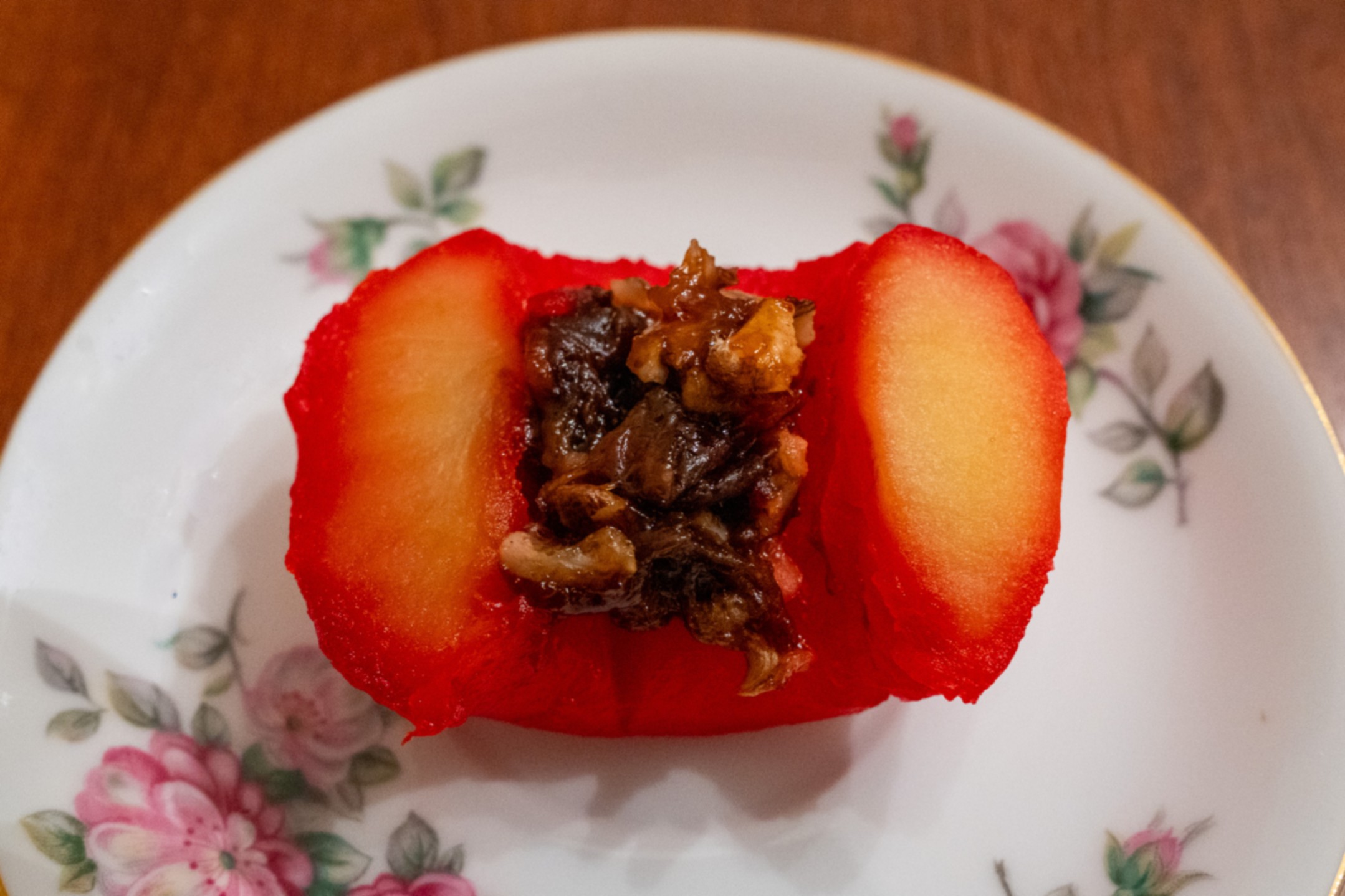
The Stuffed Apples with Chopped Prunes and Nuts were a vibrant red, and would make an impressive garnish or dessert. They were very tasty with a lovely mix of tastes and texture. When I got ready to eat an apple, I cut it in half, and was amazed how beautiful the white interior of the apple looked against the red background of the parts of the apple that had the red coloring. An optional way to present the apples would be to cut them all in half. Stuffed apple half on plate

The old directions were for twelve apples. I didn’t want that many, so when I updated the recipe, I reduced it to 3 apples. For the syrup that the apples are poached in, I divided the amount of sugar by three, but proportionately used more water than in the original recipe. I did this because even though I made fewer apples, I still needed sufficient syrup to successfully poach the apples. I also had some issues with the syrup getting too thick if I didn’t add additional water.

The old recipe doesn’t identify what type of nuts to use. I used walnuts.

Here’s the recipe updated for modern cooks:

Apples Stuffed with Prunes and Nuts

  • Servings: 3 apples
  • Difficulty: moderate
  • Print

3 apples (Use a variety that maintains shape when cooked. I used Honeycrisp.)

6 prunes

1/4 cup chopped walnuts

1 cup sugar + additional sugar to sprinkle on top

1 cup water + additional water to cook prunes

1/2 teaspoon liquid red food coloring (Adjust amount if very light or dark red apples are desired.)

Peel and core the apples. Combine the sugar and water in a pan that is large enough to hold the apples; bring to a boil using medium heat. Stir in the red food coloring, and add the apples. Reduce heat so the syrup very gently boils while the apples poach. Periodically roll the apples to get them evenly colored. Add additional water if the syrup gets too thick. The lid can be put on the pan to help the apples cook more evenly. Cook until the apples are just barely tender (and not so long that they begin to fall apart).

In the meantime, put the prunes in a pan and cover with water. Bring to a boil, then turn off heat. Let sit for a few minutes, then drain and chop the prunes. Combine the chopped prunes and chopped walnuts. Set aside.

Line a dish or pan that can be put under the broiler with foil. Set the cooked apples in the lined dish and stuff with the chopped prune and walnut mixture. Sprinkle sugar on top of the stuffed apples. Put under the broiler and broil until the sugar melts (1 – 2 minutes).

The stuffed apples can be served whole or cut in half before serving. They work well as either a garnish or a dessert.

http://www.ahundredyearsago.com

Old-Fashioned Apple and Coconut Pie

Slice or Apple and Coconut PIe

Government agencies have produced cookbooks for more than a hundred years that promote the use of local foods. I recently came across a small apple cookbook published in 1924 by the Fruit Branch of the Canada Department of Agriculture. The introduction to the book says that “Canada produces the best flavoured, most highly coloured and longest keeping apples.” I can’t vouch for the accuracy of that statement, but I can say that the book has some good recipes – though I used possibly inferior (??) U.S. apples.

One recipe was for Apple and Coconut Pie.  The pie was delightful. This recipe takes a classic pie, and adds a fun tropical twist to it.

Canadian Apple Cookbook

Here’s the original recipe:

Recipe for Apple and Coconut Pie
Source: Canadian Grown Apples: Delight in Every Bite (1924)

I used cinnamon rather than lemon. When I made this recipe, in addition to flavoring the apples with sugar and cinnamon, I stirred in a little flour to help ensure that the pie won’t be overly juicy.

The recipe author spelled “cocoanut” with an “a.” I think that this is considered an archaic spelling now, so when I updated the recipe, I spelled it without an “a.”

Here’s the recipe updated for modern cooks:

Apple and Coconut Pie

  • Servings: 6 - 8
  • Difficulty: moderate
  • Print

6 cups thinly sliced apples (cored and peeled)

3/4 teaspoon cinnamon

1/3 cup sugar

1/4 cup flour

1 1/2 cups coconut

1 10-inch deep dish pie shell

Preheat oven to 425 degrees. Put sugar, cinnamon, and flour in a small bowl; stir to combine. Add the sugar and cinnamon mixture into the sliced apples; gently stir until the apples are coated with the mixture. Set aside.

Sprinkle 1/2 cup of the coconut on the pie shell,  then add the apple mixture. Bake at 425 degrees for 15 minutes. Reduce heat to 350 degrees, and bake an additional 30 minutes or until the apples are soft. Sprinkle 1 cup of coconut on top of the hot pie. Return to the oven and bake for an additional 5 minutes, or until the coconut is just barely beginning to brown. Remove from oven.

http://www.ahundredyearsago.com

Scalloped Sweet Potatoes and Apples

Scalloped Sweet Potatoes and Apples

I love candied sweet potatoes, but they can be a bit boring, so I decided to look for another way to serve sweet potatoes. I found a recipe for Scalloped Sweet Potatoes and Apples in a hundred-year-old cookbook and decided to give it a try.

The Scalloped Sweet Potatoes and Apples were delightful. Sliced sweet potatoes and apples were embedded in a buttery brown sugar sauce.

I knew this recipe was a winner when my husband said, “You should make this again for Thanksgiving.”

Here’s the original recipe:

Recipe for Scalloped Sweet Potatoes and Apples
Source; The Boston Cooking-School Cook Book (1923)

And, here’s the recipe updated for modern cooks:

Scalloped Sweet Potatoes and Apples

  • Servings: 3 - 4
  • Difficulty: moderate
  • Print

3 medium sweet potatoes

water

1 1/2 cups  sour apples (Granny Smith, Braeburn, etc.), peeled and thinly sliced

1/2 cup brown sugar

4 tablespoons butter

1 teaspoon salt (if desired, use less)

Put sweet potatoes in a large saucepan and cover with water. Bring to a boil using high heat, then reduce heat and cook until the sweet potatoes are tender when tested by inserting a knife (30-40 minutes). Remove from heat, drain, and cool slightly so the sweet potatoes can be handled. Gently remove the peels from the cooked sweet potatoes, then slice into 1/4 inch pieces.

Preheat oven to 350° F. Put 1/2 of the sliced sweet potatoes into a 1-quart baking dish, then top with 1/2 of the sliced apples. Sprinkle with half of the brown sugar; dot with small pieces of half of the butter and sprinkle with half the salt. Repeat with the remaining ingredients. Put in oven and bake for 1 hour.

http://www.ahundredyearsago.com

Old-fashioned Breakfast Apples

Breakfast applesI’m always looking for new recipes for simple, yet tasty ways to serve apples – and I recently found an excellent new (old) recipe. The hundred-year-old recipe was for Breakfast Apples, though they are work equally well at lunch or dinner.
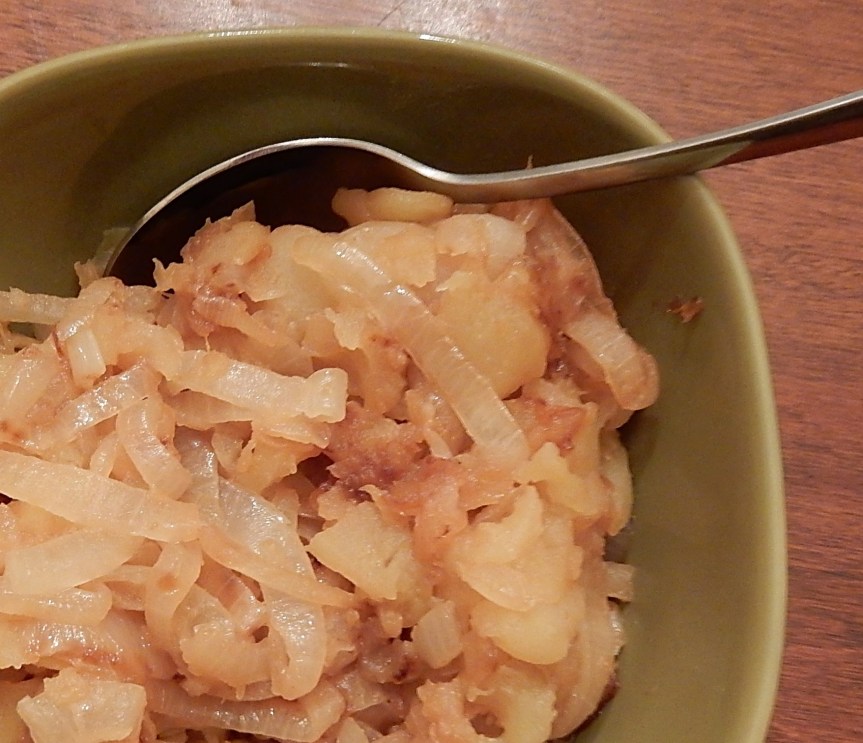
The Breakfast Apples were delightful. Apple slices were sautéed in butter then sprinkled with cinnamon and sugar.

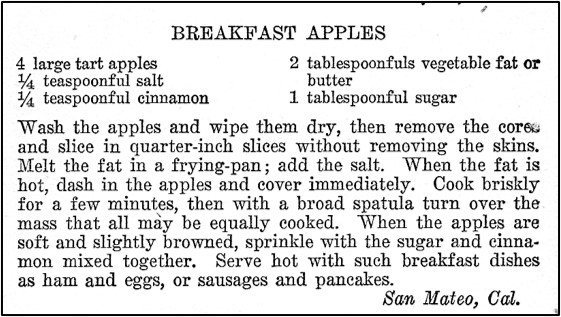
Here’s the original recipe:

Recipe for Breakfast Apples
Source: Good Housekeeping’s Book of Menus, Recipes, and Household Discoveries (1922)

And, here is the recipe updated for modern cooks:

Breakfast Apples

  • Servings: 2-3
  • Difficulty: easy
  • Print

4 large tart apples (Braeburn, McIntosh, Granny Smith, etc.)

2 tablespoons butter

1/4 teaspoon salt

1/4 teaspoon cinnamon

1 tablespoons sugar

Core and slice the apples (do not peel them). Melt butter in a skillet using medium heat; add salt and stir to combine. Add sliced apples, then put lid on pan. Cook for 5 minutes, then remove lid and use a spatula to turn over the apple slices so they evenly cook on both slides. Put lid back on the pan and cook for another 5 minutes. Remove lid and check to see if the apples are soft. (If they are not soft, cook for several additonal minutes.)

In the meantime, put the cinnamon and sugar in a small bowl, and mix together.

Sprinkle the cooked apples with the cinnamon and sugar mixture. Serve hot.

http://www.ahundredyearsago.com

Fried Onions with Apples

Fried Onions with Apples in Bowl

A hundred years ago there was a limited selection of fruits and vegetables during the winter months.  Onions and apples are two foods that store well, and were frequently eaten during the winter – though I had never thought of them as being foods that would be combined in one recipe until I saw a recipe for Fried Onions with Apples in a hundred-year-old cookbook. I couldn’t picture what this recipe would taste like, so decided to give it a try.

The sweet tartness of the apples combined beautifully with the sharpness of the onions to make a tasty side dish. I served the Fried Onions with Apples with roast beef and it nicely complemented the meat.

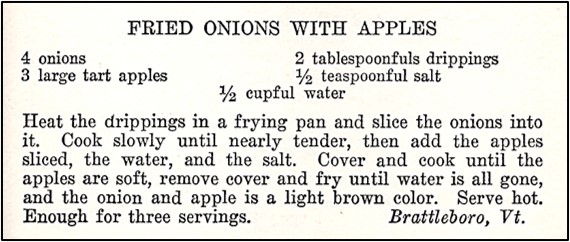
Here’s the original recipe:

Recipe for Frined Onions with Apples
Source: Good Housekeepng’s Book of Menus, Recipes and Household Discoveries (1922)

Here’s the recipe updated for modern cooks:

Fried Onions with Apples

  • Servings: 3 - 4
  • Difficulty: moderate
  • Print

4 medium onions, sliced

3 large tart apples, peeled and sliced (I used Braeburn apples.)

2 tablespoons bacon fat or other fat (The old recipe called for meat drippings.)

1/2 teaspoon salt

1/3 cup water

Heat fat in a skillet, then add the onion slices. Saute using medium heat until the onions begin to turn transparent, then add the apples, salt and water. Cover and cook until the apples are soft (10 – 15 minutes). Remove lid, increase heat to medium high, and fry until the water has evaporated and the onions and apples are a light brown; stir frequently.

http://www.ahundredyearsago.com

Old-fashioned Apple and Celery Salad

Celery and Apple Salad in dish

I always enjoy Waldorf Salad, so was intrigued by recipe for Apple and Celery Salad in a hundred-year-old cookbook. It seemed very similar to Waldorf Salad – but with fewer ingredients (just apples and celery). I wondered, would I miss the nuts and raisins in the typical Waldorf Salad?

The verdict- Apple and Celery Salad was nice, but I prefer Waldorf Salad with the added crunchiness and sweetness of the nuts and raisins.

Here’s the original recipe:

Recipe for Celery and Apple Salad
Source: The New Cookery (1921) by Lenna Frances Cooper

I went with the mayonnaise option when I made this recipe, and I did not garnish with lettuce. (Exactly how do you garnish with lettuce?) I also did not peel the apples. To be totally honest, I somehow failed to notice that the apples were supposed to be peeled until I started writing this post. When I made this recipe, I was in a hurry and just glanced at the recipe, and thought that this would be an easy recipe because it was Waldorf Salad minus half the ingredients. I should have read it more carefully. The salad would be different (and less colorful) if the apples had been peeled.

And I also failed to notice that I was supposed to marinate the apple pieces in lemon juice – but we ate the salad soon after I made it, so the apples didn’t discolor. (I think that coating them with mayonnaise also slows discoloration).

I used just enough mayonnaise to coat the celery and apple pieces (about 1/2 – 2/3 cup).  I previously made the Golden Salad Dressing recipe that is listed in this recipe when I made another recipe from this cookbook: Pineapple and Strawberry Salad with Golden Dressing. Golden Salad Dressing recipe can be found in that post.

I’m now realizing that I barely made the original recipe for Apple and Celery Salad – and am fascinated that I somehow failed to do so many things quite right with such a simple recipe. I guess it’s a lesson learned about carefully reading directions even for the easiest recipes. That said, the recipe turned out well, so the updated recipe for modern cooks is based on how I made it..

Here’s the recipe updated for modern cooks:

Apple and Celery Salad

  • Servings: 5 - 7
  • Difficulty: easy
  • Print

2 cups chopped apples (about 1/2 inch pieces) –The apples can be either peeled or not peeled.

2 cups chopped celery (about 1/2 inch pieces)

1/2 – 2/3 cup mayonnaise

Combine apple and celery pieces; stir in enough mayonnaise to lightly coat the pieces.

http://www.ahundredyearsago.com