19-year-old Helena Muffly wrote exactly 100 years ago today:
Friday, October 16, 1914: << no entry>>
Her middle-aged granddaughter’s comments 100 years later:
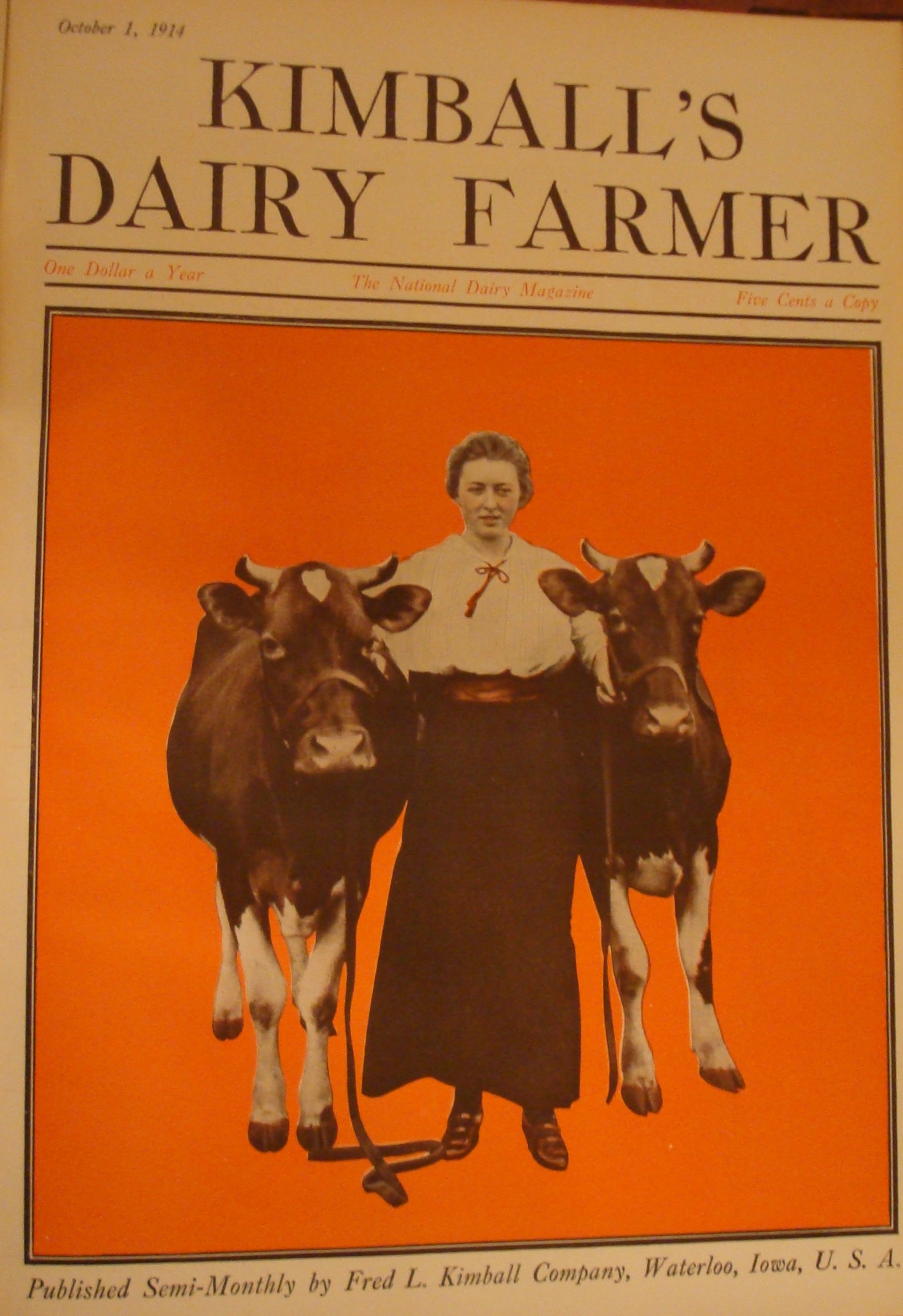
Since Grandma didn’t write anything a hundred-years-ago today, I thought you might enjoy seeing the cover of the October 1, 1914 issue of Kimball’s Dairy Farmer Magazine.
The orange cover design with the picture of a woman (with lipstick ?) and two cows doesn’t quite work for me—but it may have been considered progressive at the time.
19-year-old Helena Muffly wrote exactly 100 years ago today:
Thursday, October 15, 1914: << no entry>>
Source: Ladies Home Journal (October, 1914)
Her middle-aged granddaughter’s comments 100 years later:
There was a hint in a diary entry last summer that Grandma may have had a boyfriend—and I’m keeping my fingers crossed that she’s having lots of fun (and is too busy to write in the diary).
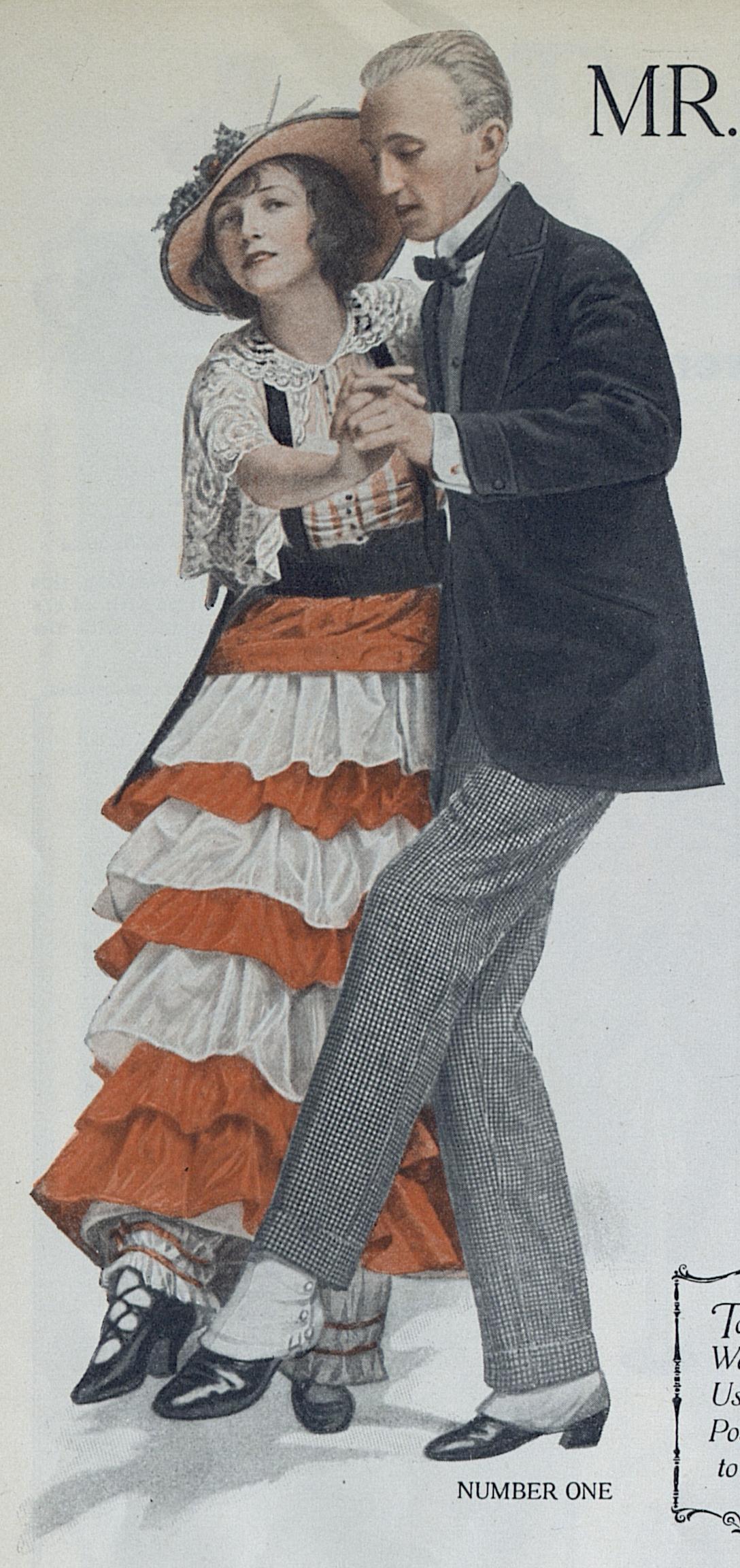
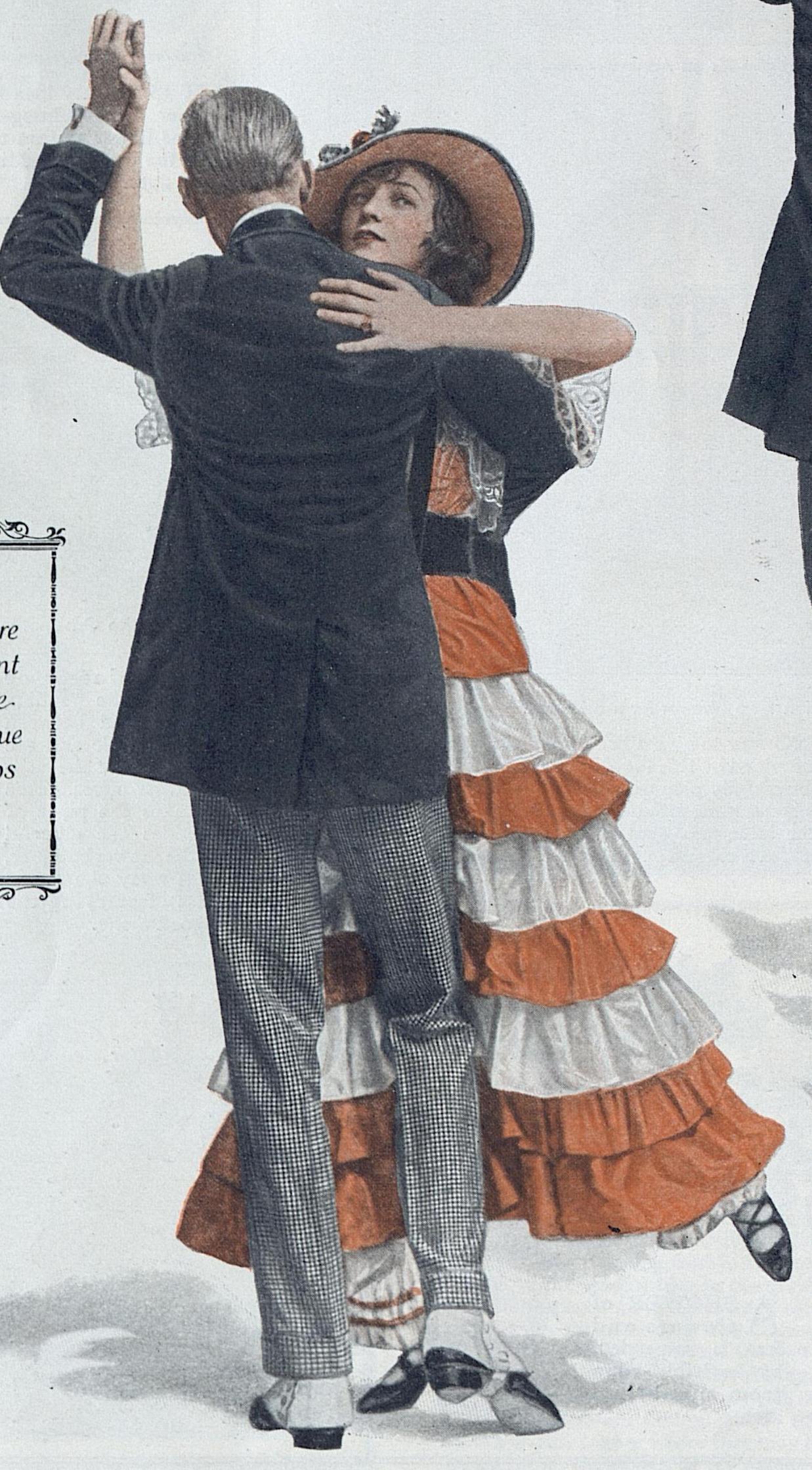
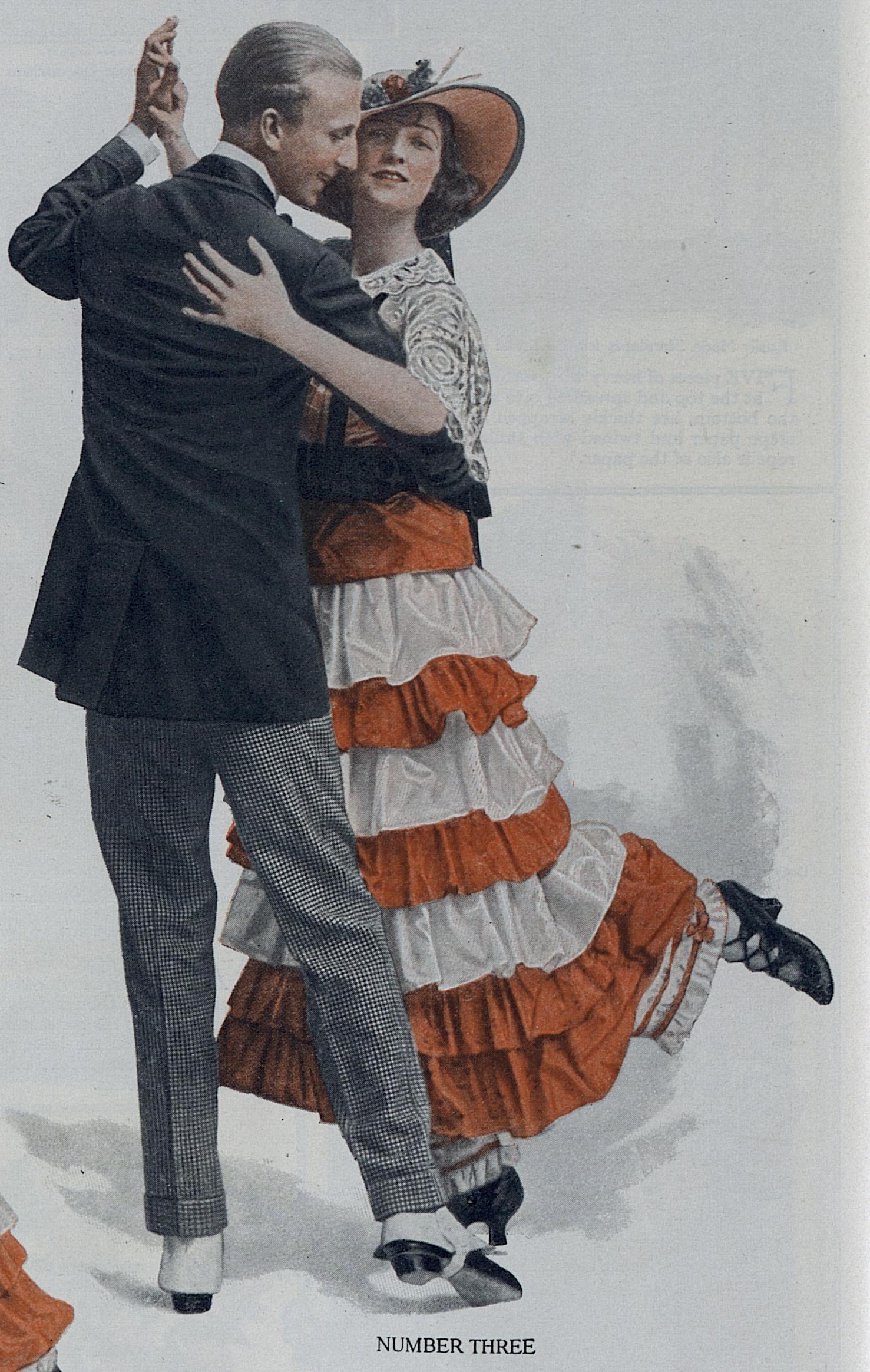
Maybe Grandma went dancing. Here are directions in the October, 1914 issue of Ladies Home Journal for the polka:
Before I explain the polka it might be well to tell why I think it should be revived and modernized—not to take the place of the other dances so popular now, but to add variety to all dance programs. We have at present a leaning toward things old-fashioned. This is most noticeable in the quaintness of the fashionable woman’s attire. In fact my wife is wearing at parties the dress you see in these photos.
Possibly the most important excuse for a revival and modernization of the polka is because it is easy to learn and so enjoyable to dance. In the polka you hop rather than slide, which exactly the opposite to the usual steps in our other present-day dances. The hop, if not exaggerated, is most graceful. The counting for this dance is 1 -2 – 2 – hop, 1 – 2- 3 – hop. You do the hop after the third step. . .
19-year-old Helena Muffly wrote exactly 100 years ago today:
Wednesday, October 14, 1914: << no entry>>
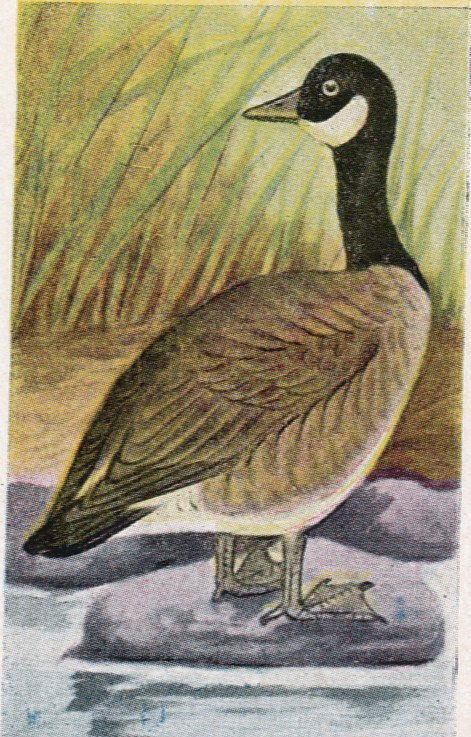
Source: The Bird Book (1914)
Her middle-aged granddaughter’s comments 100 years later:
Fall is here. Some things haven’t changed much across the years. Did Grandma see any Canadian Geese flying South a hundred years ago today?
Here’s what a book published in 1914 had to say about the Canada Goose.
Canada Goose
Range: The whole of North America, breeding from northern United States northward, and wintering in the southern parts of the United States. Its familiar “honk” and V-shaped formation in which the flocks migrate is always an object of interest to everyone.
19-year-old Helena Muffly wrote exactly 100 years ago today:
Thursday, October 8, 1914: <no entry>
Source: Ladies Home Journal (October, 1914)
Her middle-aged granddaughter’s comments 100 years later:
Since Grandma didn’t write anything a hundred years ago today, I’ll share some “rules” there were in the October, 1914 issue of Ladies Home Journal about how to decorate rooms:
There are certain general rules that govern the furnishing of every room in the house, whether it be living-room, dining-room, or bedroom that is under consideration.
Beginning with the floor, see that the covering for this is of a slightly darker color than that selected for walls.
The colors used for your wall, of course, depend upon the amount of light admitted to the room and also upon the exposure. For a south light, which is in itself warm, choose cool colors, light greens and blues; on the other hand, for a north light select warm colors like tones of yellow and red.
Do not use a decidedly figured paper in the same room that you used figured draperies. Figured draperies should be used only with plain paper.
When your paper is figured, be careful not to put too many small pictures on your walls or the effect will be spotty.
19-year-old Helena Muffly wrote exactly 100 years ago today:
Wednesday, October 7, 1914: <<no entry>>
Source: Ladies Home Journal (April, 1914)
Her middle-aged granddaughter’s comments 100 years later:
Sigh . . another day with no diary entry.. . but while we’re waiting for Grandma to pick up her pen, I thought that you might enjoy this hundred-year-old bicycle ad.
19-year-old Helena Muffly wrote exactly 100 years ago today:
Monday, October 5, 1914: <<no entry>>
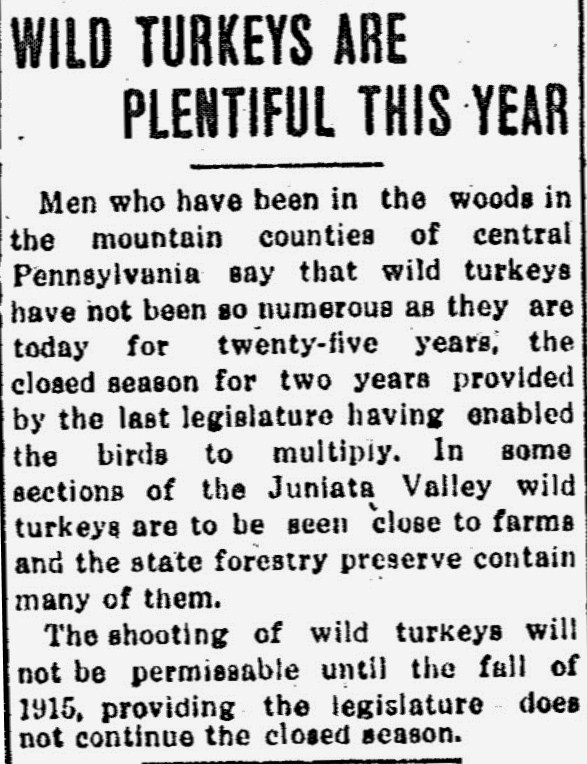
Source: Milton Evening Standard (September 21, 1914)
Her middle-aged granddaughter’s comments 100 years later:
Since Grandma’s diary is not helping me come up with a topic for today’s post, I’m going to go off on another tangent–
Yesterday, I shared an article from 1914 which indicated (much to my surprise) that women could get hunting licenses a hundred years ago. Today, I’m sharing another 1914 article from the Milton (PA) Evening Standard that also touched on hunting—and the effects of over-hunting in the late 1800s and early 1900s.
It’s good to know that the wild turkey population was increasing, and that the state of Pennsylvania had passed laws which supported wildlife restoration—but it’s somewhat alarming that turkeys apparently were endangered in Pennsylvania and other states in the early 1900s. According to the Tennessee Wildlife Resource Agency:
1840—Wild turkey “virtually eliminated” from New York
1881— Wild turkey gone from Wisconsin
1900— Wild turkey gone from Iowa
1900—Wild turkey “nearly silenced “ in Georgia
1900— Wild turkey gone from North Carolina
1910— Wild turkey gone from 2/3s of Virginia
1920 —18 of 39 state had lost their wild turkey population
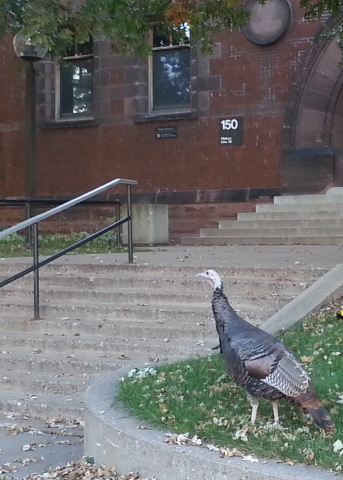
An aside—I saw several turkeys on my way into work on Friday. Thank goodness the people who lived a hundred years ago worked to restore the wild turkey population so that we can enjoy them now.