17-year-old Helena Muffly wrote exactly 100 years ago today:
Saturday, March 15, 1913: We had company today. Didn’t think at first they’d come, for it was so rainy.
Her middle-aged granddaughter’s comments 100 years later:
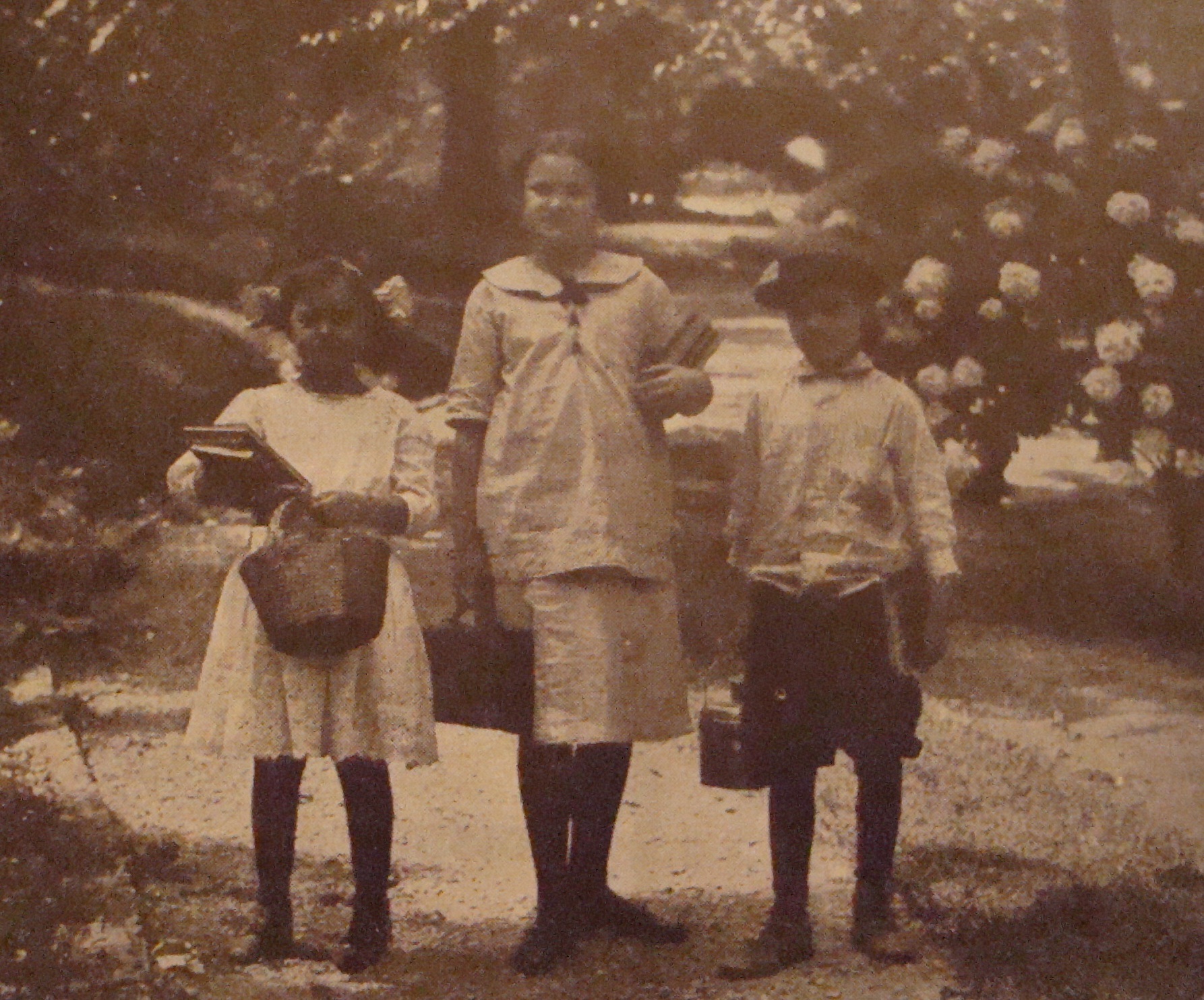
I wonder who visited the Muffly’s. Does company refer to one person, a couple, or a family with children? Did any of the children wear Bestyette rain capes or slicker coats to stay dry?
Does company refer to one person, a couple, or a family with children? Did any children wear Bestyette rain capes or coats to stay dry?
Source: Ladies Home Journal (October, 1913)
Bestyette Rain Coats
Yes, it is difficult to tell a good rain garment from a poor one. The eyes or fingers cannot tell whether the garment is waterproof or not. That is why you should buy Bestyette raincoats that are made by an old established concern, the New York Mackintosh Company, and sold with the famous
Bestyette Guarantee: “Satisfaction or a new garment free.”
The Bestyette process of waterproofing is a secret way of treating and applying live new rubber to the fabric so that it is absolutely waterproof and won’t dry or crack from age or usage.
Bestyette Garments are strikingly stylish, correctly cut, and well-tailored. They cost but little more than the inferior, unknown, unguaranteed kinds. Made for men, women, and children. Here we illustrate two of our “hits” for the little folks. Every child should have one. Cheaper than doctors’ bills—better than umbrellas which break or get lost.
The Famous Bestyette Storm Cape $3.00 up
The famous Bestyette Storm Cape is made of genuinely good rubberized material of a soft, silky finish—fitted with a roomy plaid-lined silk hood, and tied at the neck with dainty silk ribbons. It envelops the child from head to feet. In tailoring, fit, and all the finer points of finishing, the Bestyette is far superior to cheap, unguaranteed imitations. Colors guaranteed fast: cardinal, navy, golden brown and tan. Sizes 4 to 15. Price with free School bag, $3.00 up.
For Boys and Girls Bestyette Slicker Coat $3.50 up
The Bestyette Slicker coat is a great favorite with boys and girls. It is made on mannish lines and affords perfect protection against driving rain and piercing winds. It is absolutely waterproof and wonderfully durable—made of special double material, treated by the Bestyette process. It won’t dry, creak, or leak. Sizes 4 to 14 years. Price $3.50 up. (Sou’ Wester Hats, 50 cents up.)
If your dealer cannot supply you with Bestyette garments, we will. Write for Booklet.
NEW YORK MACKINTOSH CO.
39 2. 32 Street New York City
School bag free with each Bestyette storm cape.
This bag is waterproof and contains two compartments, one for carrying school books, the other for carrying the Bestyette storm cape.
17-year-old Helena Muffly wrote exactly 100 years ago today:
Thursday, March 13, 1913: Nothing doing.
Her middle-aged granddaughter’s comments 100 years later:
Since Grandma didn’t write much a hundred years ago today, I’ll go off on another tangent–
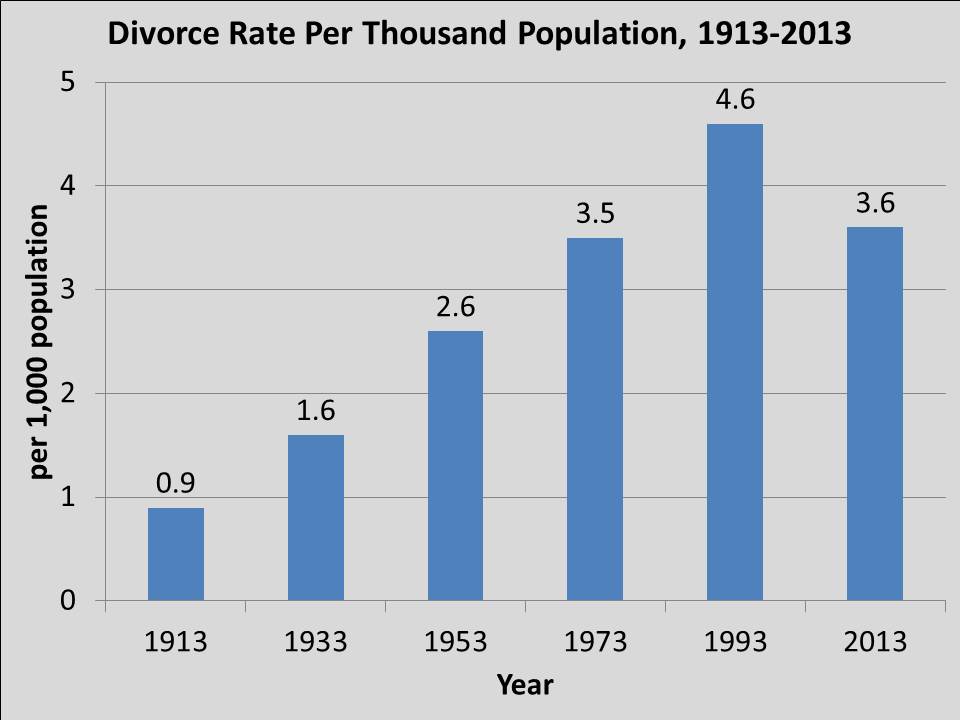
I’ve been reading some Edith Wharton books from the early 20th century—and one of the themes in her writing is unhappy marriages and the role of divorce. This made me wonder if divorce rates have changed much across the years.
The divorce rate was 0.9 per thousand population in 1913. It peaked at 4.6 in 1993; and decreased to 3.6 in 2013.
For those of you who care about the source of the data–The historic data is from Infoplease, and the data for the current year is from the Centers for Disease Control and Prevention. If data for the exact year were not available, I used data from the nearest available year (typically the first year of the decade–for example, I used 1910 data for 1913).
Here are links to some previous posts on statistics that you might enjoy:
17-year-old Helena Muffly wrote exactly 100 years ago today:
Sunday, March 9, 1913:Went to Sunday School this afternoon. It was so nice out. Felt most too warm with my jacket on going up.
Wooltex
The W. BLACK COMPANY
Designers
Wooltex Coat $15.00
Model 2249
An Extraordinary
Demonstration of Wooltex Value.
A handsomer coat for general service could scarcely be designed at any price than this model, No. 2249. It comes in whip cords, diagonal worsteds, find fancy diagonals, and a variety of fancy worsteds. Trimming is with inserts of self or contracting color broadcloth, and with buttonholes and invorine buttons to match inserts. Price but $15.00.
There are a few woman in every city who are always “well-dressed”.
They are not always the richest.
Go see the Wooltex spring models and know why so many of them wear Wooltex coats and suits.
The Store That Sells Wooltext Coats, Suits, Skirts
(Source: Ladies Home Journal, April, 1913)
Her middle-aged granddaughter’s comments 100 years later:
The online Weather Channel forecast for McEwensville for today is a low of 31° and a high of 52.° Sounds like a nice day—though still jacket weather. It may have been a just a little bit nicer on this date a hundred years ago.
17-year-old Helena Muffly wrote exactly 100 years ago today:
Thursday, March 6, 1913:I got pretty cold today. My hands got rather chilly coming home from school. Ma and Ruth went up to Oakes.
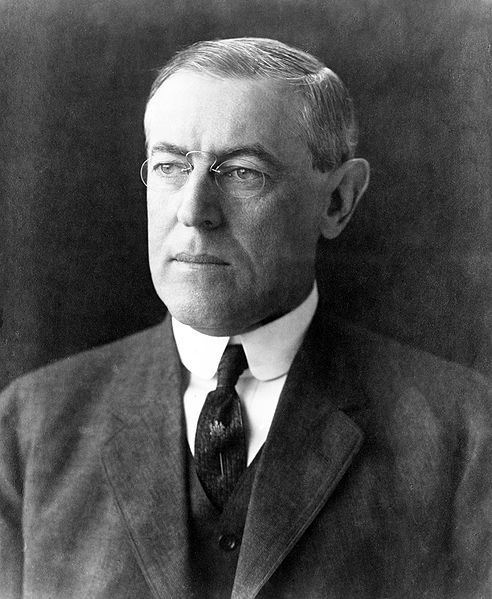
President Woodrow Wilson
Her middle-aged granddaughter’s comments 100 years later:
It sounds like it was a cold day. Did Grandma forget her gloves? Maybe she thought that the day would be warmer than it actually was.
For today’s post, I searched for a hundred-year-old newspaper article about the weather, but I failed to find any anything. Instead I discovered that a hundred years ago today was the 3rd day of President Woodrow Wilson’s presidency.
A hundred years ago the presidential inauguration was in March. Inauguration Day used to be four months after election day. In 1913, it was on March 4. Inauguration day was changed to noon on January 20 by the Twentieth Amendment in 1933.
In November, 1912 Woodrow Wilson, a Democrat, beat the incumbent president, Robert Taft in a three-way race. He also beat former president Theodore Roosevelt. Roosevelt was the founder of the Bull Moose Party. For more on the election see:
Was Grandma excited about the new president? . . unhappy about the change. . .indifferent?
—
The Oakes lived on a farm near the Muffly family. They had several children about the same age as the Muffly children. Rachel Oakes was a friend of Grandma and her sister Ruth.
Her middle-aged granddaughter’s comments 100 years later:
Since Grandma didn’t’ write much a hundred years ago today, I’m going to go off on a tangent.
I’ve often wondered what children ate for lunch a hundred years ago. Today we hear so much about how unhealthy school lunches are—and that even children who bring their own lunch often don’t bring nutritious foods.
.Of course, in the small rural schools a hundred years ago all students needed to bring their own lunches. I found a great article on packing school lunches in a 1913 magazine:
The School Lunch Pail
Great care is essential in making the lunch and the lunch pail appear attractive, not only for the sake of the child’s appetite, but for his pride as well. Many a lunch has been surreptitiously thrown under a convenient hedge, because the child was ashamed to open it before the critical eyes of his playmate. . .
The foundation of a lunch is always the reliable bread sandwich. There are many dainty and appetizing sandwich fillings to be made from left-overs. . .
You can make the most appetizing custards and puddings in little ramekins. These are easily prepared the day before when you are getting dinner for the home folks. . .
There are a variety of simple cookies and cakes which delight the child’s heart, particularly when baked in “animal” fancy shapes.
No lunch pail is complete without fruit. If it is impossible to obtain fresh fruits, the dried stewed ones may be substituted. Figs, prunes or dates are wholesome and may be made doubly so when stuffed with nuts, peanut butter, or the puffed grains.
17-year-old Helena Muffly wrote exactly 100 years ago today:
Friday, February 28, 1913:We got out of school real early this afternoon, so I visited the Primary awhile.
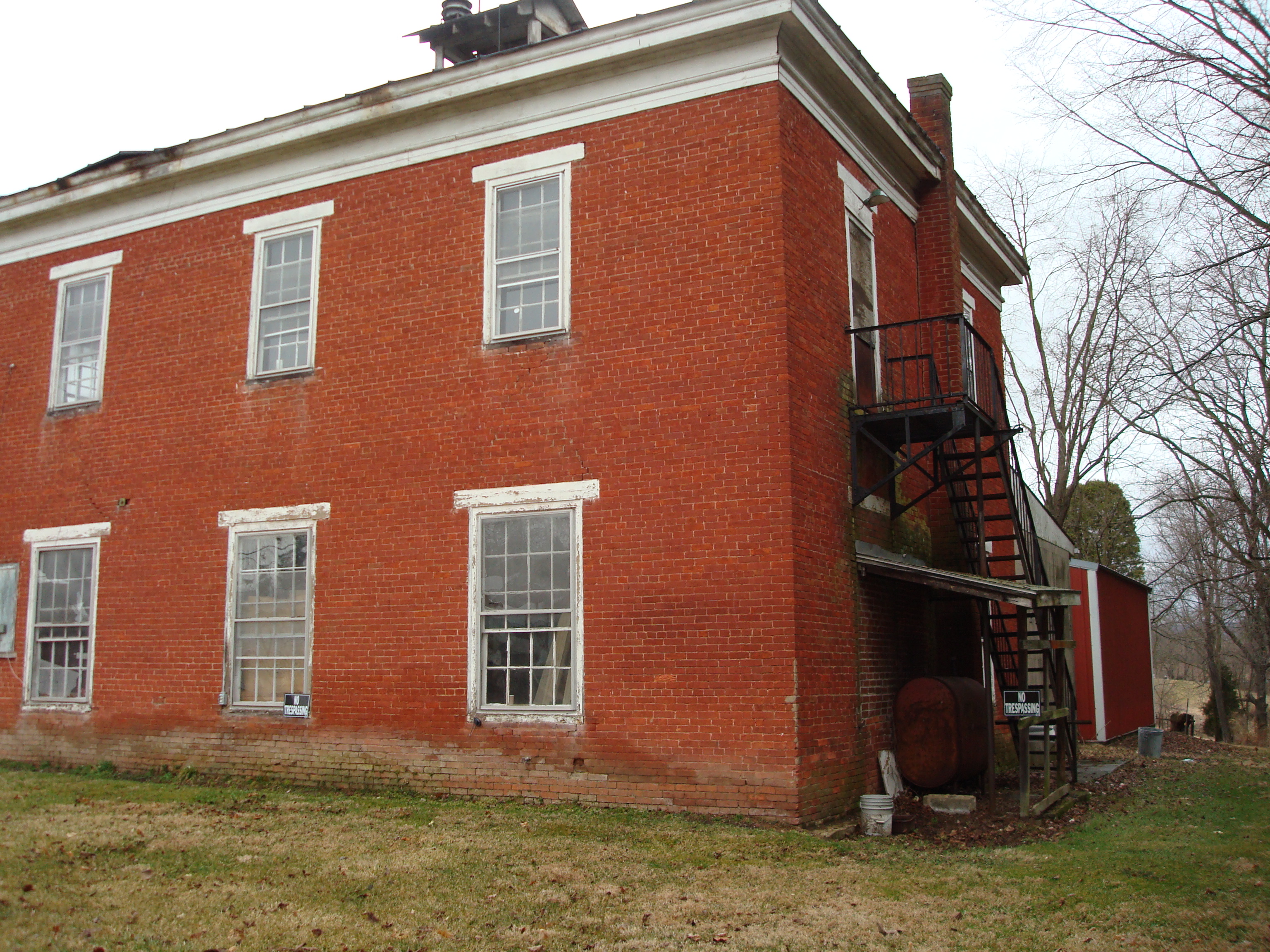
Recent photo of building that once housed the McEwensville Schools.
Her middle-aged granddaughter’s comments 100 years later:
This diary entry reminds me of how different the school Grandma attended was from schools today.
The McEwensville School building housed both a primary school (grades 1-8) on the first floor and a high school on the second floor. There were just two teachers in the building—a primary teacher and a high school teacher. Both teachers would have taught multiple grades and subjects.
Since Grandma was writing in the diary for herself (and not for readers a hundred years later) she skipped many of the details. Here’s my interpretation of this entry—
Although Grandma got out of school early, she probably needed to stay until the primary students were dismissed. Her 7-year-old brother Jimmie was in second grade. Even though she almost never mentioned walking to and from school with her little brother in the diary—they probably walked together every day.
17-year-old Helena Muffly wrote exactly 100 years ago today:
Tuesday, February 25, 1913: I’ve forgotten. Finished essay.
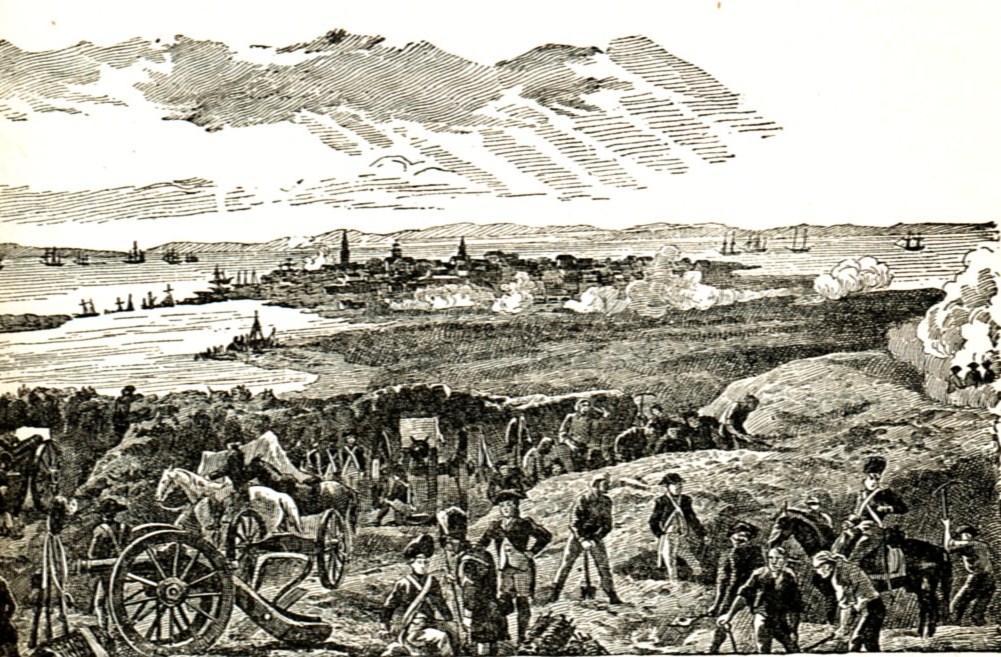
Picture caption: The Siege of Charleston, After the picture by Chappel (Source: American History for Schools, 1913)
Her middle-aged granddaughter’s comments 100 years later:
Yeah, Grandma! I bet it feels good to have finished the essay on the American Revolution that you’ve been working on for almost two weeks. I’m keeping my fingers crossed that you win the two and a half dollar gold piece that your teacher is going to give to the student who wrote the best essay.
—
I’m still having fun reading the chapter on the American Revolution in the 1913 American History textbook that I quoted in several previous posts.
Here are a few of the review questions at the end of the chapter:
1. If modern battleships had been in use during the Revolution, would the outcome of the war been different?
2. Did the British government have any sound basis, moral or legal, for its policy of coercion?
3. In your opinion, what was the most important battle of the war?
4. How was the Revolution an aid to the cause of liberty everywhere?
5. Name some of the serious problems that confronted the Americans when the war was over?
6. How do you account for the success of the American navy?
American History for Schools (1913) by R.B. Cousins and J.A. Hill
For previous posts on the American Revolution from the same 1913 textbook see: