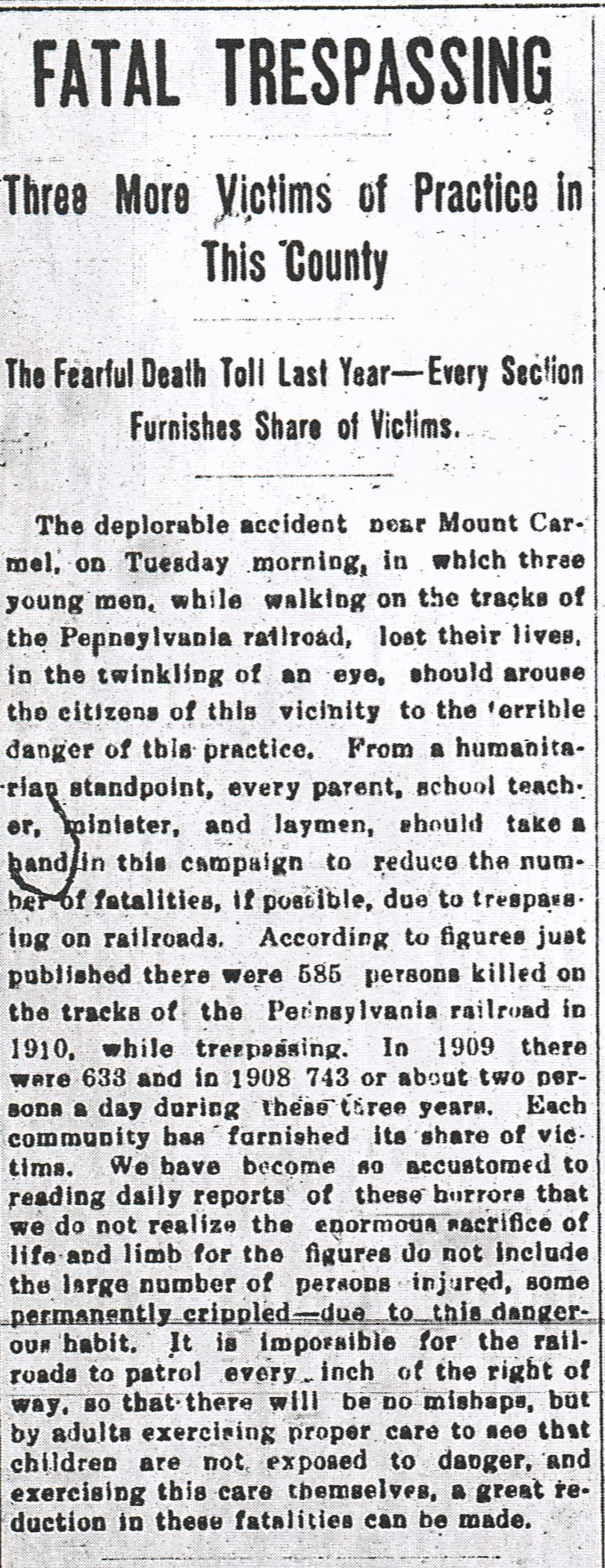
Every Dairyman Should Take a Vacation–And be Sure to Take the Wife!

16-year-old Helena Muffly wrote exactly 100 years ago today:

Thursday, September 7, 1911: Really nothing so very much for today. Am getting used to going to school now. 

The caption says, "Every Dairyman Should Take a Vacation."

Her middle-aged granddaughter’s comments 100 years later:

Since Grandma didn’t have much to say a hundred years ago today, I’m going to go off on a tangent.

Summer’s over—and based on the diary I don’t think that the Muffly’s took a vacation during the summer of 1911. I just assumed that farmers didn’t take vacations back then because the animals needed to be fed regularly and the cows needed to be milked twice each day.

I was surprised to discover that my assumption was wrong and that some dairy farmers did take vacations a hundred years ago. The cover story in  the July 15, 1911 issue of Kimball’s Dairy Farmer magazine recommended that dairy farmers take vacations.

However, apparently many farmers took vacations without their families–and they left their wives at home to do the farm work. The article reprimanded  men who did this:

The farmer’s vacation should include other members of the family besides himself. The wife who has been struggling through the entire year with her difficulties and her tasks that oftentimes seem hopelessly burdensome should share in the recreation pleasures.

Kimball’s Dairy Farmer (July 15, 1911)

Old Math Problems

16-year-old Helena Muffly wrote exactly 100 years ago today: 

Wednesday, September 6, 1911: Have to study in the evenings now, instead of sitting around, reading or doing nothing. I got stuck on an algebra problem this evening. Don’t know whether I’ll get it yet or not. I know how to work the problems of that kind but this is a bulky one.

Her middle-aged granddaughter’s comments 100 years later:

I suppose Grandma forgot some math over the summer.

Here are some problems in the first chapter of an algebra book that was published in 1911. Maybe the problems Grandma was struggling with were similar to these.

  1. A bicycle and suit cost $54. How much did each cost, if the bicycle cost twice as much as the suit?
  2. Two boys dug 160 clams. If one dig 3 times as many as the other, how many did each dig?
  3. The average length of a fox’s life is twice that of a rabbit’s. If the sum of these averages is 21 years, what is the average length of a rabbit’s life?
  4. The water and steam in a boiler occupied 120 cubic feet of space and the water occupied twice as much space as the steam. How many cubic feet did each occupy?
  5. Canada and Alaska together annually export furs worth 3 million dollars. If Canada exports 5 times as much as Alaska, find the value of Alaska’s export.
  6. The poultry and dairy products of this country amount to 520 million dollars a year, or 4 times the value of the potato crop. What is the value of the potato crop?

First Year Algebra (1911) by William J. Milne

For additional 1911 math problems see these previous posts:

Odd, Unusual, and Strange Math Problems

1911 Algebra Problems: The Lusitania and Molasses

Clothes for School: 1911 Styles for Young Women

16-year-old Helena Muffly wrote exactly 100 years ago today: 

Tuesday, August 29, 1911: Did some fixing at one of my school dresses. I will soon need them for school starts next week. I’m so glad. I intend to be very studious and see if I can’t make a better record this coming year than I did last. Last year’s average was poor enough. I know.

Source: Ladies Home Journal (August, 1911)

Her middle-aged granddaughter’s comments 100 years later:

I wonder what repairs Grandma needed to make to one of her old school dresses. I bet that she wished that she had some stylish new clothes. The August 1911 issue of Ladies Home Journal showed the latest school clothes styles for young women.

For more pictures of 1911 clothes, see 1911 Dresses.

Life Expectancy–1911 and 2011

16-year-old Helena Muffly wrote exactly 100 years ago today: 

Wednesday, August 9, 1911: Today is passing and my opportunity for writing anything about it is passing with it. It is not necessary to jot down the happenings of every occurrence.

Her middle-aged granddaughter’s comments 100 years later:

Since Grandma didn’t write much a hundred years ago today, I’ll tell you about some statistics I found on the Center for Disease Control website. I’ve often heard that people live longer now than they used to, and I wondered how much longer they lived.

Life expectancy at birth from 1911 to 2011. At all years the life expectancy is higher for females than males. In 1911 the life expectancy at birth for females was 53 years; for males it was 50 years.

Grandma was born in 1895. I don’t have data for people born in 1895, but assume that the life expectancy was even lower then than in 1911. Grandma lived longer than average.  She died in 1981 when she was 85-years-old.

Since more children died shortly after birth a hundred years ago than today, I thought that might affect the birth life expectancies. So I also checked the life expectancy at age 60.In 1911 a 60-year-old female could expect to live 15 more years; a male could expect to live 14 more years. In 2011 a 60-year-old female can expect to live 24 more years and a male can expect to live 21 more years. Life expectancy at age 60 for the years between 1911 and 2011. At all years the life expectancy is higher for females.(For those who care–The 2011 numbers are for the most recent available year. The Center for Disease Control has not yet released the 2011 life expectancy tables, so those estimates may go up or down slightly after they becomes available.)

1911 Dresses

16-year-old Helena Muffly wrote exactly 100 years ago today: 

Sunday, July 16, 1911: Went to Sunday school this afternoon. I was the only one in our class. I initiated my new dress for the first time. Wouldn’t it be nice to have as many dresses as you wanted, and wear them whenever you pleased.

Photo in June, 1911 issue of Ladies Home Journal

Her middle-aged granddaughter’s comments 100 years later:

Grandma’s mother finished the new dress earlier in the week. Grandma probably wished that she had some dresses that looked similar to the ones in Ladies Home Journal.

Photo in the July, 1911 issue of Ladies Home Journal

Young People and Marriage

16-year-old Helena Muffly wrote exactly 100 years ago today: 

Thursday, March 23, 1911:  Ruth and I received an invitation to the wedding. But oh dear me it is two wks. off. It took a streak of being cold today. This is such uncertain weather. Hope I will be warm on the sixth for then I intend to have some fun.

Her middle-aged granddaughter’s comments 100 years later:

Grandma seems excited about getting an invitation to the wedding of a senior in her high school. I wondered what people thought made a good marriage a hundred years ago. I found an article in a 1911 issue of Ladies Home Journal about marriage.  Just as we do now, older people worried about young people making good decisions about relationships. Some of the concepts, suggestions, and concerns seem incredibly modern—others extremely quaint.

 Our Young People and Marriage

Whether it is because of the increase in divorce or whatever it is, we are hearing a great deal these days about new forms of the marriage relation or changes in our present form of marriage. With all these suggested changes there is always sounded one note: that monogamy as we call the present sex relation of marriage of one man to one woman, and vice versa, was forced upon the world by the authority of a church, or by stern moralists who were regardless of the finer aesthetic interests of human nature. And then generally follows some argument, carefully put into the form of a question, as to whether the love feeling, the love relation, could not be better realized if the present yoke, the present form of marriage, which has been put upon men and women, were shaken off in part if not in whole. 

To those of us who have lived a few years all these alternative arrangements between men and women that are suggested are read with interest, perhaps, and then dismissed. We know that all these brand-new and novel suggestions have been tried and found wanting. But to the minds of the younger people they are new, and to their minds also they bring thoughts that are dangerous unless healthfully met. The ideas, generally very seductively put, of what one writer will call “trial marriage”, another will call “experimental marriage,” a third will call “a ten-year arrangement,” and a fourth will base upon that meaningless, but more alluring word “affinity”—all these are tremendously fascinating to a young developing mind. It is all very well for us elders to “pooh-pooh” these ideas and dismiss them as unworthy of thought, but the young do no “pooh-pooh” them, and they are not dismissing them. We ought to wake up to the fact that certain questionings about the present form of the marriage relation have not only fallen into the minds of our young people, but that they are also resting here, and in some instances actually taking root. This is particularly true of young girls. What we need to do, whenever one of these wonderfully interesting, and novel proposals (for such they are to the young) finds expression, is to take down our histories of the world and read a bit to our young people, and show them that these seemingly new ideas are not new: that they have all been tried: and that the poor, lumbering, halting human race has, after all, found—not because in the nature of God said it, not because moralists said it, but because in the nature of things it is so—that the faithful and steadfast relation of one man and one woman is the best and only relation that has stood the test of time and of practically all peoples. And to our young girls should it be particularly pointed out that it is the only sound relation on the interest of women, because if other relations were tried women would inevitably be the first and the greatest sufferers.

Ladies Home Journal (August 1911) 

—————————–

An aside to those of you who managed to get through that dense article and are still reading—

Every time I read Ladies Home Journal articles from 1911 I’m amazed at how hard they are to read—long paragraphs, complex sentences, and difficult words. I put the above 1911 text into the “SMOG” readability tool—and found that the grade level was 15.3 years. Text from recent issues of the Ladies Home Journal is at about an 8th grade level. The Journal then as now, was a mass circulation women’s magazine. It’s absolutely amazing how well most women could read a century ago. The schools must have been doing something right!

Trespassing: Walking the Rails

15-year-old Helena Muffly wrote exactly 100 years ago today: 

Sunday, March 5, 1911:  I went to Sunday school this morning. Carrie Stout and I walked to Turbotville this afternoon going up the rail road. We were rather weak in our feet by the time we got home. Ruth and I went to church this evening.

Her middle-aged granddaughter’s comments 100 years later: 

Whew, this was a hike. It’s about 5 miles each way via road and it may be a little further on the railroad tracks. In 1911 the roads weren’t paved yet, and Helena and Carrie were probably trying to avoid the mud by walking on the railroad.

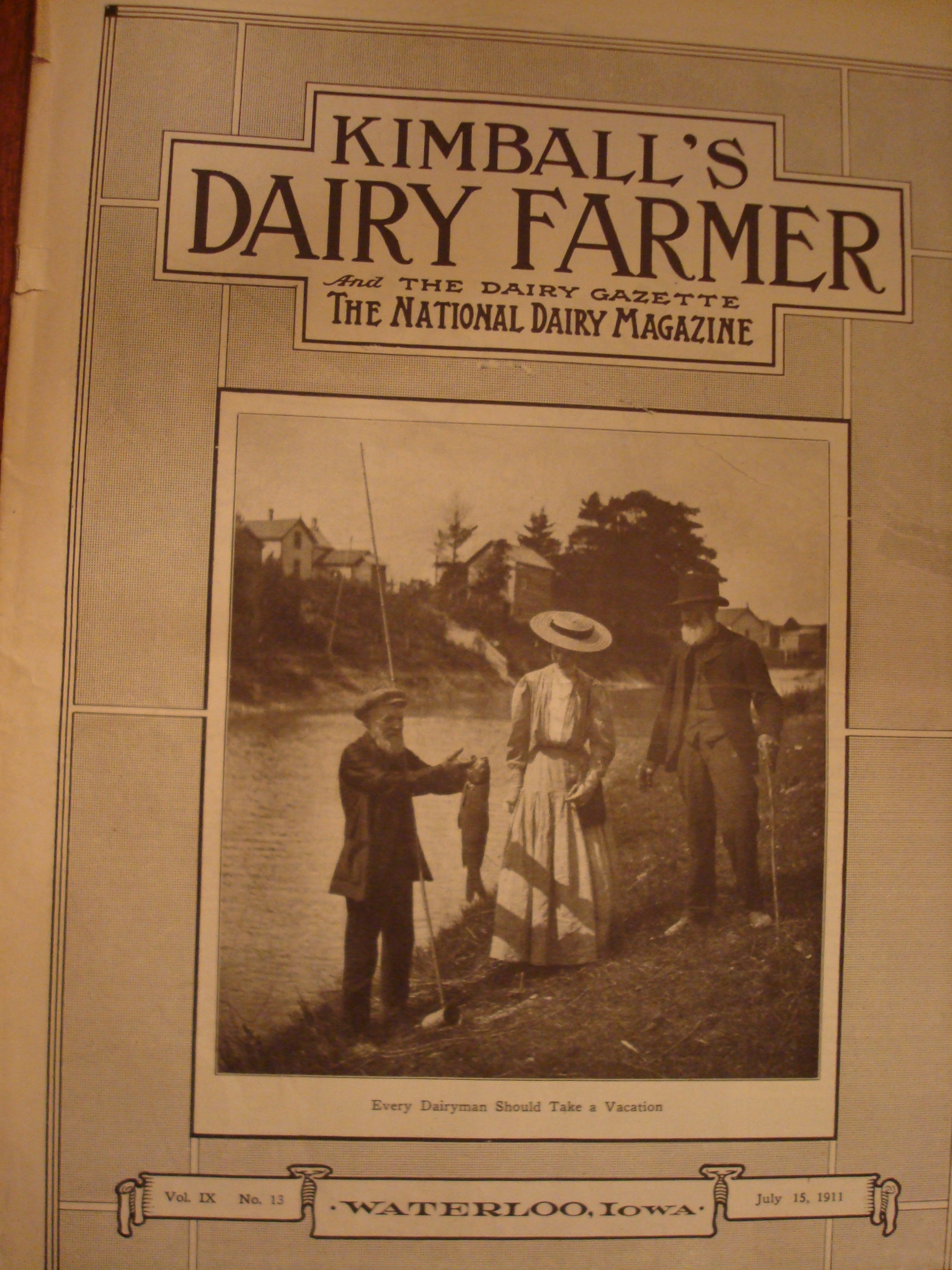
Apparently lots of people walked train tracks in those days even though it officially was considered trespassing and could be dangerous. Below are excerpts from an article in the local paper, the Milton Evening Standard,  that was written less than two months before Grandma and Carrie walked the rails.  

Article in Milton Evening Standards, January 19, 1911

FATAL TRESPASSING

Three More Victims of Practice in the County

The Fearful Death Toll Last Year—Every Section Furnishes Share of Victims

The deplorable accident near Mount Carmel on Tuesday morning, in which three young men while walking on the tracks of the Pennsylvania railroad lost their lives in the twinkling of an en eye, should arouse the citizens of this vicinity to the terrible danger of this practice. . .

According to figures just published there were 585 persons killed on the tracks of the Pennsylvania railroad in 1910, while trespassing. In 1909 there were 633 and in 1908 743 or about two persons a day during these three years. Each community has furnished its share of victims.  . .

We have become so accustomed to reading daily reports of theses horrors that we do not realize the enormous sacrifice of life and limb for the figures do not include the large number of persons injured, some permanently crippled—due to this dangerous habit. .  .

It is impossible for the railroads to patrol every inch of the rights of way, so that there will be no mishaps, but by adults exercising proper care to see that children are not exposed to dangers, and exercising this care themselves, a great reduction to these fatalities can be made. 

Milton Evening Standard, January 19, 1911