A Hundred Years Ago is 15 Years Old!

image of Jan. 1, 2011 post of A Hundred Years Ago
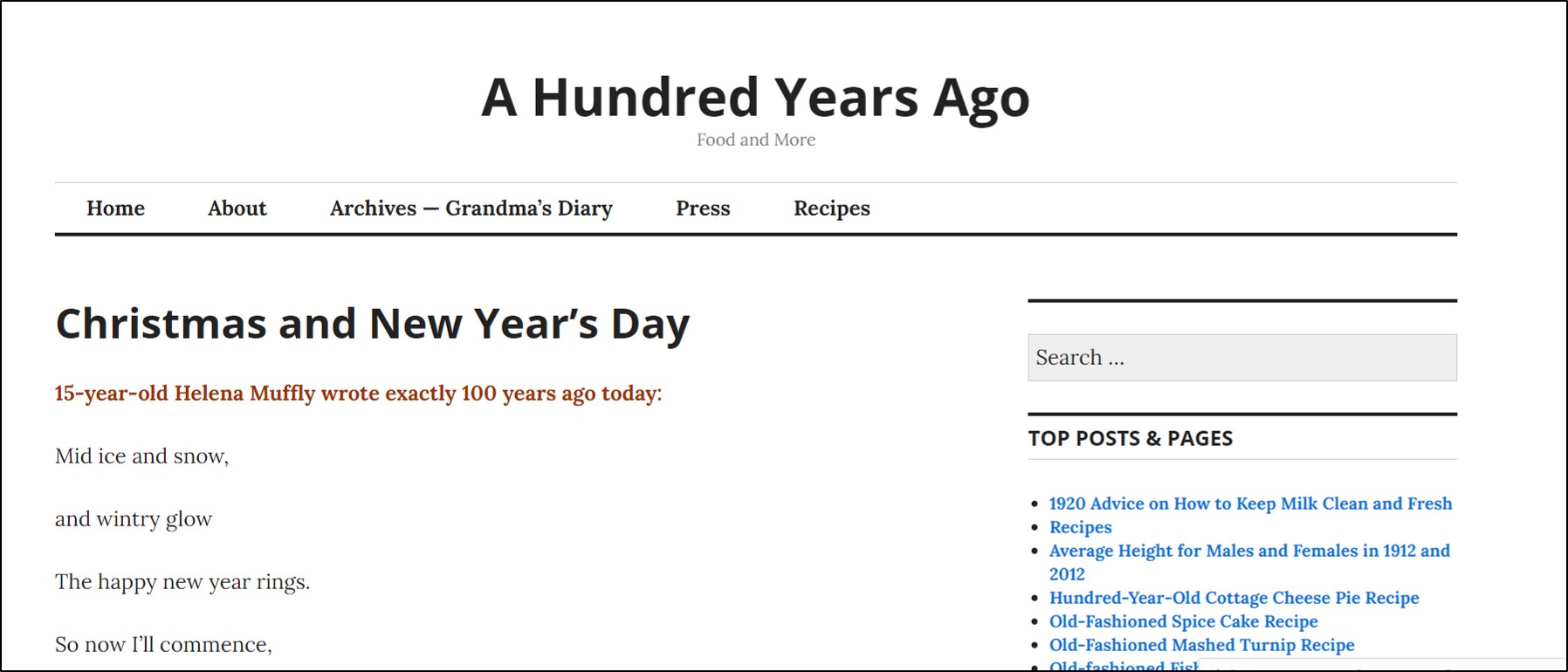
January 1, 2011 post of A Hundred Years Ago

A Hundred Years Ago hit a milestone today. It’s 15 years old. I did the very first post on January 1, 2011. The blog’s original purpose was to share with family members my grandmother’s diary entries a hundred years to the day after she wrote them. I also often posted additional information to explain and flesh out the entries. I planned to do a post every day during the four years of the diary. To my surprise, in addition to my family, other people soon started reading the posts.

My grandmother, Helena Muffly, kept the diary from January 1, 1911 – December 31, 1914 when she was a teen living on a farm in central Pennsylvania. After I posted the last diary entry, I told readers that A Hundred Years Ago had ended, and that there would be no more posts. However, I discovered that I missed blogging. So, about eight months later, I reinvented A Hundred Years Ago as a place to post recipes and other tidbits about food and cooking from a hundred years ago. And, the rest is history.

Some of you have been with A Hundred Years Ago since almost the beginning; others have been part of this blogging community for a few years, months, or days. Thank you! I’m humbled by your caring and support across the years. I am so fortunate to have wonderful readers like you.

In case you’re interested, here’s the very first post:

Christmas and New Years Day

Posted on January 1, 2011 by Sheryl

15-year-old Helena Muffly wrote exactly 100 years ago today:

Mid ice and snow,

and wintry glow

The happy new year rings.

So now I’ll commence,

And not with pretense,

My diary of interesting things

Sunday, January 1, 1911: The old year has passed, and the new year is ushered in with its joys and possibilities. To me the old year has been quite a pleasant one. May this year be as pleasant. Christmas brought me no fatal grievances, and it really proved to be enjoyable and merry. I received quite a small number of Christmas presents although none of them were very costly. Judging none of them to exceed the modest price of fifty cents. (By this no one should think I am ungrateful for I really mean to be a grateful girl.)

This afternoon I went to Sunday school and attended catechize after church. On my way home I received a charming new year’s gift. (Thanks to the donor.) The first day of the new year is almost spent and I feel rather sad.

Helena MufflyHelena Muffly

Old-Time Cheese Delight (Cheese & Bread Custard)

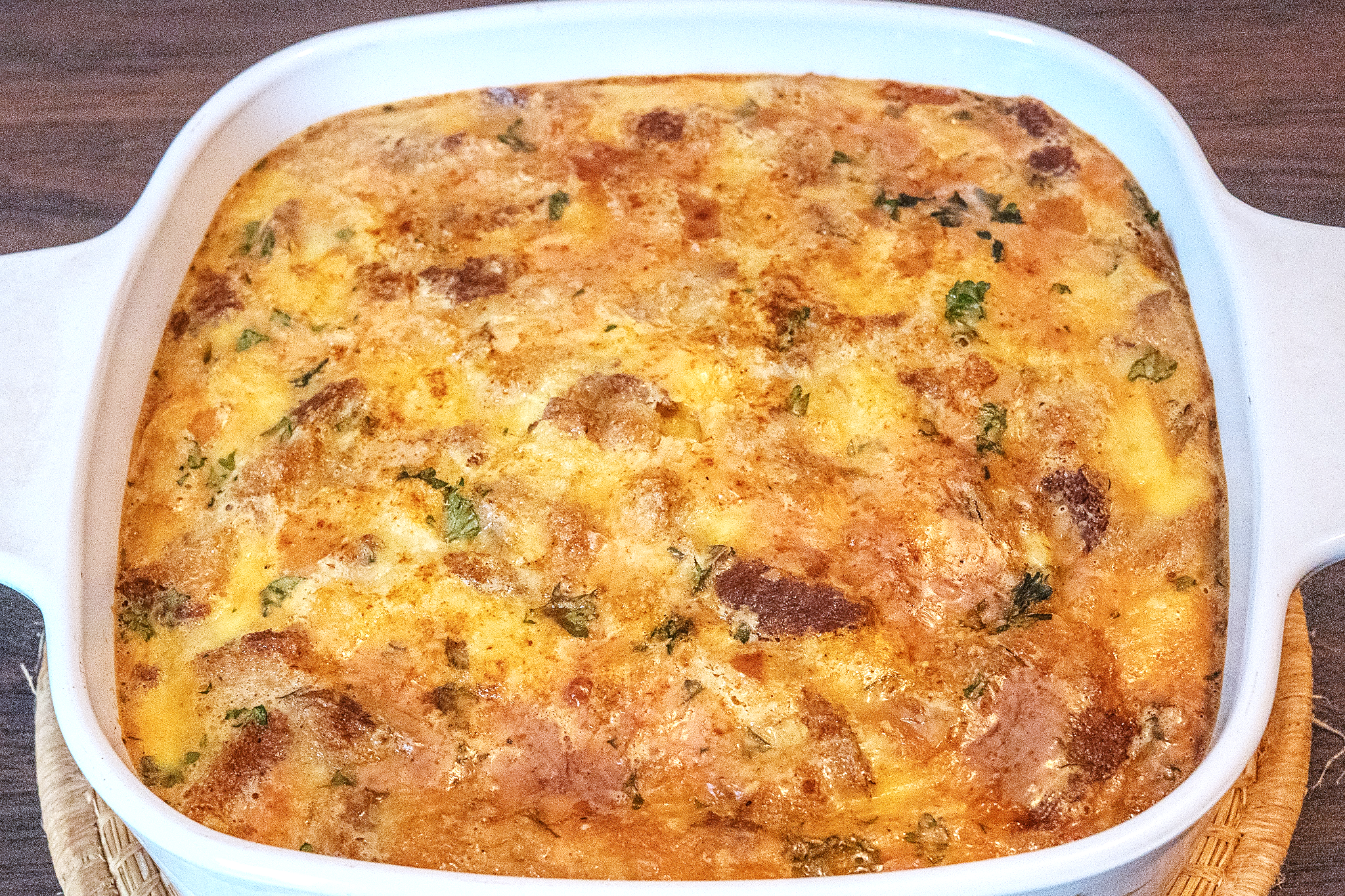
Cheese Delight (Cheese and Bread Custard)As the holidays are beginning to wind down, I’m in the mood for comfort food. So, when I came across a hundred-year-old recipe for Cheese Delight, I was intrigued and decided to give it a try.

Cheese Delight is a delicate cheese and bread custard. It is not the same as modern egg and cheese casseroles that often contain bacon, onions, and green peppers. If you can set aside any possible expectation that Cheese Delight will be the same as modern egg and cheese casseroles, you will  will enjoy this dish.

The original recipe called for using American cheese. I thought about updating it to go with a natural cheese that has a tangier flavor, but decided to stick with the recipe author’s choice. The mild and creamy nature of American Cheese (and velvety smoothness when it melts) worked well in this recipe, and made this dish a delightful, old-fashioned comfort food.

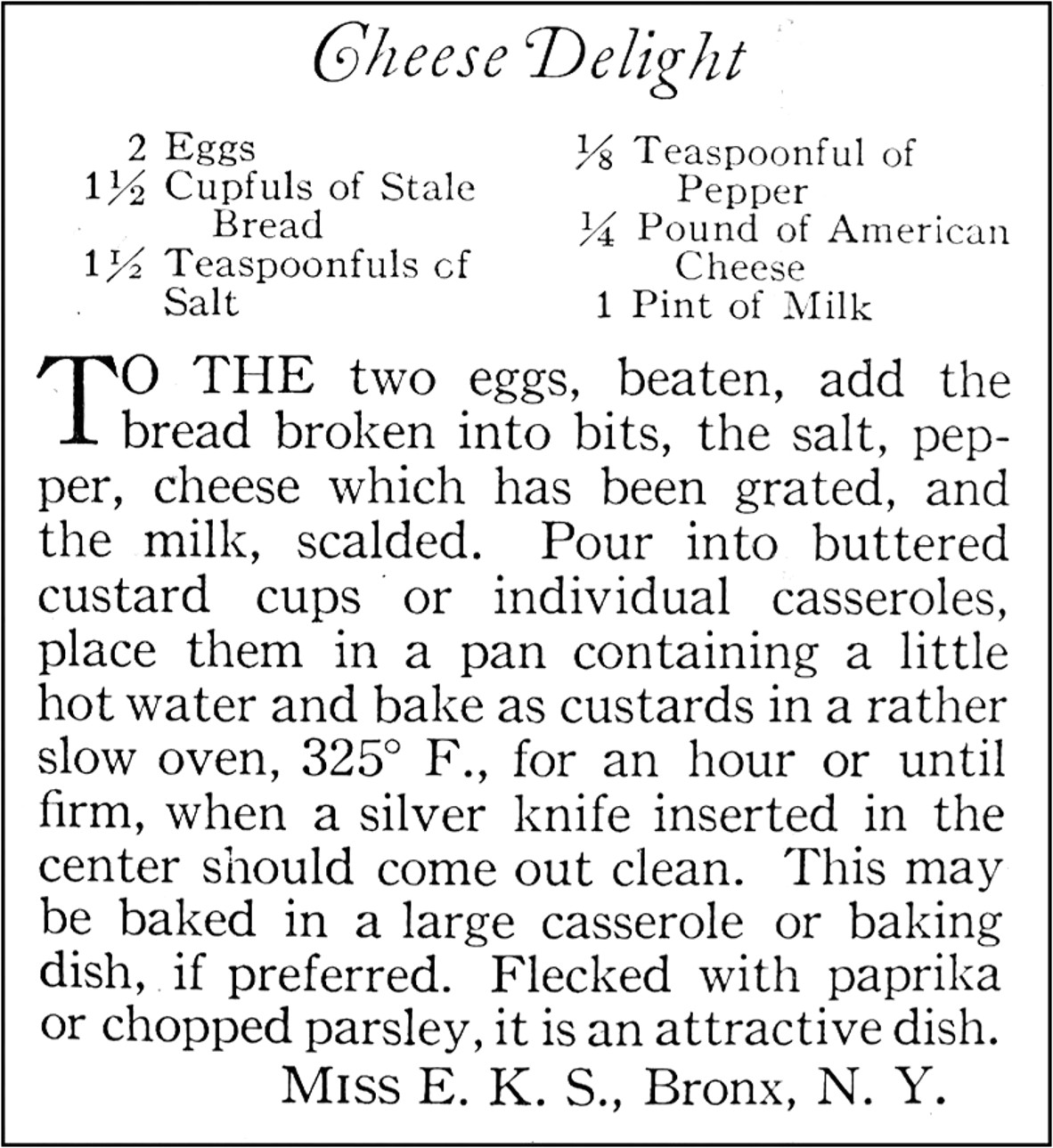
Here is the original recipe:

Cheese Delight Recipe
Source: Ladies Home Journal (September, 1925)

I decided to put the custard in a baking dish rather than make individual cups of custard.

When I made this recipe, I added chopped parsley to the egg mixture. I sprinkled a little paprika on the top before putting in the oven to bake, but I could not see the paprika when I took the dish out of the oven, so would not bother putting any on it if I made the dish again.

Here’s the recipe updated for modern cooks:

Cheese Delight (Cheese and Bread Pudding)

  • Servings: 3 - 4
  • Difficulty: moderate
  • Print

2 eggs

1 1/2 cups bread torn into 1/2-inch cubes (I used half white bread and half whole wheat bread.)

1 1/2 teaspoons salt

1/8 teaspoon pepper

1/4 pound American cheese, grated (about 6 slices) (I folded the cheese slices to make a small stack and then grated with a box grater.)

2 cups milk

2 tablespoons chopped parsley

Step 1. Preheat oven to 325° F.

Step 2. Put the eggs in a mixing bowl and beat. Stir in the milk, salt, and pepper. Add the bread cubes and the grated cheese; stir until all ingredients are evenly distributed. Stir in the chopped parsley.

Step 3. Pour into individual custard cups or into a 1-quart baking dish.

Step 4. Place the custard cups or baking dish in a pan of hot water and place in the oven.

Step 5. Bake for 50-60 minutes or until a knife inserted in the center of the pudding comes out nearly clean. (It may not be totally clean because of the melted cheese.) It will take a less baking time if individual cups were used than if the mixture was put into a baking dish.

http://www.ahundredyearsago.com

Cracking Walnuts with Family and Friends Over the Holidays

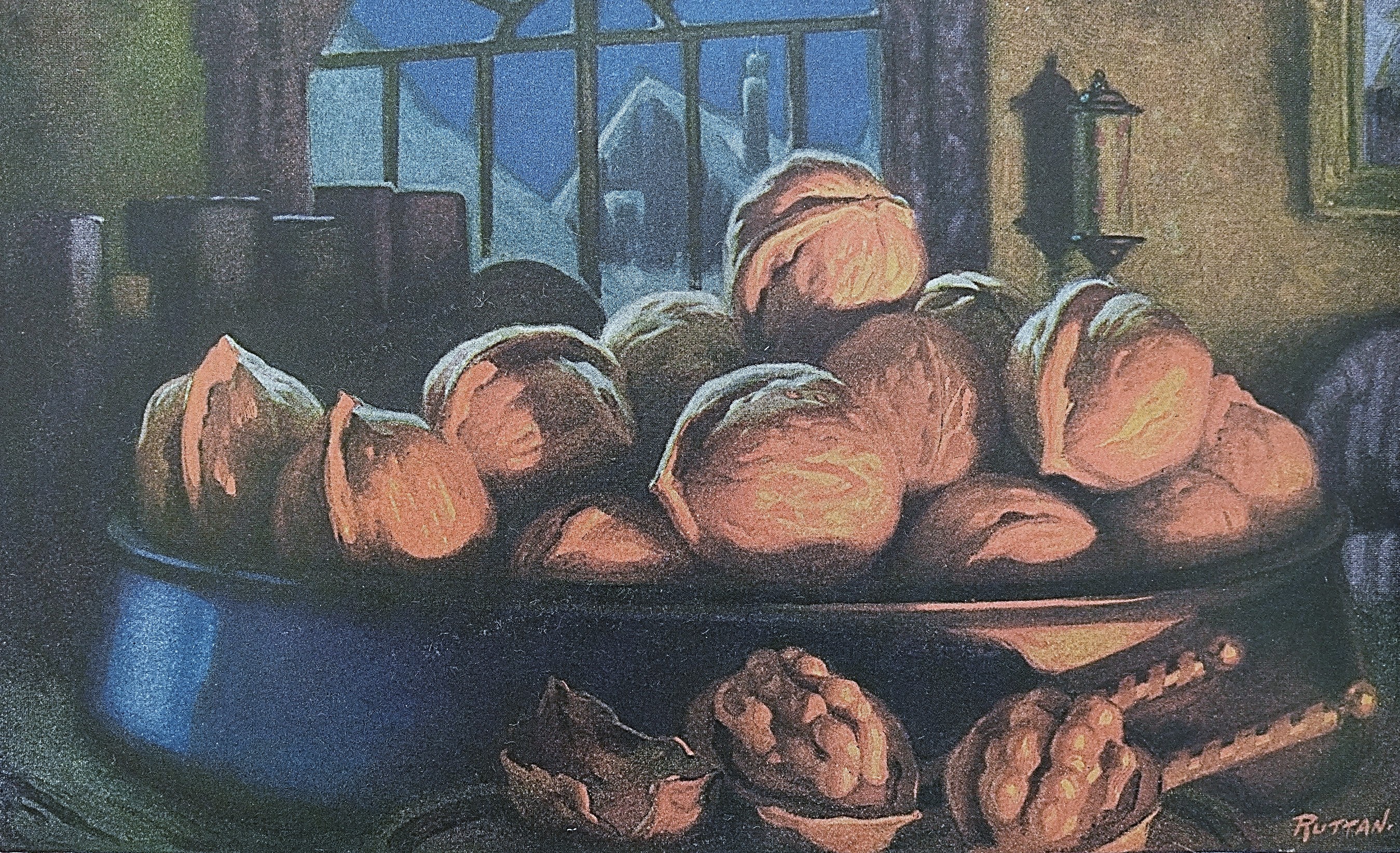
walnuts in bowl
Source: Ladies Home Journal (December, 1925)

A DIAMOND Walnut advertisement in a hundred-year-old magazine said:

Be sure to have [walnuts] throughout all the holidays – a standing invitation to partake of the distinctive hospitality of your home. They are fireside companions that the entire family will enjoy.

Ladies Home Journal (December, 1925)

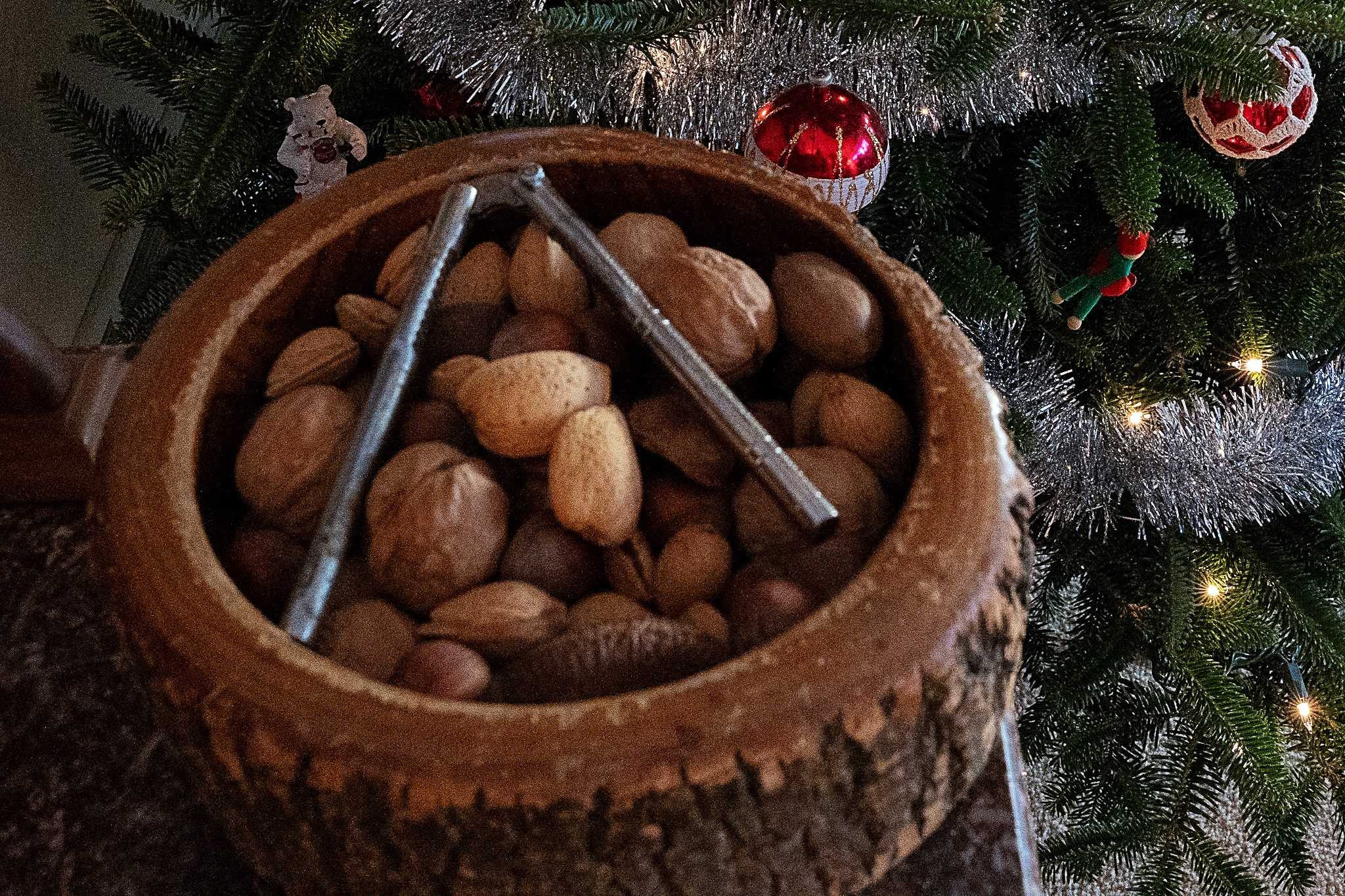
Some traditions don’t change (at least not much). I have a bowl of nuts — I went with mixed nuts instead of walnuts — ready for my family to crack and eat as we sit around the fire.

nut bowl

MERRY CHRISTMAS!  

“Food for the Gods” (Date Crumbles) Recipe

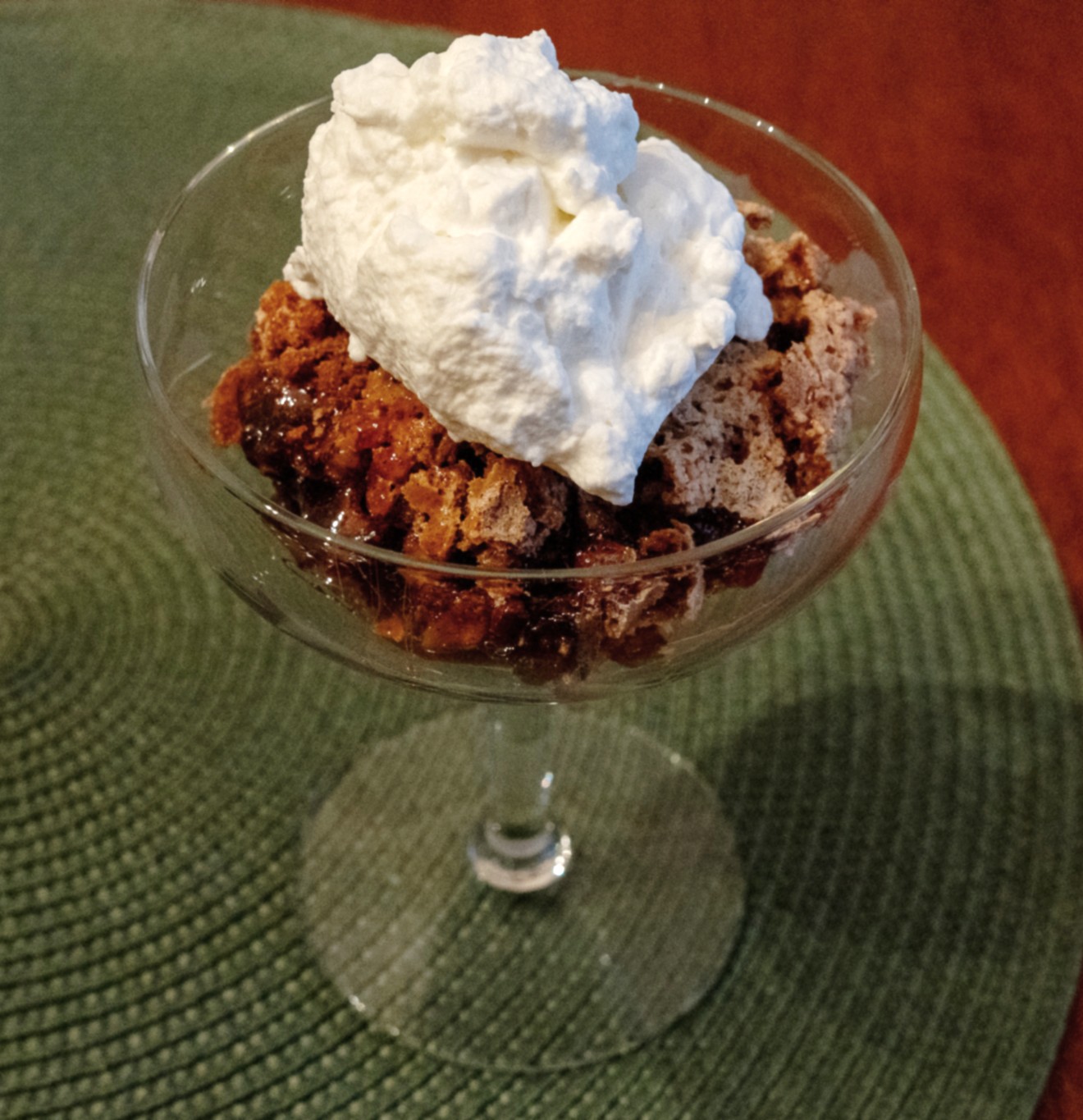
Date Crumbles with whipped cream toppingI recently came across an intriguing recipe in a 1925 issue of Farm Journal. The recipe was labeled “food for the gods or date crumbles.” What a bold assertion! Could this recipe possibly be that good? I had to find out, so next thing I knew I was making the recipe.

Date Crumbles had a crispy crust, with lot of nuts in the middle.  The dates cooked down to create a lovely, sweet date filling on the bottom. I scooped the Date Crumbles out of the pan, and put it in serving glasses (dishes would also work just fine). I served it with whipped cream. I thoroughly enjoyed this dessert.

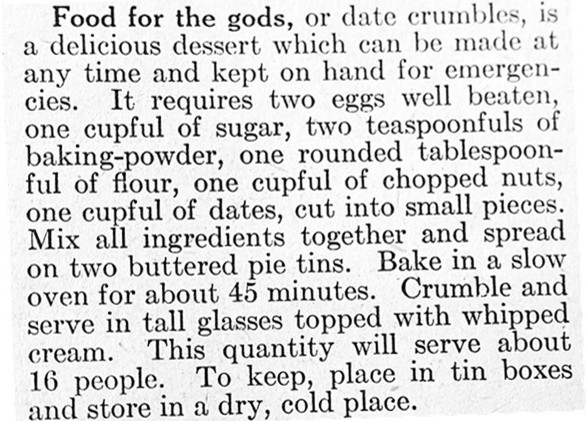
Here is the original recipe:

recipe for "food for the gods"
Source: Farm Journal (April, 1925)

It’s fascinating that the old recipe directs cooks to serve it in “tall glasses.” I took this to mean stemware. I envision Farm Journal readers, living in remote rural locations, feeling like they were serving a very elegant dessert when they put the Date Crumbles in stemmed glasses and topped it with whipped cream. After all, they were serving “food for the gods.”

I did not want 16 servings, so I made half of the recipe. That said, I don’t think that half of this recipe would be enough for 8 people, so when I updated the recipe, I indicated that it would make 5 – 7 servings.

I assumed that a “slow oven” meant setting the temperature at 300° F.

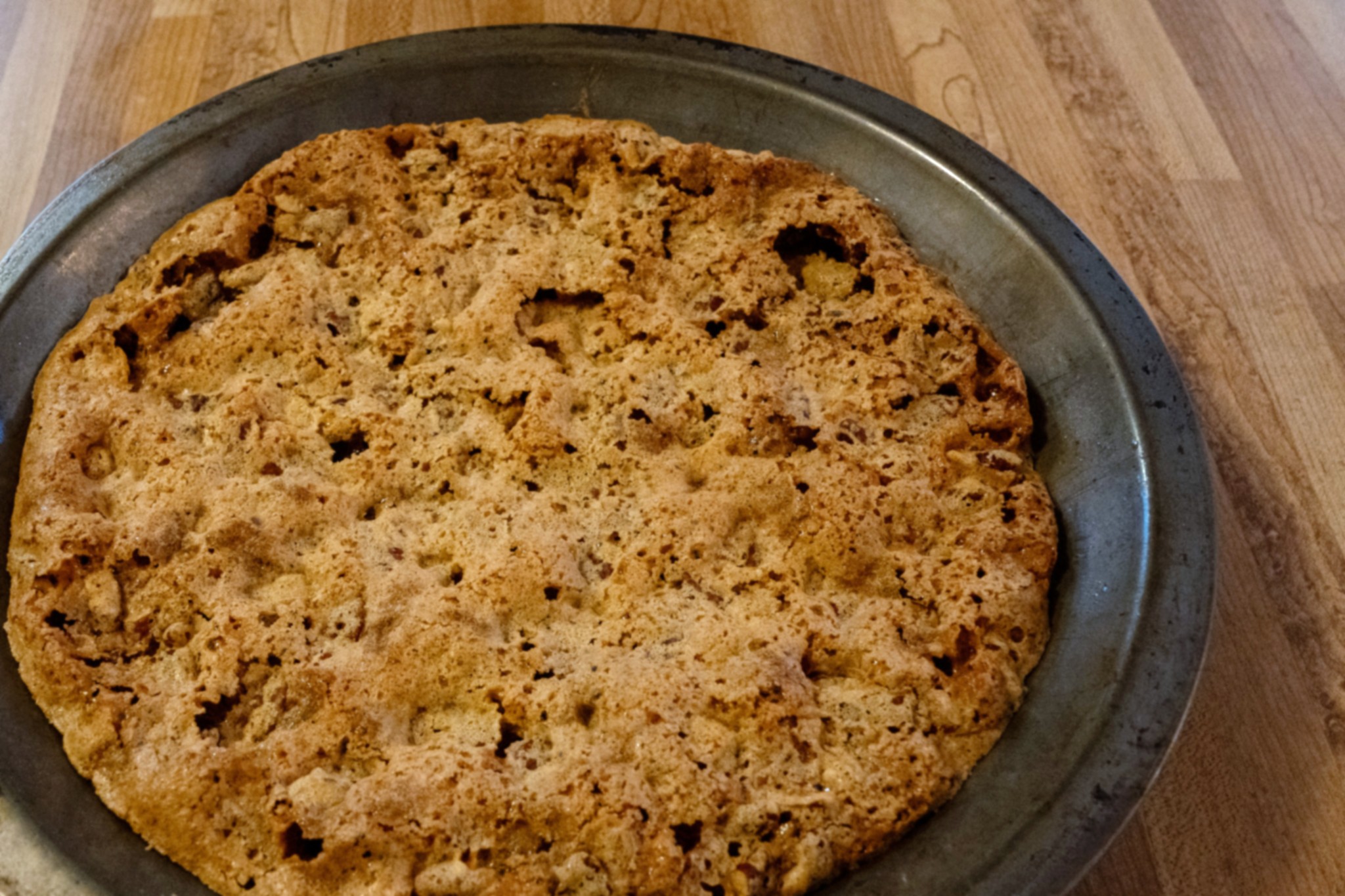
As I prepared to bake the date mixture, I considered putting it in a baking dish instead of a pie pan as indicated in the old recipe; but, in the end just used an old 9-inch metal pie pan that I had and that worked well. A baking dish would also work. Date Crumbles in pan

I would not store Date Crumbles in a tin box. When I made this recipe, I ate some of it right away, and covered the remainder in the pan that it was baked in. It also could be stored in a food storage container.

Here’s the recipe updated for modern cooks:

Food for the Gods (Date Crumbles)

  • Servings: 5 - 7
  • Difficulty: easy
  • Print

1 egg, beaten

1/2 cup sugar

1 teaspoon baking powder

1 tablespoon flour

1/2 cup nuts, chopped (I used pecans.)

1/2 cup dates, chopped

whipped cream

Step 1. Preheat oven to 300° F.

Step 2. Put egg, sugar, and baking powder in a mixing bowl. Stir to combine.

Step 3. Stir in the chopped nuts and dates.

Step 4. Put the mixture in a greased pie pan or other baking dish (an 8″ X 8″ dish would work well), and spread it out.

Step 5. Put in oven and bake for 45 minutes.

Step 6. Use a spoon to “crumble” the baked dessert; put into dessert dishes or glasses to serve. May be served hot or cold. Top with whipped cream.

Note: The Date Crumbles can be covered and stored in the pan that it was baked in or it can be “crumbled” and stored in a tightly covered container.

http://www.ahundredyearsago.com

Have Grandma’s Recipes Been Ghosted?

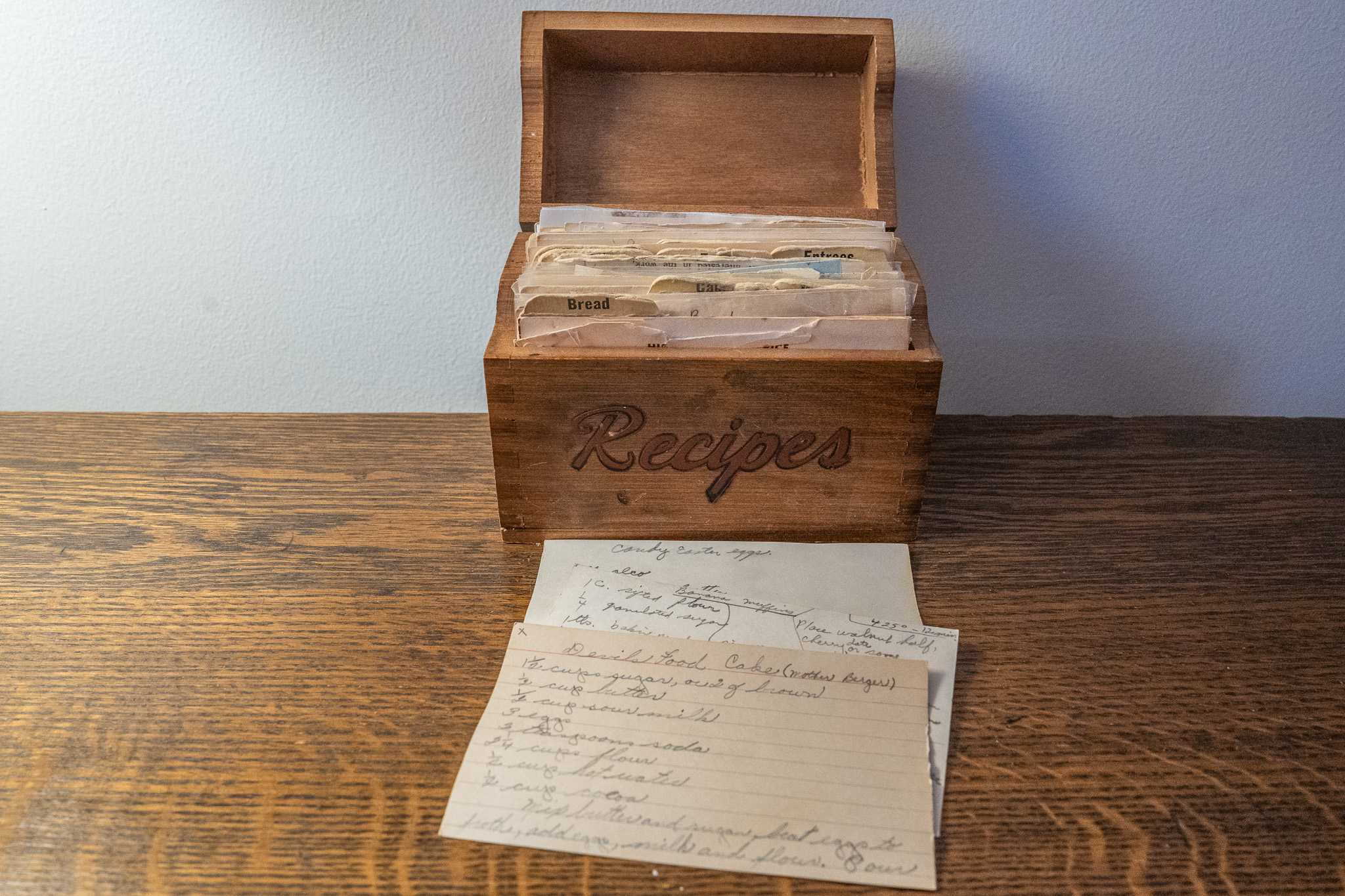
Recipe box and cardsMany dishes on the holiday dinner menu are the same year after year, and there can be complaints if a dish vanishes or is “different” from how Grandma used to make it. So, I was surprised when a friend said, “Grandma’s recipes have been ghosted.”

My first reaction was “No way. ”

I know from comments I get on this blog that many people are looking for old-recipes that they have vague memories of ancestors making years ago. I regularly get comments like, “Thanks! I’ve been looking for this recipe for years. It is almost exactly like the recipe my grandmother made when I was a child.”

But, the more I thought about whether old family recipes are being ignored, the more I think that my friend was right. Grandma’s recipes are frequently ghosted.

My own efforts to create a cookbook to preserve family recipes ended up resulting in the beginnings of A Hundred Years Ago. In 2009, I compiled a  family cookbook. I included some family photos in the book. One of them was a photo of a surprised-looking me walking through a doorway at my bridal shower. Sitting on the couch in the photo’s foreground was my 82-year-old paternal grandmother.elderly woman sitting in room with younger woman in background
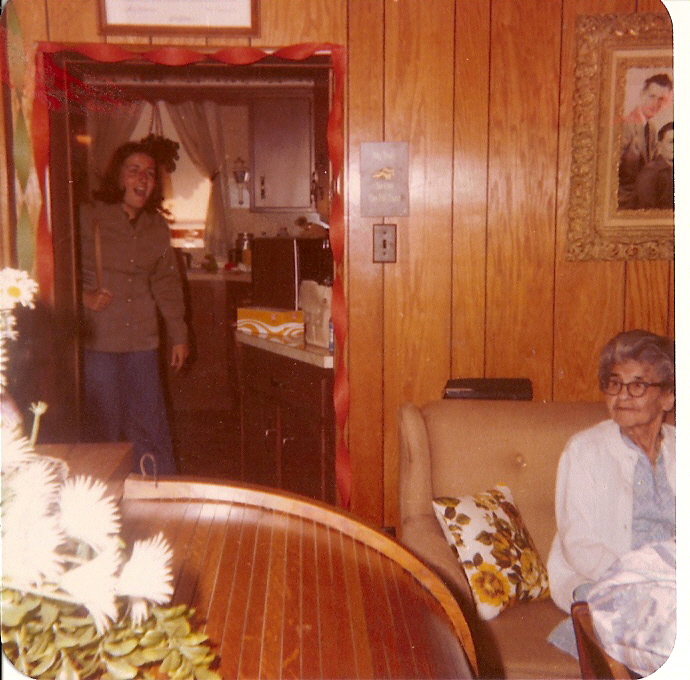
A much younger me arriving at my bridal shower with my grandmother sitting near the doorway.

When I gave the cookbook to my children, my daughter asked, ” Who’s that old lady?”

I told her that it was her great-grandmother. But her question jogged my memory about a copy of an old diary of my grandmother’s that I had. I dug it out of a cupboard and discovered that Grandma kept the diary from 1911 – 1914. She was a teen-ager at the time.

I realized that it would be exactly one hundred years since Grandma wrote the first diary entries very soon. I decided to post Grandma’s diary entries a hundred years to the day after she wrote them on a blog I called A Hundred Years Ago. I originally did it for family, but soon others were also enjoying the diary entries. However, after four years the diary ended. I briefly quit blogging, then re-invented A Hundred Years Ago as a cooking blog.

Over the many years that I’ve done this blog, I’ve learned a lot from my readers about the value of preserving family recipes as well as the challenges. Here is a summary of what I’ve learned.

Understanding the Challenges

Cursive Writing is Difficult to Read. Old recipe cards often were written in cursive and are extremely difficult to read. Younger cooks never learned to read or write cursive text, and older people often don’t interact much with cursive anymore and now find it hard to read.

I recently spoke with a graphic designer who said that she advises clients to avoid the use of script-style fonts when laying out promotional materials or an advertisement. She said, “People just can’t read it.” This suggests that if people struggle to even read typed script fonts that old handwritten recipe cards are almost impossible for them to decipher.

Old Recipes Lack Directions. Another challenge for modern cooks is that old recipes often have few, or confusing, directions. Many cooks just throw up their hands and give up on a recipe when it says things like “add enough flour so that the dough can easily be rolled” or “bake in a quick oven.”

Dirty, Worn Recipe Cards and Cookbooks Are a Nonstarter. Cooks today often find the old recipe cards and books that their Grandma once used to be unappealing. Old cookbook pages are yellowed, often there are loose pages, and the book spine may be torn. Many of the pages may have food stains, which can be considered badges of honor that indicate which pages contained Grandma’s favorite recipes; but, more often, just seem like dirty (and perhaps germy) pages.

It’s Hard to Know What a Dish Will Look Like When There is No Photo. Cooks today regularly use online recipe sources (as well as modern cookbooks) that show vibrant recipe photos that help them decide which foods to make, while old recipe boxes and cookbook pages are crammed with recipes, but contain few or no pictures. This can make it difficult for a cook to envision what the dish would look like.

Sharing Family Memories

Dishes that once were common foods may now be considered old-fashioned, not appealing, or not very healthy; however, they become part of family lore and traditions. I want to think that old family recipes pull families together at holiday gatherings by becoming the basis for stories and memories. But, I also know that they can create challenges.

When a family sticks rigidly to the traditional menu for a holiday gathering, family members who do not eat animal products, have food allergies, or have environmental concerns about certain foods can feel frustrated or hurt that their needs are not met.

Yet, who can’t smile when a family matriarch remembers a great aunt who has been gone for forty years, and tells the story (for the 39th year) about the time Great Aunt Emma’s molded, canned fruit gelatin collapsed into a mushy mess when she was unmolding it right before dinner.

Discussing Grandma’s Recipes

Family members can have different opinions regarding how much (or if) their grandmother’s recipes can be adapted or modified without changing them so much that they are no longer her recipe. There probably would be general agreement that it is okay to cook a stew in a crock pot rather than in a pan on the stove as described in an old recipe.

However, if an old recipe for apple pie called for using shortening when making the pie shell and Northern Spy apples for the filling, some family members may think that it is okay to substitute butter for the shortening for the crust and to use another apple variety in the filling, while others might say that the pie no longer tastes like Grandma’s. Still others might chime in that it would be nice if Grandma’s old recipe was updated so it was gluten-free and vegan so that everyone could enjoy it.

Some might worry that “Grandma won’t approve of us changing her apple pie recipe,” while others might note that Grandma herself may have “modernized” the recipe when she updated her grandmother’s recipe so that it used shortening instead of lard. This could lead to a discussion about whether the recipe should be converted back to using lard for the pie pastry now that research suggests some possible health issues related to the use of shortening.

Preserving Grandma’s Recipes

Everyone seems stressed this year, and worried that discussions at the holiday dinner table may go sideways with one disagreement or another. Maybe it would be a good time, when everyone is there, to discuss how to preserve their Grandma’s recipes and make them more accessible.

What it means to save Grandma’s recipes will differ from family to family. In some cases, it might mean developing a plan for typing them up and creating a family hard-bound or electronic cookbook. In other families, it might mean making videos that show how to prepare favorite recipes; while, still others might have discussions about how to update the recipes to make them more user friendly, or how much a recipe can be updated without destroying it.

Let’s not ghost old family recipes, but rather use them as connectors that bring families together. Those old recipes can be a powerful tool that engages family members across generations.
Old-Fashioned King George’s Steamed Pudding

Steamed puddings, with their subtle blending of flavors, are a traditional cold weather dessert. For generations, cooks regularly made steamed puddings on their wood or coal stoves. The stoves were used for both cooking and heat, so they were hot all day, and it was easy to cook a pudding that needed to be steamed for several hours.

Hundred-year-old cookbooks contain numerous steamed pudding recipes, but as people shifted to more modern heating and cooking methods, steamed pudding become less popular because of their long cooking time (and concerns about the energy cost of steaming a food for several hours). That’s a pity. Steamed puddings make a lovely dessert.

I found a nice recipe for King George’s Pudding in a 1925 cookbook and decided to give it a try. Myth has it that King George I requested steamed pudding for a Christmas feast in the 1700’s, and that the request resulted in him being considered the “pudding king.”

The King George’s Pudding was sweet and moist with a dense texture that is characteristic of steamed puddings. The old recipe says to serve the pudding with a sweet sauce. I decided to make a lovely Lemon Sauce that I previously posted.  A Vanilla Sauce  or Brandy Sauce would also work well.

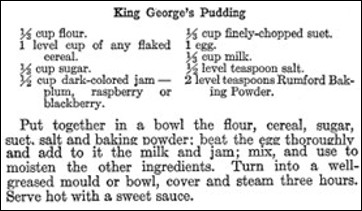
Here’s the original recipe:

Recipe for King George Pudding
Source: The Rumford Complete Cookbook (1925)

Cooks regularly update recipes to adapt to changing tastes or to use new ingredients. This recipe clearly is not a replicate of the steamed pudding served at King George’s Christmas feast. It calls for both very traditional pudding ingredients such as suet and an ingredient (flaked cereal) that would have be considered “modern” in 1925. Suet has a high melting point which results in it melting slowly. This gives the pudding a lovely spongy texture. When I made the recipe, I used bran flakes for the flaked cereal.

King George's Pudding with Lemon Sauce

  • Servings: 7 - 9
  • Difficulty: moderate
  • Print

1/3 cup flour

1/3 cup sugar

1/2 teaspoon salt

2 teaspoons baking powder

1/3 cup suet, finely chopped

1 cup flaked cereal (I used bran flakes.)

1 egg

1/2 cup dark-colored jam (e.g., plum, raspberry, blackberry, currant) (I used currant.)

1/3 cup milk

Step 1. Put flour, sugar, baking powder, and salt in a mixing bowl; stir to mix. Add chopped suet; stir to coat the suet with the flour mixture. Add flaked cereal; stir until evenly dispersed in the mixture. Set aside.

Step 2. Put the egg in another bowl. Beat egg, then add jam and continue beating until mixed. Add milk and stir. Add this mixture to the bowl with the other ingredients.

Step 3. Put the batter into a greased mold or bowl (1 1/2 pint or larger), cover and steam for 3 hours.

Step 4. Remove bowl or mold from pan or steamer. Let sit for 15 minutes, then unmold.

Step 4. Serve hot with a sweet sauce such as Vanilla Sauce or Lemon Sauce.

http://www.ahundredyearsago.com

1925 “Charles Dickens” Christmas Menu + Recipe for Apples Stuffed with Prunes and Nuts

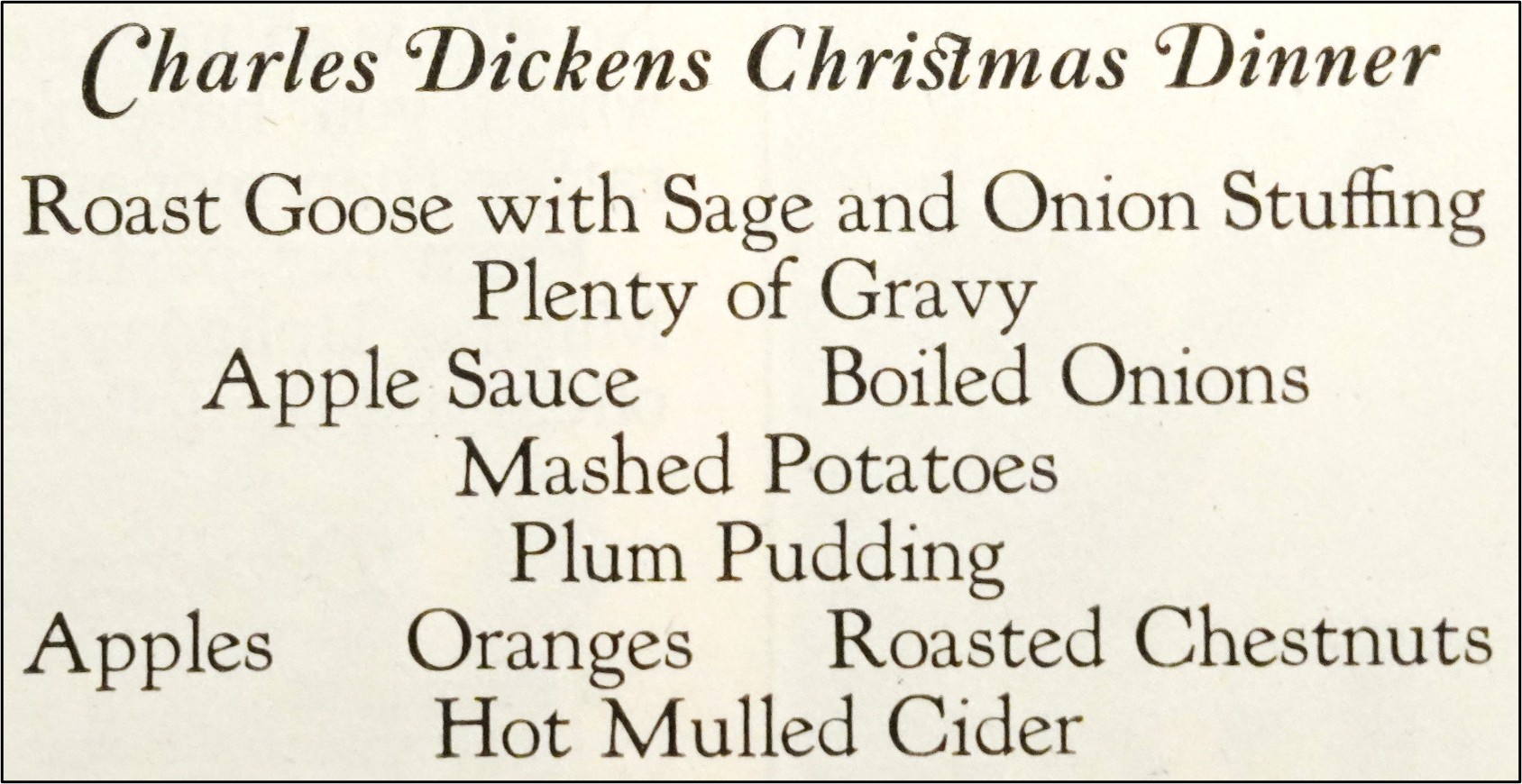
Menu
Source: Ladies Home Journal (December, 1925)

For close to two hundred years, the story of A Christmas Carol by Charles Dickens has been told and repeated. It was published in 1843, and its story of redemption and transformation has resonated ever since. Some people today even host Dickens’ themed dinners with classic foods based on the cuisine in the book. For example, Food and Wine provides guidance on how to serve Scrooge’s menu on Christmas.

Amazingly, people have been hosting dinners with menus based on the foods in A Christmas Carol for at least a hundred years. A menu for a Charles Dickens Christmas Dinner appeared in the December, 1925 issue of Ladies Home Journal. It included roast goose, boiled onions, mashed potatoes, plum pudding, and other foods. A companion article described how to roast and carve a goose.

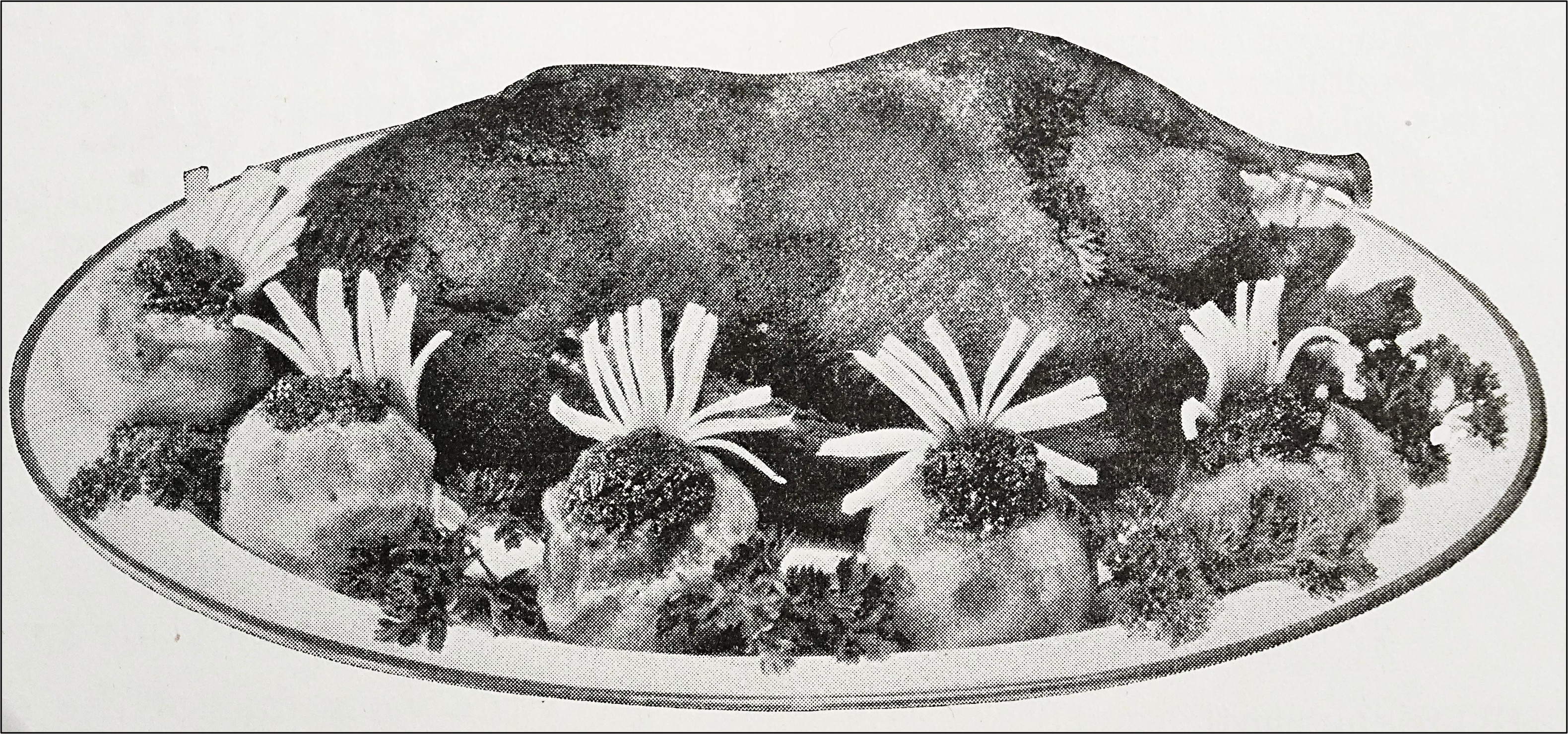
Roast Goose
Source: Ladies Home Journal (December, 1925)

In the old magazine, there were red-tinted apples stuffed with chopped prunes and nuts in the foreground of an image of the roast goose. The articles included directions for making the stuffed apple garnish:

Recipe for Stuffed Apples
Source: Ladies Home Journal (December, 1925)

I had no desire to roast a goose, but I was fascinated by the stuffed apple garnish. The directions called for tinting peeled apples red, poaching them, and then stuffing them with chopped prunes and nuts. I  decided to try making a few stuffed apples.

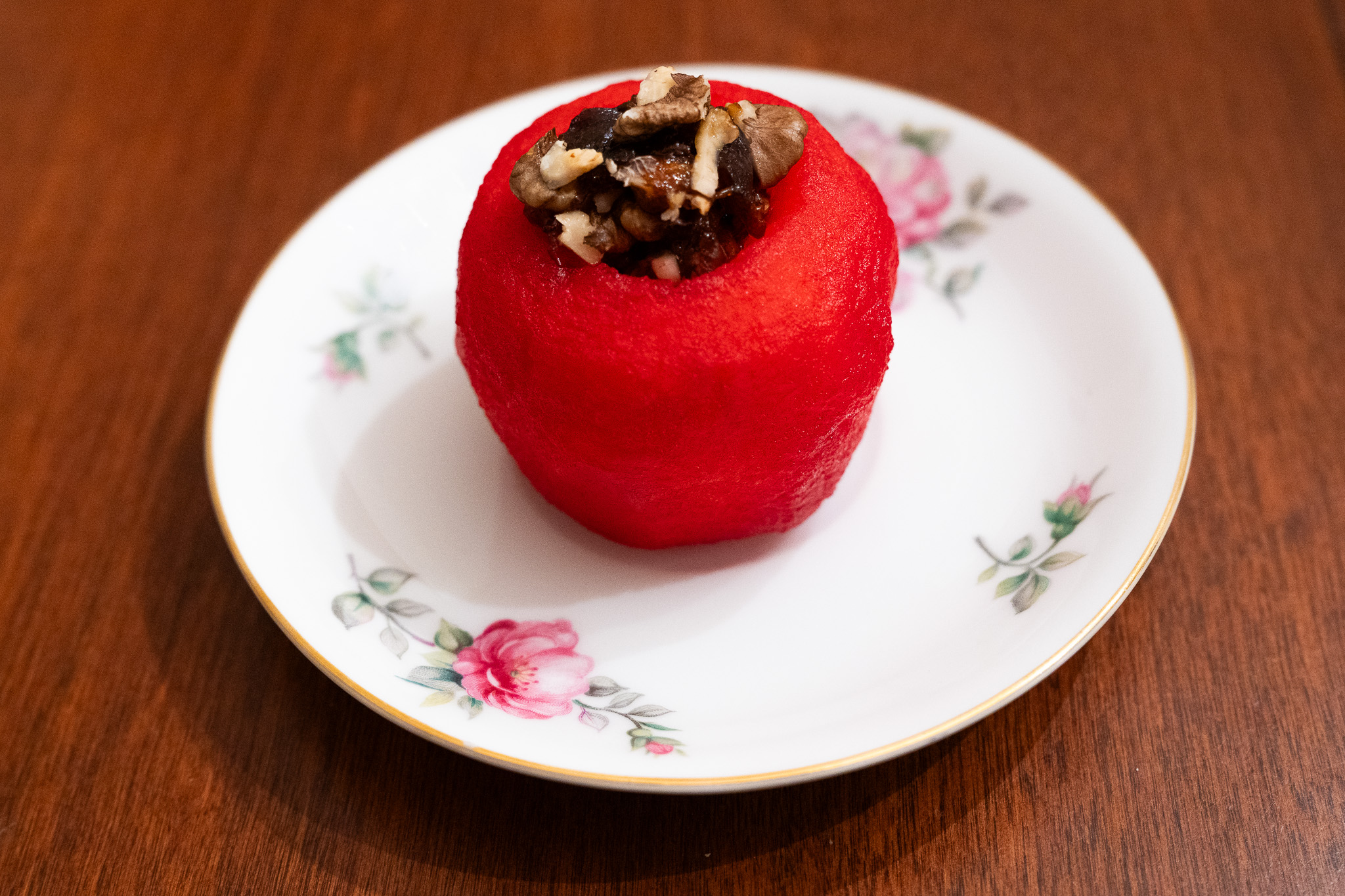
Stuffed Apple

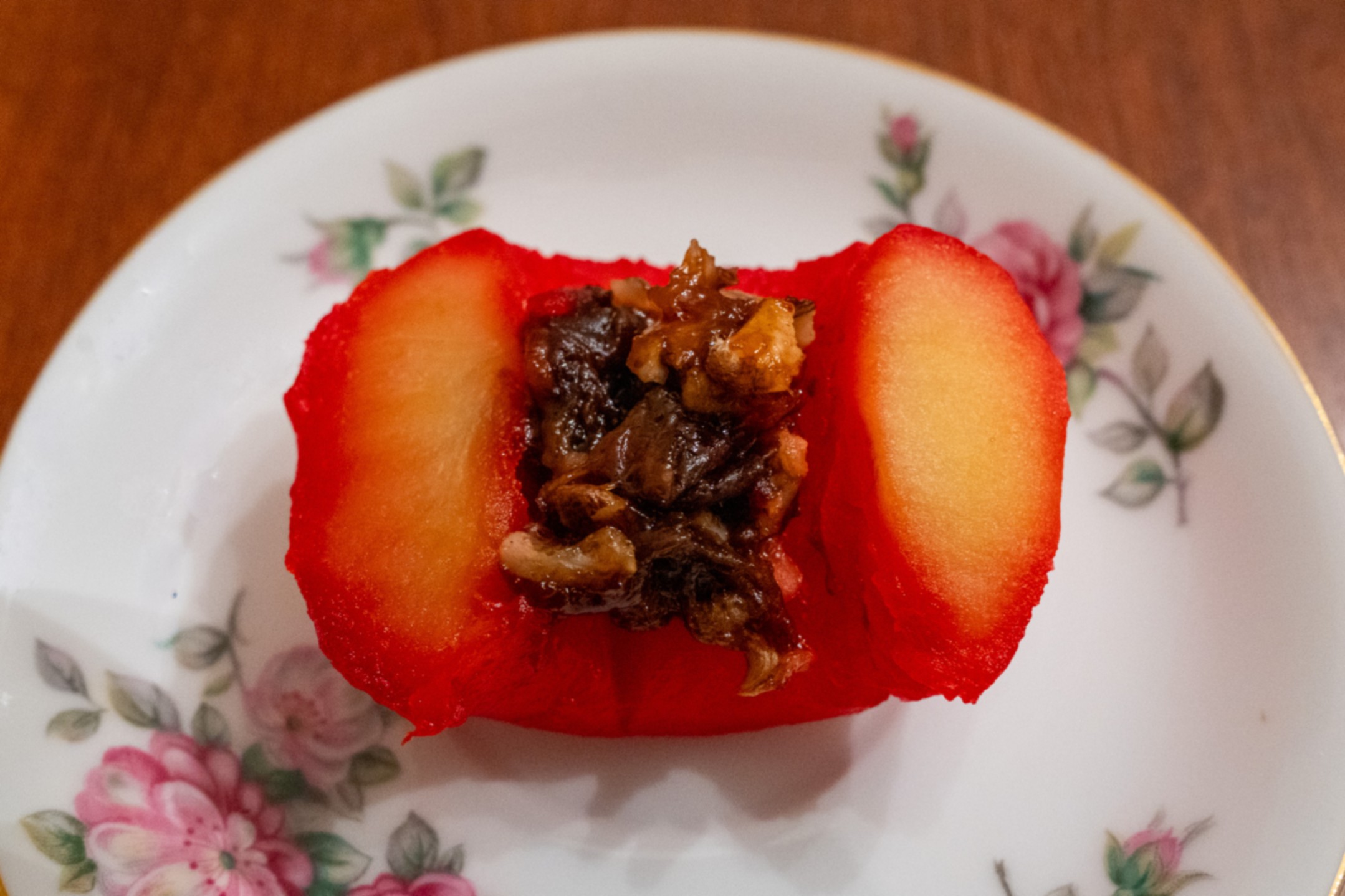
The Stuffed Apples with Chopped Prunes and Nuts were a vibrant red, and would make an impressive garnish or dessert. They were very tasty with a lovely mix of tastes and texture. When I got ready to eat an apple, I cut it in half, and was amazed how beautiful the white interior of the apple looked against the red background of the parts of the apple that had the red coloring. An optional way to present the apples would be to cut them all in half. Stuffed apple half on plate

The old directions were for twelve apples. I didn’t want that many, so when I updated the recipe, I reduced it to 3 apples. For the syrup that the apples are poached in, I divided the amount of sugar by three, but proportionately used more water than in the original recipe. I did this because even though I made fewer apples, I still needed sufficient syrup to successfully poach the apples. I also had some issues with the syrup getting too thick if I didn’t add additional water.

The old recipe doesn’t identify what type of nuts to use. I used walnuts.

Here’s the recipe updated for modern cooks:

Apples Stuffed with Prunes and Nuts

  • Servings: 3 apples
  • Difficulty: moderate
  • Print

3 apples (Use a variety that maintains shape when cooked. I used Honeycrisp.)

6 prunes

1/4 cup chopped walnuts

1 cup sugar + additional sugar to sprinkle on top

1 cup water + additional water to cook prunes

1/2 teaspoon liquid red food coloring (Adjust amount if very light or dark red apples are desired.)

Peel and core the apples. Combine the sugar and water in a pan that is large enough to hold the apples; bring to a boil using medium heat. Stir in the red food coloring, and add the apples. Reduce heat so the syrup very gently boils while the apples poach. Periodically roll the apples to get them evenly colored. Add additional water if the syrup gets too thick. The lid can be put on the pan to help the apples cook more evenly. Cook until the apples are just barely tender (and not so long that they begin to fall apart).

In the meantime, put the prunes in a pan and cover with water. Bring to a boil, then turn off heat. Let sit for a few minutes, then drain and chop the prunes. Combine the chopped prunes and chopped walnuts. Set aside.

Line a dish or pan that can be put under the broiler with foil. Set the cooked apples in the lined dish and stuff with the chopped prune and walnut mixture. Sprinkle sugar on top of the stuffed apples. Put under the broiler and broil until the sugar melts (1 – 2 minutes).

The stuffed apples can be served whole or cut in half before serving. They work well as either a garnish or a dessert.

http://www.ahundredyearsago.com