High School Graduation Rates, 1911 and 2010

15-year-old Helena Muffly wrote exactly 100 years ago today: 

Tuesday, February 28, 1911: I really cannot think of one thing that happened today of marked importance concerning my little world. One of the boys stopped school today. 

Her middle-aged granddaughter’s comments 100 years later: 

It’s amazing how much high school graduation rates have changed over the last one hundred years. In 1911 only about 20% of youth attended high school—and fewer than 10% graduated. Whereas, in 2010, about 90% of all students in Pennsylvania graduated from high school; and, the graduation rate for the Warrior Run School District (the district that now includes McEwensville) was 91%.

I wonder what the boy did after he dropped out of McEwensville High School. Even as a high school drop-out he had a higher educational level than most people in 1911.

Today the nation is focused on enacting policies that will ensure that all students graduate from high school “college and career ready”. Are schools better or worse now than a hundred years ago?

In Grandma’s day many people went on to lead successful lives with an 8th grade education. In my father’s day, a high school diploma was generally the minimal requirement for a good job. When I entered the job market, a bachelor’s degree was often a needed qualification. And, today it seems like many positions require at least a M.S.

Susquehanna, Bloomsburg, and Berwick Railroad

15-year-old Helena Muffly wrote exactly 100 years ago today: 

Monday, February 27, 1911: The roads were so muddy that I went up the railroad to school and came home that way. Besse was out this afternoon. Wish I had all of my lessons out for tomorrow especially my latin.

Her middle-aged granddaughter’s comments 100 years later: 

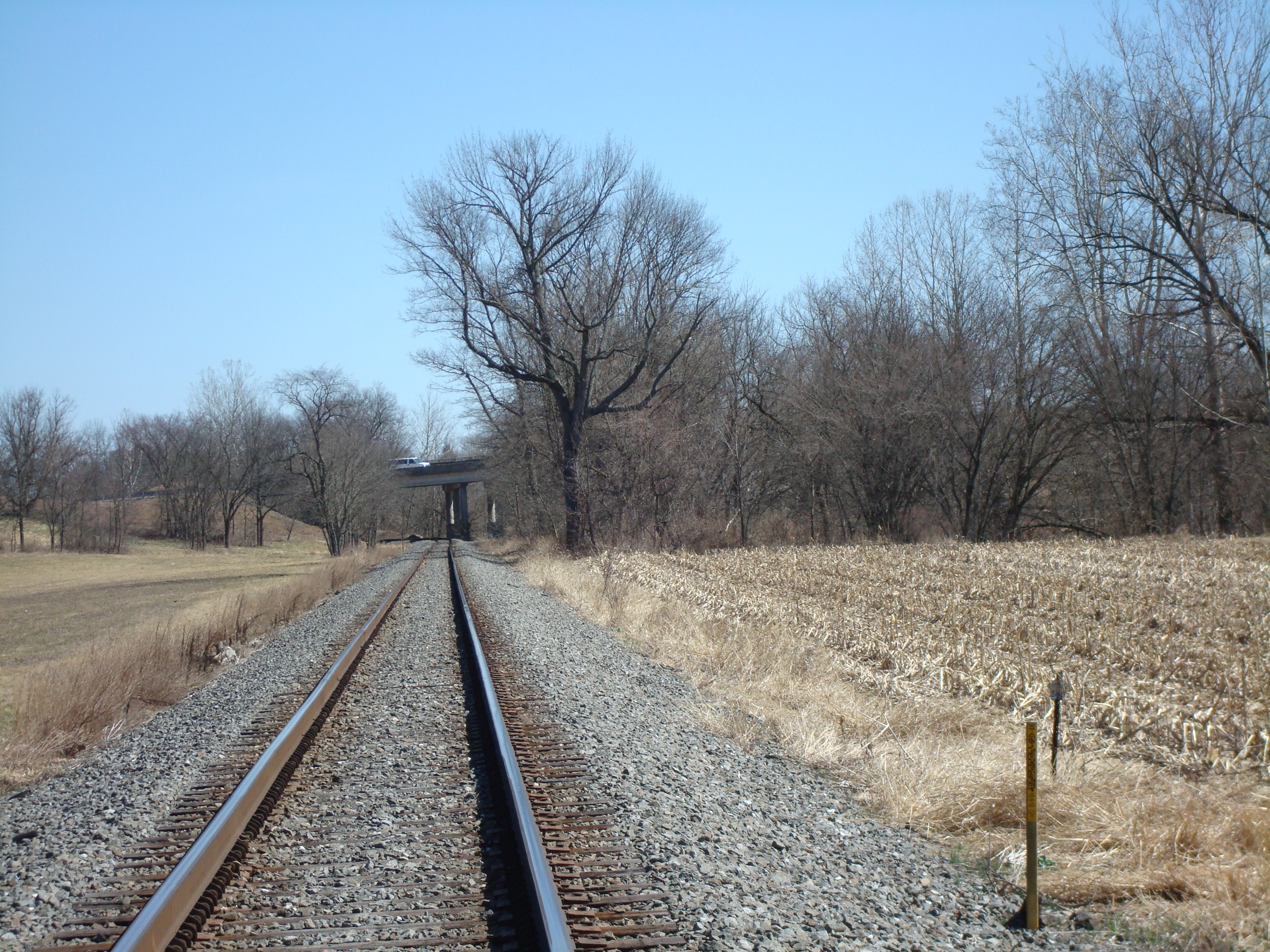
It’s hard to picture how bad the mud must have been in the era before paved roads. Railroad tracks for the Susquehanna, Bloomsburg, and Berwick Railroad (S.B. & B. R.R.) crossed the Muffly farm.The route went from Watsontown to McEwensville and Turbotville and then continued east to Washingtonville, Bloomsburg, and Berwick.

My father says that Grandma always called the railroad the Sweet Bye and Bye.

According to an essay by the Columbia County Historical and Genealogical Society the Susquehanna, Bloomsburg and Berwick Railroad (S.B. & B.R.R.) was often called the ‘Sweet Bye and Bye’ because traffic was intermittent, and trains traveled at a slow speed and stopped at every hamlet and feed mill along the route. Sweet Bye and Bye is also the name of an old-time hymn.

There were flag stops at two feed mills between Watsontown and McEwensville (a distance of only 4 or 5 miles). One was at a hamlet called Pioneer–it’s just a group of 4 or 5 houses today–and the other was at Truckenmiller’s Mill which was located next to the Muffly farm.

The railroad was also sometimes called the Weak and Weary railroad. It was a financial failure because there were no major industries along the route.

The S.B. & B.R.R. no longer exists, but the track is still used by trains transporting coal to the Pennsylvania Power and Light (PP & L) power plant at Strawberry Ridge near Washingtonville.

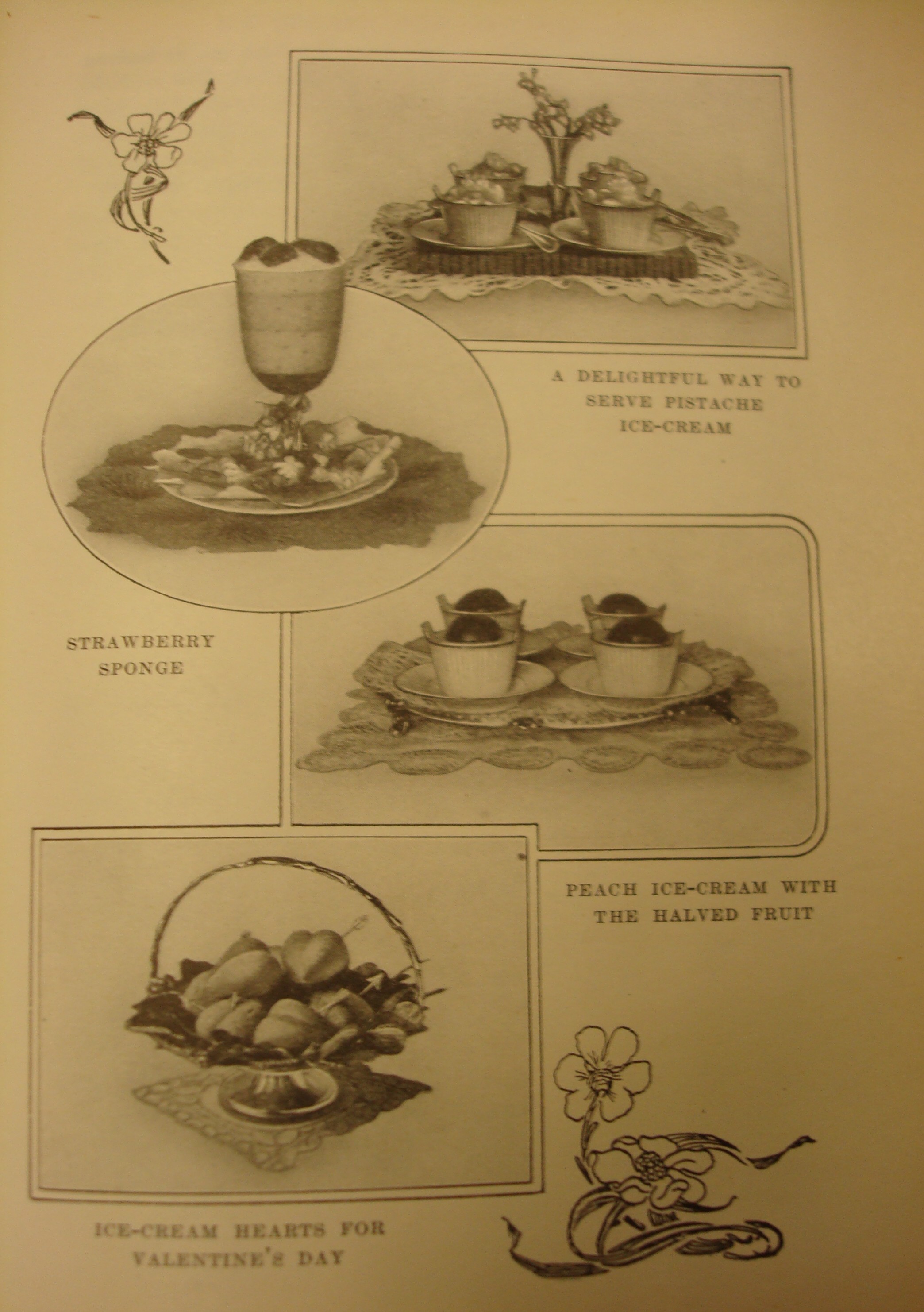
Old-time Chocolate and Fruit Ice Cream Recipes

15-year-old Helena Muffly wrote exactly 100 years ago today: 

Sunday, February 26, 1911: I went to Sunday school this afternoon and staid for church and catechize. The walking was extremely bad, but still I went. We had chocolate ice cream for supper. We all rather like it, so we have it occasionally which is about once in a week.

Her middle-aged granddaughter’s comments 100 years later:

I’m amazing how often the Muffly family had ice cream. This is the fifth time they’ve made it since the diary began on January 1–ice cream was previously mentioned on January 22, February 8 (and it was banana ice cream on the 8th! I’m amazed that bananas were available in rural Pennsylvania), February 12, and  February 23.

A century ago ice cream freezers were the new-fangled thing—and with the ready availability of ice during the winter months, ice cream made the perfect dainty winter dessert. (A hundred years ago, young people preferred lighter foods which they called dainty foods.)

I found directions for making ice cream in an old cookbook that was published in 1911.

Chocolate Ice Cream—Use the vanilla recipe, adding four ounces of grated chocolate to the milk before scalding and using a couple ounces more sugar than for the vanilla cream.

Vanilla Ice Cream—Add to one egg slightly beaten one sup of sugar, one tablespoon of flour, and a speck of salt. Pour on one pint of scalding milk and cook for twenty-five minutes in a double boiler. When cool, add vanilla and one pint of thin cream.

Fresh Fruit Ice Creams—Prepare fruit by sprinkling sugar. Let it stand one hour, press through a sieve, and stir into ice cream when the cream is frozen to a mush. All fruit ice creams are made in substantially the same way, but where seed fruits, such as currants, are used, the carefully strained juice only must be added. This can be put in the freezer with the cream and not reserved until later, as in the case of the mashed fruits. Grated pineapple, with the addition of a little lemon juice, makes a particularly fine fruit cream.

The Butterick Cook Book (1911)

For detailed directions from the 1911 cookbook see the Vanilla Ice Cream posting.

Chased with a Stir Stick

15-year-old Helena Muffly wrote exactly 100 years ago today:

Saturday, February 25, 1911: Mother got mad at me this morning and chased me around with a stir stick. I always seem to get into some kind of trouble on Saturdays. I went up to Oakes this afternoon. I didn’t want to go, but Ruth wanted me to take home some papers and cards of theirs. So at last I went. I stuck fast in the mud several places, but succeeded in extricating myself. I have been for the past few days, and still am, the owner of a very sore thumb on my right hand. I guess it is either a ring-around or a run around.

Her middle-aged granddaughter’s comments 100 years later:

I’m not positive what a stir stick was in Grandma’s day, but I think it was a wooden spoon.

I’m slightly appalled by this entry. I recognize that times were different and that physical punishment was used more frequently one hundred years ago than it is today—yet I’m still surprised that it was used to discipline an adolescent.

Being chased by her mother with a stir stick was unusual enough from Grandma’s perspective to merit mention in the diary—yet it doesn’t seem like she is particularly surprised by the action. This suggests that her mother periodically hit her.  

Methods of punishment shape individuals’ attitudes toward authority and obedience. I wonder how being chased by a stir stick affected Grandma.

——

The sore thumb mentioned in the entry refers to the finger that Grandma cut six days earlier.

The Sleep-over

15-year-old Helena Muffly wrote exactly 100 years ago today: 

Friday, February 24, 1911: I tried to get up this morning without awakening my bed fellow, but all in vain. We tried to make her believe she was dreaming of Him. I didn’t have a lesson out for this morning, for I didn’t study any last night, because I wouldn’t very well, but I made up for it some this evening. I managed to get through my lessons somehow. Ruth has gone to a sleighing party, thorough the mud tonight.

Her middle-aged granddaughter’s comments 100 years later: 

Grandma, her sister Ruth, Blanche Bryson, and Edith (last name unknown—but she married Harry Reynolds in April, 1911) had a sleep-over  (see yesterday’s posting).

In the late 1800s and early 1900s:

Young women routinely spent the months preceding their marriage almost exclusively with other women—at neighborhood sewing bees and quilting parties or in a round of visits to geographically distant friends and relatives—Ostensibly they went to receive assistance in the practical preparations for their new home—sewing and quilting a trousseau and linen—but of equal importance, they appear to have gained emotional support and reassurance.

Carroll Smith-Rosenberg (1978)

The Minor and Major Players

15-year-old Helena Muffly wrote exactly 100 years ago today: 

Thursday, February 23, 1911: We had quite a gathering here this evening. Jake and the senior class were down for supper and to spend the evening. Only the girls staid all night. Besse was out, but she went home shortly after supper was over. Rachel and her brother (I mean her nice brother) arrived upon the scene shortly afterwards. We spent the evening playing cards. I played part of the time. I made some of the most blundering mistakes, you see, I am a greeny. I ate so much ice cream that I got a pain and it was an awful one, but it didn’t last very long. Thank goodness. Well after Bill and that teacher of mine took their departure, we four girls journeyed off up stairs where we talked and laughed for about an hour and a half before we could make up our minds to go to bed. At last we cuddled down to sleep. Ruth slept with Blanche and I slept with Edith, a bride elect. I felt quite honored.

Her middle-aged granddaughter’s comments 100 years later: 

There are lots of names in today’s posting—some that appear throughout the diary and others that appear in this posting and then quickly vanish from the diary pages. One of the challenges of working on family history is figuring out who all of the people are when many names are mentioned–and sometimes I wonder if it even matters if I never figure out who some of the tangential characters are since they play such minor roles in the story that is emerging. And secondary sources don’t always agree with what is in the diary— Ah, the challenge (and the fun) of working with primary family history sources.

The best place to get background information about the major people in the diary is on the People page. But today I’m going to try to sort out all of the names in this posting:

Grandma’s sister Ruth was a senior at McEwensville High School and she apparently invited the teacher and entire class out to dinner. (The entire class probably had 6 or 8 members. There were 6 people in Grandma’s graduating class two years later.) Jake–Grandma referred to him as Jakie in previous postings– was the teacher. I don’t know his last name. As I mentioned in a previous posting, according to Leon Hagenbuch in his History of McEwensville, Howard Northrop was the teacher during the 1910-11 school year—I sure can’t get anything close to Jake out of that name and I want to guess that the information in the History is incorrect but I could be wrong.

Besse is Grandma’s oldest sister. She was married and must have come just come to help with the party.

The Rachel mentioned in this entry is Rachel Oakes. She lived nearby and was a friend of Grandma and Ruth. Rachel must have been a little older than Ruth because in 1911 she was the elementary school teacher at McEwensville. Based on later entries Rachel had at least two brothers: James and Alvin. Both are mentioned several times in the diary and apparently were close in age to Grandma and Ruth. I’m not sure which one was the “nice brother” who was a member of the class of 1911.

And, based on other diary entries I’m guessing that the Bill in this entry referred to Bill Gauger. He later married Ruth.

Both Blanche and Edith must have been members of the senior class. Blanche refers to Blanch Bryson. She is mentioned only two or three times in the diary–and always just in passing. She apparently was not a particularly close friend of the Muffly girls.

And, I don’t know what Edith’s maiden name was, but a little later in the diary she marries Harry Reynolds. Edith is mentioned several times over the next few months and then her name disappears from the remaining diary pages. Soon after her marriage she apparently moved into a different circle of friends that probably was made up of married couples.

Washington’s Birthday

15-year-old Helena Muffly wrote exactly 100 years ago today: 

Wednesday, February 22, 1911: It was so awful cold this morning. I got to school before the doors were unlocked. There I had to stand outside and freeze, but the door was unlocked before I reached that point. That glorious sister of mine is in bed now. I will soon follow. Rufus has her eyes on me. Perhaps she is guessing what I am writing. Today is Washington’s birthday. I didn’t forget it. Don’t’ you think I’m very patriotic? 

Her middle-aged granddaughter’s comments 100 years later: 

A hundred years ago Washington’s Birthday was celebrated on his actual birthday (February 22)—though it’s obvious from Grandma’s diary entry that is wasn’t considered an important enough holiday for school to be canceled. In 1971 the holiday was moved from Washington’s actual birthday to the 3rd Monday in February—and in many states it is now called Presidents Day in honor of both Washington’s  and Lincoln’s birthdays.