Memorial Day: Watsontown Cemetery

16-year-old Helena Muffly wrote exactly 100 years ago today: 

Tuesday, May 30, 1911: Carrie and I went over to the Watsontown cemetery this afternoon. Am rather tired and sleepy.
Her middle-aged granddaughter’s comments 100 years later:

Grandma and her friend Carrie may have gone to the cemetery to put flowers on the graves of deceased relatives for Memorial Day–or maybe there was a Memorial Day ceremony held there.
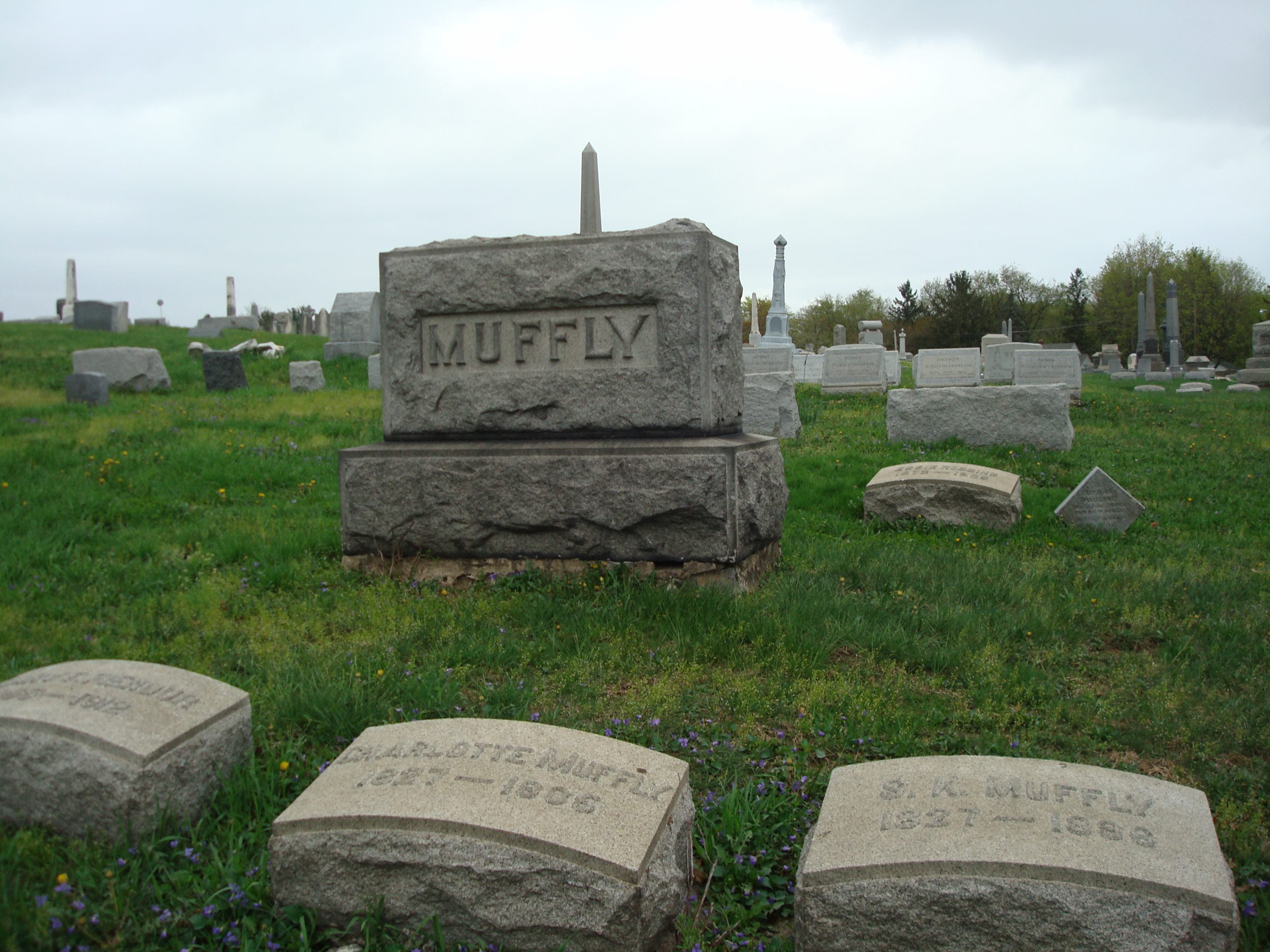
Grandma’s paternal grandparents are buried in the Watsontown cemetery. Her grandfather had died before she was born, but Grandma would have remembered her grandmother, Charlotte Muffly, who died in 1905 at the age of 78.

I wonder what Grandma’s memories are of her grandmother—Had she been close to her grandmother? . . . or not? Had her grandmother been in ill health for years prior to her death? . . . Or had she died suddenly?

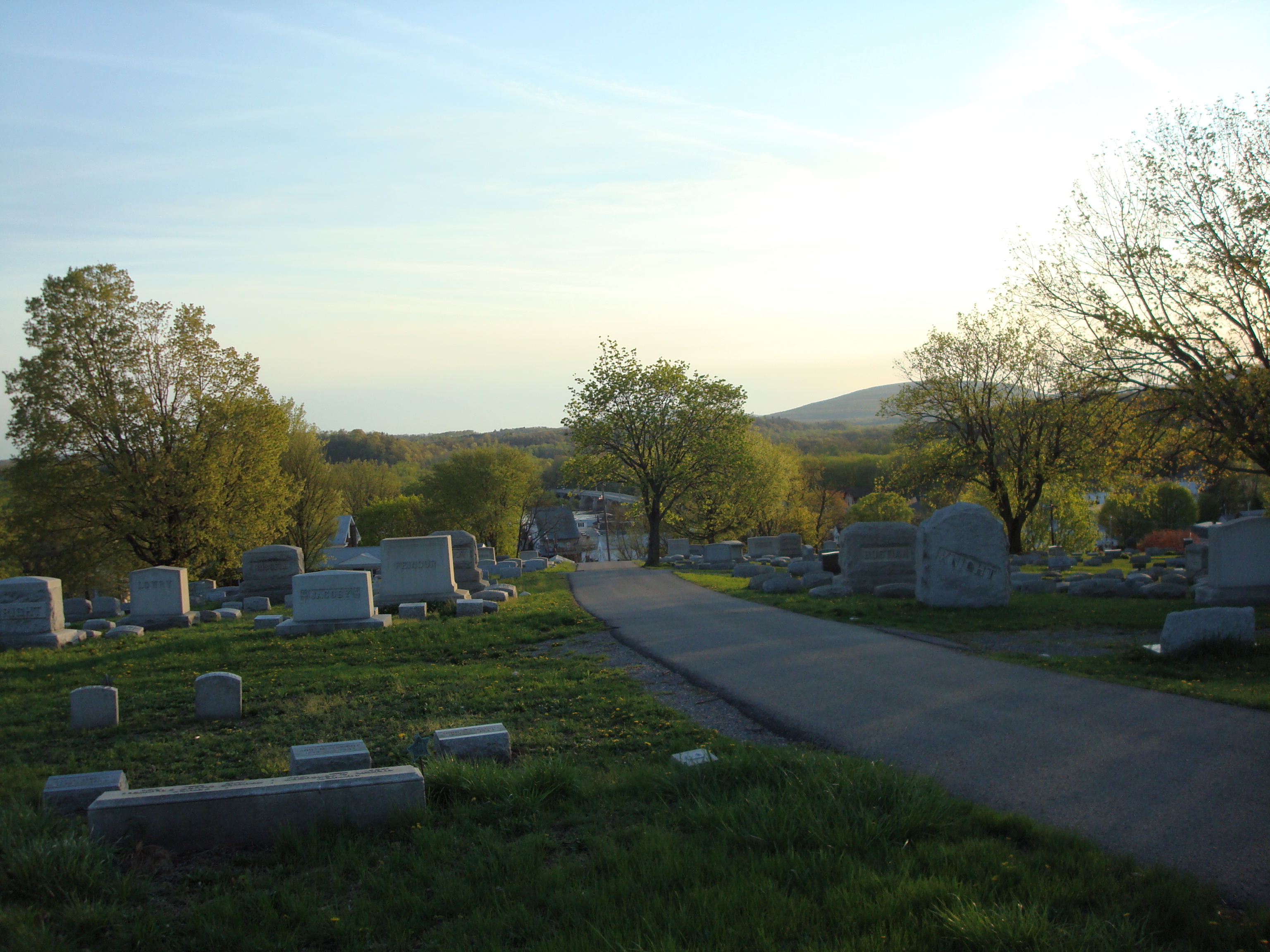
Watsontown Cemetery is on very high hill that overlooks the town of Watsontown. Grandma and Carrie would have had a bird’s eye view of the entire town. They would have been able to look over downtown Watsontown to the West Branch of the Susquehanna River and the looming mountains beyond. Now, just as they did a hundred years ago, the sound of trains rumbling through town periodically breaks the silence.

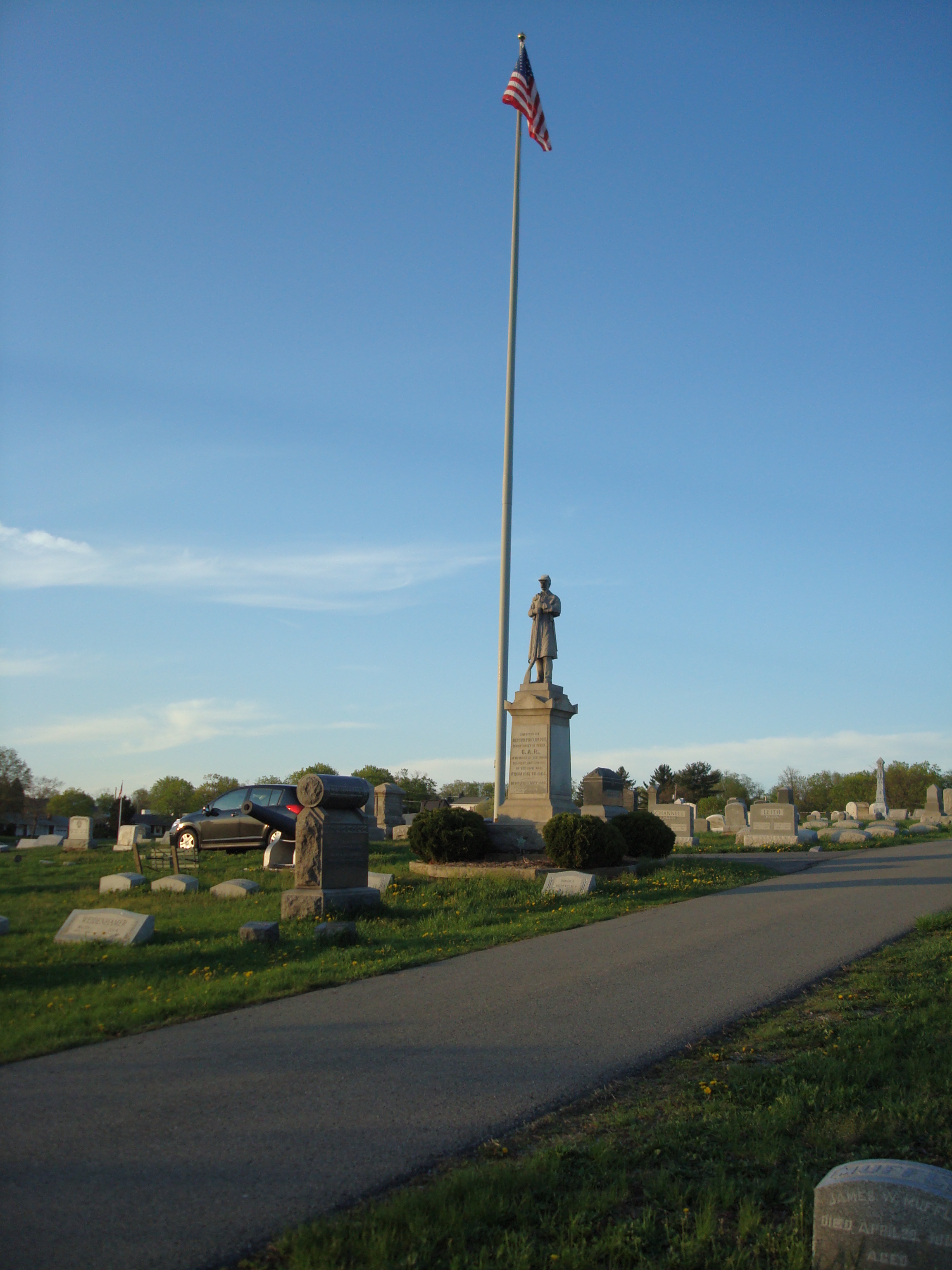
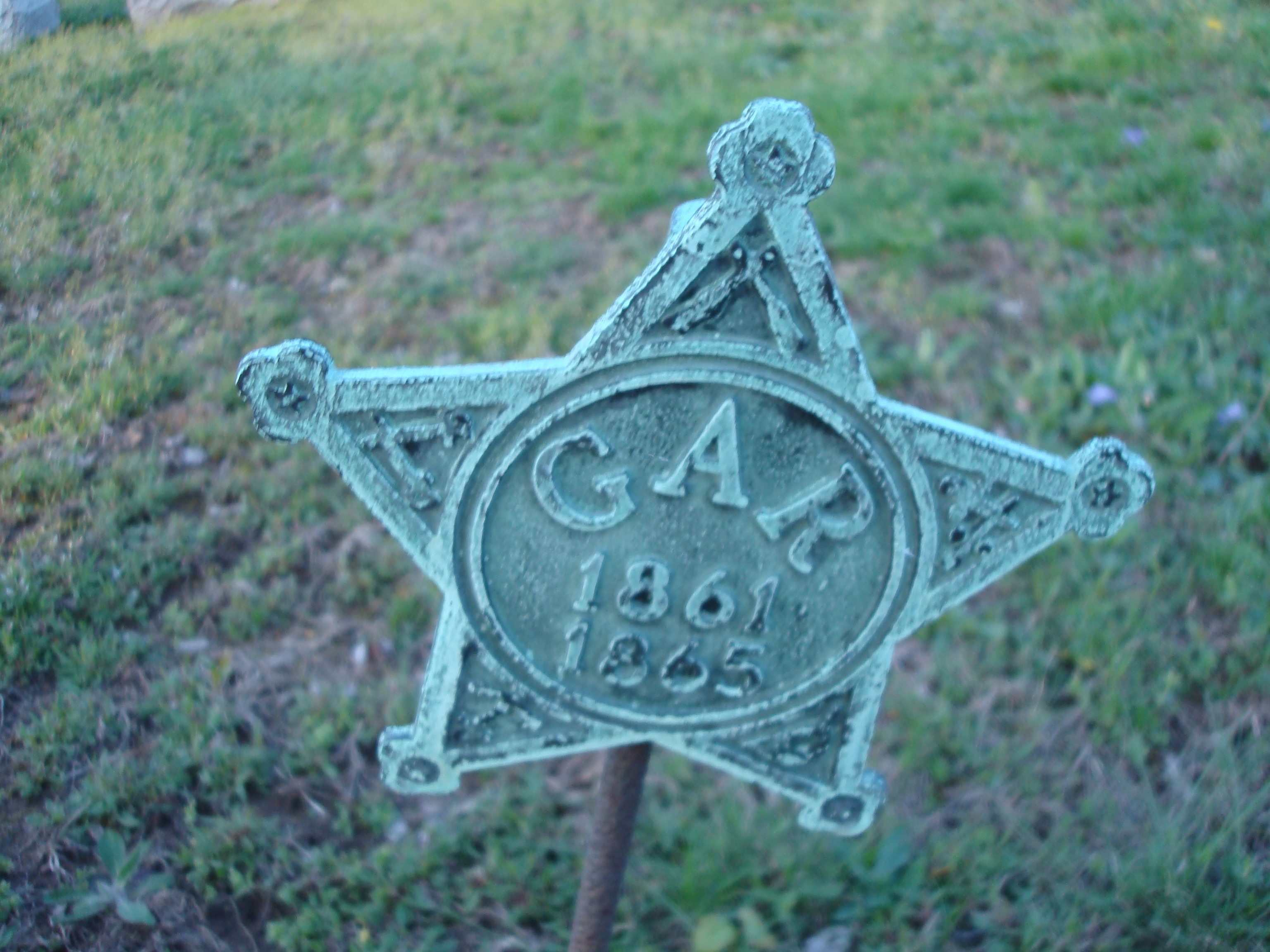
The cemetery is dominated by a memorial to Civil War veterans.  According to the engraving on the base of the monument the memorial was built in 1902—so it would have been less than 10 years old when Grandma and Carrie visited the cemetery. The memorial probably was built with funds raised by aging GAR (Grand Army of the Republic) veterans who didn’t want the war to be forgotten after they passed on.
Phoebe and Albert Muffly’s 27th Wedding Anniversary

16-year-old Helena Muffly wrote exactly 100 years ago today: 

Monday, May 29, 1911: My mother’s wedding anniversary. 27 years ago. We are going to build a piece to the barn. Two of the carpenters came today. During a thunderstorm this afternoon, the lightning struck a large oak tree. 

Her middle-aged granddaughter’s comments 100 years later:

I’ve been curious about how marriage ages have changed over the years (see March 22 entry). Grandma’s parents must have gotten married in 1884.  Her mother would have been 21 or 22; her father would have been 26.

On May 10 Grandma mentioned helping pour mortar—I now wonder if it was in preparation for the construction of the piece they were going to build onto the barn.

Saw Each Other Most Sundays for 50+ Years

16-year-old Helena Muffly wrote exactly 100 years ago today: 

Sunday, May 28, 1911: Ma and Pa went away to store all day. Tweet was here all night and staid till evening. Went to Sunday school this morning. Carrie was over this afternoon. Heard this evening of the arrival of a girl cousin born on May the 18th. 

Her middle-aged granddaughter’s comments 100 years later:

From reading the diary—I now know that “Tweet”  was Helen Wesner–with a nickname like Tweet she must have been a blast as a teen.  I just knew her as an elderly woman who had never married.

Grandma and Helen would see each other on Sunday’s for much of their lives. After Grandma married, she attended Messiah Lutheran Church in McEwenville which was the church Helen attended.

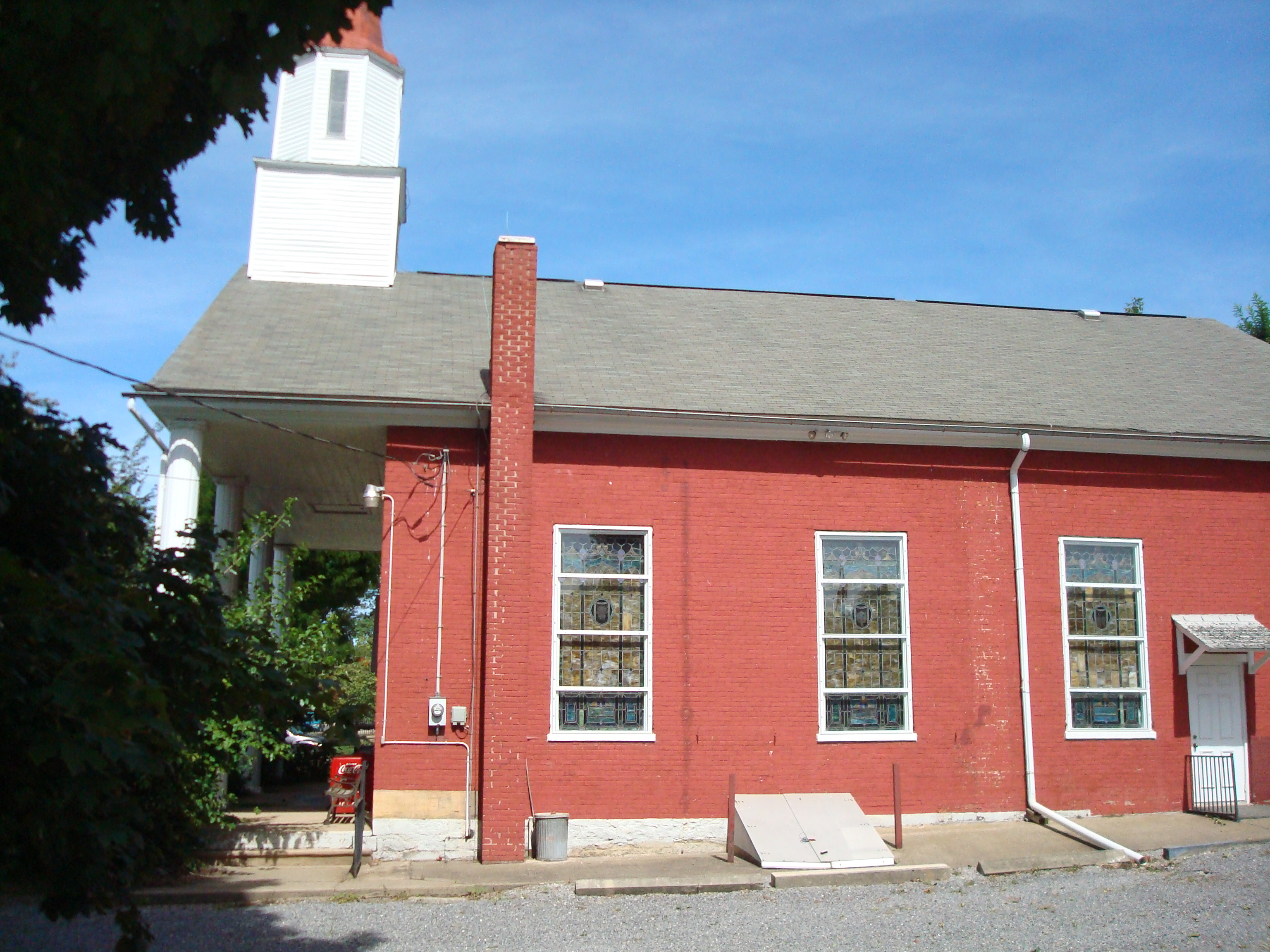
Recent photo of building that used to be Messiah Lutheran Church.

When I was a child in the middle of the 20th century, the children’s Sunday School classes were in the basement, but the adult classes were spread out in various corners of the main church sanctuary. I remember that sometimes my Sunday School class would end before the adult classes, and I’d come up the stairs into the narthex and peek through the doors into the sanctuary.

There were four adult classes: the men’s class, the women’s class, and the old ladies’ class, and the old men’s class. (Maybe the classes had another name—but I always called them the old ladies’ and old men’s classes).

I can remember Grandma and Helen sitting in the old ladies’ class. It was a small class—maybe seven people on a good Sunday—most Sunday’s there probably were about 5 people. My memory is that all had gray hair, wore loose-fitting dresses that seemed to lack any sense of style, and were bent over in weariness.

After reading the diary—I now wonder what those elderly women talked about on those Sunday mornings.

What do people talk about who’ve known each other for most of their lives? The good old days? . . their families? . . . gardening? . . . their health? . . . their deepest secrets (which may not really be secrets to people who’ve know each other for 50, 60, or 70 years)?

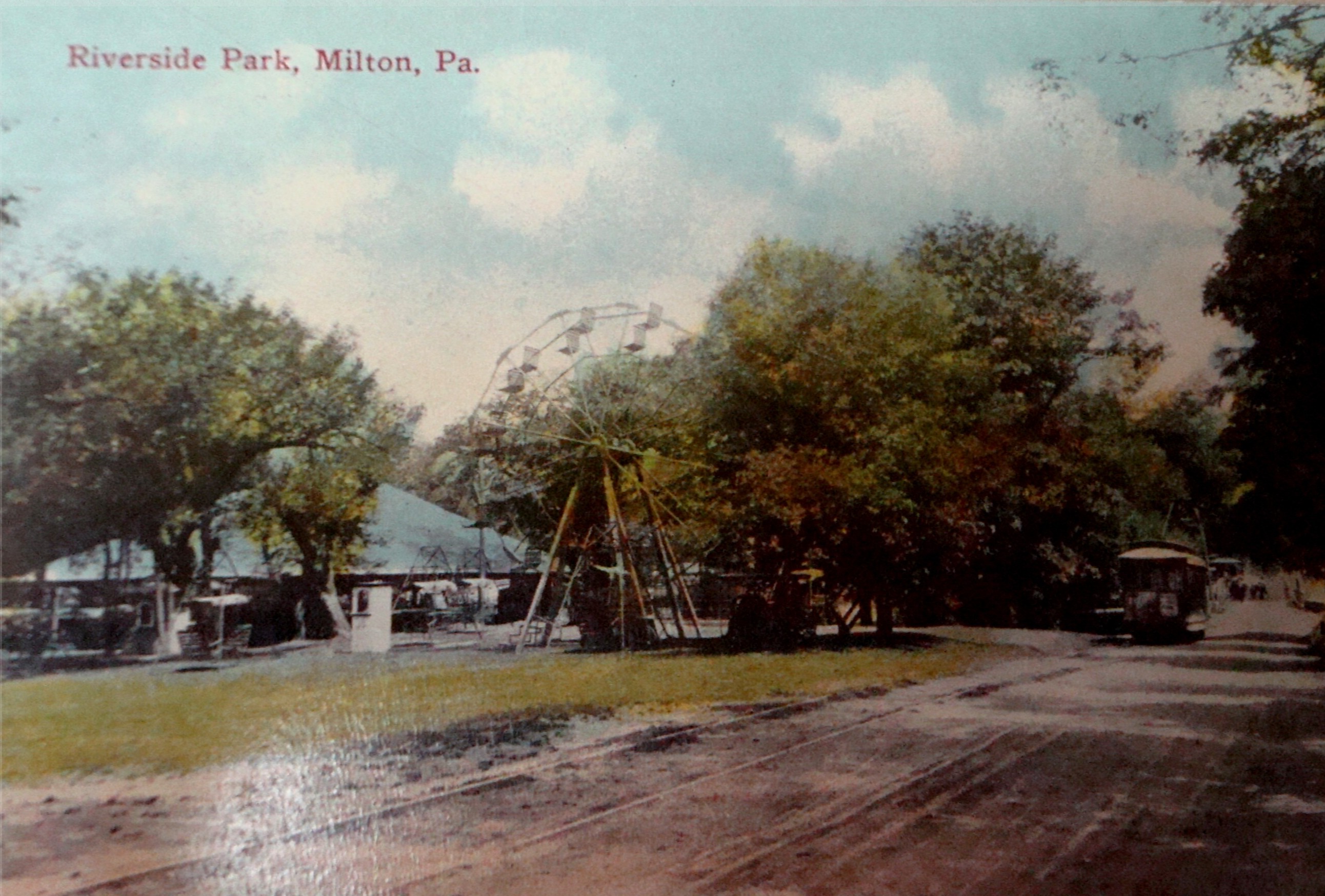
Riverside Park

16-year-old Helena Muffly wrote exactly 100 years ago today: 

Saturday, May 27, 1911: Went to Watsontown this morning, and up to McEwensville this afternoon. Oh the countless errands I have to perform keeps me rather busy. Ruth went to Riverside park.

Source of old Riverside Park postcards: Milton Historical Society

Her middle-aged granddaughter’s comments 100 years later:

A hundred years ago today, it sounds as if Grandma’s sister Ruth had all the fun—and Grandma had all of the work. I wonder if Ruth got home in time to help milk the cows—or if Grandma had to do it by herself.

Riverside Park

When Grandma was young, Riverside Park was the center of the summer social scene.

A trolley ran between Watsontown and Milton. According to Robert Swope, Jr.”

The line passed through a popular recreational park called Riverside Park just south of Watsontown. The park had amusements, swimming, boating and romantic scenery.

 Robert Swope, Jr. in Watsontown, McEwensville, and Delaware Township: A Real Photo Postcard History

The park was only open during the summer months—and probably had just opened for the season. An article in the Watsontown Star and Record from three years later describes the park opening.

Watsontown Star and Record, May 15, 1914 (Source: Montgomery House Library)

Riverside Park was located near the current location of Fort Boone Campsites.

Running Errands

When I was growing up on a farm, after I got my driver’s license,  I remember clearly how farm machinery broke with maddening frequency—and how I’d be sent on errands to buy the needed parts. In Grandma’s day, farm machinery wouldn’t have been nearly as mechanized, but maybe repairs still needed to be purchased—or maybe the errands were totally unrelated to machinery repairs. . .

Watching Cows

16-year-old Helena Muffly wrote exactly 100 years ago today: 

Friday, May 26, 1911: I’m through watching cows for the present time—at least. That was my duty for one wk.

Her middle-aged granddaughter’s comments 100 years later:

Why is the duty of watching cows over? What did it involve? Weren’t there fences around the fields? (Somehow this entry brings back vague memories of  Johanna Spyri’s book about Heidi watching cows in the Alps.) Was the task rotated between the siblings in the family?

According to Wikipedia barbed wire was widely used by the last quarter of the 19th century. I would have thought that the Muffly family would have had sturdy barbed wire fences around their fields—but maybe they didn’t.

An Errand and a Male Visitor (to See Her Sister)

16-year-old Helena Muffly wrote exactly 100 years ago today: 

Thursday, May 25, 1911: Went to Watsontown on an errand this morning. I had to walk though. Besse came out this evening. (Jim) Ruthie’s was here also tonight.

Recent photo of the view Grandma would have had as she walked into Watsontown. (Well, it isn't exactly the same because 100 years ago there would have been a bustling railroad station in the foreground.)

 Her middle-aged granddaughter’s comments 100 years later:

This entry suggests that Grandma did not always walk when she went to Watsontown. I’d previously assumed that she generally walked since it was only a mile and a half or so from the Muffly farm to Watsontown. But maybe she often got a ride—either in a carriage or wagon, or possibly on a Susquehanna, Bloomsburg and Berwick (S. B. &  B.) train that went by her house. (There was a flag stop at a nearby feed mill.)

Grandma seems to be feeling a little sorry for herself—She not only had to walk to Watsontown; but a beau came to see her sister Ruth.Grandma probably wished that she also had a boyfriend. Jim probably refers to James B. Oakes. On March 26 Grandma had written:

 . . . I’m making this entry in her room, because I can’t have the light. Ruthie has the honorable James B. Oakes down in the sitting room, but she had to go after him or he wouldn’t have been here. Papa is down there also, so nothing won’t happen . . .

Even if Ruth originally had to chase James B. Oakes back in March—it sounds as if he was interested enough to have become Ruthie’s Jim over the next several months.

Stewed Rhubarb (Rhubarb Sauce)

16-year-old Helena Muffly wrote exactly 100 years ago today: 

Wednesday, May 24, 1911: One of these days I’m going to do something of some importance. I’m getting rather tired of the same old duties, the same old ways, and the same old troubles.

Her middle-aged granddaughter’s comments 100 years later:

Whew, the same old duties, the same old ways, and the same old troubles. I wonder what Grandma was referring to. Sometimes I wish that she’d tell us more about what her daily duties were—and what she didn’t like about the “old ways”. But of course she couldn’t have known that we’d be reading her diary a hundred years later . . .

Since she didn’t tell us much about what happened, I’m going to try to guess what foods the family have might have been eating in late May.

They were probably enjoying fresh greens, radishes, and other spring vegetables from their garden. They probably were also eating rhubarb. It used to be considered one of the spring tonic foods (dandelion was another) that helped restore people’s energy and health after a long winter without fresh foods.

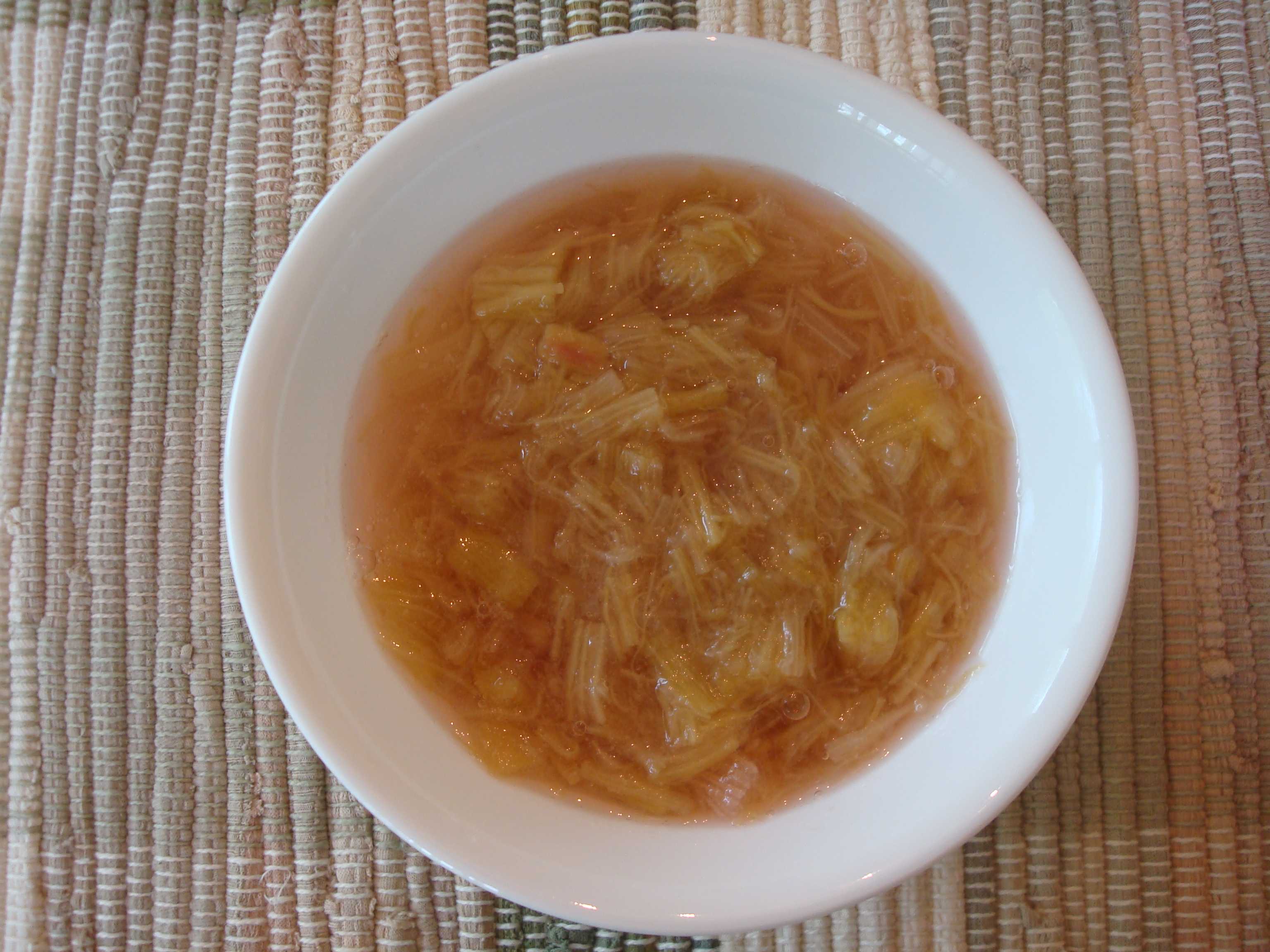
Stewed Rhubarb

When I was a child we often ate Stewed Rhubarb (Rhubarb Sauce) in May. We ate it as a side dish during the main meal. (We ate it warm at the first meal; left-overs were eaten chilled). I don’ t have a recipe for Stewed Rhubarb, and I haven’t made it in years—but yesterday I successfully made it from memory and it tasted just as I remembered.  This is what I did:

Stewed Rhubarb (Rhubarb Sauce)

2 cups rhubarb (cut into 3/4 inch pieces)

1/3 cup sugar

1/4 cup water

1/2 teaspoon salt

Mix all of the ingredients together in a saucepan. Using medium heat, heat to boiling; reduce temperature and simmer until tender (about 5 minutes); stir occasionally. Remove from heat. Can be served either hot or chilled. 2-3 servings. Recipe can be easily doubled or tripled.

The amount of sugar can be adjusted to make the rhubarb tarter or sweeter.

My husband’s family also ate Stewed Rhubarb when he was a child—and he agrees that the recipe turned out perfectly. He took seconds—and we easily ate all of the rhubarb at one meal. (Next time I’ll make more). And, he suggested that we should have it again soon. It’s definitely an old-time food that we’ve enjoyed rediscovering.