16-year-old Helena Muffly wrote exactly 100 years ago today:
Tuesday, June 6, 1911: We had the raising of the barn this morning. Tweetie and her mother were here to assist. Besse also. Perhaps you may think I was in my highest ecstasy, a hovering among the dishes. M.C.R. was here. Good night.
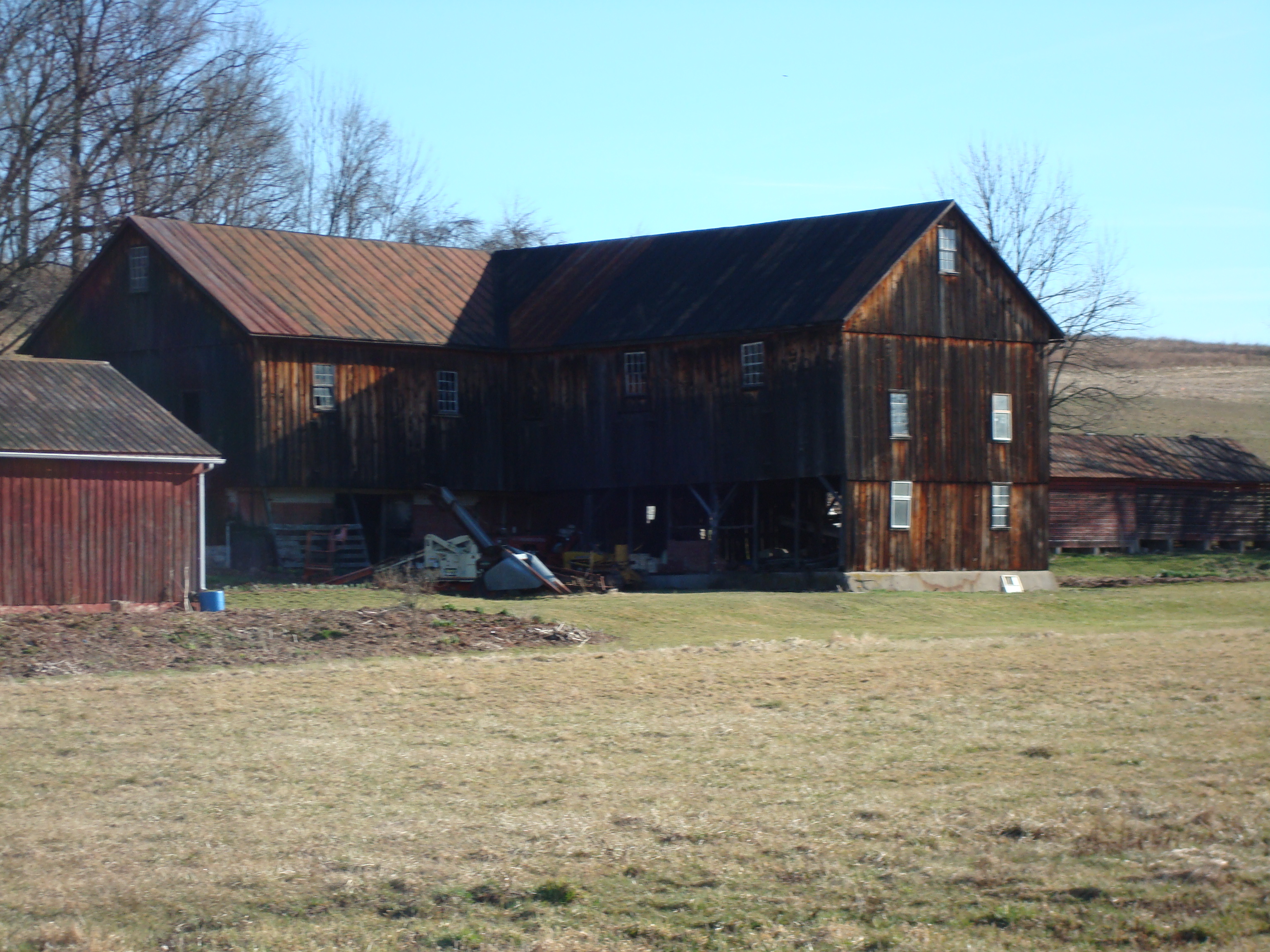
Recent photo of the barn on the farm where Grandma lived when she wrote the diary. Which part was the addition that was raised a hundred years ago today?
Her middle-aged granddaughter’s comments 100 years later:
It’s amazing how neighbors helped one another a hundred years ago. I wonder how many men helped with the raising of the barn addition, and how much food Grandma helped prepare and serve. The Mennonite Community Cookbook by Mary Emma Showalter contains a menu for a barn raising. The book was published in 1950—but the author writes that the menu was found in an old hand-written recipe book of her great-grandmother’s so it’s old:
Food for a Barn Raising
(Enough food for 175 men)
115 lemon pies
500 fat cakes (doughnuts)
15 large cakes
2 gallons applesauce
3 gallons rice pudding
3 gallons cornstarch pudding
16 chickens
3 hams
50 pounds roast beef
300 light rolls
16 loaves bread
Red beet pickle and pickled eggs
Cucumber pickle
6 pounds dried prunes, stewed
1 large crock stewed raisins
5 gallon stone jar white potatoes and the same amount of sweet potatoes
The Mennonite Community Cookbook by Mary Emma Showalter
16-year-old Helena Muffly wrote exactly 100 years ago today:
Monday, June 5, 1911: Mother, Besse and Ruthie flew around today a baking pies and cakes. I thought it be fun to swipe one, but oh, the result.
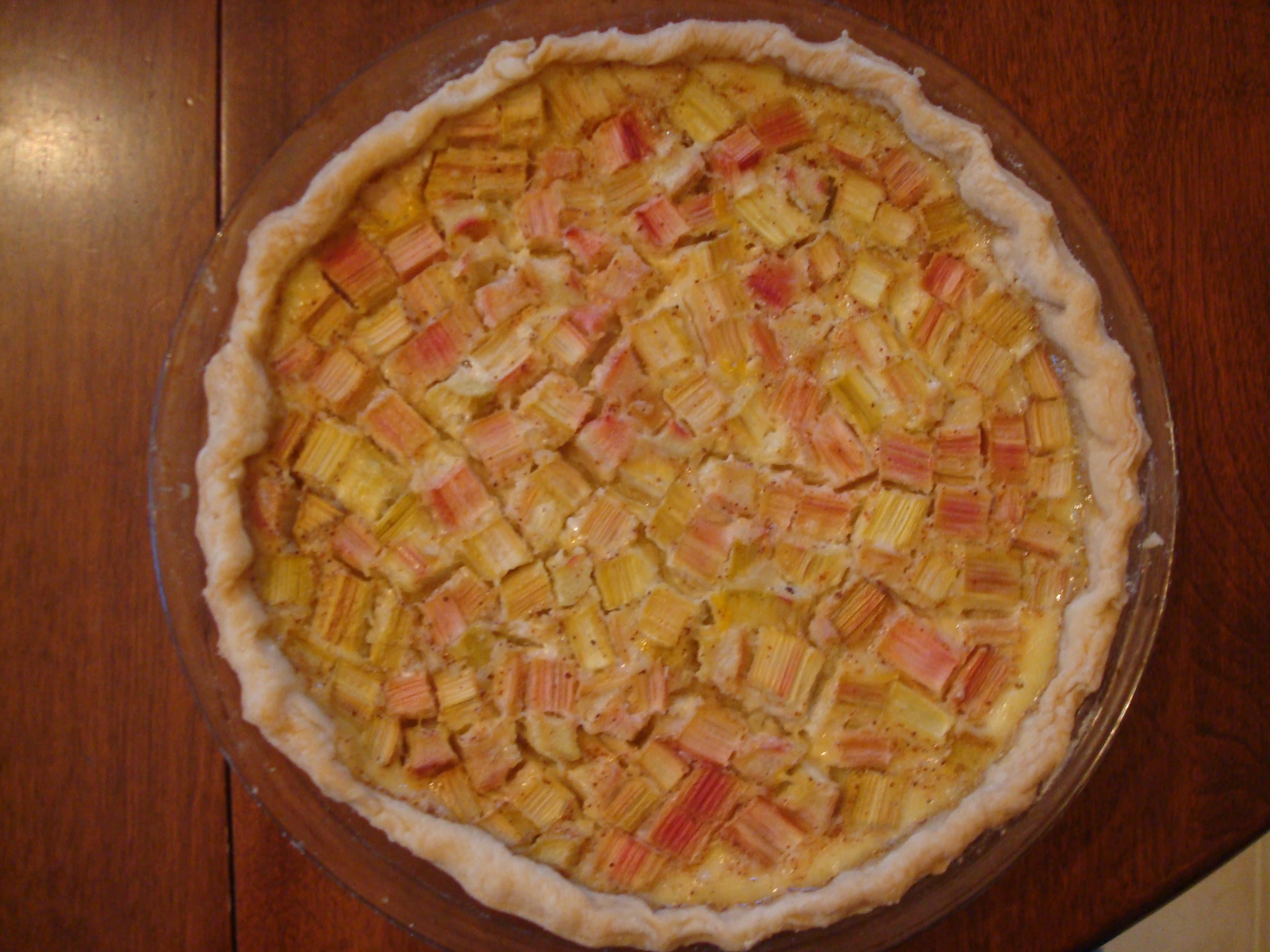
Rhubarb Sponge Pie
Her middle-aged granddaughter’s comments 100 years later:
Grandma’s married sister Besse came to help her mother and sister bake pies and cakes. It sounds like Grandma didn’t help—I wonder why. As a 16-year-old, you’d think that she’d be a competent baker (or at least could help with some of the easier tasks). But instead Grandma apparently was clowning around—and swiped a pie—and got into trouble. Whew, what punishment was referred to as “the result”?
What kinds of pie did they make? My favorite old-fashioned spring pie is Rhubarb Sponge Pie. (I got this recipe from my mother-in-law. However, it is an old-time Pennsylvania recipe—and the Muffly women may have made a similar pie.)
Rhubarb Sponge Pie
3 eggs
3 tablespoons all purpose flour
1/2 teaspoon nutmeg
3/4 cup sugar
dash salt
1 cup milk
2 cups rhubarb
9 inch pie shell (see recipe below)
Heat oven to 425 degrees. Beat eggs slightly. Add flour, nutmeg, sugar, and salt; Beat for 1 minute. Add milk and beat until blended. Stir in rhubarb. Bake at 425 degrees for 5 minutes. Reduce heat to 325 degrees. Bake (1 – 1 1/2 hours*) until knife inserted into center of pie comes out clean.
*This pie takes a long time to bake. If the rhubarb starts to turn brown (burn) before the center of the pie is solid, reduce heat to 300 degrees.
Any pie pastry recipe—or a pie pastry purchased at the store— can be used to make Rhubarb Sponge Pie. But for a really flakey crust with an absolutely awesome taste, make an old-fashioned pie shell using lard.
I absolutely love the recipe below. At the stores where I shop lard can be surprisingly difficult to find—and I am always searching for it so that I can make really good pies. (Clayton and Elizabeth, thank you for the lard that I used to make the pie in the photo!)
In any case, here’s the recipe:
Old-Fashioned Pie Pastry (1 crust, 9 inch)
1 cup flour
1/3 cup lard
2 to 3 tablespoons cold water
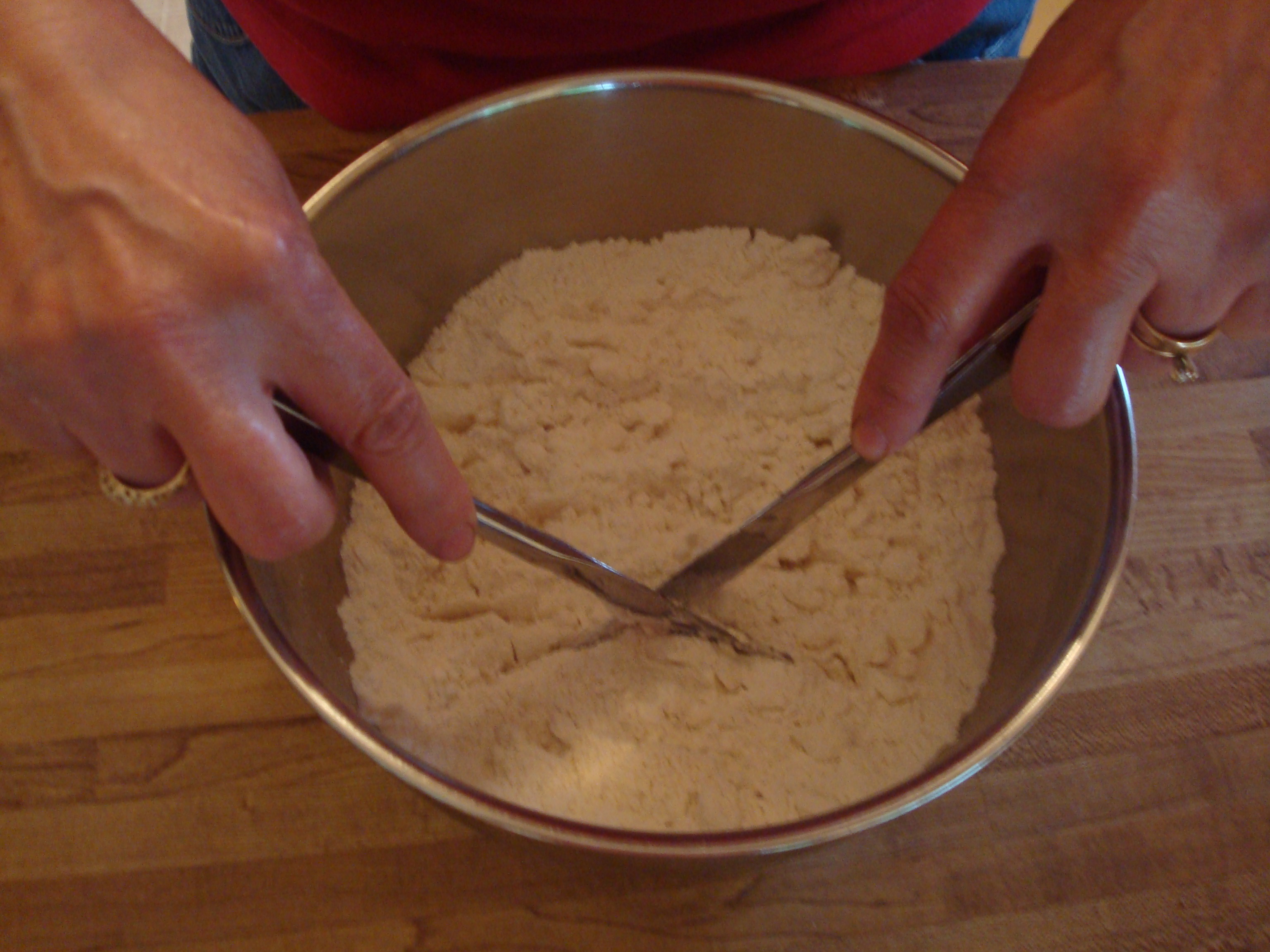
Put flour into bowl. Cut in shortening using two knives or a pastry blender. Add water and mix using a fork until dough starts to cling together. If needed, add additional water.
With a little practice it’s easy to cut lard (or shortening) into the flour using two knives. I learned how to do it when I was young and have never felt a need to buy a pastry blender.
Gather dough together in a ball. Flatten into a round circle on lightly floured surface (a floured pastry cloth works well). Roll dough 2 inches larger than needed to fit pie pan using floured rolling pin. Fold pastry into quarters; unfold and fit into pan.
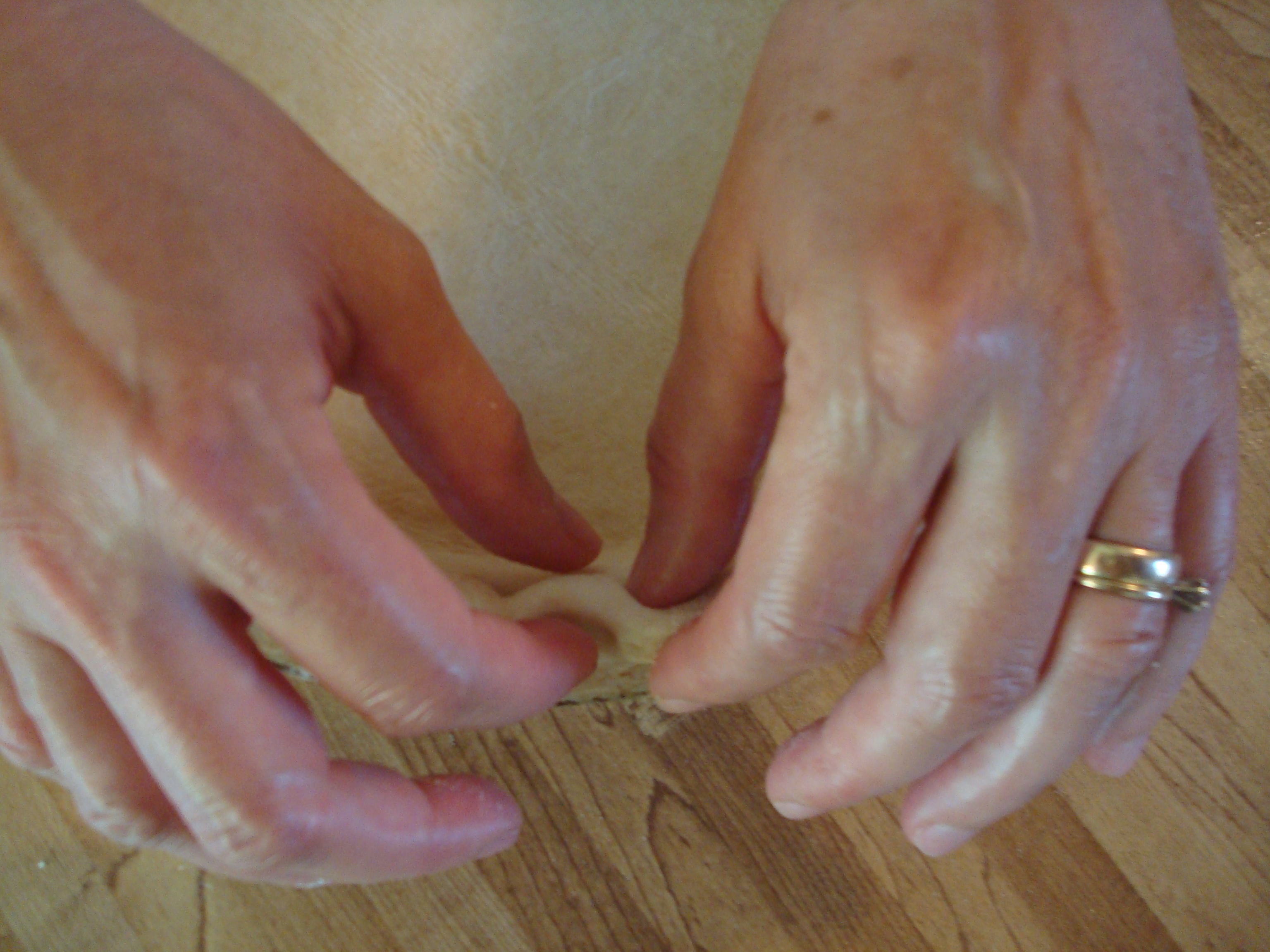
Trim edge of pastry 1/2 inch from rim of pan. Flute pastry to create edge by pressing between fingers that are moving in opposite directions.
16-year-old Helena Muffly wrote exactly 100 years ago today:
Sunday, June 4, 1911: Went to Sunday school this afternoon. Carrie Stout was over this evening. Somehow she happened to stay so late that her mother came after her. Guess she got a spanking and maybe a growling also.
Her middle-aged granddaughter’s comments 100 years later:
Even though there have been previous diary entries about mothers using corporal punishment to discipline teens (see the February 25 entry where Grandma’s mother chased her with a stir stick)—I’m still in shock that parents apparently spanked teen-aged children a hundred years ago. And that the teens apparently accepted the punishment.
16-year-old Helena Muffly wrote exactly 100 years ago today:
Saturday, June 3, 1911: Went over to Stouts this forenoon to telephone to Besse. The carpenters went away tonight.
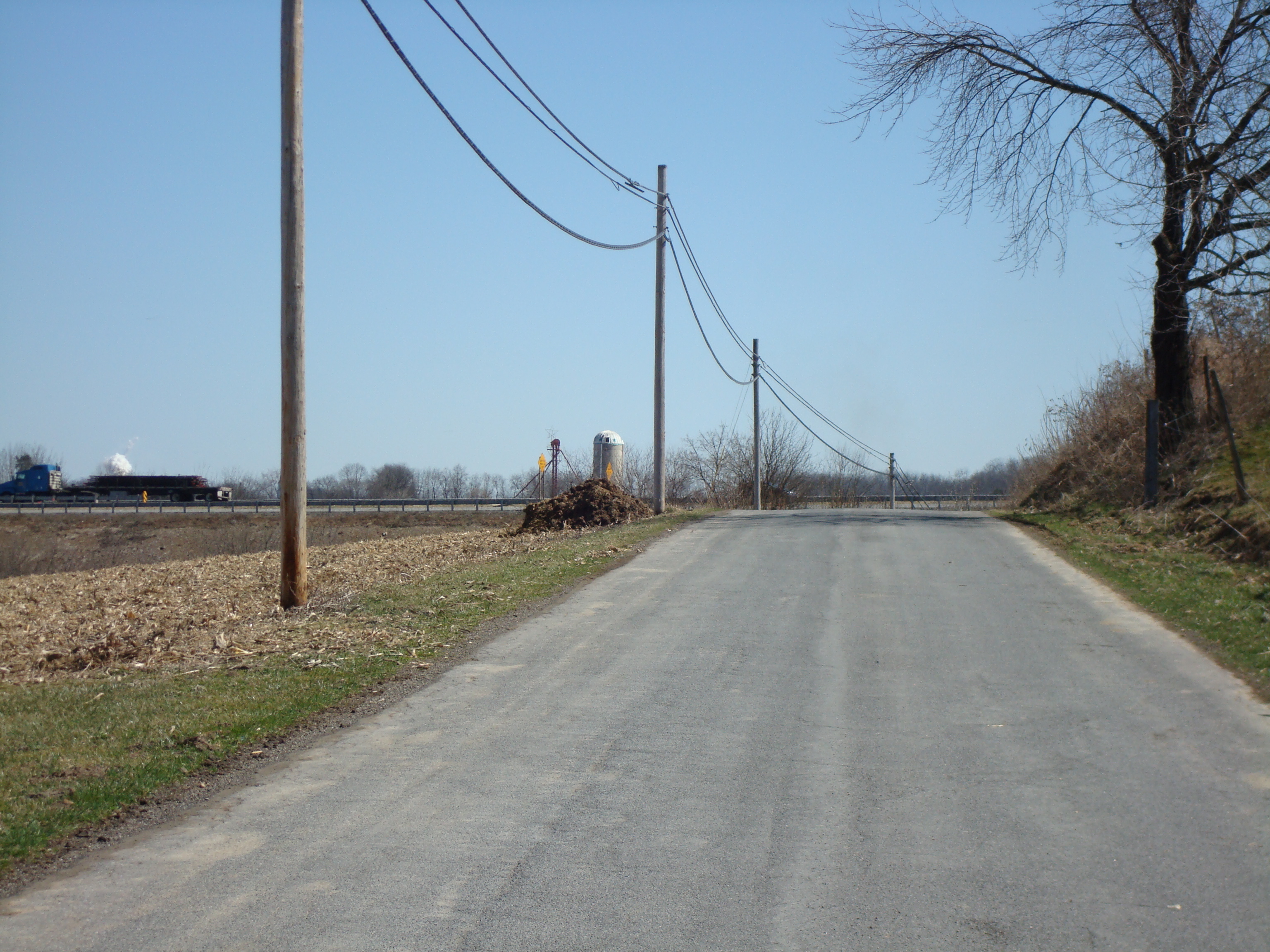
Grandma would have walked over this hill toward McEwensville to reach the Stout home. The house that the Stout's lived in burned down many years ago. A hundred years ago the road was still dirt.
Her middle-aged granddaughter’s comments 100 years later:
It’s interesting how the telephone has gone from being a new curiosity that Grandma was afraid to try less than a month ago to a tool that she uses to call her married sister Besse.
The carpenters were building the addition on the barn—and Grandma seemed to think that two of them were cute (see yesterday’s entry). But why does their leaving merit mention in the diary? Did they come from a distance and typically stay overnight at the Muffly’s? (It may have been considered acceptable hundred years ago for transient laborers to sleep in the barn.) Maybe the carpenters left because the next day was Sunday and they won’t be working. . .
16-year-old Helena Muffly wrote exactly 100 years ago today:
Friday, June 2, 1911: I would like to rub up an acquaintance with one of the young carpenters. There are two of ‘em, but seems an impossibility. Dear, dear me.
Her middle-aged granddaughter’s comments 100 years later:
I’m really struggling with our age difference today. My grandmother was about 40 years younger than what I currently am when she wrote this entry. A hundred years ago she was a teen jotting down her thoughts about cool guys who were helping build the addition on the Muffly barn—while I’m a mother with adult children.
I’m just going to let this entry stand without any comments—and instead will go back to yesterday’s entry about the circus in Milton. I would like to share two articles in the June 2, 1911 issue of the Milton Evening Standard:
16-year-old Helena Muffly wrote exactly 100 years ago today:
Tuesday, June 1, 1911:
Of all the months, my favorite is
The radiant glorious month of June.
How many are the joys it brings,
And also tells that the year is noon.
Every cloud has a silver lining. Ruth and I went to the circus, accompanied by Miss R. O. You see my darling sister sometimes changes her mind for the better. I though the circus was great even if you did blow 60 cents.
Article in June 1, 1911 issue of the Milton Evening Standard.
Her middle-aged granddaughter’s comments 100 years later:
Yeah! I’m glad that Grandma was able to go to the circus after all. R.O. refers to Rachel Oakes—a friend of Grandma and her sister.
The circus came to Milton on the train. There then was a parade as the entertainers, the animals, and their equipment went through town to the fairground (where the actual circus was held).
Recent photo of railroad tracks and an old railroad station building. A hundred years ago today, the circus train probably sat on a siding here--and the parade would have begun in this area.
The parade apparently was awesome and the focus of the front page story in the June 1, 1911 edition of the Milton Evening Standard.
Somewhat surprisingly there don’t seem to be photos of the actual circus in either the June 1 or June 2 issue of the paper. I suppose the paper “went to bed” too early for photos on June 1—though I’m not sure why there were none on June 2. Maybe newspaper photographers weren’t allowed under the big tent to help encourage people to buy tickets and attend the circus rather than just viewing it vicariously by reading the newspaper.
It sounds like Grandma enjoyed the circus—though she doesn’t seem ecstatic about it since she mentions blowing 60 cents. She seems to doing some sort of cost-benefit analysis in her head—and almost wishing that she still had the 60 cents.
Sixty cents in 1911 dollars would be about $17 in 2011. A dollar today is worth about 1/28th what it was worth a hundred years ago. In other words, there has been an average annual inflation rate of 3.4% per year over the past hundred years.
16-year-old Helena Muffly wrote exactly 100 years ago today:
Wednesday, May 31, 1911: Was so very disappointed this evening. Ruth said she was not going to the circus which is to be held this month at the Milton fairground, and I intended to go if she would go.
Her middle-aged granddaughter’s comments 100 years later:
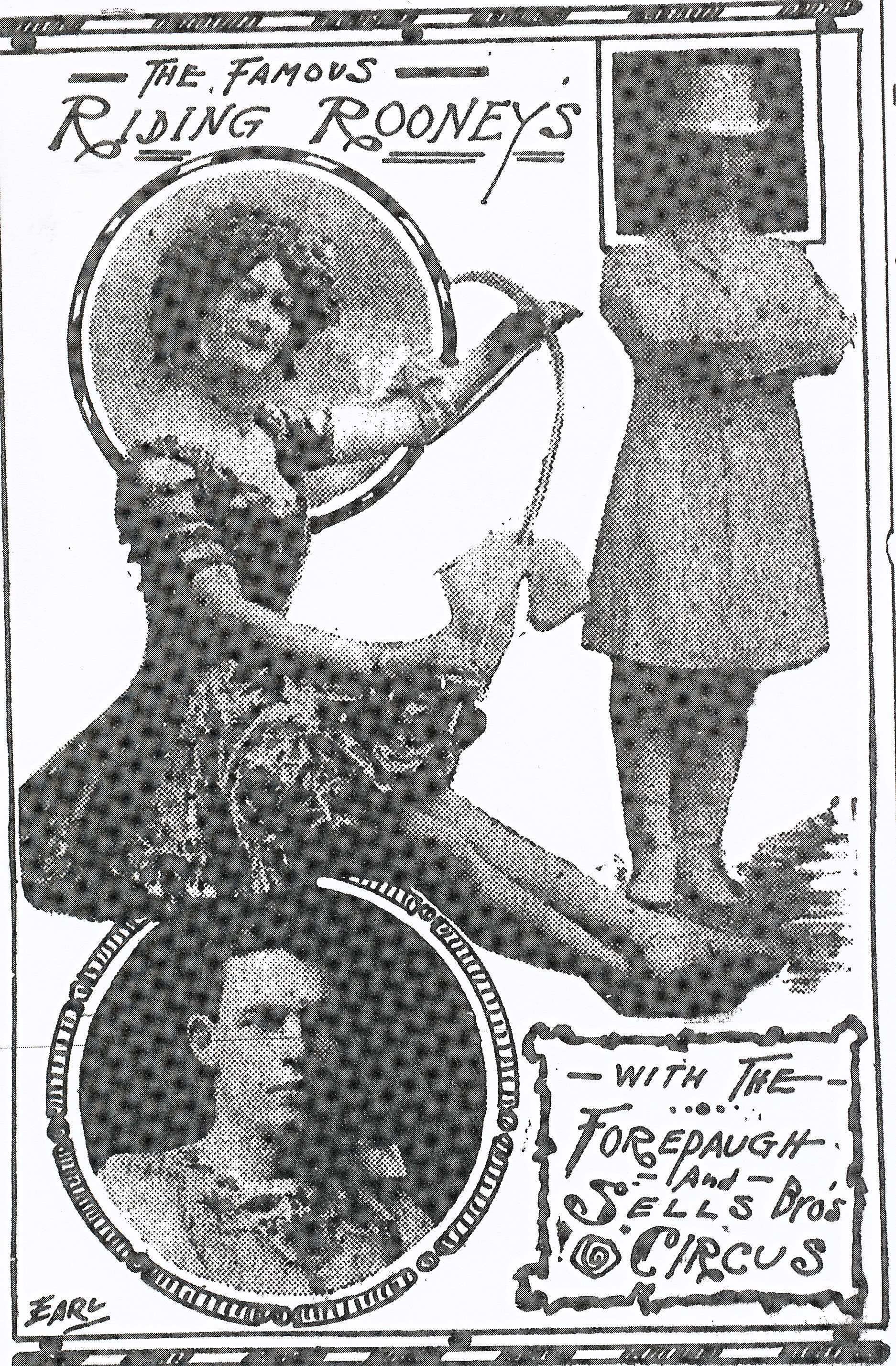
Ad in May 27, 1911 issue of Milton Evening Standard