Old-Time Cucumbers and Onions Recipe

16-year-old Helena Muffly wrote exactly 100 years ago today: 

Tuesday, August 15, 1911: Went to Watsontown this afternoon to get some nick-knacks to take to the picnic. Makes me to mad Carrie isn’t going after all our planning. I have a presentiment that perhaps no one will be there except its originator, but the morrow alone can tell.

Her middle-aged granddaughter’s comments 100 years later:

What could nick-knacks for a picnic have been? . . . Crepe paper? . . . paper nut cups? Neither of these items seems exactly like a nick-knack or right for a picnic, and they may not have even existed a hundred years ago.

Why isn’t Grandma’s friend Carrie Stout going to come? Carrie had been involved in the planning since the very beginning. Did Grandma and Carrie have a disagreement? Was Carrie grounded for some reason?

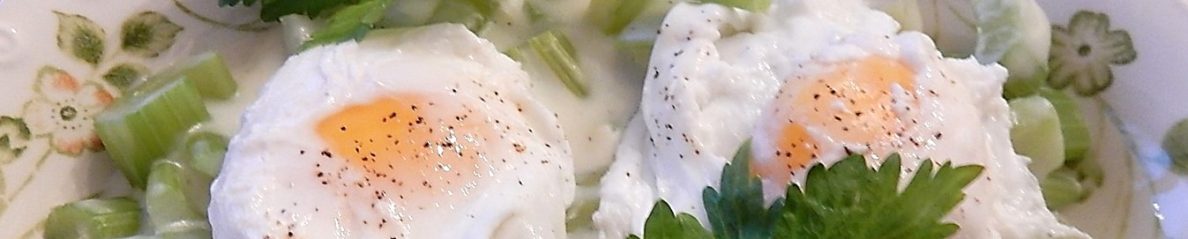
I wonder if Grandma had begun to makes foods for the picnic. An excellent old-time food for a picnic in August is Cucumbers and Onions.

Cucumbers and Onions

1 cup apple cider vinegar

1 cup sugar

1 cup water

1/2 teaspoon salt (optional)

2 cups cucumbers, peeled and thinly sliced

1 cup onion, sliced

Stir together the vinegar, sugar, and water in a large bowl. Add cucumber and onion; gently stir to coat vegetables with liquid. Cover and refrigerate for 24 hours before serving.

Yield: 4 to 6 servings

This is one of my favorite old recipes. I frequently make Cucumbers and Onions during the late summer and early fall. The vinegar, sugar, and water are in a 1:1:1 proportion—and, depending upon how many cucumbers and onions I have, I will vary the amount of syrup that I mix up. The liquid should almost cover the vegetables. (Many old recipes are based on easy to remember proportions and were never written down.)

It is okay if there is a layer or so of the sliced cucumbers and onions above the liquid because after a few hours the amount of liquid will increase as some of the liquid comes out of the vegetables.

First and Last Taste of Cantaloupe for the Year

16-year-old Helena Muffly wrote exactly 100 years ago today: 

Monday, August 14, 1911: He passed by here this morning, but I didn’t see him though. Miss Carolyn was over this evening. I had a taste of several cantaloupes this evening. They were the first taste I had of them yet, and I guess it will be the last. Too bad, isn’t it.

A hundred years ago green-fleshed cantaloupes were more popular than they are today. ( Photo source: Wikemedia Commons)

Her middle-aged granddaughter’s comments 100 years later:

In 1911 people ate by the seasons, and the various fruits and vegetables were wonderful fleeting tastes. Since Grandma had her first and last taste of cantaloupe for the year a hundred years ago on this date, I guess that the cantaloupes in the Muffly garden didn’t do well that year.

Maybe it had been too dry (or wet), or maybe the Spring had been too cool and the seeds hadn’t germinated well, or maybe pests had damaged the plants and they produced few melons, or maybe the soil was not well-suited for  melon raising.

A hundred years ago people ate by the seasons–sometimes there was a surplus of some fruits and vegetables (and everyone tired of the food) and other times a crop did poorly–and people savored every bite. I bet that when Grandma wrote this entry that she was already looking forward to the 1912 cantaloupe season.

People

“He” probably refers to a guy Grandma had a crush on. In other recent entries she referred to B. and B.G.—but never used a complete name.

I have no idea who Carolyn was.

Chocolate Cake Recipes A Hundred Years Ago

16-year-old Helena Muffly wrote exactly 100 years ago today: 

Sunday, August 13, 1911: Went to Sunday school this afternoon. I guess that picnic is to be realized after all, if it isn’t I’ll certainly be very disappointed.

Source: Lowney's Cook Book (1907)

Her middle-aged granddaughter’s comments 100 years later:

Grandma and her friend Carrie have been planning a picnic all week. They came up with the idea while taking a walk the previous Sunday.

Was Grandma thinking about which foods to make for the picnic? Perhaps she flipped through a cookbook or two and looked at the pictures for ideas.

Here are two cake recipes from an old cook book:

Walnut Chocolate Cake

¼ cup Lowney’s Always Ready Chocolate Powder

½ cup butter

1 ½ cups flour

½ cup milk

1 cup walnut meats

1 cup sugar

2 egg yolks

2 ½ teaspoons baking powder

2 tablespoons hot water

1 teaspoon salt

Cream butter; add sugar, yolks of eggs well beaten and flour in which baking powder has been sifted, milk, and chocolate which has been moistened with hot water; beat well and add walnut meats. Bake in buttered jelly cake pans about twenty minutes.

Spread one cake with one half cup of Lowney’s Sweet Chocolate Powder moistened with one fourth cup boiling water and flavored with one teaspoon vanilla. Sprinkle with broken walnuts, cover with other cake, and ice with White Frosting.

Lowney’s Cook Book (1907)

Chocolate Sponge Cake

¼ cup Lowney’s Always Ready Chocolate Powder

yolks of 3 eggs

¼ cup sugar

whites of 3 eggs

2 tablespoons hot water

¼ teaspoon salt

¼ cup pastry flour

1 teaspoon vanilla

Beat yolks until lemon-colored and thick; add sugar and continue beating. Mix chocolate with water, add to sugar mixture; cut and fold in flour, salt and beaten whites. Flavor and bake in buttered pan in a moderate oven three quarters of an hour.

Lowney’s Cook Book (1907)

I enjoy reading old recipes—though I’m often befuddled about exactly how they need to be adjusted for modern use. One suggestion in the Lowneys’ Cook Book for making cakes says:

Attend to fire, making sure, if it is a coal fire, that there is sufficient coal to last through the baking.

Hmm—Is that the same thing as a 350 degree oven?

The cook book was published by Lowney’s–a company that sold baking chocolate and cocoa. (I guess that brand name advertising and PR has been around for a long time.)  The supermarket sells Ghirardelli Sweet Ground Chocolate and Cocoa. Would that work as a substitute for Lowneys’ Always Ready Chocolate Powder?

I suppose the beating the yolks means either using a hand beater or stirring them rapidly by hand.

The Chocolate Sponge Cake recipe calls for very little flour—actually it seems like very small amounts for several ingredients. It must make a really small cake—or maybe there are typos in the cook book.

Whew, I’m getting a head-ache trying to interpret these recipes for modern cooking. I guess I’ll just assume that these cakes tasted awesome and not try to make them.

House Painted

16-year-old Helena Muffly wrote exactly 100 years ago today: 

Saturday, August 12, 1911: What with rubbing against fresh paint, and watching the painters I managed to have something to do, but this won’t occupy me very much longer, as the house will soon be painted with its last coat.

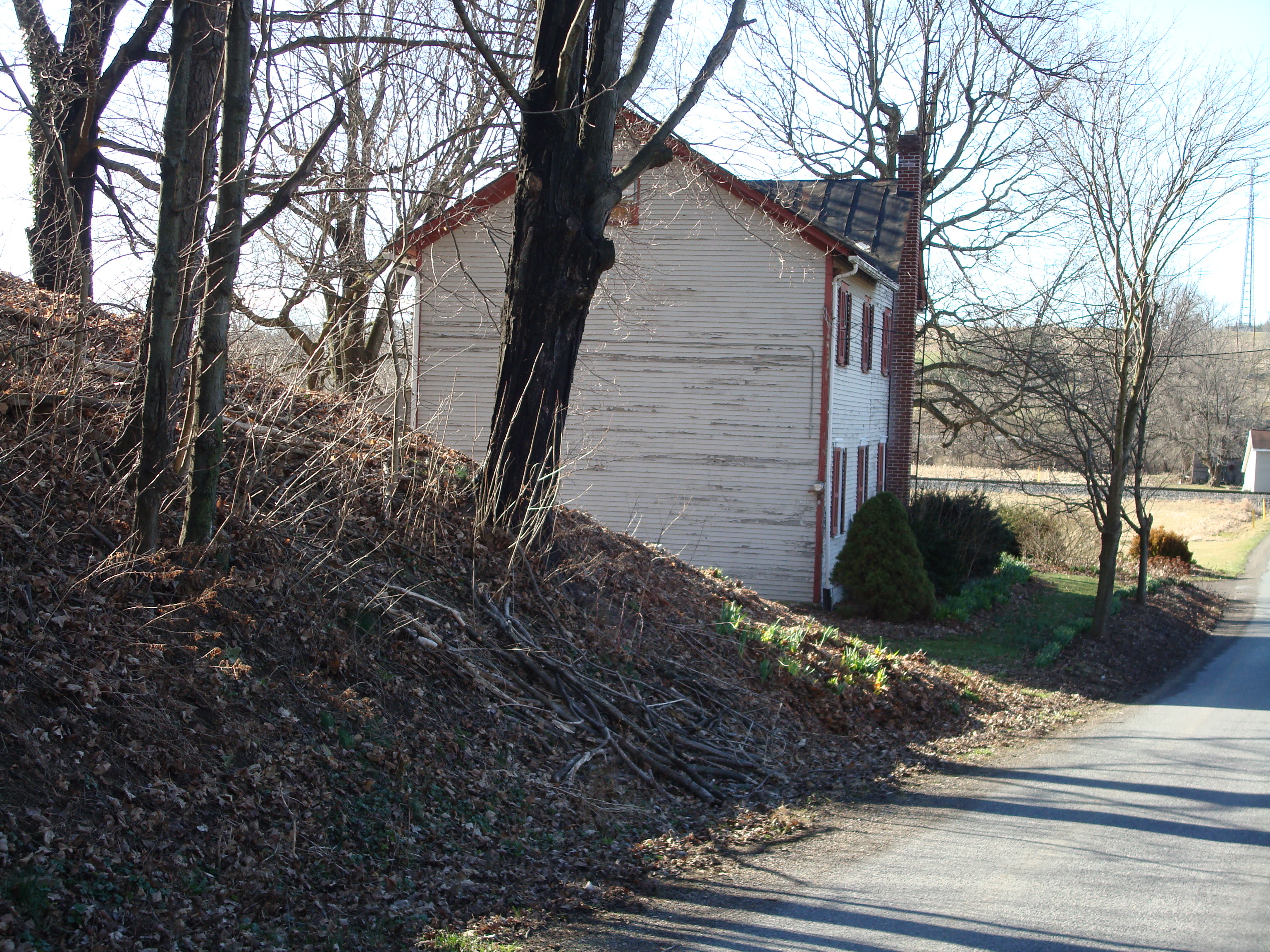
Recent photos of the Muffly farm. Whew, the freshly painted house and barn must have looked awesome in 1911.

Her middle-aged granddaughter’s comments 100 years later:

Ready-mixed paints became widely available in the late 1800s. The July 26 diary entry mentioned that the barn was being painted red—and now the house was being painted.

Old-time Paper Craft: Swimming Frog

16-year-old Helena Muffly wrote exactly 100 years ago today: 

Friday, August 11, 1911: It is impossible to write anything for today that will prove itself interesting, so I won’t try.

Her middle-aged granddaughter’s comments 100 years later:

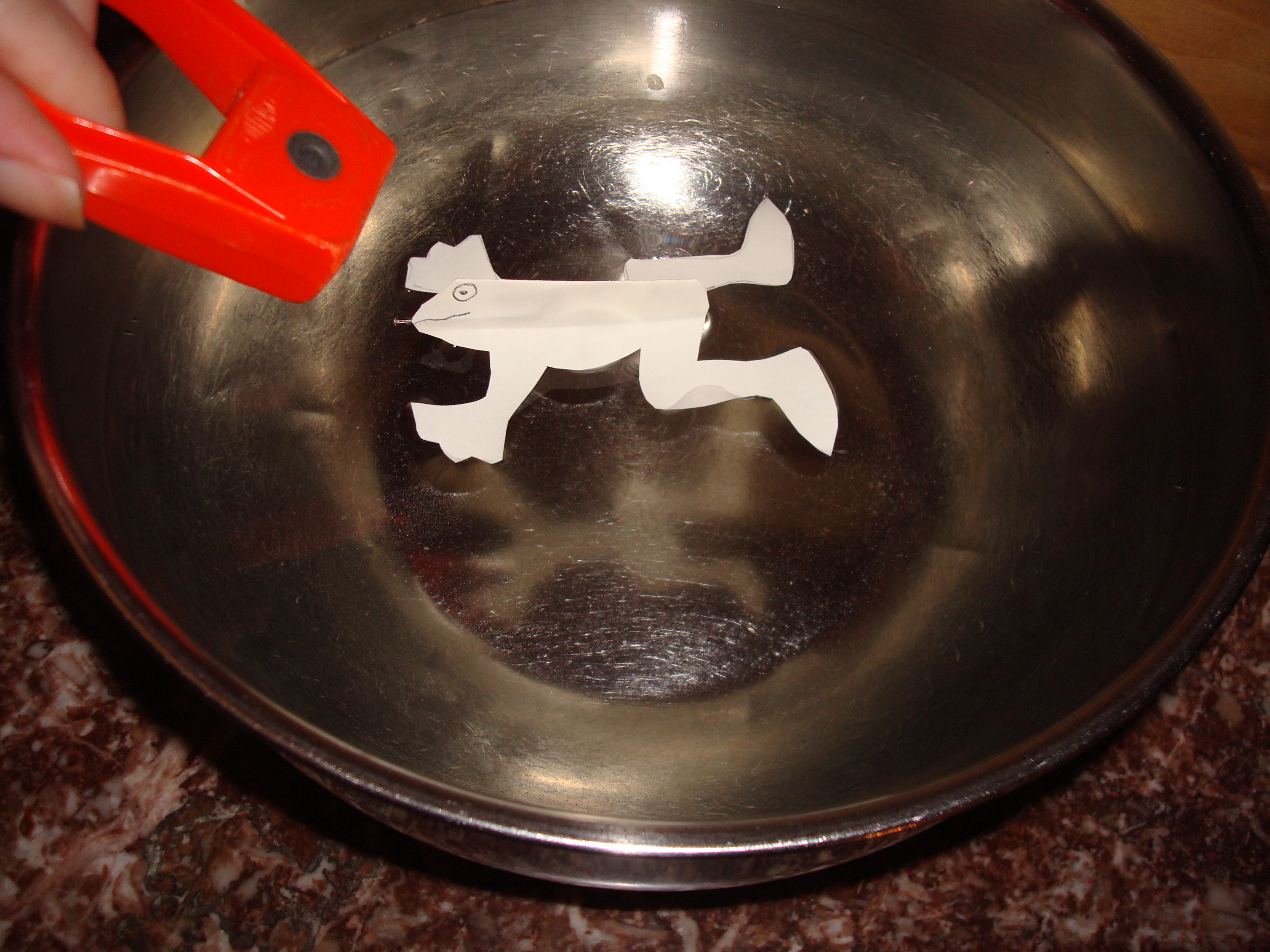
Use a magnet to make the frog swim.

In 1911 Grandma’s little brother Jimmie was 6-years-old. She seldom mentions him in the diary. On quiet summer days I wonder if she ever made crafts with him.

The July 1911 issue of Good Housekeeping magazine had directions for a paper frog that swims.

If you’d like to make the swimming frog, here are the adapted and abridged directions.

Supplies Needed

Heavy white paper

Pencil

Scissors

Small straight (sewing) pin

Paste or glue

Magnet

Thin white paper for tracing (optional)

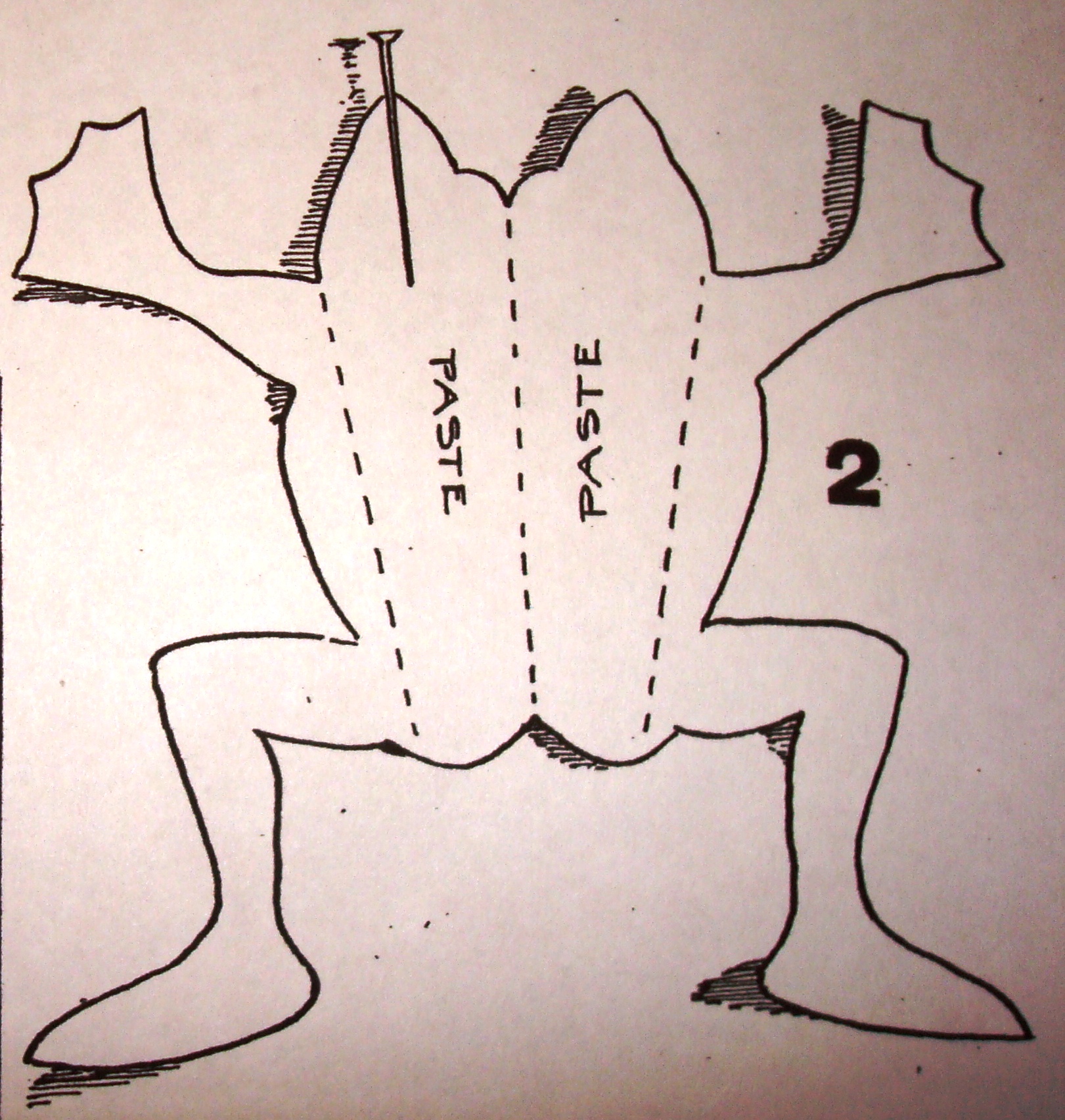
Click for the frog pattern. Print a copy of the pattern, and then cut it out.

Fold the heavy white paper in half. Fit the straight line of the frog’s back exactly on the fold of the paper. Trace around the pattern. Cut out both halves of  the paper at once. Use a pencil to draw the frog’s mouth and eyes.

Bend out the legs and lower part of the body as indicated by the dotted lines.

Open the frog and lay him on his back. Cover the inside of the head and the inside of the body as far down as the dotted line with glue or paste. Then lay a pin on one-half of the head. Fold the two halves of the frog together and press. This will paste the pin inside with only the pin-head and a small part of the pin standing out from the frog’s mouth like a tongue. Now bend the legs out again, so they will lie flat on either side of the frog when you set him down on the table.

Source: Good Housekeeping (July, 1911)

After the paste or glue dries fill a bowl or pan with water, then set the frog down on top of the water. Hold the magnet near the pin in the frog’s mouth.

Hold the magnet just far enough away from the frog to keep him from jumping. He will follow the magnet in any direction you want.

When you take the frog out of the water, set it on a piece of clean paper and press the feet flat. When it is dry it will be as good as new.

P.S.—Previous posts with old-time paper crafts have been very popular. If  you haven’t already seen them you may want to check them out:

Paper doll girl and her swimming ducks

Paper birds

De Laval Cream Separator Advertisement

16-year-old Helena Muffly wrote exactly 100 years ago today: 

Thursday, August 10, 1911: Trotted after the cows this morning and did some sewing this afternoon. Don’t like to sew very well, but must when no one else will for me.

Her middle-aged granddaughter’s comments 100 years later:

The cows must have somehow managed to escape from the pasture AGAIN. This is the fifth time during summer 1911 that Grandma mentioned chasing cows. Only two days previously she wrote about a rebellious heifer in the orchard.

I wonder how many cows the Muffly family had. A hundred years ago farms were more diversified than they are today. Most farms had only a few cows, a couple of pigs, some chickens, some ducks, and maybe a few sheep. (Whew, it’s starting to sound like Old McDonald’s Farm).

I’d guess that Grandma’s family only had 4 or 5 milking cows—plus a couple heifers and calves—but that’s only a guess.  Many farm families sold butter, so they probably had a cream separator that separated the skim milk from the cream. The family would have fed much of the skim milk to calves and pigs—and the butter that the family didn’t use would have been sold.

Cream Separator (Source: Wikimedia Commons)
Advertisement in June 30, 1911 issue of Farm Implement Magazine

Life Expectancy–1911 and 2011

16-year-old Helena Muffly wrote exactly 100 years ago today: 

Wednesday, August 9, 1911: Today is passing and my opportunity for writing anything about it is passing with it. It is not necessary to jot down the happenings of every occurrence.

Her middle-aged granddaughter’s comments 100 years later:

Since Grandma didn’t write much a hundred years ago today, I’ll tell you about some statistics I found on the Center for Disease Control website. I’ve often heard that people live longer now than they used to, and I wondered how much longer they lived.

Life expectancy at birth from 1911 to 2011. At all years the life expectancy is higher for females than males. In 1911 the life expectancy at birth for females was 53 years; for males it was 50 years.

Grandma was born in 1895. I don’t have data for people born in 1895, but assume that the life expectancy was even lower then than in 1911. Grandma lived longer than average.  She died in 1981 when she was 85-years-old.

Since more children died shortly after birth a hundred years ago than today, I thought that might affect the birth life expectancies. So I also checked the life expectancy at age 60.In 1911 a 60-year-old female could expect to live 15 more years; a male could expect to live 14 more years. In 2011 a 60-year-old female can expect to live 24 more years and a male can expect to live 21 more years. Life expectancy at age 60 for the years between 1911 and 2011. At all years the life expectancy is higher for females.(For those who care–The 2011 numbers are for the most recent available year. The Center for Disease Control has not yet released the 2011 life expectancy tables, so those estimates may go up or down slightly after they becomes available.)