16-year-old Helena Muffly wrote exactly 100 years ago today:
Saturday, August 12, 1911: What with rubbing against fresh paint, and watching the painters I managed to have something to do, but this won’t occupy me very much longer, as the house will soon be painted with its last coat.
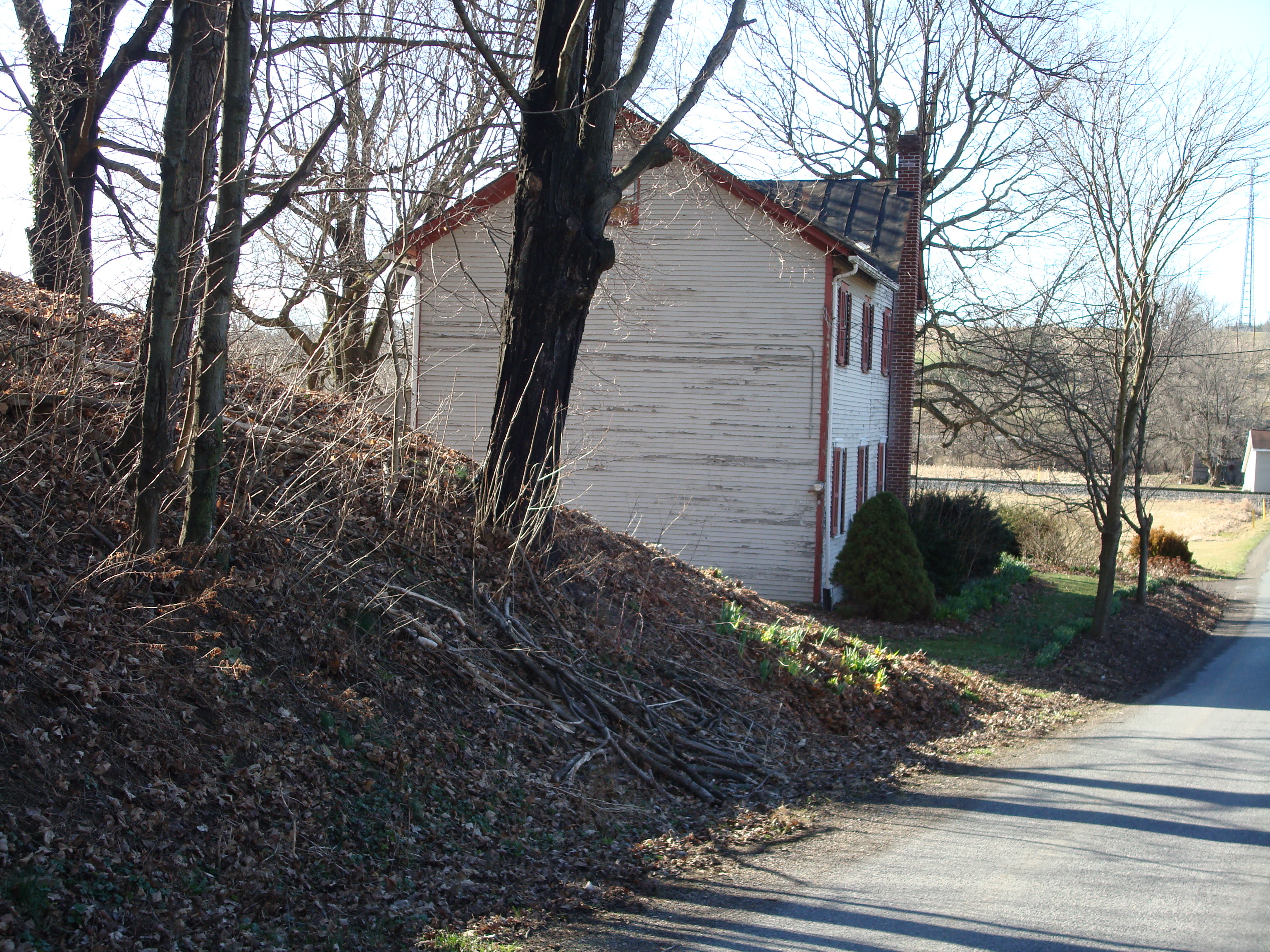
Recent photos of the Muffly farm. Whew, the freshly painted house and barn must have looked awesome in 1911.
Her middle-aged granddaughter’s comments 100 years later:
Ready-mixed paints became widely available in the late 1800s. The July 26 diary entry mentioned that the barn was being painted red—and now the house was being painted.
16-year-old Helena Muffly wrote exactly 100 years ago today:
Friday, August 11, 1911: It is impossible to write anything for today that will prove itself interesting, so I won’t try.
Her middle-aged granddaughter’s comments 100 years later:
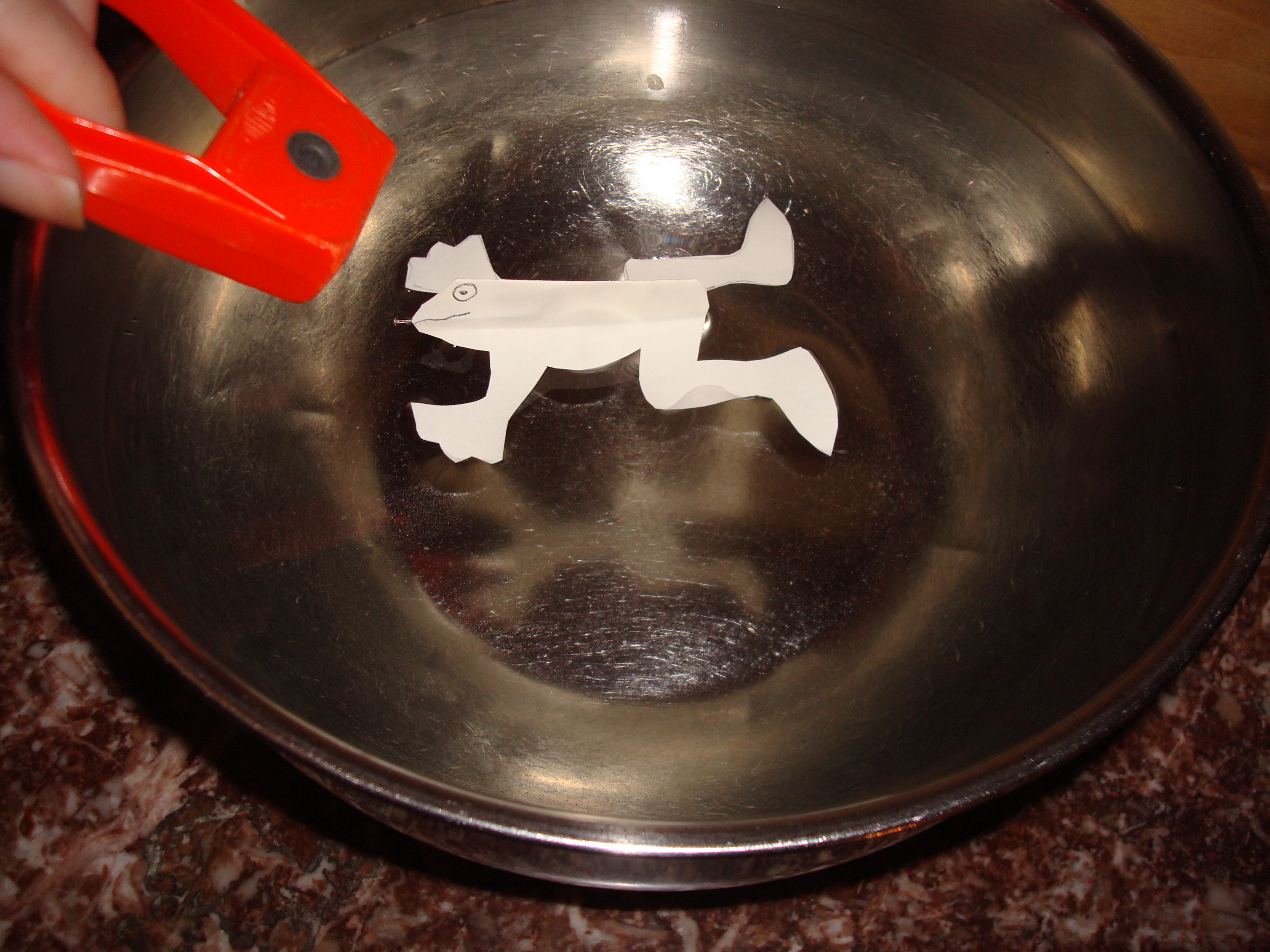
Use a magnet to make the frog swim.
In 1911 Grandma’s little brother Jimmie was 6-years-old. She seldom mentions him in the diary. On quiet summer days I wonder if she ever made crafts with him.
The July 1911 issue of Good Housekeeping magazine had directions for a paper frog that swims.
If you’d like to make the swimming frog, here are the adapted and abridged directions.
Supplies Needed
Heavy white paper
Pencil
Scissors
Small straight (sewing) pin
Paste or glue
Magnet
Thin white paper for tracing (optional)
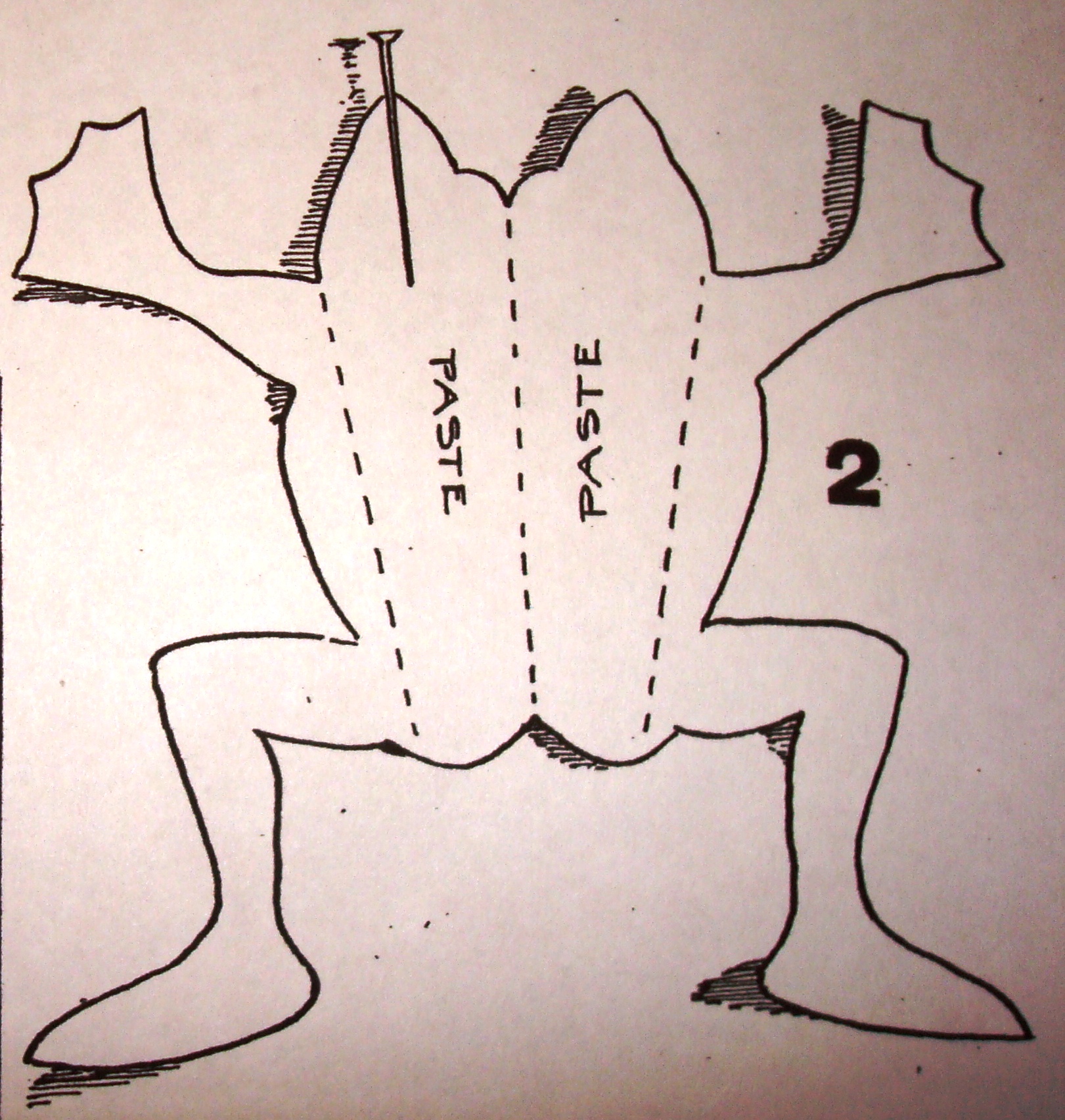
Click for the frog pattern. Print a copy of the pattern, and then cut it out.
Fold the heavy white paper in half. Fit the straight line of the frog’s back exactly on the fold of the paper. Trace around the pattern. Cut out both halves of the paper at once. Use a pencil to draw the frog’s mouth and eyes.
Bend out the legs and lower part of the body as indicated by the dotted lines.
Open the frog and lay him on his back. Cover the inside of the head and the inside of the body as far down as the dotted line with glue or paste. Then lay a pin on one-half of the head. Fold the two halves of the frog together and press. This will paste the pin inside with only the pin-head and a small part of the pin standing out from the frog’s mouth like a tongue. Now bend the legs out again, so they will lie flat on either side of the frog when you set him down on the table.
Source: Good Housekeeping (July, 1911)
After the paste or glue dries fill a bowl or pan with water, then set the frog down on top of the water. Hold the magnet near the pin in the frog’s mouth.
Hold the magnet just far enough away from the frog to keep him from jumping. He will follow the magnet in any direction you want.
When you take the frog out of the water, set it on a piece of clean paper and press the feet flat. When it is dry it will be as good as new.
P.S.—Previous posts with old-time paper crafts have been very popular. If you haven’t already seen them you may want to check them out:
16-year-old Helena Muffly wrote exactly 100 years ago today:
Thursday, August 10, 1911: Trotted after the cows this morning and did some sewing this afternoon. Don’t like to sew very well, but must when no one else will for me.
Her middle-aged granddaughter’s comments 100 years later:
The cows must have somehow managed to escape from the pasture AGAIN. This is the fifth time during summer 1911 that Grandma mentioned chasing cows. Only two days previously she wrote about a rebellious heifer in the orchard.
I wonder how many cows the Muffly family had. A hundred years ago farms were more diversified than they are today. Most farms had only a few cows, a couple of pigs, some chickens, some ducks, and maybe a few sheep. (Whew, it’s starting to sound like Old McDonald’s Farm).
I’d guess that Grandma’s family only had 4 or 5 milking cows—plus a couple heifers and calves—but that’s only a guess. Many farm families sold butter, so they probably had a cream separator that separated the skim milk from the cream. The family would have fed much of the skim milk to calves and pigs—and the butter that the family didn’t use would have been sold.
Cream Separator (Source: Wikimedia Commons)Advertisement in June 30, 1911 issue of Farm Implement Magazine
16-year-old Helena Muffly wrote exactly 100 years ago today:
Wednesday, August 9, 1911: Today is passing and my opportunity for writing anything about it is passing with it. It is not necessary to jot down the happenings of every occurrence.
Her middle-aged granddaughter’s comments 100 years later:
Since Grandma didn’t write much a hundred years ago today, I’ll tell you about some statistics I found on the Center for Disease Control website. I’ve often heard that people live longer now than they used to, and I wondered how much longer they lived.
In 1911 the life expectancy at birth for females was 53 years; for males it was 50 years.
Grandma was born in 1895. I don’t have data for people born in 1895, but assume that the life expectancy was even lower then than in 1911. Grandma lived longer than average. She died in 1981 when she was 85-years-old.
Since more children died shortly after birth a hundred years ago than today, I thought that might affect the birth life expectancies. So I also checked the life expectancy at age 60.In 1911 a 60-year-old female could expect to live 15 more years; a male could expect to live 14 more years. In 2011 a 60-year-old female can expect to live 24 more years and a male can expect to live 21 more years. (For those who care–The 2011 numbers are for the most recent available year. The Center for Disease Control has not yet released the 2011 life expectancy tables, so those estimates may go up or down slightly after they becomes available.)
16-year-old Helena Muffly wrote exactly 100 years ago today:
Tuesday, August 8, 1911: Went over to see Carrie on an errand, but came back in about fifteen minutes as I had a rebellious heifer to keep out of the orchard.
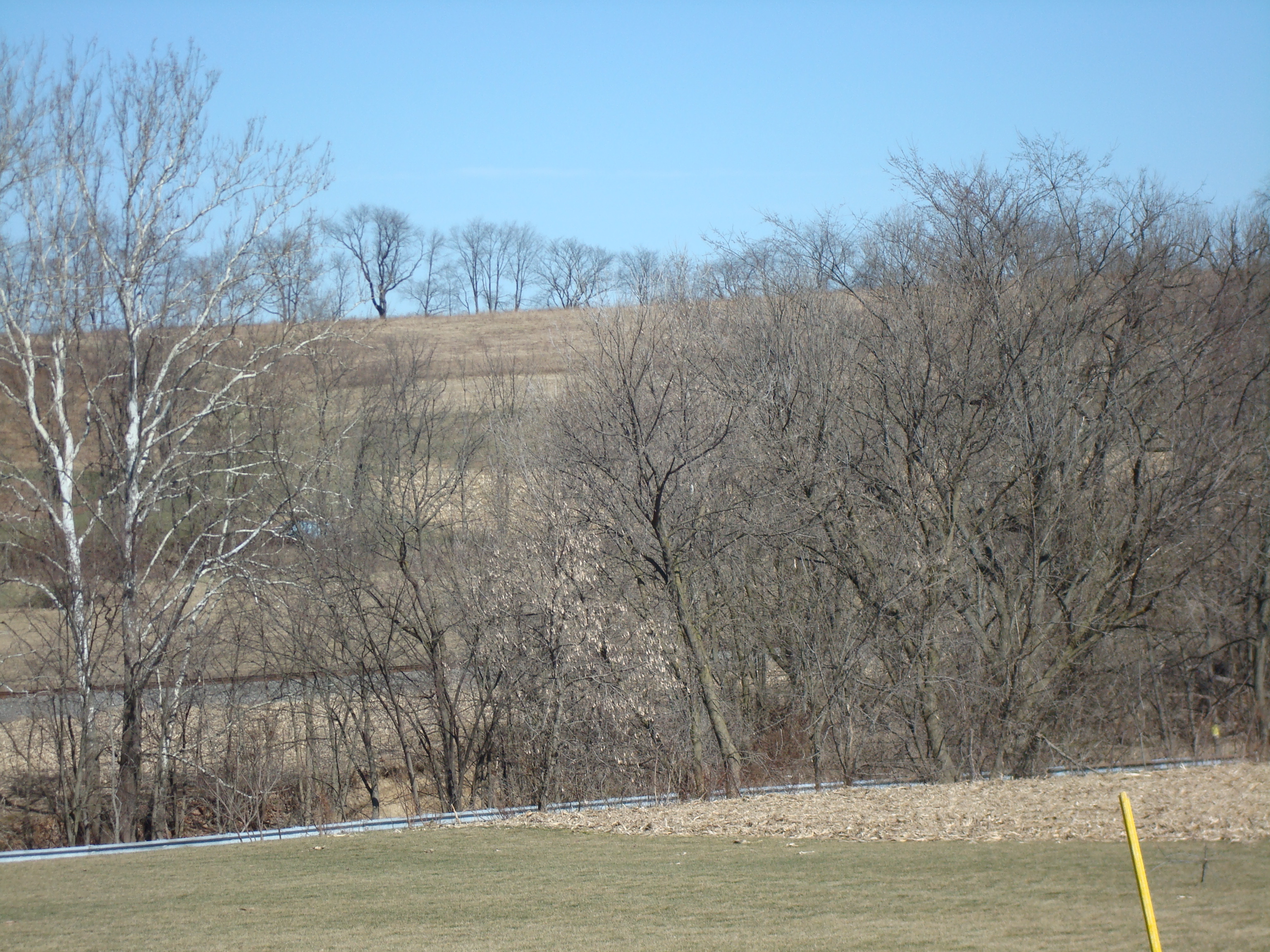
Recent distant view of the Muffly fields from the road near her friend Carrie Stout's home. (I wonder where the orchard once was.) Today it would be impossible to see the Muffly fields once the leaves are on the trees--but maybe it was more open back then.
Her middle-aged granddaughter’s comments 100 years later:
The Muffly family seemed to have a lot of problems with the cows getting into places where they weren’t supposed to be. Twice during the summer of 1911 Grandma wrote about cows getting into the corn (July 10 and July 25), and on May 26 she wrote “I’m through watching cows for the present time—at least. That was my duty for one wk.”
I continue to think that the family would have used barbed wire to fence the pasture but maybe they didn’t. And, even if there were fences maybe the cows were able to escape (cows can be very adept at finding holes in fences).
16-year-old Helena Muffly wrote exactly 100 years ago today:
Monday, August 7, 1911: I wound up my driving this afternoon, and I’m not sorry either. Carrie was over this evening. We did some planning for that picnic, which we wish to have some time next week if we can.
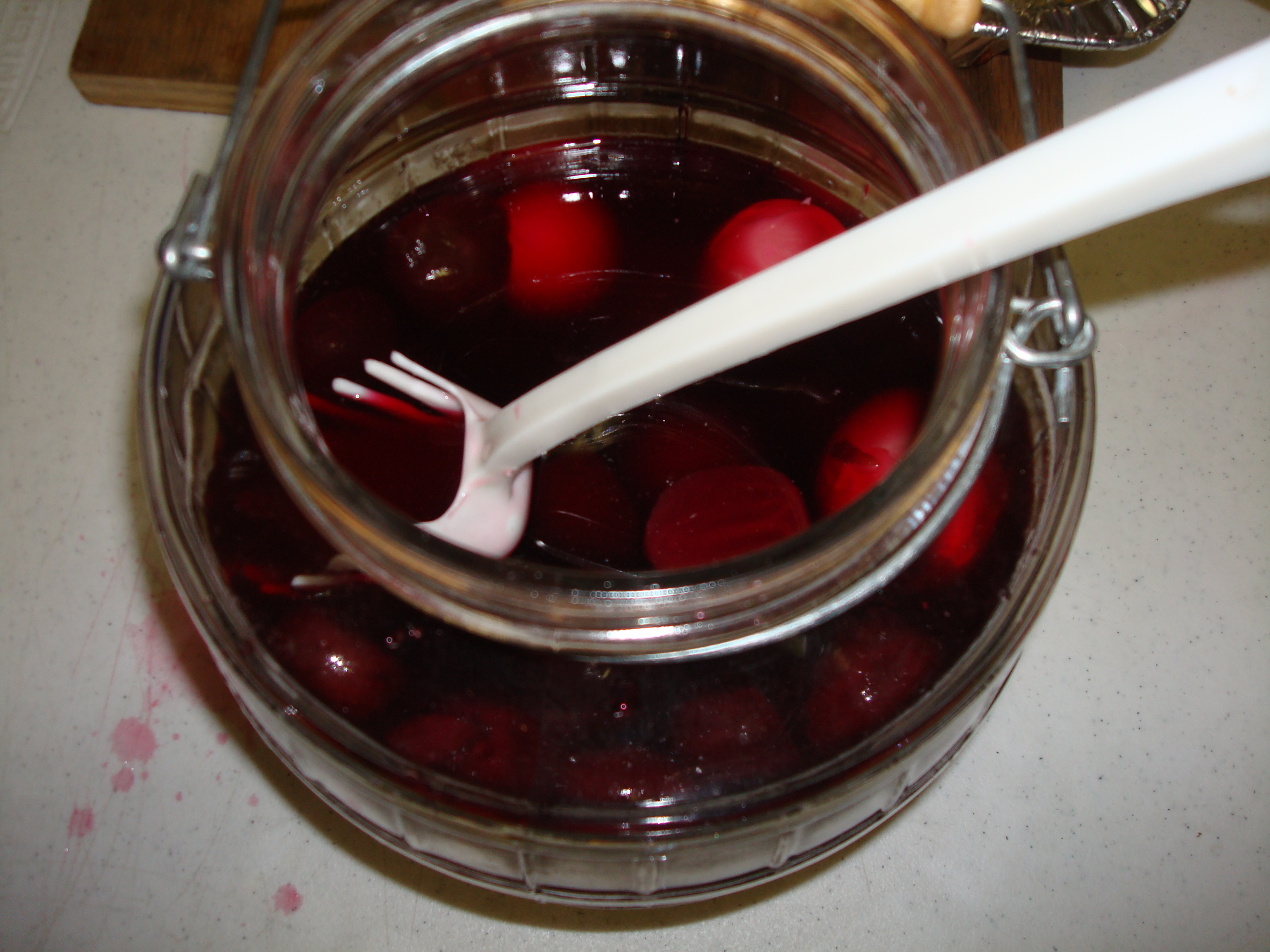
Pickled Beets and Eggs at the 2011 McEwensville Community Picnic
Her middle-aged granddaughter’s comments 100 years later:
Grandma began driving horses five days ago. As discussed in the August 2 entry, she probably was operating a horse-drawn roller that leveled the plowed ground in preparation for planting winter wheat.
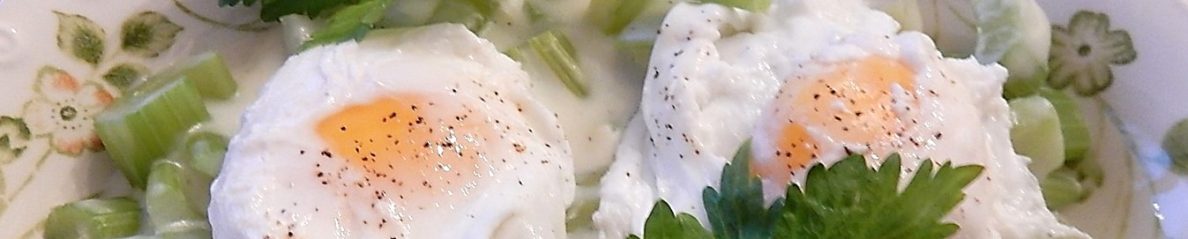
As Grandma planned for the picnic, she may have thought about foods that she could take. Beets are in season, so a hundred years ago Grandma may have thought about taking Pickled Beets and Eggs to the upcoming picnic. Here’s an old recipe that I use to make pickled beets and eggs.
Pickled Beets and Eggs
2 cups apple cider vinegar
1 cup reserved beet water from cooking beets
1 1/3 cup sugar
1 piece stick cinnamon
2 cups cooked beets, sliced (leave beets whole if small)*
12 hard-cooked eggs, peeled
Combine vinegar, beet water, sugar, and piece of stick cinnamon in a large saucepan. Bring to a boil. Stir until sugar is dissolved then remove from heat.
Put sliced beets and hard-boiled eggs in a glass jar or other container. Pour cooked liquid over the beets and eggs. Chill overnight to marinate. (For darker eggs, chill for several days before serving.).
*Peel beets before cooking (or canned beets may be used–though that’s probably less authentic).
16-year-old Helena Muffly wrote exactly 100 years ago today:
Sunday, August 6, 1911: Went to Sunday school this morning. Carrie and I took a short stroll this afternoon. We had intended to take a longer one, but we decided that it would be too hot. We talked about getting up a picnic, and the thought may be carried into execution. Who knows.
Her middle-aged granddaughter’s comments 100 years later:
Grandma mentioned the hot weather several times during Summer 1911. The other times I could find articles in old newspapers which confirmed that the weather had been very hot on that date. But I can’t find anything in 1911 newspapers about unusually hot weather on August 6. Maybe the sun just felt really hot to Grandma and her friend Carrie Stout even though the temperature wasn’t particularly high.
In the process of looking for the weather in the August 6, 1911 issue of the New York Times I noticed an article that began:
Narrower Skirts Next Autumn—So Says Rumor, but No One Has an Idea What the Arbiters of Fashion Will Decree
Rumor is rife these days. It is said that skirts are to be narrower than ever in the Autumn; that all waists are to be excessively short; that divided skirts will be the rule . . . .
New York Times, August 6, 1911
Hmm—I’ve heard a rumor that the arbitrators of fashion are saying that narrower skirts are in for this upcoming autumn.
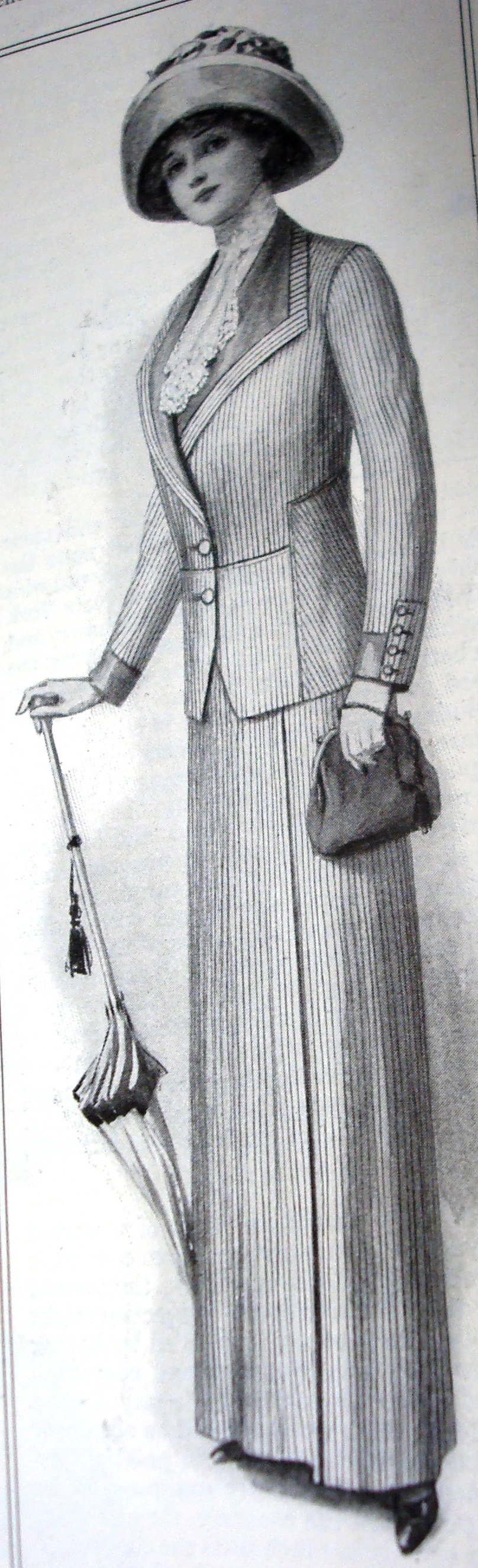
When I read the New York Times article, I remembered that I’d seen these drawings of a type of narrow skirt–the trouser skirt–in the June, 1911 issue of Ladies Home Journal.