Old-time Directions for King of France Game

16-year-old Helena Muffly wrote exactly 100 years ago today: 

Tuesday, September 5, 1911: Started to school this morning. Jimmie started also. The teacher we have at present is a substitute, so that will be something like starting in twice when our real teacher comes back.

Recent photo of building the once housed McEwensville School.

Her middle-aged granddaughter’s comments 100 years later:

Both Grandma and her little brother Jimmie attended the school at McEwensville.  Grades 1 through 8 were on the first floor of the building. Jimmie was starting first grade. There was no kindergarten, so this was Jimmie’s very first day ever as a student.

The high school was on the second floor of the building. It was a 3-year high school and Grandma was starting the 2nd year of high school.

Maybe Jimmie’s teacher had the students play some games.  According to a book published in 1911 called Social Plays: Games, Marches, Old Folk Dances and Rhythmic Movements:

Games and plays have an important educational value. The sense perceptions are quickened, the motor powers are strengthened, powers of volition, inhibition, and accuracy are gained through them. By their agency is acquired a balanced power of will, the love of fair play, and a sense of true moral . . .

Here are the directions in the 1911 book about how to play The King of France:

The King of France

The King of France with forty thousand men

Marched up the hill and then marched down again.

The players stand in two rows facing each other, each row having a leader, which is the king leading his army. The players imitate the motion given by the kings, who take turns at singing the verse, at the same time marching forward at the first line of the verse and back to t their places during the second line, imitating the motion that is to be taken by all. The verse is then sung by both groups, advancing toward each other and retreating.

Social Plays: Games, Marches, Old Folk Dances and Rhythmic Movements (1911)

Ruth’s First Day as a Teacher

16-year-old Helena Muffly wrote exactly 100 years ago today: 

Monday, September 4, 1911: Ruth’s school started today, so I had to hustle around and help Ma with the work. Mine doesn’t start until tomorrow. I’m so glad of that. Am getting nervous already.

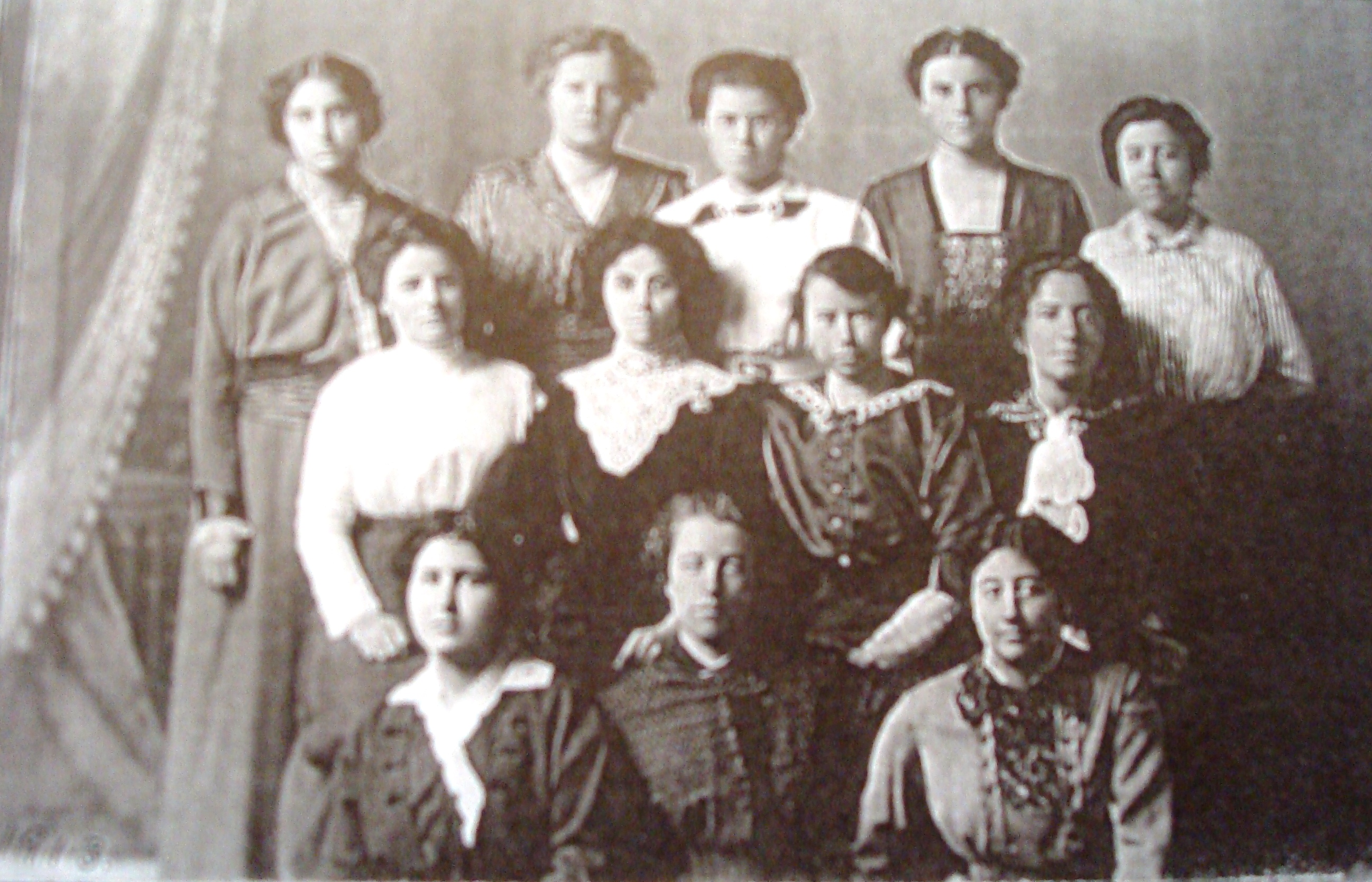
Photo of Ruth at a 1913 teachers' meeting in Sunbury. She is the first person on the left in the second row. She's wearing a white blouse.*

Her middle-aged granddaughter’s comments 100 years later:

Whew, what an exciting (and probably slightly scary) day for Grandma’s sister Ruth. It was her first day as a teacher.

Ruth graduated from high school in April 1911—and was hired as a teacher in late June. Teachers weren’t required to have college degrees in 1911—they just needed to pass a test.

(See the  June 30 post for a discussion of the requirements for teachers in 1911.)

I haven’t been able to figure out which school Ruth taught at during the 1911-12 school year, but it must have been one of the one-room school houses near McEwensville. There would have been students in grades 1-8.

I wonder if Ruth worried about behavior management. Ruth would have been 18-years-old, and some of her students were probably just a few years younger than her.

She would have had no one to back her up if she had problems. Even today behavior management is supposedly the biggest concern of first year teachers.

Differentiating instruction for a wide range of students is challenging. And Ruth would have had little or no training in pedagogy. It’s hard to picture how she had the skills needed to teach—totally without support—in a multi-grade setting.

An aside– I’m not sure why Ruth’s school didn’t observe Labor Day. According to Wikipedia Labor Day has been a federal holiday since 1894.

*The photo is from the History of McEwensville Schools by Thomas Kramm (used with permission). Two of Ruth and Grandma’s friends were also teachers and are in this picture. Rachel Oakes is in the middle of the first row, and Blanche Bryson is on the right in the first row. This photo suggests that teachers did receive a little professional development at occasional meetings held in Sunbury which is the county seat of Northumberland County.

Sunday: A Day to Visit Family and Friends

16-year-old Helena Muffly wrote exactly 100 years ago today: 

Sunday, September 3, 1911: Went to Sunday school this morning. No one was here this afternoon. We went up to Oakes a little while. Ruth and I were on our way to church when we learned there wasn’t any.

Recent photo of the Muffly house and the road they would have walked down to visit the Oakes. The road would have been dirt in those days.

Her middle-aged granddaughter’s comments 100 years later:

It sounds like neighbors commonly visited with one another on Sunday afternoons. Since no one came to visit the Muffly family, they went to visit their neighbors, the Oakes.

In 1911 people did not work on Sundays. Farmers worked very hard all week—but Sunday was a day of rest. On Sundays the animals were fed and the cows milked—but all other farm work waited until Monday.

And, a hundred years ago stores were not open on Sundays.

So Sundays were a quiet, relaxing day to spend with family and friends.

Church Service Times

I still can’t figure out exactly what determined the times of church services and Sunday School. Sometimes they were held in the morning—other times in the afternoon.

I continue to think that the Baptist church in McEwensville was part of a parish and that the minister served several churches. The services probably rotated between more and less desired times. Probably church was canceled because the minister was unable to make it to McEwenville that day.

Previously I’d thought that if the church services were in the afternoon that  Sunday School also was held in the afternoon—and if services were in the morning than Sunday School was in the morning.

But this entry makes it sound as if Sunday School was held in the morning even if church was in the afternoon—though maybe the last sentence in the diary entry about Grandma and her sister Ruth being on their way to church referred back to the morning.

(See previous post for further discussion of church times.)

Old-Fashioned Apple Sauce Recipe

16-year-old Helena Muffly wrote exactly 100 years ago today: 

Saturday, September 2, 1911: Had to pick apples today. Almost a whole wagon load it was. Was rather hard on my hands for they were just about as sore as I cared to have them by the time I got through with the dreaded thing.Her middle-aged granddaughter’s comments 100 years later:

Whew, a wagon load is a lot of apples. Early varieties aren’t generally very good for long-term storage. Maybe they made cider or sold some of them.  Perhaps Grandma used a few of the apples to made apple sauce.

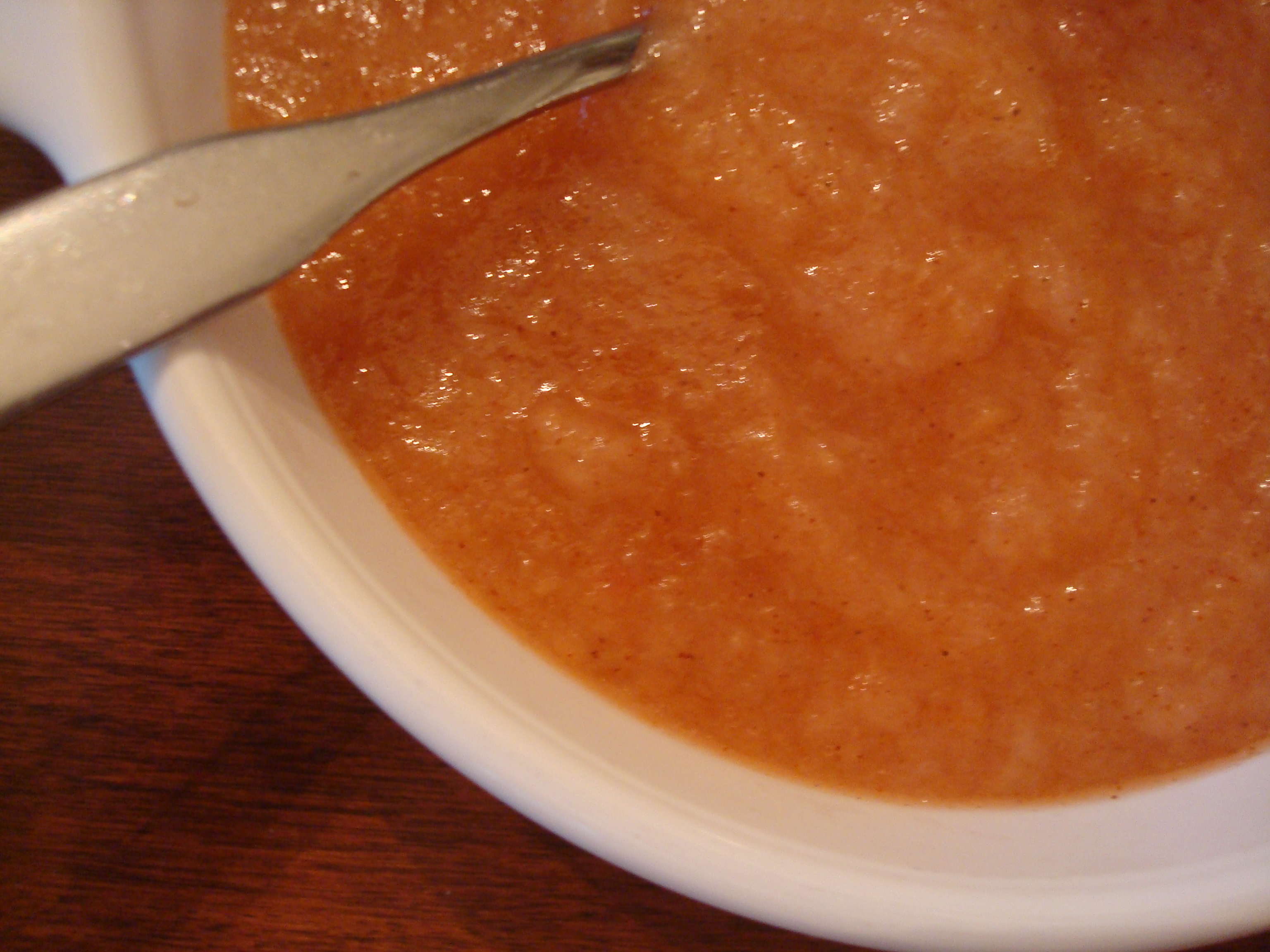
Here’s how I make apple sauce:

Apple Sauce

Cut any bad sections from the apples, then quarter and core. Do not peel (The peels of red-skinned apples give the sauce a nice pinkish color).

Place the quartered apples in a medium sauce pan. Use as many apples as needed to fill pan about two-thirds full. Add a small amount of water to keep apples from scorching.Place on medium heat. Stir occasionally.  If needed, add additional water. Reduce heat after it begins to boil.  Cook until apples are soft and mushy (about 15 minutes).

Press the cooked apples through a sieve or strainer. I use a Foley Mill—though they would not have existed a hundred years ago. (Foley Mills were invented in 1933.)If desired, stir cinnamon and sugar into the sauce. For each cup of apple sauce, I usually use about 1/2 teaspoon cinnamon and (depending upon how tart the apples were) approximately 1/8 – 1/4 cup sugar. Chill and serve.

Exhausted! Started Fall Housecleaning

16-year-old Helena Muffly wrote exactly 100 years ago today: 

Friday, September 1, 1911:

Glorious skies of balmy September,

Tells us of approaching fall

With its leaves of varied colors,

And it’s flowers for large and small.

Celebrated the first day of this month by starting to clean house. We cleaned the sitting room today, and it was an all day job. I’m so tired from exerting myself.

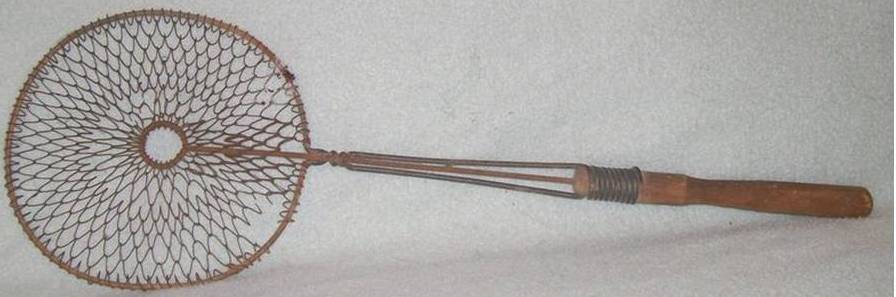
Old Carpet Beater

Her middle-aged granddaughter’s comments 100 years later:

Yuck—it sounds like a lot of work. Grandma, her sister Ruth, and her mother were probably starting to do the fall housecleaning.  A hundred years ago houses got a deep cleaning twice a year—in the spring and in the fall.

Furniture would be moved so that carpets could be rolled up and then taken outside to be beaten, every corner and cranny would have been swept, floors would have  been waxed, the wooden furniture would have  been polished, the windows washed, etc., etc., etc.

No wonder Grandma was exhausted. Just making this list is making me tired.

(See  previous post for more information about the poems on the first day of each month.)

Old Recipe for Pear Fritters

16-year-old Helena Muffly wrote exactly 100 years ago today: 

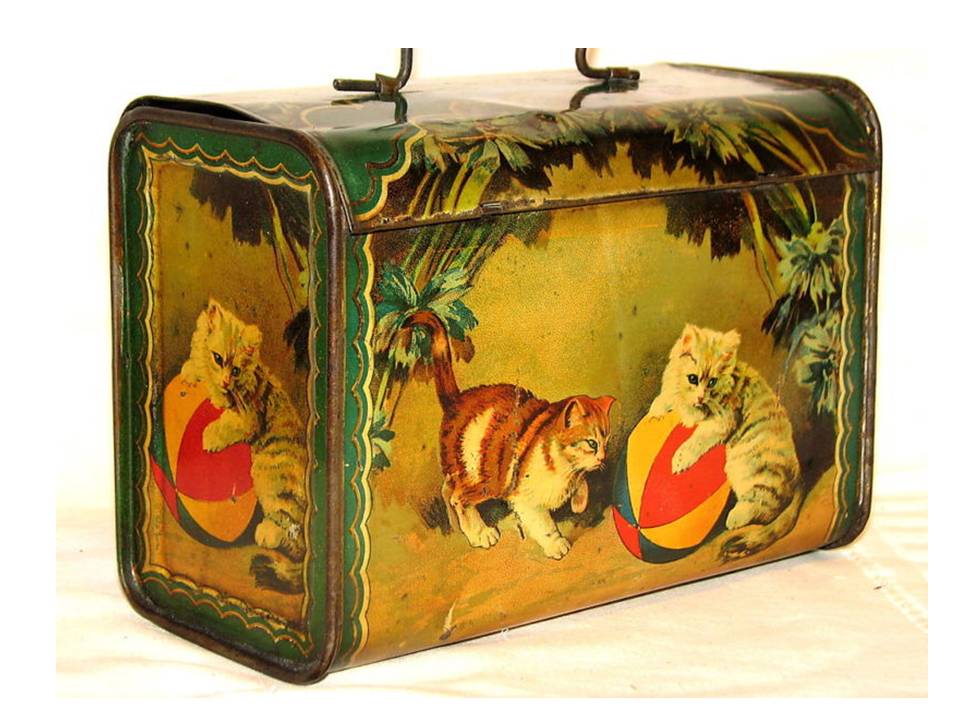
Thursday, August 31, 1911: Went to town this afternoon. Had to get a lunch box. Helped pick the pears. Harriet Seibert was here awhile in the afternoon. She rode her old nag down instead of walking.

Old lunchbox from the early 1900s

Her middle-aged granddaughter’s comments 100 years later:

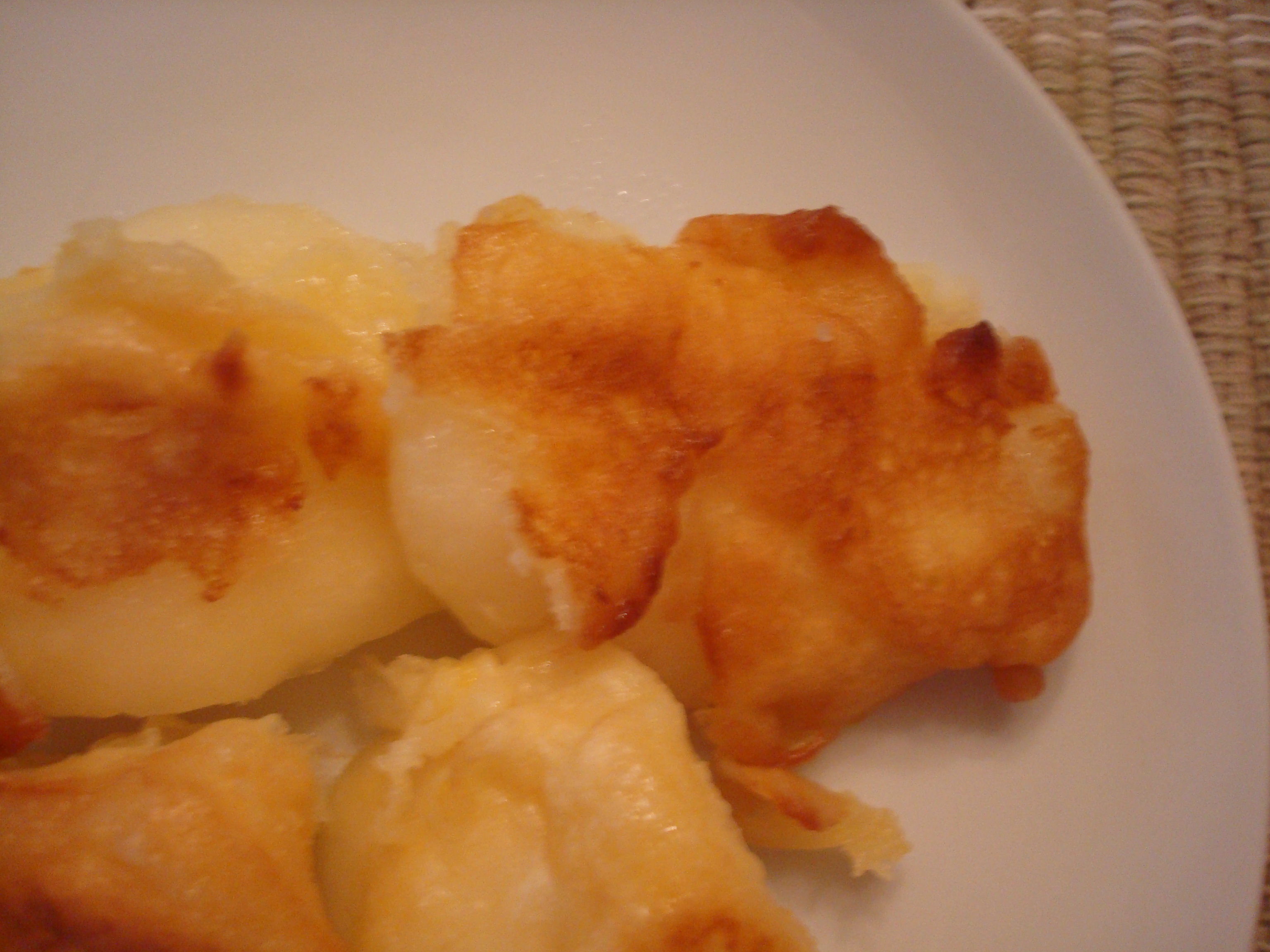
I wonder what the Muffly’s did with the pears. Maybe they made Pear Fritters. Fritters were popular a hundred years ago.  Here’s an old recipe:

Pear Fritters

4 pears

4 tablespoons lemon juice

4 tablespoons sugar plus 2 tablespoons sugar

1 cup flour

½ teaspoon salt

Grated rind of l lemon

2 eggs

½ cup milk

Shortening or lard for frying

Peel, quarter, and core pears.   Sprinkle with lemon juice and 4 tablespoons sugar. Let stand for 1 hour.

In a bowl beat together 2 tablespoons sugar, flour, salt, lemon rind, eggs, and milk. Dip prepared pear quarters in fritter batter. Fry in deep fat until golden. Drain on brown paper or paper towels.

Adapted from recipe in Lowney’s Cook Book (1907)

When I made this recipe I had some left-over batter. I could have coated additional pears–or maybe I should have made only half as much batter.

When frying the pears, flip them very gently. If I wasn’t careful, the batter had a tendency to slip off the pears.

My husband and I really enjoyed eating the pear fritters. We sprinkled a little powdered sugar on them–and they made a wonderful dessert.

Early Farm Management Cartoon

16-year-old Helena Muffly wrote exactly 100 years ago today: 

Wednesday, August 30, 1911: Really there isn’t very much for today, so I won’t write about any of the occurrences.

Her middle-aged granddaughter’s comments 100 years later:

Since not much happened a hundred years ago today, I’m going to share a cartoon I found in the July 15, 1911 issue of Kimball’s Dairy Farmer magazine.

Caption: What system and good management do for the dairy farmer.