Honey Popcorn Balls Recipe

16-year-old Helena Muffly wrote exactly 100 years ago today: 

Monday, January 29, 1912:  It is hard to study when you don’t feel like it. Don’t know what will become of myself if I don’t get aroused pretty soon.
Her middle-aged granddaughter’s comments 100 years later:

Perhaps Grandma made a snack while she was trying to motivate herself to study.

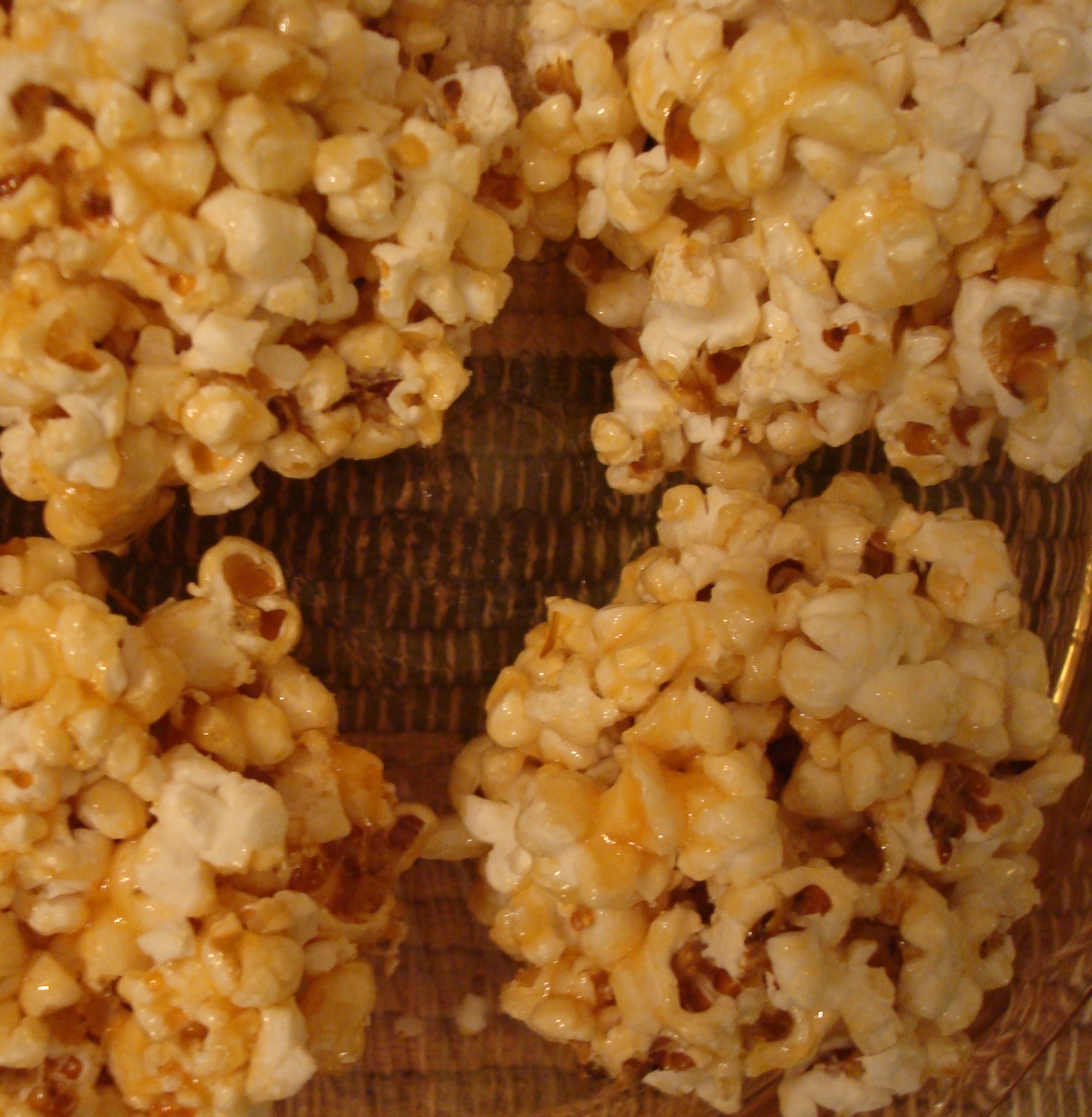
Popcorn was a very popular winter snack a hundred years ago. A few weeks ago I made old-fashioned Caramel Popcorn.  I enjoyed it so much, that I decided to make another old-time popcorn snack—Honey Popcorn Balls.

Honey Popcorn Balls

approximately 1 1/2 quarts popped popcorn

1/2 cup honey

1/2 cup sugar

1/3 cup water

2 tablespoons butter

1/4 teaspoon salt

Put popped corn in a large bowl and set aside. Cook honey, sugar, water, and butter to a medium-crack stage (280 degrees).  Remove from heat and stir in salt; pour over the corn and stir with a spoon to coat the kernels.

Grease hands with butter. Firmly press coated popcorn into balls.  Lay balls on waxed paper until cool. If the balls will be stored, wrap in waxed paper.

These popcorn balls have an awesome rich honey flavor. (They are nothing like the horrid, stale popcorn balls that I occasionally see in stores.)

I used some alfalfa honey that I got at an Amish market to make these balls—but any honey will work.  I love the flavor of the light alfalfa honey, but think it would also be fun to experiment and make them again with a darker honey.  Maybe next week. . . .
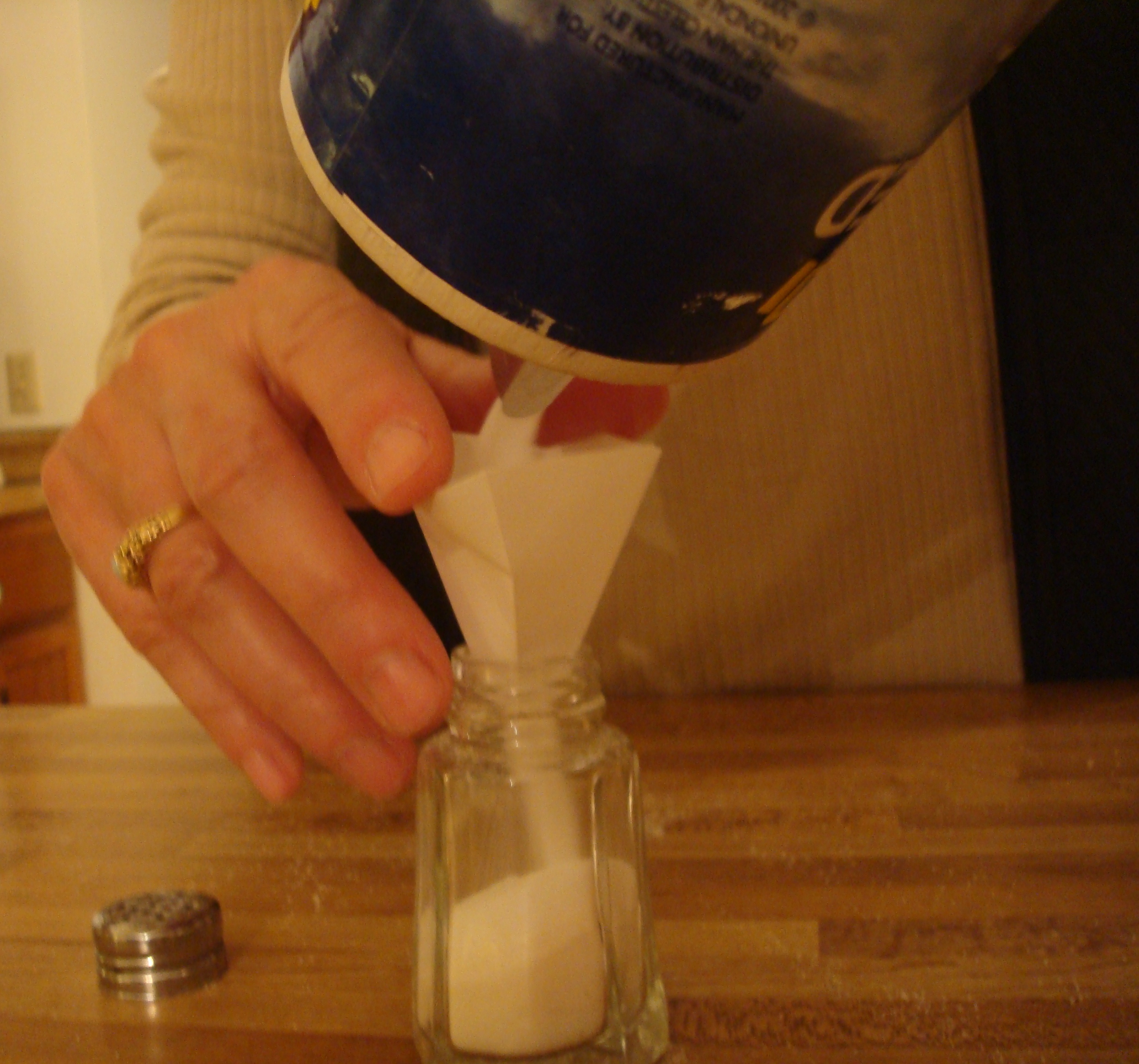
How to Make a Funnel From an Envelope

16-year-old Helena Muffly wrote exactly 100 years ago today:

Sunday, January 28, 1912: Went to Sunday School this afternoon. Worked several Algebra problems this evening though Ruth showed me how.

Her middle-aged granddaughter’s comments 100 years later:

The previous Thursday Grandma got a lecture from her teacher about cheating on tests, and she resolved to study harder. It sounds likes Grandma was really trying to understand her algebra problems.  She even asked her sister for help.

Since the diary entry is pretty self-explanatory, I’m going to go off on a tangent.

I love browsing through hundred-old-magazines. They often contain wonderfully old-fashioned (yet practical) household tips. For example,

A temporary funnel is quickly made from an ordinary envelope. Clip a corner off, funnel-shaped. Then clip the point and your funnel is ready to use.

Good Housekeeping (September, 1911)

Fixing Clothes to Make Them More Stylish

16-year-old Helena Muffly wrote exactly 100 years ago today: 

Saturday, January 27, 1912: Saturday is a busy day if so you choose to make it. I was busy all day. Sewed nearly all afternoon. I didn’t make anything, but fixed some of my clothes the way I wanted them. And I’m not going to study any this evening—lessons or no lessons.

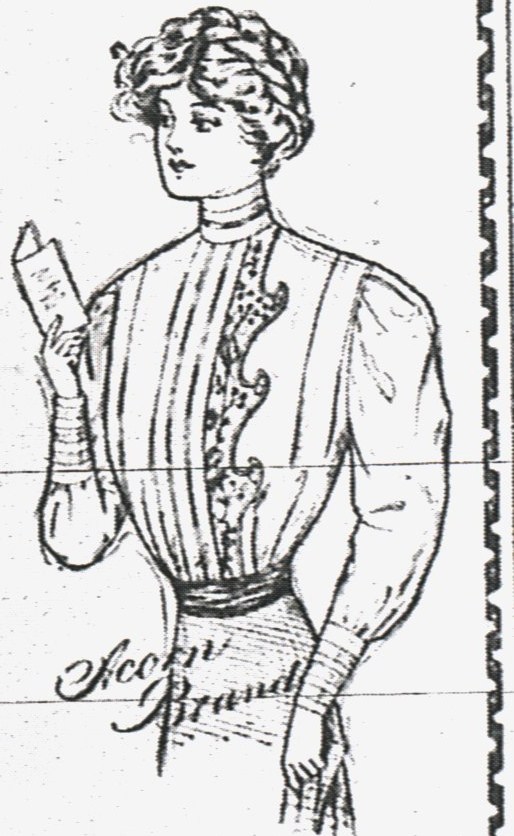
Waist (Source: Milton Evening Standard, Feb. 4, 1911)

Her middle-aged granddaughter’s comments 100 years later:

Today clothes have become almost throwaway items.  Styles seem to change ever more rapidly. The legs on my pants from last year are too wide; the skirts too long.

A hundred years ago people remodeled their clothes when styles changed. According to The Dressmaker (1911) by the Butterick Publishing Company:

In making over a waist it is sometimes necessary to use quite a little new material; but when chemisettes, yokes, and half-sleeves are in fashion it is an easy matter to supplement the old material with net, lace, chiffon, etc.

Sleeves and skirts frequently need to be recut. If piecing is necessary, see to it that the seams fall in places where they will not show or where they can be covered with trimming.

Remodeling a skirt is an easy matter if the new pattern is narrower than the old skirt. In that case it is only a question of recutting; but if the pattern calls for more material than you have in the skirt itself you will have to do some piecing.  Braided bands covering the skirt seams are an excellent way of increasing the width of a skirt.

Or you can raise the skirt at the waistline, refit it, and add to it at the bottom by a band or a fold. Or it may be pieced at the bottom and the line of piecing covered by wide braid, bias bands, etc.

Had a Little Fun–and Did a Little Studying

16-year-old Helena Muffly wrote exactly 100 years ago today: 

Friday, January 26, 1912:  Ruth and I went up to Oakes’ this evening. Wanted to stay at home and work my Algebra problems. Worked two after I came home. Ruth helped me with one. Must manage to the rest some other time.

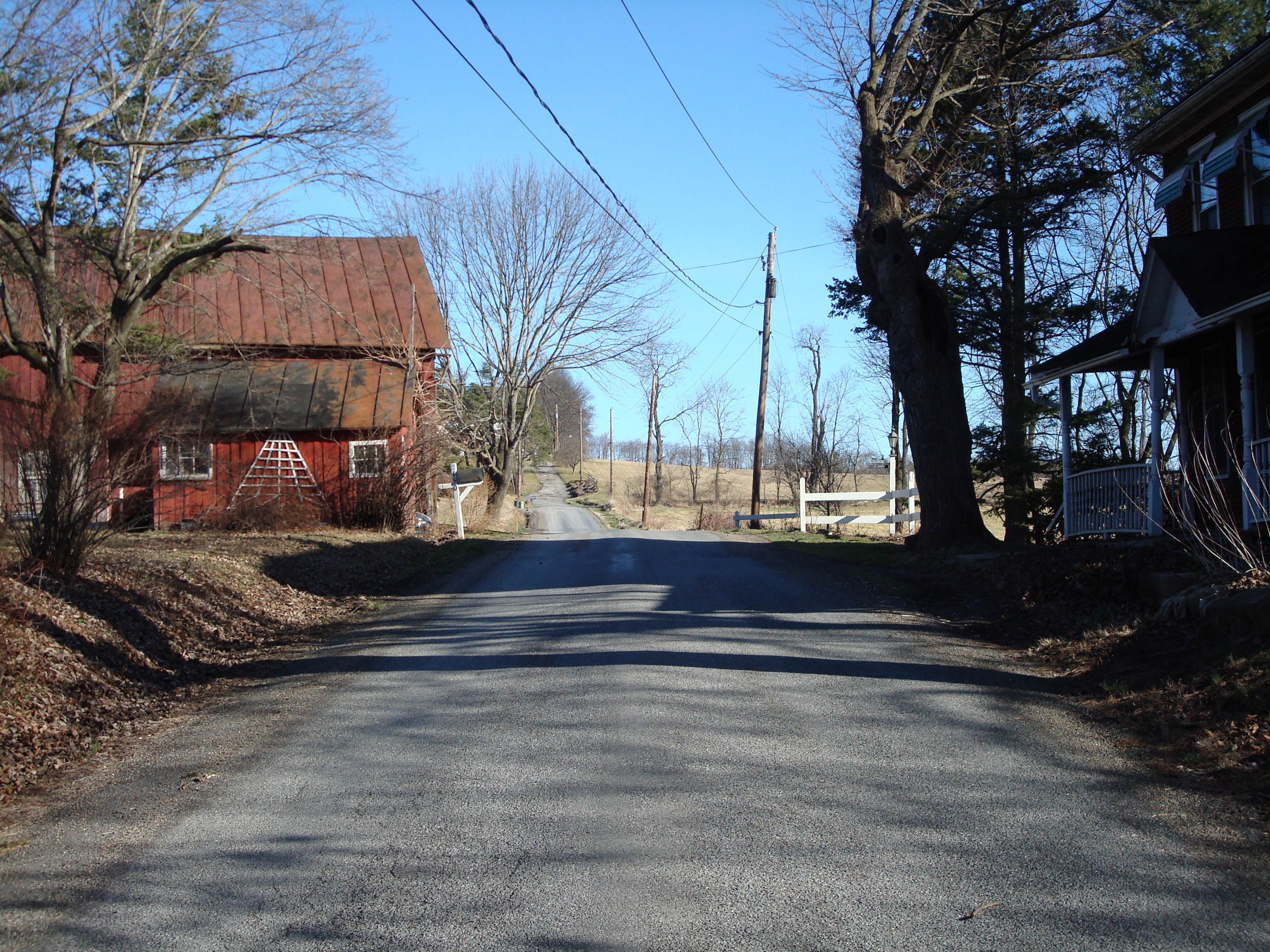
Grandma and Ruth would have walked down this road to get to Oakes.

Her middle-aged granddaughter’s comments 100 years later:

Grandma went to visit neighbors with her sister Ruth on a Friday night–though she also did  two algebra problems.

Hmm–has Grandma turned a new page?

In the diary entry that I posted yesterday Grandma wrote that she’d gotten a lecture from her teacher about cheating on tests. She said that she was going to:

. . . bid adieu to all ways of crookedness and get the things in my head instead of having them on paper.


Do Students Cheat More Now?

16-year-old Helena Muffly wrote exactly 100 years ago today: 

Thursday, January 25, 1912:  Gave my ear to a free-for-all lecture this afternoon. It was delivered by Mr. Teacher, the chief part of which was about cheating on examinations. I’ve been so worked up at this, although Conscience tells me not to.  Anyway I believe it is time to stop, and do better in the future. So now, I will try to bid adieu to all ways of crookedness and get the things in my head instead of having them on paper.

Recent photo of the building that once housed the McEwensville school.

Her middle-aged granddaughter’s comments 100 years later:

My grandmother cheating on tests!! . . . .Grandma, what were you thinking?

Sometimes it’s hard to interpret what Grandma wrote without judging her.  Grandma was 16 and about 40 years younger than me when she wrote this diary entry. I’m looking at this entry through the lens of a mother and I can’t completely wrap my head around why a teen would decide to cheat.

I want to think that the world was a simpler place a hundred years ago—and that students were less likely to cheat back then. But I’m not sure. This is the second time Grandma’s mentioned cheating in the diary.

On February 7, 1911 Grandma wrote:

Some of the boys at school found the teacher’s Latin questions in examination, and we all expect to make a good mark. I do at least, but I might be fooled as some cheats are.

And, the next day, her diary entry said:

Had some of our exams today. Came out all right in Latin. Our arithmetic wasn’t so easy though.

Got Up While Still Dark and Milked Cows

16-year-old Helena Muffly wrote exactly 100 years ago today: 

Wednesday, January 24, 1912: We had to vacate the school room while Jake swept at noon. Spent the time by taking exercise on the school ground. Ruth and I had sort of a fight this morning. I happened to have all the covers and couldn’t  get them back right, so I got up and went out to milk in the darkness.

After Grandma milked each cow, she probably poured the pail of milk into a can similar to this one. To read ad, click on it to make larger. (Source; Kimball's Dairy Farmer Magazine, December, 15, 1911)

Her middle-aged granddaughter’s comments 100 years later:

Jake was Grandma’s teacher. It always amazes me that she often referred to him by his first name in the diary.

Grandma and her sister Ruth shared a double bed—at least during the cold, winter months. They must have had some fight over the blankets if Grandma decided to get up early to milk the cows instead of staying in the warm bed as long as possible.

Comparison: 1912 and 2012 Algebra Textbooks

16-year-old Helena Muffly wrote exactly 100 years ago today: 

Tuesday, January 23, 1912:  Sleigh rides are a thing of the past now. There is no danger of freezing yourself now. I’m at a standstill in Algebra.

Her middle-aged granddaughter’s comments 100 years later:

Maybe Grandma was struggling in algebra because the textbook was confusing.

To get a sense of how algebra textbooks have changed over the past 100 years. I compared the promotional materials for an algebra textbook published in 2012 with the information in the preface of an algebra textbook published in 1912.

The Books

2012 Book

Beginning & Intermediate Algebra, (4th Edition) by John Tobey, Jr., Jeffrey Slater,  Jamie Blair, and Jennifer Crawford (Pearson)

1912 book

Durrell’s School Algebra by Fletcher Durrell (Charles E. Merrill Company)

Comparison

Of course the book published in 2012 is brightly colored with lots of pictures and figures (and there are numerous supplemental online resources). The 1912 book is black and white with only a few pictures.

The 1912 book looks denser than then new one. However, the chapter titles are similar. For example both books had a chapter called Factoring.

Purpose

2012:  “. . . builds essential skills one at a time by breaking the mathematics down into manageable pieces. This practical “building block” organization makes it easy for students to understand each topic and gain confidence as they move through each section.”

1912:  “The main object in writing this School Algebra has been to simplify principles and give them interest, by showing more plainly, if possible, than has been done heretofore, the practical or common-sense reason for each step or process.”

Problems

2012:  “Student Practice problems are paired with every example in the text . . .”

1912: “A large number of problems. . . .”

Review and Reinforce

2012:  “Students will find many opportunities to check and reinforce their understanding of concepts throughout the text . . .”

1912: “Numerous and thorough reviews of the portion of the Algebra already studied are also called for.”