Studying with the Light Going Out

16-year-old Helena Muffly wrote exactly 100 years ago today: 

Monday, March 17, 1912:  Am trying to get my lessons out tonight. This light of mine is going out and tis all I can do to see.

Photo source: Wikipedia

Her middle-aged granddaughter’s comments 100 years later:

Sometimes I’m surprised by the similarities between 1912 and 2012. Other times, I’m reminded of the differences . . .

It’s hard to imagine what it must have been like to study using light from a kerosene lamp.

St. Patrick’s Day, 1912 and 2012

16-year-old Helena Muffly wrote exactly 100 years ago today: 

Sunday, March 17, 1912:  Today is St. Patrick’s Day. I had some green on this morning. It was so nice out today. Just like spring. I was going away this afternoon, but didn’t go after all.

Her middle-aged granddaughter’s comments 100 years later:

Sometimes I’m surprised how similar some things are across the years.

The weather was  beautiful a hundred years ago–just like it is today.

Grandma wore green a hundred years ago– just like I’m wearing green today.

Happy St. Patrick’s Day!

Popular Children’s Book Series a Hundred Years Ago

16-year-old Helena Muffly wrote exactly 100 years ago today:

Saturday, March 16, 1912:  Ruth went to Milton this morning. I made an apron today. Started to read a book this evening. The sequel of which I read about three years ago.

Source: Wikipedia

Her middle-aged granddaughter’s comments 100 years later:

Hmm. . . what was Grandma reading?  She probably was reading adult books—but since she said that she’d read the other book in the series three years previously maybe they were children’s stories.

I don’t know which adult series were popular a hundred years ago—but I can think of several children’s series.

Little Women, Little Men and other books in the series by Louisa May Alcott are classics that have retained their appeal over the years. The series was published between 1868 and 1886.

The Bobbsey Twin series of adventure stories by Laura Lee Hope were published between 1904 and 1979. Laura Lee Hope is a pseudonym used by several different authors over the years.

The Elsie Dinsmore series by Martha Finley were published between 1967 and 1905. Elsie’s mother was dead, and Elsie faced many moral conflicts (and seemed to constantly feel guilty for one minor offense or another) as she grew up in her grandparent’s home.

An aside–Grandma WAS NOT reading the Nancy Drew series (first book published in 1930) , the Hardy Boys (first book published in 1927), or the Betsy and Tacy series (first book published in 1940).

The Creek is Out of Its Banks!

16-year-old Helena Muffly wrote exactly 100 years ago today: 

Friday, March 15, 1912:  It was out of the ordinary walking to school this morning. It rained so last night that my morning, water was plainly visible everywhere. It was about the same height tonight. I thought this morning I might not get to school after all.

Recent photo of Warrior Run Creek.

Her middle-aged granddaughter’s comments 100 years later:

Grandma needed to cross Warrior Run Creek to get to school.

It sounds like the creek had flooded and was out of its banks.  However, the water apparently had not covered the road and the bridge so Grandma could get to school.

Though not visible, the creek is in the valley in the center of this photo. Probably the field next to the railroad tracks and low lands were flooded a hundred years ago today.

Shift From Classical High Schools to Modern 4-Year Ones

16-year-old Helena Muffly wrote exactly 100 years ago today: 

Thursday, March 14, 1912: I wrote out the meaning of that wonderful poem today. I hope I have it as it should be. Am coming to some terrible hard propositions in geometry. The one we have for tomorrow seems so hard for me.

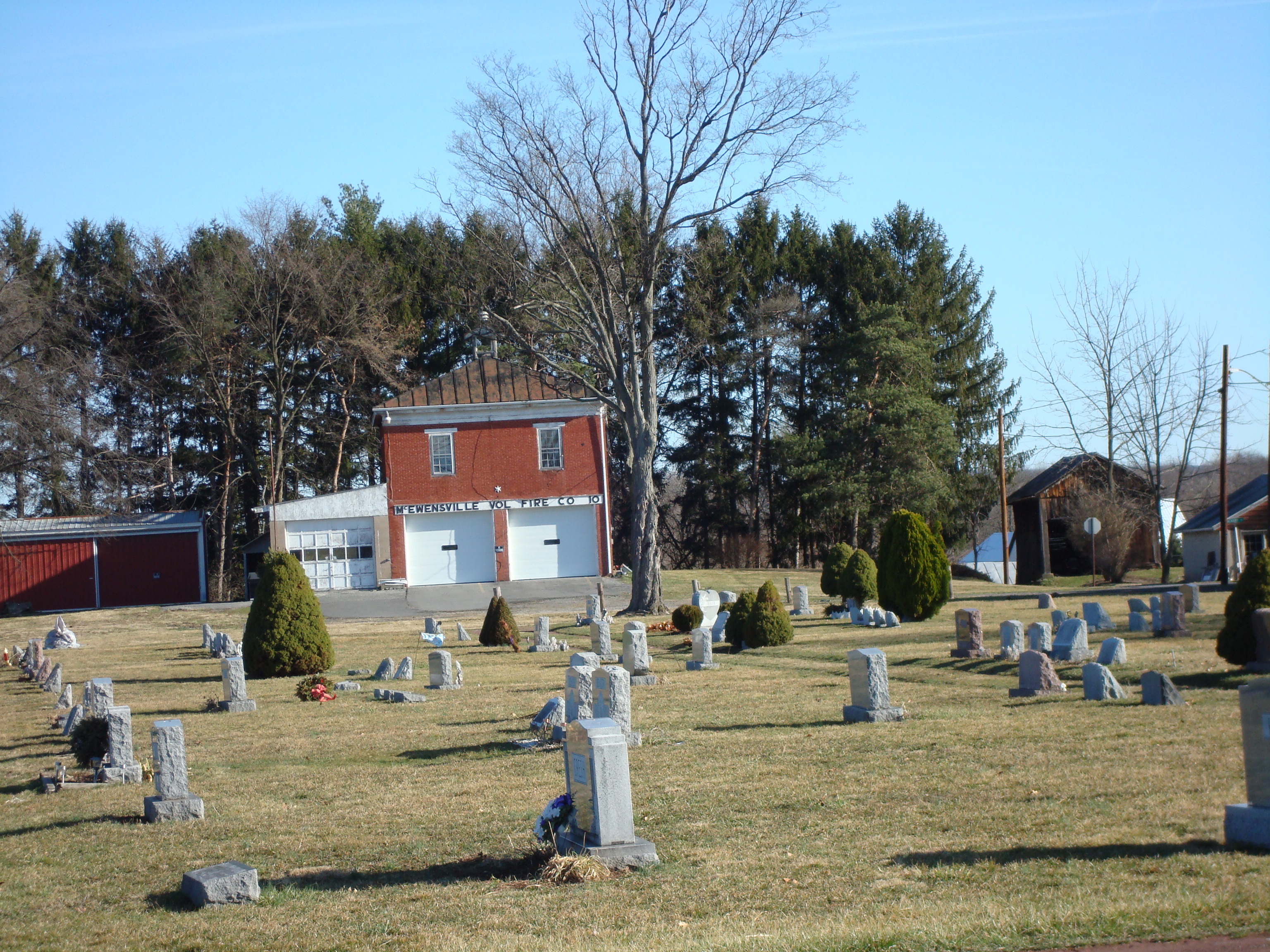
Recent photo of building that once housed McEwensville High School.

Her middle-aged granddaughter’s comments 100 years later:

Did Grandma’s high school courses prepare her for the life she lived?

Grandma attended McEwensville High School—a small classical 3- year high school.  She studied geometry (and Latin)—and literature. Grandma did not go to college—and never had a career.

In the early 1900’s there was a lot of discussion about whether a classical high school education met the needs of some students.

About five miles from McEwensville a modern high school was being built in Milton. There was a movement towards larger 4-year general high schools that offered a wider range of courses and different tracks (commercial, home economics, etc.).

Over the next few years, more students from McEwensville attended the more modern high school in Milton (as well as the high school in Watsontown). And, in 1921, McEwensville high school closed because of lack of students.

(The building continued to house an elementary school until 1958.)

Old-fashioned Potato Cakes

16-year-old Helena Muffly wrote exactly 100 years ago today: 

Wednesday, March 13, 1912:  Nothing of much account did I do today.
Her middle-aged granddaughter’s comments 100 years later:

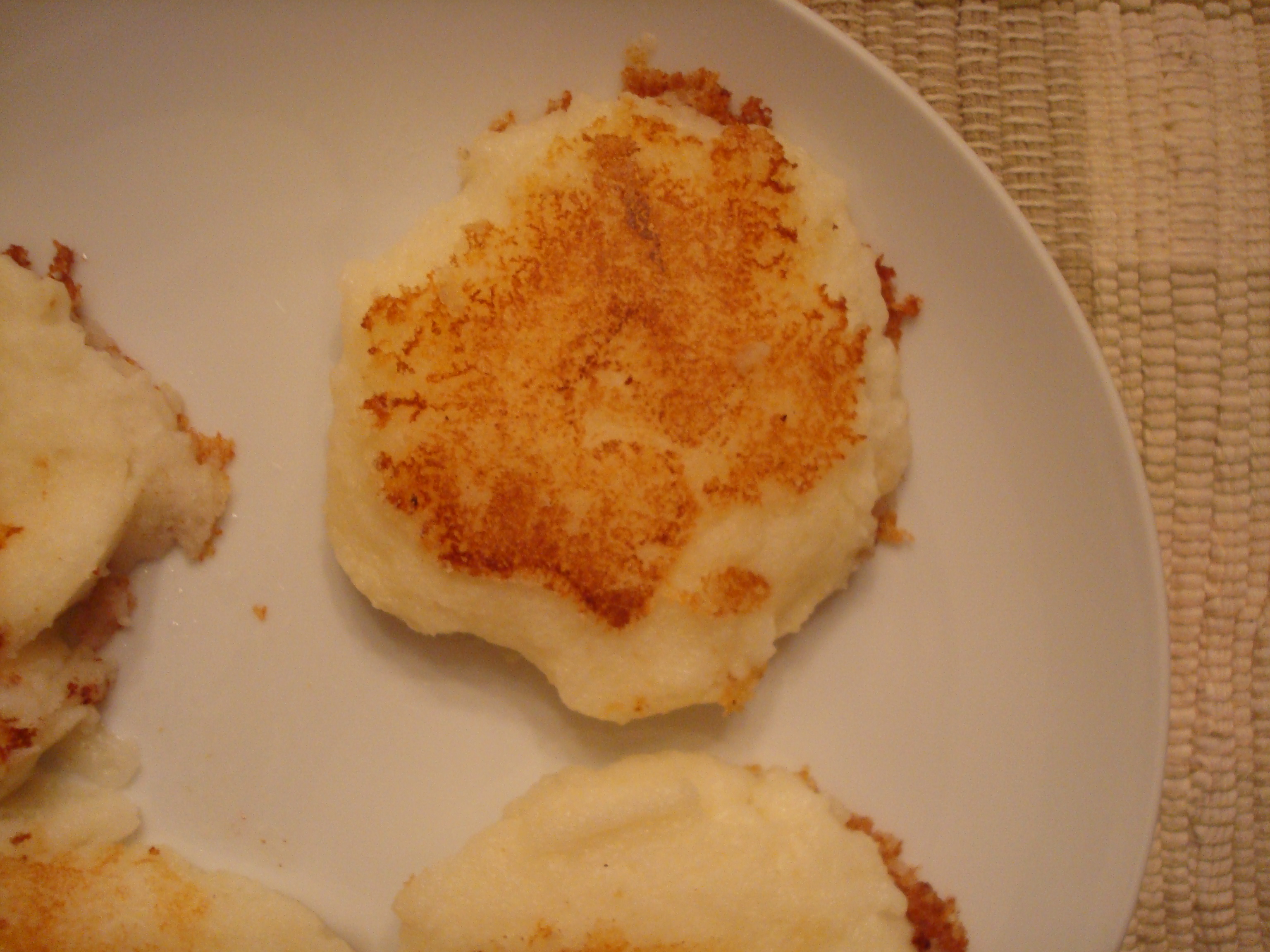
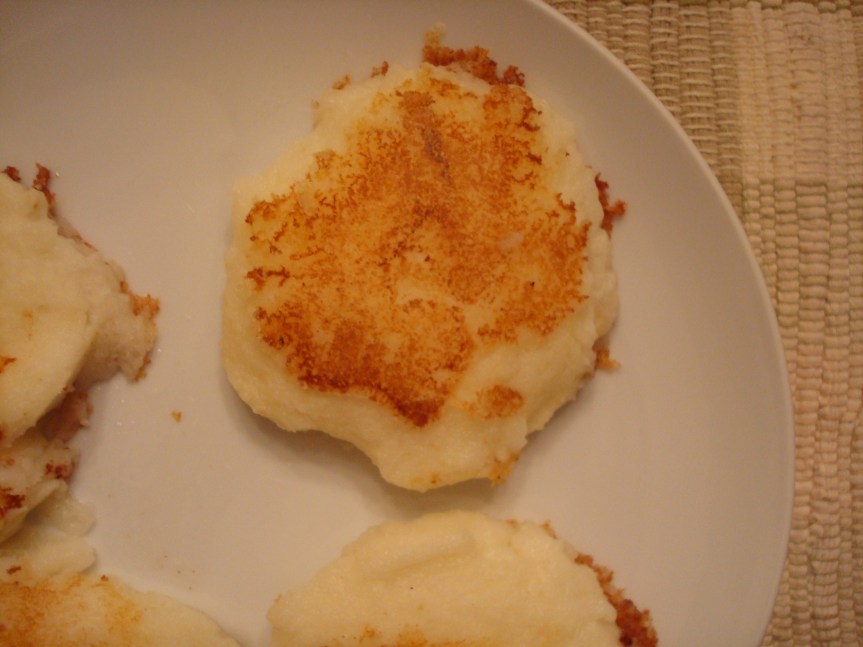
Since Grandma didn’t write much a hundred years ago today, I’m going to give you another old recipe. This one is for Potato Cakes, and it’s a great way to use left-over mashed potatoes.

When I was a child we frequently ate Potato Cakes. My memory is that they were a very traditional Pennsylvania food—and I can picture Grandma eating them when she was a teen.

I hadn’t made Potato Cakes in years until I decided to make them for this post. I don’t have a written recipe—but this is how I made them.

Old-Fashioned Potato Cakes

left-over mashed potatoes

shortening or lard

After the meal where the mashed potatoes were served, take the left-over potatoes, shape into flat patties and press firmly. Put on a plate, cover and refrigerate. Will keep for several days.

When ready to make the Potato Cakes, melt enough shortening in a heavy frying pan to cover the pan to a depth of about 1/8 inch. Slip the patties into the hot shortening. Fry until golden brown; flip and fry on the other side. Remove from pan and drain on paper towels. Serve immediately.

The amounts are very flexible. When I made the mashed potatoes, I made more than I typically would—and then I just used all of the left-over potatoes to make the potato cakes.

The Potato Cakes turned out great. My husband and I enjoyed eating them, and I’m planning to make them again in the near future.

Tramps in the Early 1900s

16-year-old Helena Muffly wrote exactly 100 years ago today: 

Sunday, March 3, 1912:  I don’t believe we are going to get our papers back. I wouldn’t mind knowing what some of my marks are. Perhaps not very satisfactory any way.

Source: Wikipedia

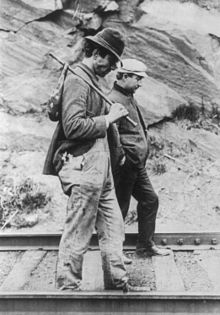
Had to walk home from school behind a tramp. I walked slow enough you can bet.

Her middle-aged granddaughter’s comments 100 years later:

Sounds a little scary—

A tramp walking down a rural road—and a a teen-aged girl needing to walk the same road  to get home from school.

Grandma would have walked down this road to get home from school. Probably each farm-house along the way represented a safe haven.

There were lots of tramps in US in the early 1900s. Many men found it very difficult to find jobs as the country industrialized. According to Wikipedia:

In 1906, Professor Layal Shafee, after an exhaustive study, put the number of tramps in America at 500,000 (about 0.6% of the U.S. population). The article citing this figure, What Tramps Cost the Nation, was published by The New York Telegraph in 1911 and estimated the number had surged to 700,000.