17-year-old Helena Muffly wrote exactly 100 years ago today:
Tuesday, January 21, 1913: Nothing to write.
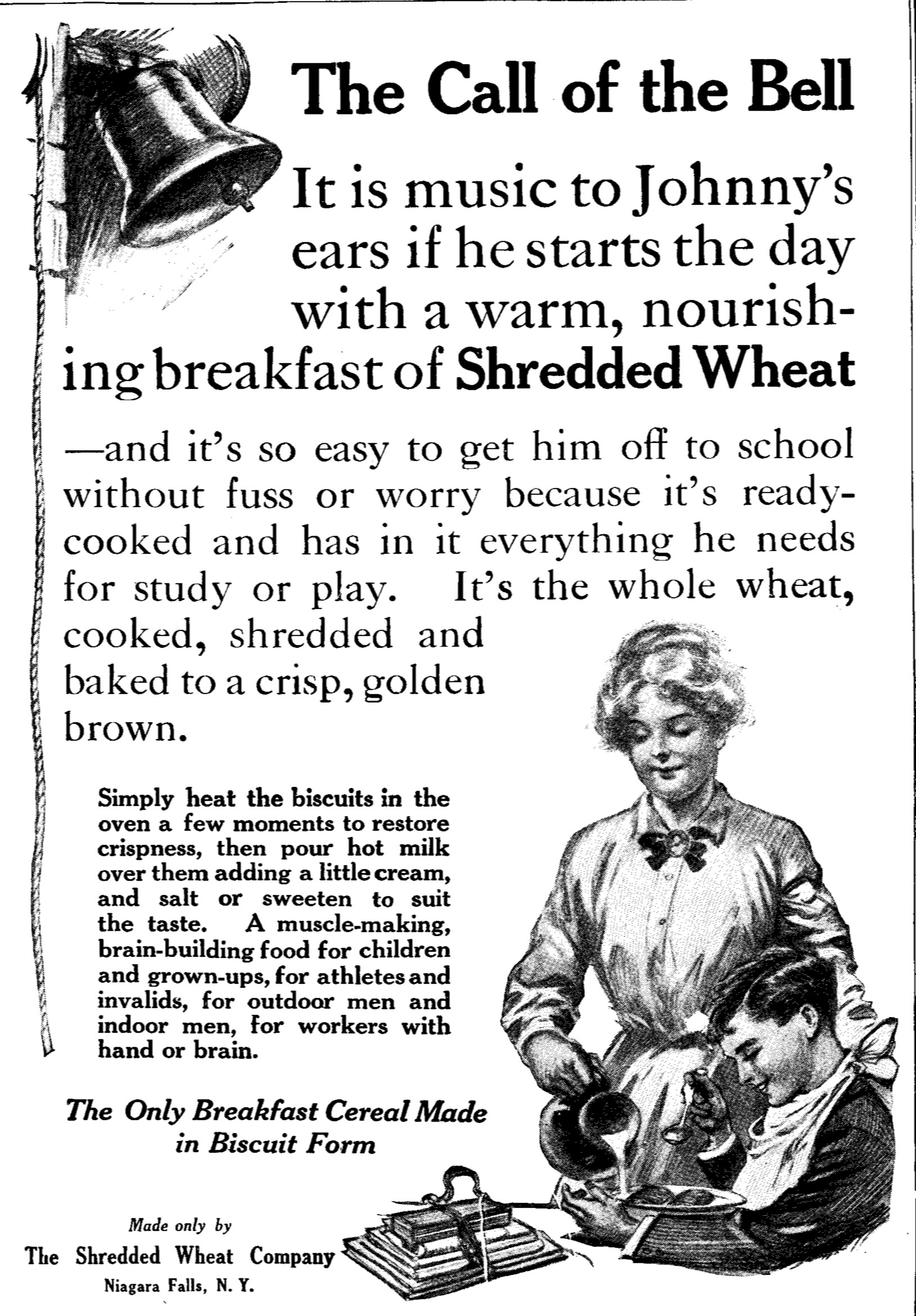
Source: National Food Magazine (January, 1913)
Advertisement Text:
The Call of the Bell
It is music to Johnny’s ears if he starts the day with a warm, nourishing breakfast of Shredded Wheat
–and it’s so easy to get him off to school without fuss or worry because it’s ready-cooked and has in it everything he needs for study or play. It’s the whole wheat, cooked, shredded and baked to a crisp, golden brown.
Simply heat the biscuits in the oven a few moments to restore crispness, then pour hot milk over them adding a little cream and salt, or sweeten to suit the taste. A muscle-making, brain,-building food for children and grown-ups, for athletes and invalids, for outdoor men and indoor men, for workers with hand or brain.
The Only Breakfast Cereal Made in Biscuit Form.
Made only by
The Shredded Wheat Company
Niagara Fall, N.Y.
Her middle-aged granddaughter’s comments 100 years later:
Since not much happened a hundred years ago today, I’ll share a 1913 advertisement I found for Shredded Wheat in National Food Magazine.
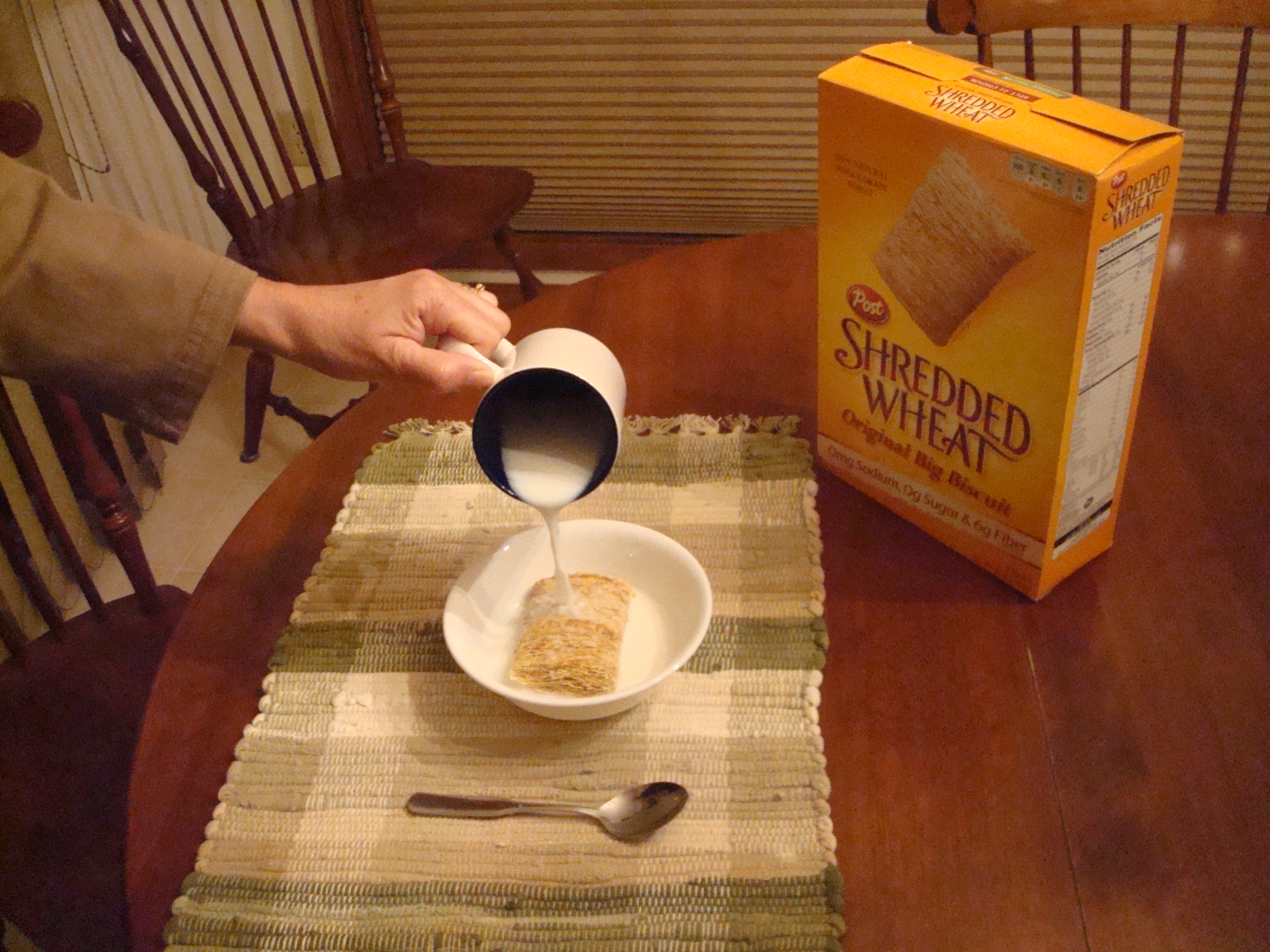
Back then you were supposed to heat the biscuits and then pour hot milk over them. Strange. . but I decided to try it.
The result—
I ended up with a hot, soft, mushy cereal. I had a difficult time getting past the texture—which was so very different from the crispiness of cold shredded wheat—but it warmed my tummy on a cold winter day.
17-year-old Helena Muffly wrote exactly 100 years ago today:
Monday, January 20, 1913: Our class expects to have a swell blow-out one of these days. We’re going to give a play. I am Chloe the negro servant. That was the part I really wanted.
Her middle-aged granddaughter’s comments 100 years later:
Hmm—I could go a lot of directions with this post, but I guess I’ll just leave it with this:
I’m glad Grandma got the part she wanted, but I wonder why she really wanted the role of Chloe. Was it a large part . . . or a relatively minor one? Did she think that it would be a challenging role . . . or an easy one?
17-year-old Helena Muffly wrote exactly 100 years ago today:
Sunday, January 19, 1913: A bright and beautiful dawn welcomed the approach of day. Ruth and I walked to Turbotville this morning to attend a family reunion. All of ‘em weren’t there. Had quite a pleasant time, but it would have been nicer if some more of the cousins had been there. We had our pictures taken out on the lawn. That walk home didn’t do me up, but I did get a terrific head-ache anyway.
Recent photos of the road between McEwesnville and Turbotille. This picture was taken at the point where the road leaves McEwesnville.
Her middle-aged granddaughter’s comments 100 years later:
Whew, it is probably about a five-mile walk—10 miles round trip– from the Muffly farm to Turbotville. Even on the nicest of days—in January or any other month– this sounds like a long, exhausting walk for Grandma and her sister Ruth.
This picture was taken midway between McEwensville and Turbotville.
Grandma’s maternal grandparents lived in Turbotville. Why didn’t Grandma’s mother go to the reunion to see her parents and siblings?
17-year-old Helena Muffly wrote exactly 100 years ago today:
Saturday, January 18, 1913: Fixed some of my clothes today. Didn’t do much work because I didn’t feel very energetic.
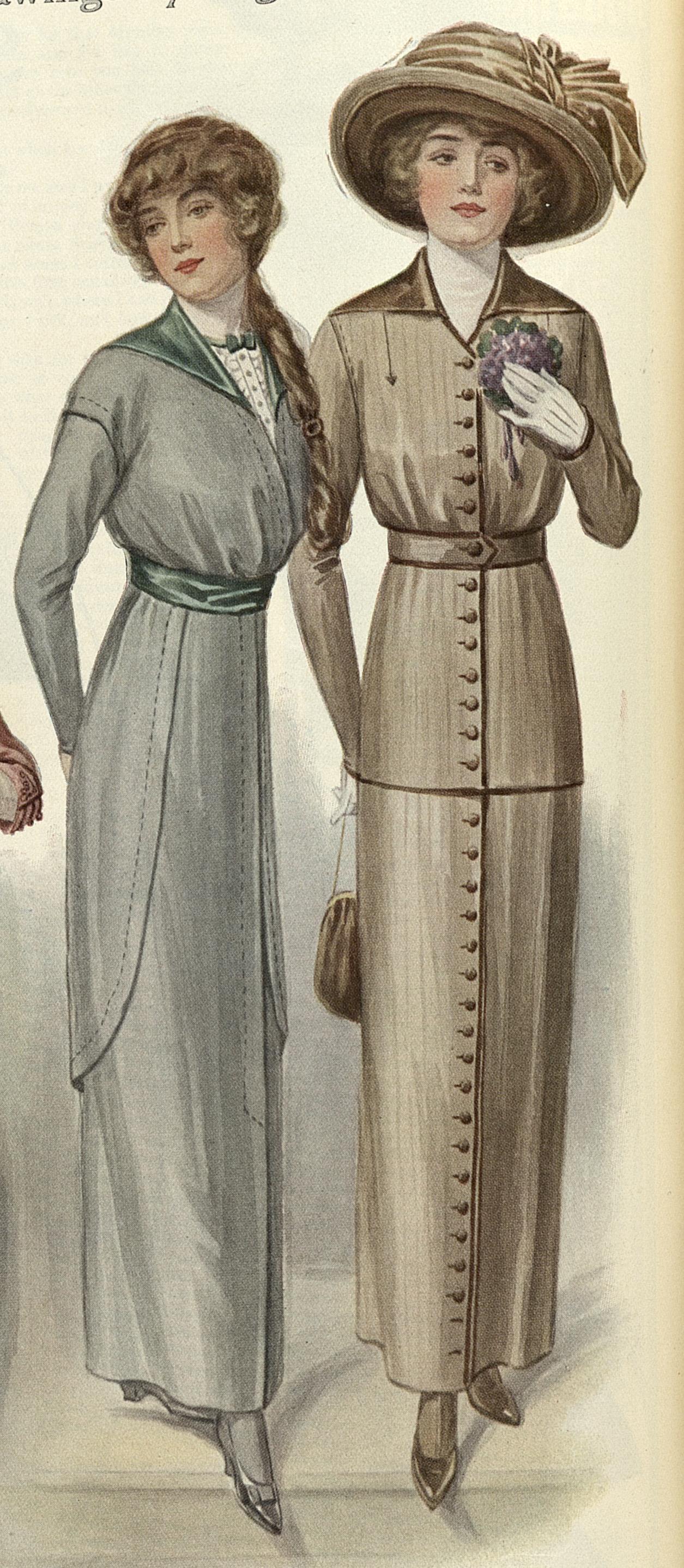
Source: Ladies Home Journal (March, 1913)
Her middle-aged granddaughter’s comments 100 years later:
I bet Grandma wasn’t very energetic fixing her clothes because she wished that she had new clothes. Did Grandma dream of having the outfits featured in Ladies Home Journal?
17-year-old Helena Muffly wrote exactly 100 years ago today:
Friday, January 17, 1913: We had patrons’ day at school this afternoon. Everything went off pretty good. We had quite a few visitors.
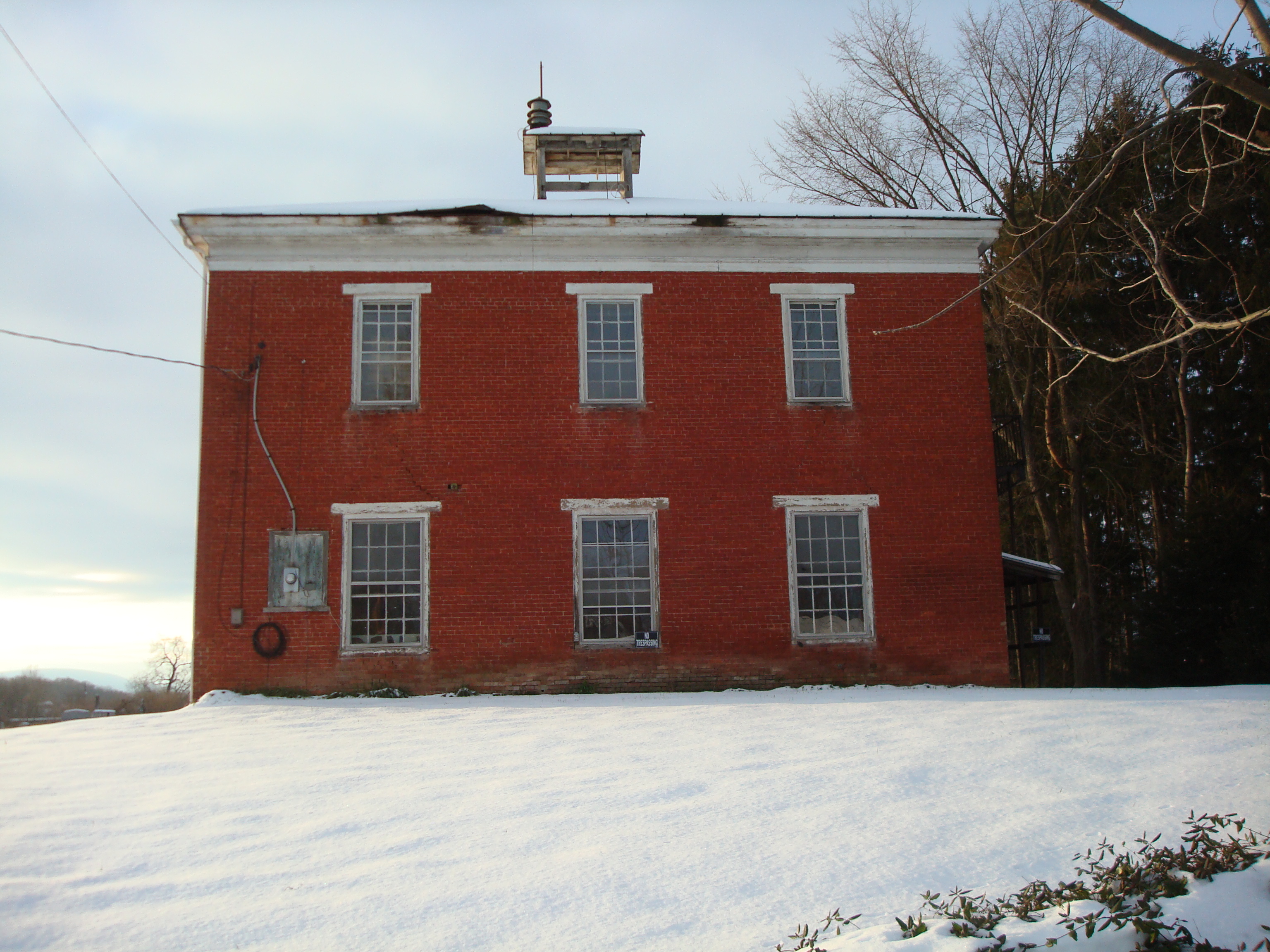
Recent photo of building that once housed McEwensville Schools.
Her middle-aged granddaughter’s comments 100 years later:
A patron is someone who provides financial support. In 1912, the McEwensville Schools were public schools, so I’m not exactly sure who attended Patron’s Day.
The school often had financial difficulty, so perhaps community members made donations to help ensure that the students got an adequate education.
Thomas Kramm in The History of the McEwensville Schools included highlights from the school board minutes. The 1913 highlight was:
04-13: The Board borrowed money from the Watsontown Bank.
Hopefully, the school’s patrons were very generous. . .
Related previous posts that you might enjoy include:
17-year-old Helena Muffly wrote exactly 100 years ago today:
Thursday, January 16, 1913:We had an examination in Geometry this morning. I think I will make a better mark than what I did the other time.
Source: Kimball’s Commercial Arithmetic (1911)
Her middle-aged granddaughter’s comments 100 years later:
What was the Geometry test about—proofs? . . . angles? . . . shapes? . . . capacities?
The directions for doing capacity problems in a hundred-year-old textbook (I think it was called volume by the time I was in school. Is capacity the same thing as volume?) seem very different from what I remember doing when I was a student:
The method of finding the contents of any regular vessel in gallons, bushels, barrels, etc. is called gauging.
The capacity of tanks, cisterns, etc. is usually expressed in gallons or barrels. In every liquid gallon there are 231 cu. in.
To find the exact number of gallons in any vessel, divide the number of cubic inches in the vessel by 231.
To find the number of gallons in a cylindrical vessel, multiply the square of the diameter by the height, and this product by 5 7/8.
To find the approximate number of gallons in a cistern, multiply the number of cubic feet by 7 1/2 and from the product, subtract 1/400 of the product.
The capacity of bins, etc. is usually expressed in bushels. The standard bushel in the United States is a measure 8 inches deep, 18 1/2 inches in diameter, and contains 2150.42 cubic inches. Hence, to find the number of bushels in any bin, divide the number of cubic inches in the bin by 2140.42.
Kimball’s Commercial Arithmetic (1911)
Got that? Want to try some problems?
Find the contents in gallons of a tank 4 ft. square and 5 ft. deep.
The water in a cistern 8 ft. square is 2 ft. deep, how many gallons does it contain?
A bin 8 ft. by 4 ft. by (?) contains 90 bushels of grain. Find the missing dimension.
How many tons of water will fill a tank 11 ft. 8 in. by 3 ft. 6 in. by 2 ft. 3 in., if the weight of a cubic foot of water is 1,000 ounces?
17-year-old Helena Muffly wrote exactly 100 years ago today:
Saturday, January 15, 1913: Don’t know hardly what to write today.
Source: Good Housekeeping (December, 1912)
Her middle-aged granddaughter’s comments 100 years later:
Since Grandma didn’t write much a hundred years ago today, I’m going to go off on a tangent.
Sometimes I read a magazine article from a hundred years ago—and I’m absolutely floored by how it could have been written in 2013 instead of so long ago
For example, I recently came across an article in the December 1912 issue of Good Housekeeping titled “The Food Value of a Peanut.” <<Yawn>>.
Then I read,
As a result of the growing popularity of vegetarianism, the demand for nuts is increasing.
Really? . . . There were vegetarians a hundred years ago?
And, I continued reading:
Another reason for the increasing demand for nuts, and more especially for peanuts, is their relative cheapness as sources of nourishment and energy. Even compared with such staple foods as bread and beans, peanuts supply protein and energy very cheaply.
Sounds about like today. Both then and now people worry about the high cost of food–though I don’t think that peanuts are particularly inexpensive now.