17-year-old Helena Muffly wrote exactly 100 years ago today:
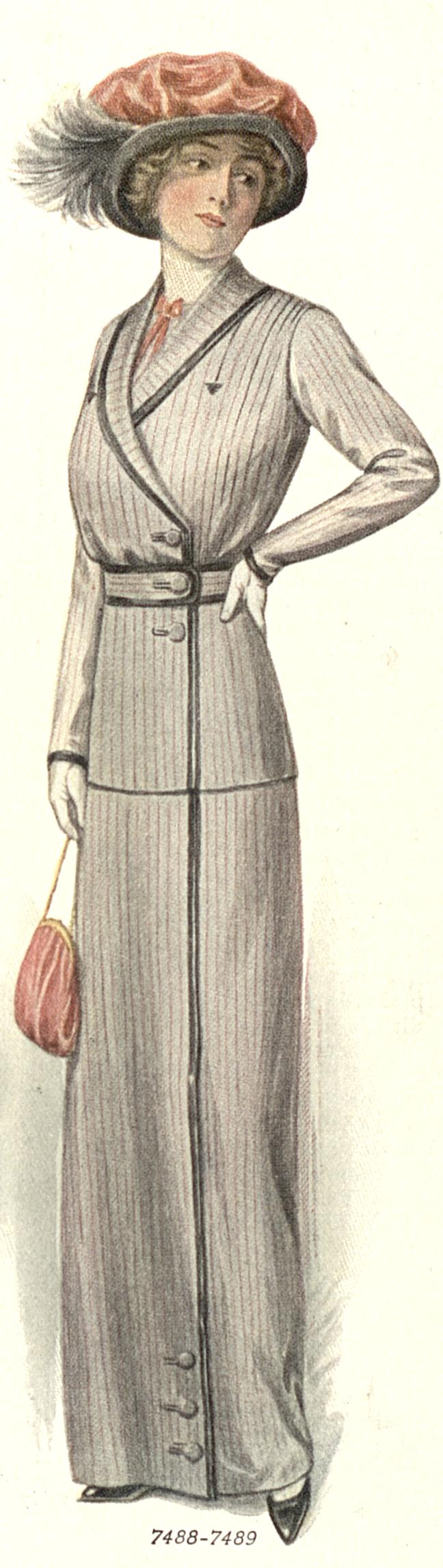
Sunday, February 23, 1913: Went to Sunday School this afternoon. Initiated my new suit by falling down. The wind blew my hat off and in racing after it, I fell when I went to pick it up.
Source: Ladies Home Journal (March, 1913)
Her middle-aged granddaughter’s comments 100 years later:
How embarrassing! Poor Grandma– I can almost picture a couple cute guys standing on a street corner in McEwensville laughing as Grandma chased after the hat and then fell.
The previous day Grandma wrote about buying the new gray suit in Milton.
17-year-old Helena Muffly wrote exactly 100 years ago today:
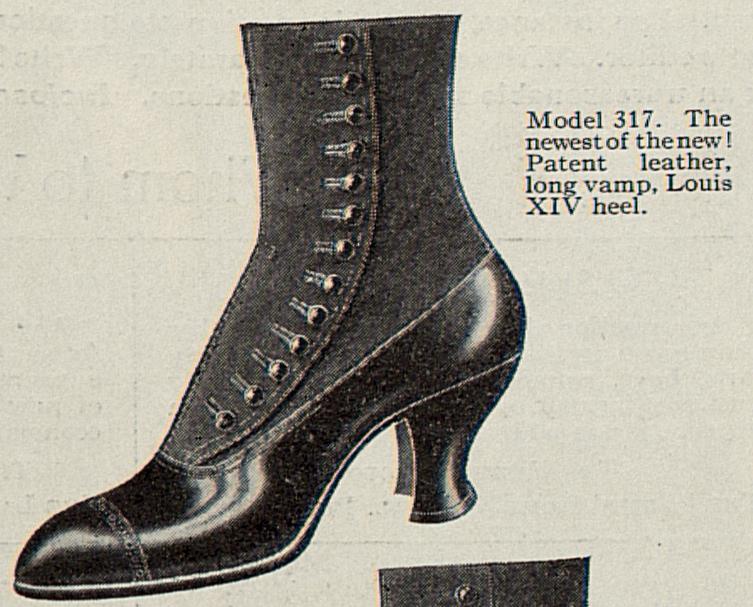
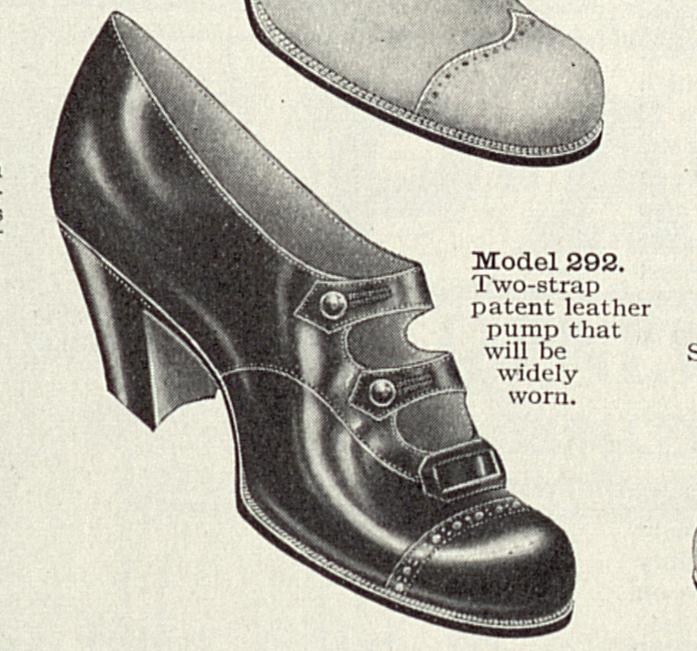
Saturday, February 22, 1913: Mother and I went on a shopping expedition this morning. I doubted whether we’d ever get to Milton. The train was late, and it looked rainy. Ma got me a gray jacket suit, two waists, one is silk, and a pair of shoes which I think I will keep for graduation.
All shoes from a Red Cross Shoe advertisements in Ladies Home Journal (April, 1913, October, 1913)
Her middle-aged granddaughter’s comments 100 years later:
It sounds like a fun shopping expedition. The shoes must have been very special if Grandma planned to save them for graduation.
Grandma and her mother probably rode the Susquehanna, Bloomsburg, and Berwick train to Watsontown. There was a flag stop at the feed mill near their farm. They probably then took the trolley to Milton. According to my father, Grandma used to call the train the Sweet, Bye, and Bye because you never could tell when it would come.
17-year-old Helena Muffly wrote exactly 100 years ago today:
Thursday, February 20, 1913: Am working at my essay. I have it pretty well on its way.
Map Titled “Land Claims of the Thirteen Original Colonies” in American History for Schools (1913)
Her middle-aged granddaughter’s comments 100 years later:
Grandma was writing an essay on the American Revolution. Her teacher was going to give a two and a half-dollar gold piece to whoever wrote the best essay.
The American Revolution seems like an awfully broad topic. There must have been some additional directions to narrow it down—but they didn’t make it into the diary.
I found an American History textbook that was published in 1913. Here’s how the chapter on the American Revolution began:
The Revolutionary War
In the war which she had begun, Great Britain would find both advantage and difficulty in the geographical conditions of the country which she had undertaken to subdue.
The coast line, indented with harbors, and with rivers flowing into the sea at convenient intervals, at first offered to a powerful navy little resistance beyond that of inertia, which condition, however, might prove distinctly embarrassing from the fact that it was temporary and therefore invited a naval commander to possible destruction through necessity for his acting with extreme haste in seizing important towns on the seaboard. But in holding even Boston, the storm center of insurgency, the British power was already largely occupied; and , in the end, events proved that while the coast towns might be taken, their capture would cost more than the results were worth; for the strength of the American colonies was not in the cities, but in the rural regions, where every man and boy knew every stream and mountain, and a column of British never left the coast and marched into the interior without sooner or later coming to grief. . . .
American History for Schools (1913) by R.B. Cousins and J.A. Hill
17-year-old Helena Muffly wrote exactly 100 years ago today:
Wednesday, February 19, 1913: We went up to practice this evening, and then didn’t have any after all.
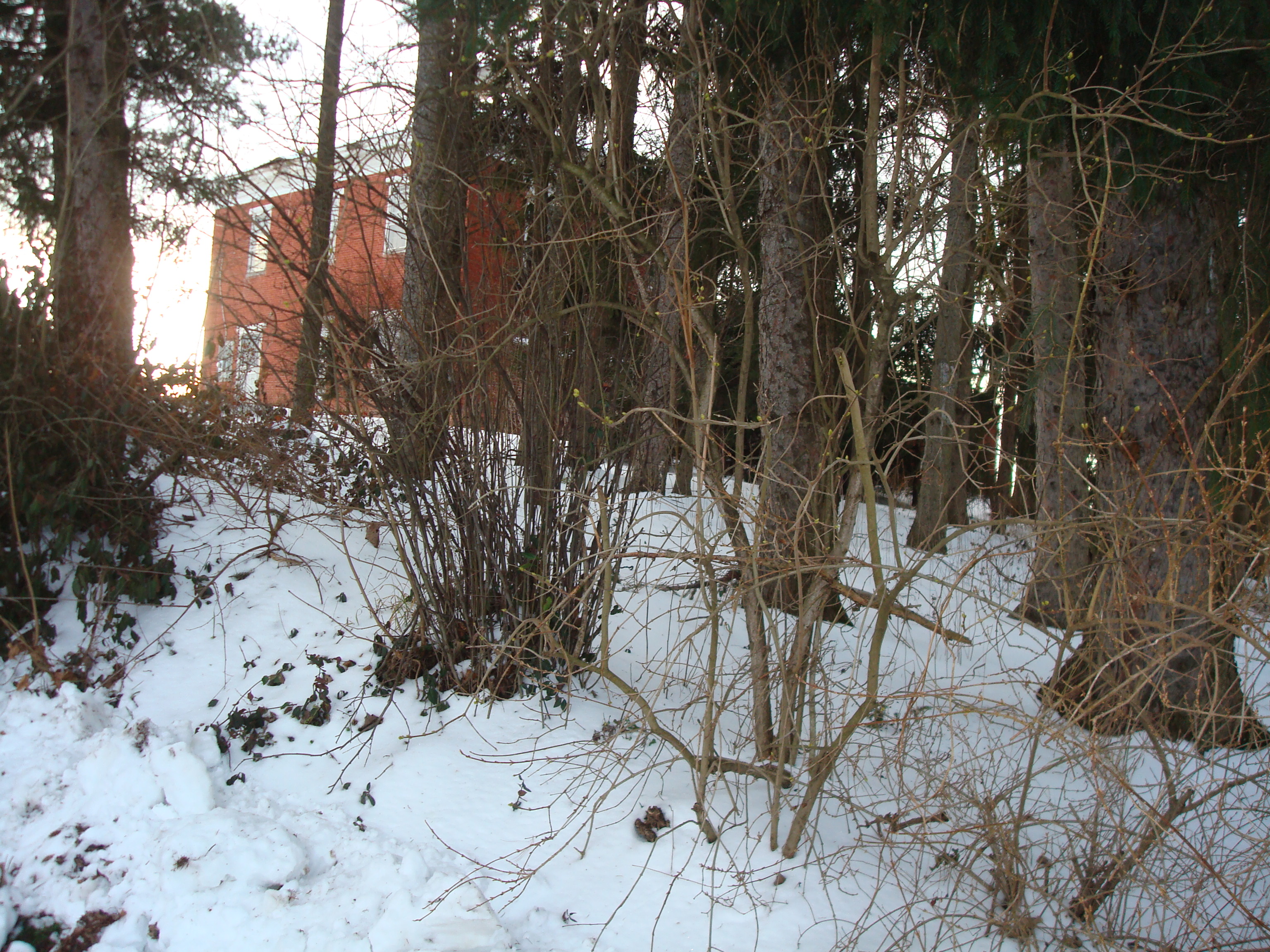
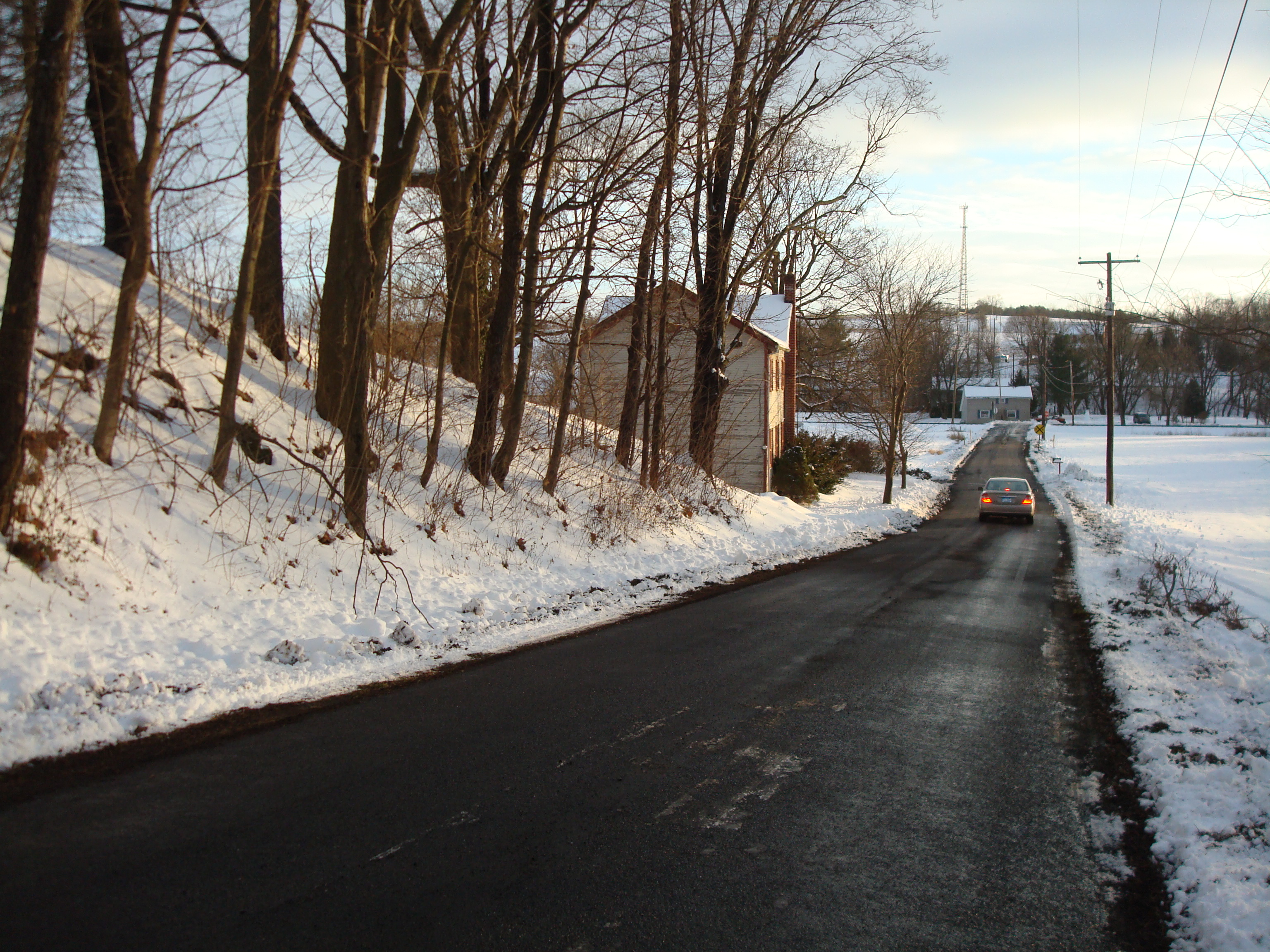
Recent photo of the house Grandma lived in when she was writing the diary–and the road she would have walked down to get to McEwensville.
Her middle-aged granddaughter’s comments 100 years later:
I hate it when signals get crossed. I bet Grandma was ticked off.
Grandma (and probably her sister Ruth) would have walked a mile and a half from their farm into McEwensville for a play practice that didn’t take place. Grandma had the role of Chloe, the servant, in the play.
17-year-old Helena Muffly wrote exactly 100 years ago today:
Tuesday, February 18, 1913: Please excuse me for today. I haven’t much material to write about.
Her middle-aged granddaughter’s comments 100 years later:
Since Grandma didn’t write much a hundred years ago today, I’ll share a hundred-year-old recipe for Scalloped Celery and Eggs.
Scalloped Celery and Eggs
2 cups diced celery
1/4 cup diced onion
4 hard-cooked eggs
2 tablespoons butter
2 tablespoons flour
1/2 teaspoon salt
1/8 teaspoon of pepper
1/2 cup celery stock
3/4 cup milk
1/2 cup bread crumbs
Dice celery and onion, then simmer until tender in water to cover. Reserve one-half cup of the liquid (celery stock). Melt butter in a frying pan, stir in flour and seasonings. Gradually stir in reserved celery stock and milk to make a sauce. Bring to a boil. Add the cooked celery and onions, and put a layer in a buttered baking-dish (I used a 1 1/2 quart dish–it might have fit into a 1 quart dish, but I was worried that it would boil over.); chop the eggs, sprinkle on a light layer, add more celery, continuing until the dish is filled. Cover with the buttered crumbs, and bake in a moderate oven (375°) until browned.
Makes 4-5 servings
Adapted from recipe in the November, 1913 issue of Ladies Home Journal
I’ve enjoying rediscovering celery this winter. Celery was a popular winter vegetable a hundred years ago. It was easy to transport and store.
I’ve also discovered that celery and egg combinations were very popular years ago. You might enjoy this previous post:
17-year-old Helena Muffly wrote exactly 100 years ago today:
Monday, February 17, 1913: I have discovered the fact that I am getting a new nail on my once sore thumb.
Her middle-aged granddaughter’s comments 100 years later:
I bet Grandma was looking forward to when her thumb nail would look like this. (Source: Wikipedia)
Whew! Grandma must have really injured her thumb back in December, if it’s taken two months for her to know whether she’d get a new nail.
This was the third time that Grandma mentioned the injured thumb in the diary. (If she hurt it as badly as it sounds, I’m almost surprised how few times she wrote about it.)
Our dearest Ruth left for Sunbury this morning and my heart is rather sad. We killed some pigs and I took a slice off the end of my thumb. Oh sad the day, for I don’t care anything about having a sore thumb.