Still Struggling with Behavior

18-year-old Helena Muffly wrote exactly 100 years ago today: 

Friday, April 11, 1913:  I got a regular call down at school today. Made me rather mad to think I did such a thing as to deserve such a raking. Am busy making out an outline.

The old slate chalkboard now sits on the floor.

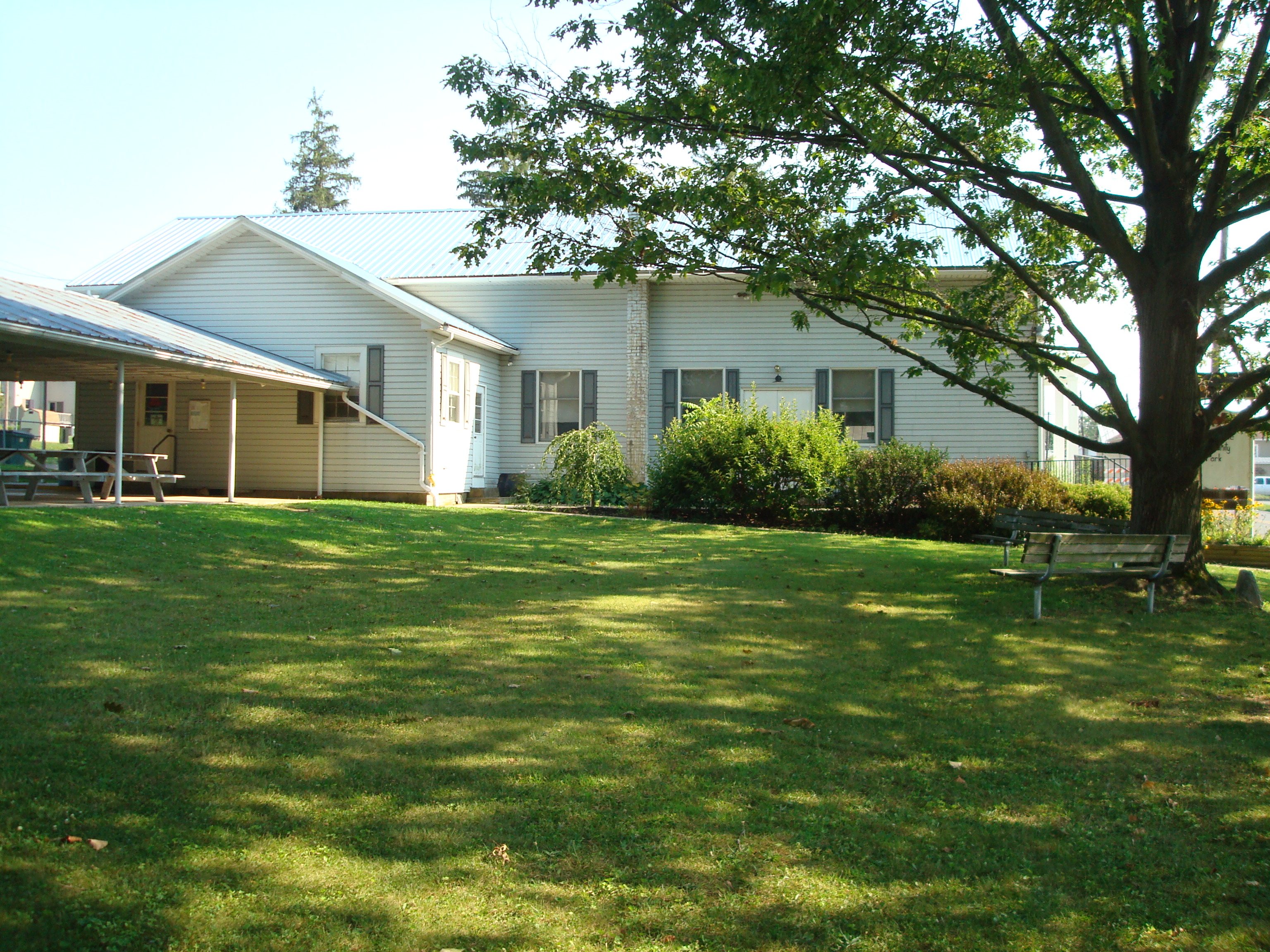
This is a recent view of the second floor of the building that once housed the  McEwesnville School.  A hundred years ago today, Grandma probably looked in anger out this window and wished she was not sitting in this classroom–

Recent photo of building that once housed McEwensville High School.

Her middle-aged granddaughter’s comments 100 years later:

Good grief—What did Grandma do now?

Behavior (or to use the old-fashioned term—deportment) still seemed to be an issue. Grandma was having a difficult last few weeks of school.  She wrote several diary entries about her struggles with behavior, but provided few clues to exactly what she did.

Here’s a recap of Grandma’s diary entries over the past 16 days which address her behavior at school:

Teacher gave the school a lecture, but it was really meant for me. I don’t think what I did was so bad, but I guess I won’t do it again. I might catch it right there. . .

March 26, 1913

.

Don’t have my lessons out very well for tomorrow, but anyhow, I’m not going to get them out tonight.

March 30, 1913

.

Got my report card today. Had quite a fall in deportment. I must be really very bad . .

April 9, 1913

Of course, the class play was held on April 5, and Grandma was very busy with it—so maybe she had an excuse for not doing homework and other behavior issues.

Hmm. . . If a student today did the same things Grandma did, what would the teacher do?  Have standards for student behavior changed over the past one hundred years?

Name Card to Insert in Graduation Invitation

18-year-old Helena Muffly wrote exactly 100 years ago today: 

Thursday, April 10, 1913:  Have ‘em all addressed by this time unless make up my mind to send some more. Have three left over. Wonder if I’ll get any presents. Just think I can soon call myself a sweet girl graduate.

graduation.name.card

Her middle-aged granddaughter’s comments 100 years later:

The previous day Grandma began addressing the invitations to her graduation—and apparently completed them on the 10th.

The tiniest pieces of paper sometimes are so special. I don’t have an invitation for Grandma’s graduation—they probably didn’t survive a hundred years— but I think that I have Grandma’s name card that was designed to be inserted into the invitations.

I have a thin file folder of mementoes that were found in Grandma’s house after she died. One item in the folder is the commencement program that I shared two days ago. Another is this name card.

In the past one hundred years, how many times did someone look at the name card,—first Grandma herself, and then later her descendants—consider tossing it out, and then decide that it was worth saving?

I’m in awe that this tiny piece of card stock with Grandma’s name on it still exists. And, I am very thankful that each person whose hands touched it over the years made the decision to keep it.

Is Deportment an Archaic Word?

18-year-old Helena Muffly wrote exactly 100 years ago today: 

Wednesday, April 9, 1913:  Got my report card today. Had quite a fall in deportment. I must be really very bad. Began to address my invitations this evening.

Building that once housed the McEwensville Schools. The high school was on the second floor.

Her middle-aged granddaughter’s comments 100 years later:

Grandma seemed to have a bad case of senioritis—so I guess it isn’t a surprise that her grade for deportment fell.  For example, on March 26 she wrote:

Teacher gave the school a lecture, but it was really meant for me. I don’t think what I did was so bad, but I guess I won’t do it again . . .

Does anyone use the term deportment any more? It almost seems like an archaic word.

Memorizing Essay to Present at Graduation

18-year-old Helena Muffly wrote exactly 100 years ago today: 

Tuesday, April 8, 1913:  Am trying to learn my essay. I know about half of it.

commencement.program.1

Her middle-aged granddaughter’s comments 100 years later:

Even though Grandma won’t graduate for another several weeks, I’m going to share her commencement program today since I think that she probably was trying to memorize an essay that she wrote for her graduation speech.

(The graduation program contains lots of interesting tidbits—and I plan to explore different facets of if in several upcoming posts. Today I’m just going to focus on Grandma’s speech.)

Grandma was probably trying to memorize the essay that she mentioned on March 21, 1913:

. . . Am tugging away at my old essay it is almost finished.

Her graduation essay was titled Relics of the Earth’s Past. I wonder how the topics were selected. Maybe it was a really interesting speech, but the topic sounds kind of boring to me.

Earlier in the year, Grandma had written about writing an essay on the Revolutionary War. The teacher told the class that the person who wrote the best essay would win  a 2 1/2  dollar gold piece. Based on the program, it appears Grandma didn’t win the gold piece—since J. Karl Watson did a graduation presentation titled, Valley Forge, A Dark Spot of the American Revolution.

Hundred-Year-Old Composite Picture of the “Good Housekeeping Woman”

18-year-old Helena Muffly wrote exactly 100 years ago today: 

Friday, April 7, 1913:  There isn’t much for today.

Source: Good Housekeeping (September, 1912)

Her middle-aged granddaughter’s comments 100 years later:

Since Grandma didn’t write much today, I’ll tell you a little about what I’ve been thinking.

I am still trying to get a better understanding of how people of various backgrounds, ethnicities, and nationalities were perceived a hundred years ago.

An article in the September 1912 issue of Good Housekeeping magazine showed a composite picture of the “Good Housekeeping Woman.”

The photograph  is truly a photograph, and can truthfully be described as the typical “Good Housekeeping Woman.” It is nothing less than the portrait of one hundred of our feminine subscribers, printed upon a single negative . . . what is known as a “composite” photograph.

The hundred photographs were secured by the editor by correspondence and through agents of the magazine in widely separated sections of the continent. Some of the portraits, for example, came all the way from British Columbia. The majority, however, were from New York state, New England, and the Middle West.

I wonder how accurately the women included in the composite reflected the population.

Interesting how composite pictures were created in the days before computers . . .

Went to Sunday School

18-year-old Helena Muffly wrote exactly 100 years ago today: 

Sunday, April 6, 1913:  Went to Sunday School this afternoon.

The old McEwensville Baptist Church probably was located somewhere on the lot that contains this yard and house.
The old McEwensville Baptist Church is long gone. It probably was once located somewhere on the lot that contains this yard and house.

Her middle-aged granddaughter’s comments 100 years later:

Grandma probably was tired after the wonderful “splash” she’d made the previous evening in the class play.

Grandma wrote a  sentence this Sunday similar to one she wrote most Sundays—”Went to Sunday School this afternoon.”—though she often elaborated a bit more.

How was this Sunday similar or different from other Sundays? . . .

Was it a sunny day. . . or a cloudy one? Was it unseasonably hot. . . or unseasonably cold. . . or just a typical April day?

Was the road to McEwensville dry or muddy? If it was muddy, did Grandma wear galoshes or did she carefully try to avoid puddles?

Had church members seen the play the previous evening?—and did they praise her for her great acting?

What was the Sunday School lesson about? Was it interesting? . . . or boring?

The Play and Related Rambling Thoughts

18-year-old Helena Muffly wrote exactly 100 years ago today: 

Friday, April 5, 1913:  Tonight expect to stand before an audience and make them smile. I caught a fish this afternoon, and I didn’t’ go a fishing either.

—-

Our play went off pretty well, although we did make some slight mistakes. I cut quite a splash after I was all fixed up. We made over twenty dollars, but our expenses come out of that.

DSC04340

This is the stage in the McEwensville Community Center that Grandma would have stood on a hundred years ago today. Back then the stage was deeper and had curtains. In recent years, the back part of the stage was converted into a storage area.

DSC04336

I can almost picture the room  filled with an attentive audience sitting on rows of chairs.

Her middle-aged granddaughter’s comments 100 years later:

Yeah!—the class play went well.  $20 from ticket sales doesn’t sound like much—but in 2013 dollars it would be the equivalent of about $500 today.

I bet Grandma in blackface, playing the role of Chloe the servant, made quite a splash—and that she enjoyed every moment of it.

Thank you all for your thoughtful comments yesterday. They really help me think about the issues.

When I read the diary, I was surprised that Grandma had once played a role in blackface. I was especially shocked because it brought back another very vivid memory. Let me tell you a personal story—

About ten years ago, right after I got my Ph.D. in Educational Policy and Administration, I interviewed for a faculty position at a university located in a rural area. If I had gotten the job, I would have worked closely with school districts in that area.

During the interview I was told that a nearby rural school district had recently held a school play where some of the white cast members had played the role of Blacks wearing blackface.

I was then asked, “If you worked with this district, what would you do?”

—-

I wish Grandma was still around so that together we could grapple with complex topics and issues. . .