Stopped with a Friend

19-year-old Helena Muffly wrote exactly 100 years ago today: 

Sunday, May 17, 1914:  Went to Sunday School this afternoon. Stopped with a friend a couple of minutes.

McEwensville
McEwensville

Her middle-aged granddaughter’s comments 100 years later:

Sounds like a wonderful, fun, relaxing Sunday afternoon.

Hmm. . . What does stopped with a friend mean? . . . Did Grandma go into a friend’s home  in McEwensville after Sunday School to see something? . . . sit on the grass and talk? . . . stop to pick wildflowers?

I like this picture of McEwensville even though Grandma didn't go to this church. (She attended the Baptist Church which was torn down years ago).
I like this picture even though Grandma didn’t go to this church. (She attended the Baptist Church which was torn down years ago).

“Don’t Buy Booze”

19-year-old Helena Muffly wrote exactly 100 years ago today: 

Saturday, May 16, 1914:  Same as yesterday.

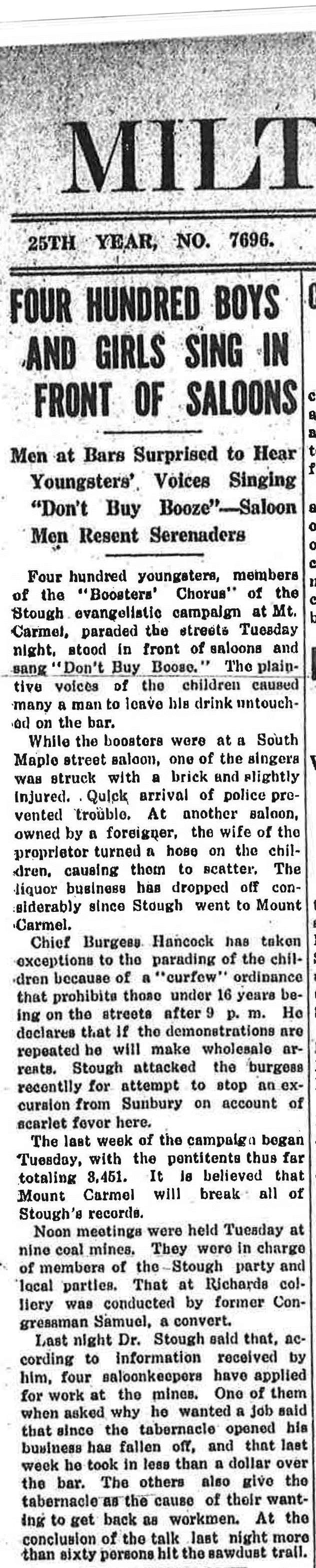
Milton Evening Standard (April 9, 1914)

Her middle-aged granddaughter’s comments 100 years later:

Since not much was happening at the Muffly house, I’ll share an intriguing 1914 article from Grandma’s local paper, the Milton Evening Standard. I’m not quite sure what to make of the article, but it’s definitely thought-provoking.

Prohibition in the US began in 1920 when the 18th amendment went into effect—but, as this article indicates, there was a strong movement against alcohol in preceding years.

The article is about the town of Mount Carmel. Grandma lived in the northwestern part of Northumberland County. Mount Carmel is at the eastern edge of the county, and was in the heart of the anthracite coal region.

1914 Panama Hats

19-year-old Helena Muffly wrote exactly 100 years ago today: 

Friday, May 15, 1914: Nothing much doing.

1914-06-25 a

Her middle-aged granddaughter’s comments 100 years later:

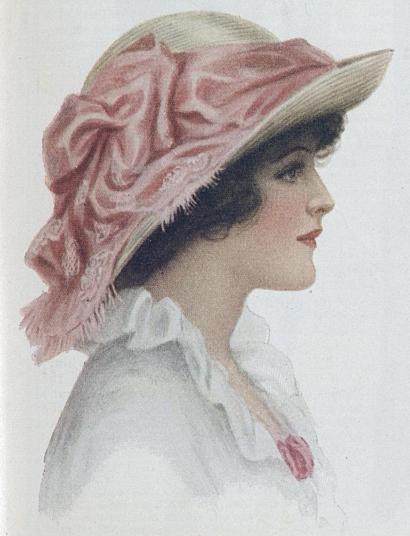
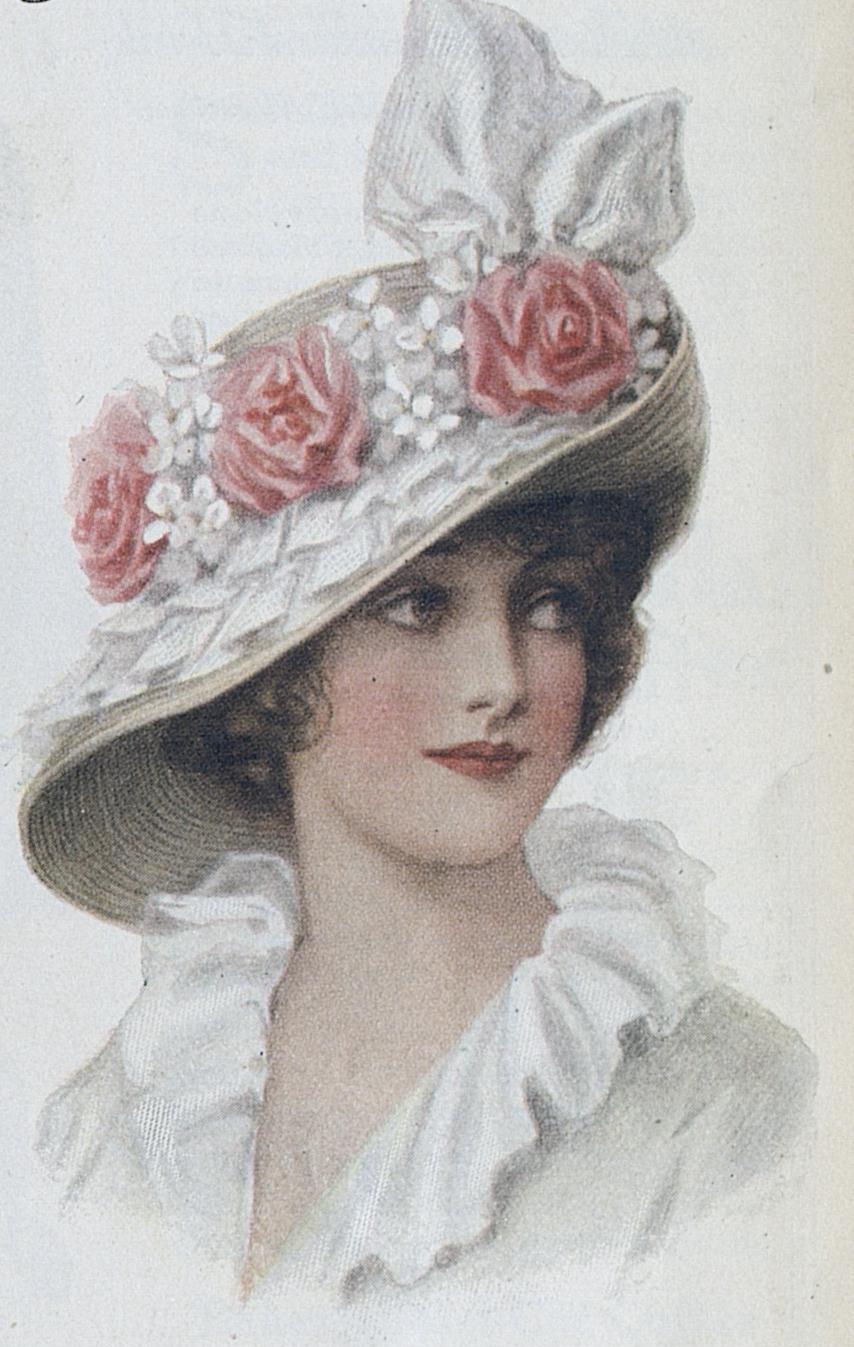
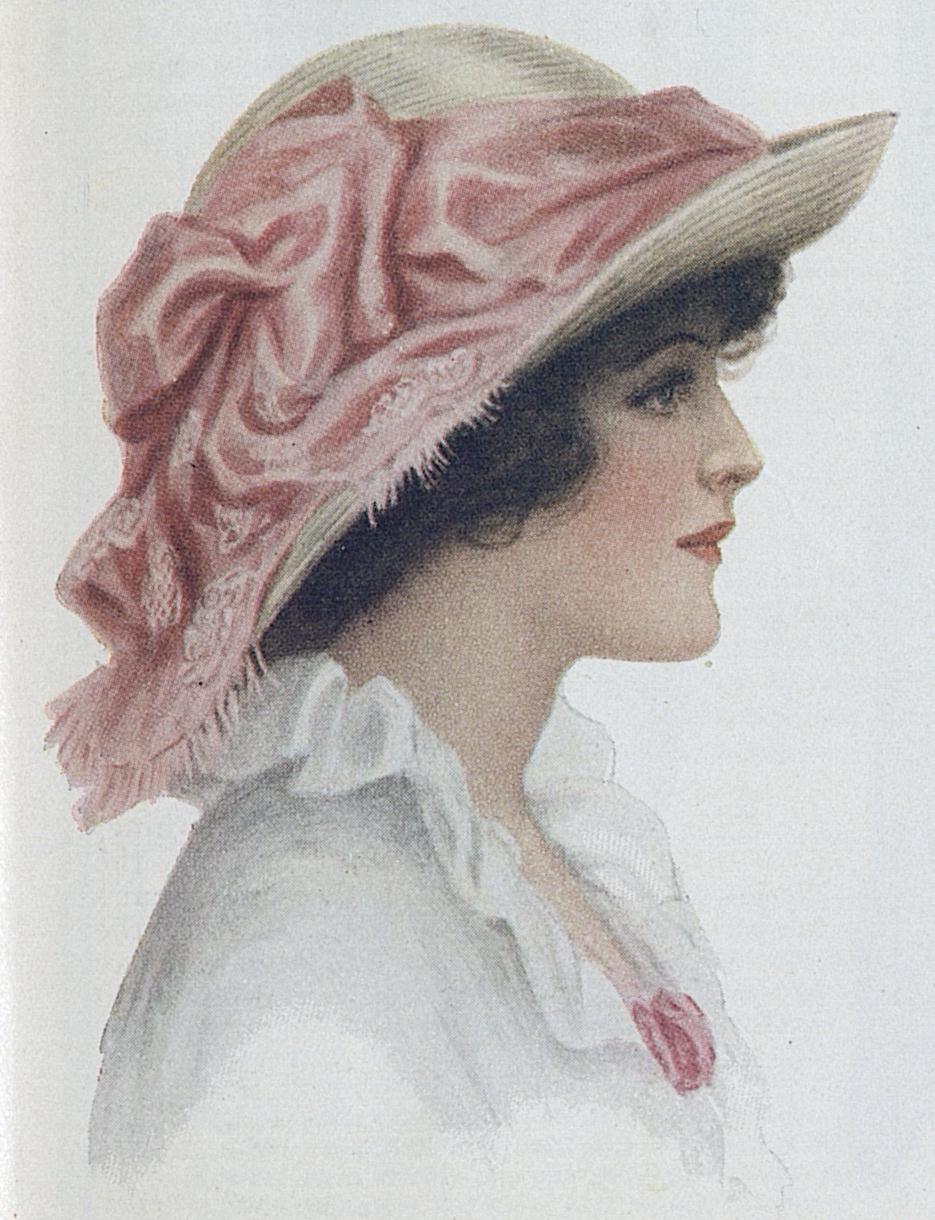
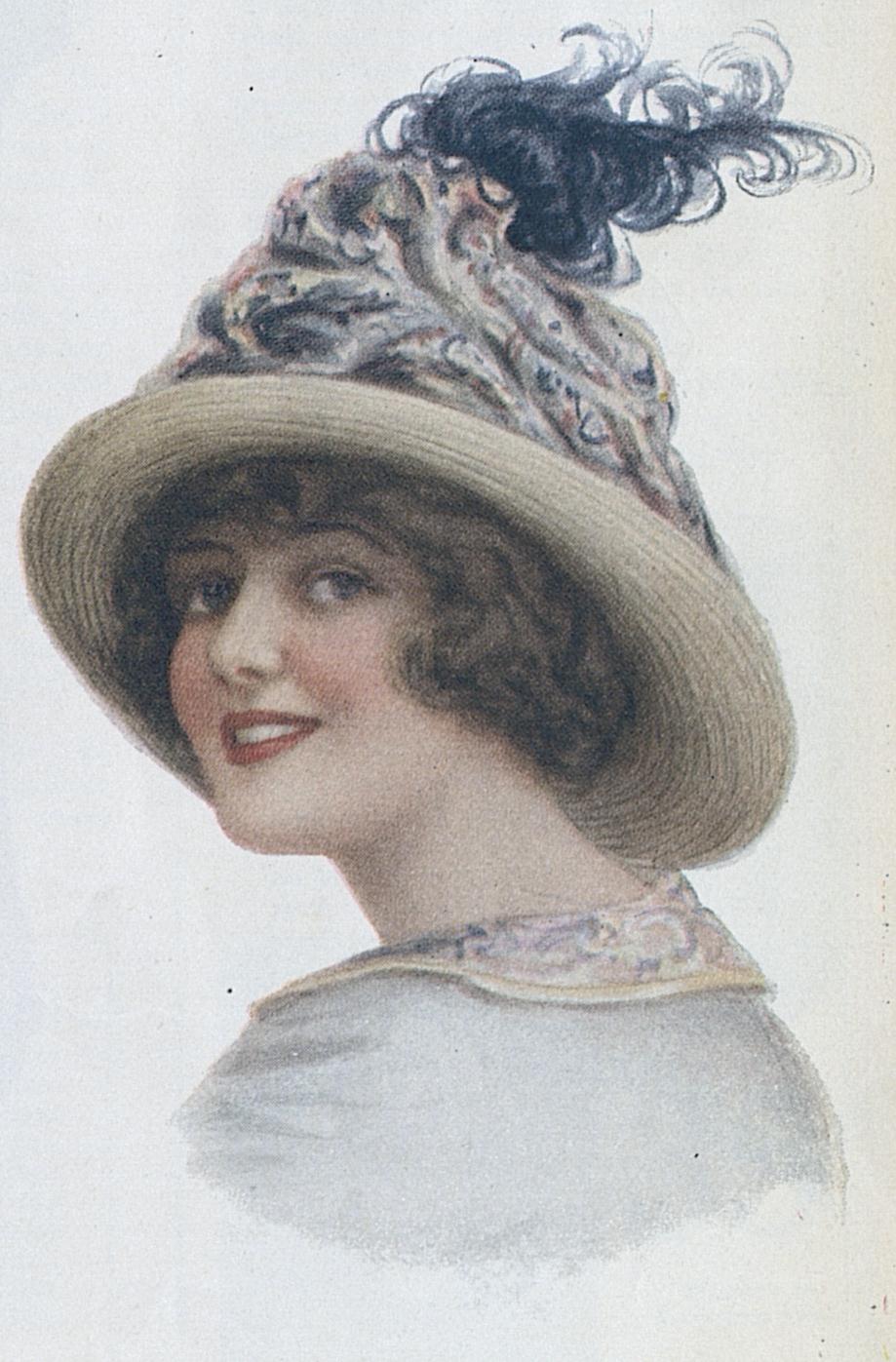
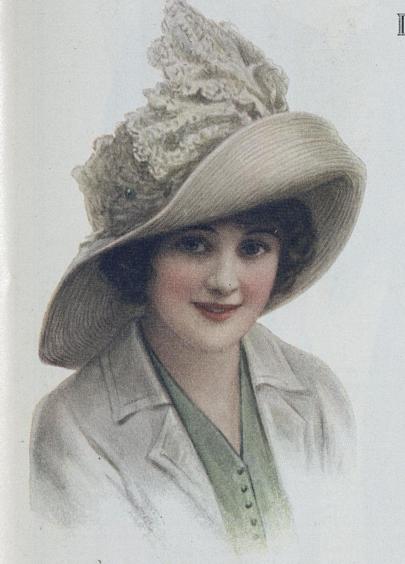
Two days ago I did a post about Grandma’s attempt to remodel a hat. When I was looking for a picture to illustrate that post, I came across some wonderful pictures of Panama hats in the June, 1914 issue of Ladies Home Journal.

The hats were linked to a major historic event and engineering feat—the building of the Panama Canal. In spring, 1914 the canal was nearing completions—and it would officially open on August 15, 1914.

Since Grandma didn’t write much a hundred years ago today, I’m going to share some of those pictures.

The Panama Hat for Any Occasion

The name of the hat designs illustrated here would of itself arouse an unusual feeling of interest, but in addition to that The Journal is able to present the name of Mrs. William Crawford Gorgas—wife of the most able and eminent physician, now Surgeon-General of the United States Army who first made the digging of the Panama Canal possible by his great work on sanitation.

These hat designs which vary from morning to afternoon fashions have been admired and endorsed by Mrs. Gorgas as representing the most charming and becoming hats for the summer girl.

The flexibility of the straw affords many opportunities for the shaping to individual lines and expression, while its delicate tint can hardly fail to blend with one’s natural coloring whatever it may be.

Fancy-band trimmings, scarfs, flowers, and feathers have changed the Panama hat, originally used for protection from the sun and for knock-about wear, into a thing of dress and beauty to be worn upon any occasion.

Ladies Home Journal (June, 1914)
1914-06-25

1914-06-25 f

1914-06-25 b

1914 P and G White Naphtha Soap Advertisement

19-year-old Helena Muffly wrote exactly 100 years ago today: 

Thursday, May 14, 1914:  Had a job this afternoon, and it lasted quite a while, too.

Source: Ladies Home Journal (March, 1914)

Her middle-aged granddaughter’s comments 100 years later:

Hmm. .. Grandma—

You aren’t giving me much to go on here. What was the job?. . . cleaning the house? (I don’t think so , since you just completed the spring housecleaning a few days ago.). . .   pulling weeds? . . . cleaning manure out of the barn? . . . doing laundry? . . .

I’m going to go with the laundry. . . Farmers clothes get very, very dirty; and it can be a lot of work to get the stains out of overalls and other work clothes.

1914 Black Hat

19-year-old Helena Muffly wrote exactly 100 years ago today: 

Wednesday, May 13, 1914:  Tried to turn milliner and fix up a hat. Mad over the shape, also dyed it with shoe-blackening. Later in day I missed the wonderful creation on which I had spent so much energy. It ended in Ma fessing that she had burned it. All that time wasted too. Oh my.

Was shoe blackening used to dye this hat? Source: Ladies Home Journal (February, 1914)

Her middle-aged granddaughter’s comments 100 years later:

Note to my Great-Grandmother—

I know that I should be respectful since you are my great grandmother. but how dare you destroy your daughter’ s self-esteem by burning her creative efforts?

Maybe the hat was ugly, but couldn’t you have waited a couple days to destroy it?

Old-fashioned Cream of Chives Soup

19-year-old Helena Muffly wrote exactly 100 years ago today: 

Tuesday, May 12, 1914: <no entry>

DSC08882

Her middle-aged granddaughter’s comments 100 years later:

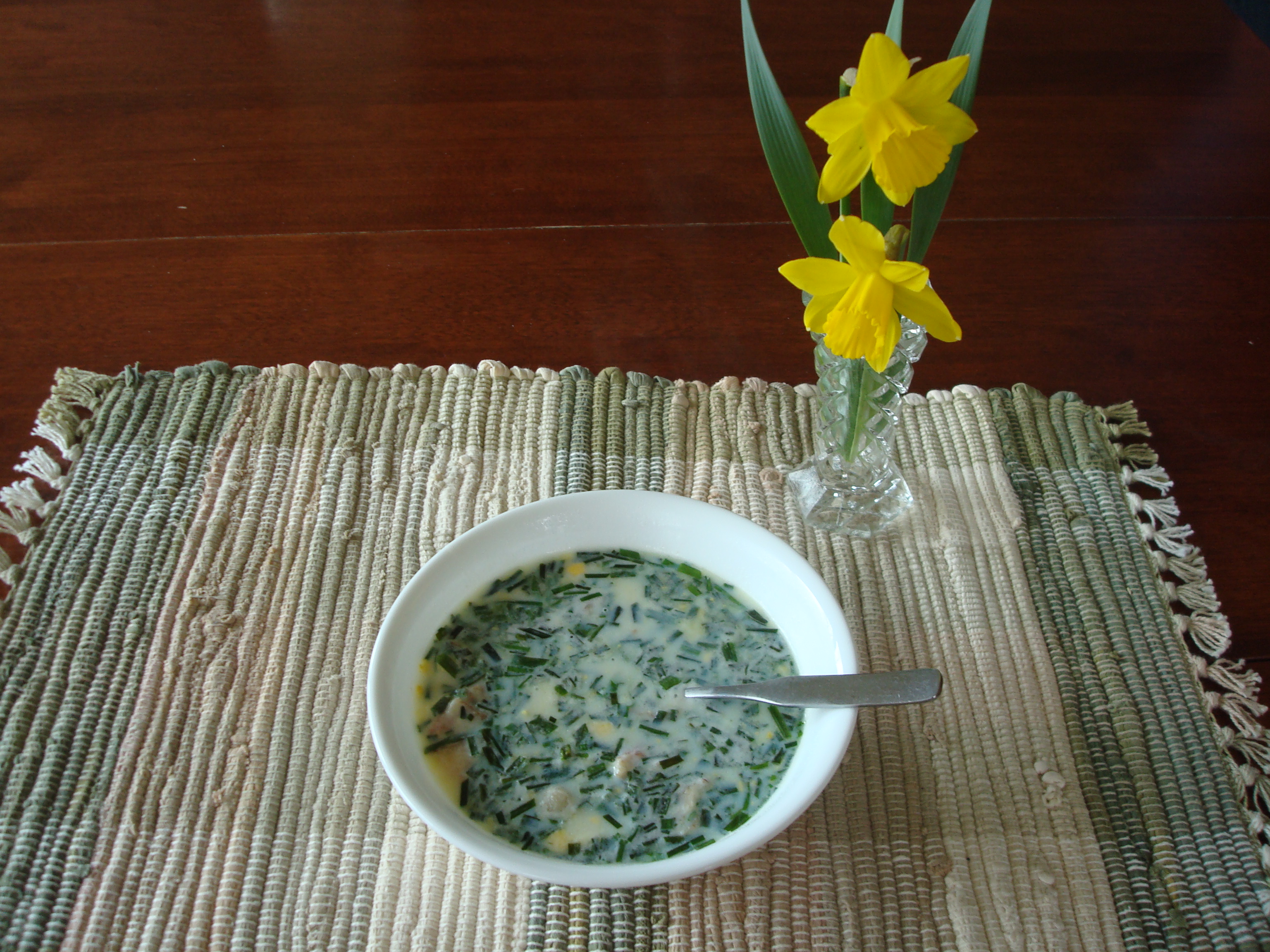
I always look forward to eating the early spring vegetables and fruits. After a long winter, rhubarb, spring greens, asparagus, and chives taste wonderful. Since there’s no diary entry to guide the direction this post takes, I’ll share a recipe for one of my favorite spring foods—Old-fashioned Cream of Chive Soup.

Old-fashioned Cream of Chives Soup

1 cup potatoes, diced

water

1/4 pound bacon, diced

2 cups chives, chopped in small pieces (approximately1/8 inch long)

2 tablespoons flour

1/4 teaspoon salt

1/4 teaspoon pepper

5 cups milk

2 hard-boiled eggs, chopped

Put diced potatoes in a saucepan and just barely cover with water. Bring to a boil, then reduce heat to medium; cook until tender (about 8-10 minutes). Remove from heat.

In the meantime put bacon in a Dutch oven or other large pan and begin to fry. About 3-4 minutes before the bacon is crisp, stir in the chopped chives. Continue stirring until the chives are wilted and the bacon is crisp; then stir in flour, salt, and pepper. While continuing to heat, gradually stir in milk. Add cooked potatoes (the water they were cooked in can also be added) and chopped eggs. Reheat until hot; serve.

You might also enjoy these previous posts with recipes for other spring foods:

Rhubarb Sponge Pie

Stewed Rhubarb (Rhubarb Sauce)

Baked Rhubarb with Orange

Rhubarb Pudding

Creamed Asparagus on Toast

Creamed Dandelion

Rain, Rain, Go Away

19-year-old Helena Muffly wrote exactly 100 years ago today: 

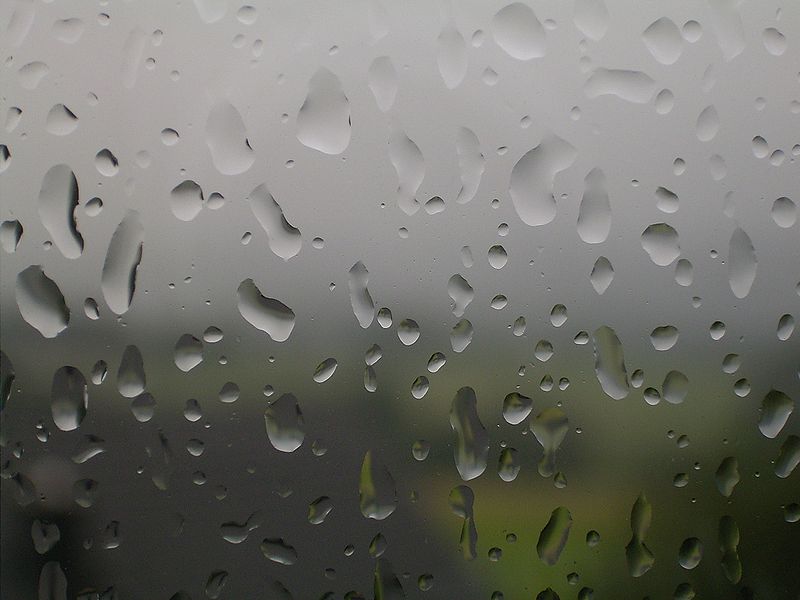
Monday, May 11, 1914:  Rain, rain go away and come again some other day. Was invited to a party for this eve, but it just came down in floods, and alas, I staid at home.

rain.drops.b

Her middle-aged granddaughter’s comments 100 years later:

Grandma—

Too bad about the rain . . . Did you miss a super fun party. . .or just an average one?

It’s amazing how some phrases like, “Rain, rain, go away” been around at least a hundred years.

While others are popular for a few years and then totally vanish. A phrase with a very short life that comes to mind is “Where the beef?