19-year-old Helena Muffly wrote exactly 100 years ago today:
Sunday, May 24 – Thursday, May 28, 1914: Nothing much doing.
Her middle-aged granddaughter’s comments 100 years later:
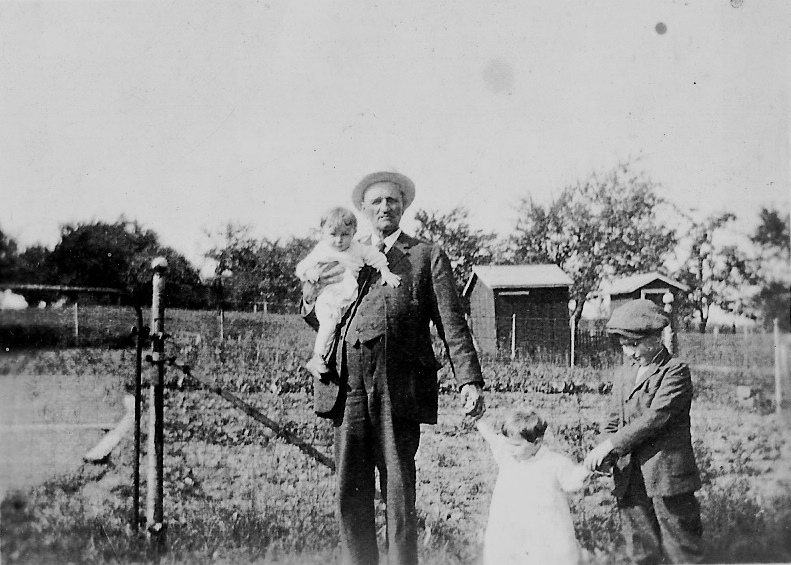
Things will get better for Grandma and her sister Besse. This photo was taken in 1924—and it is a picture of Besse’s husband Curt. The older boy is his son, Curt, Jr. The other two children are two of Grandma’s children. The baby is my father Harold, and the little girl is his sister Marjorie.
Somehow “nothing much doing” seems like odd words for Grandma to write in her diary to summarize the days following the death of her infant niece—but maybe that’s the best she could do. It had to be difficult.
—
Besse and Curt Hester had one child who lived beyond infancy. Curt, Jr. was born in 1915, and had a nice, long life. He died in 1999 at the age of 83.
When I was child, Curt Jr. lived in the house that Grandma lived in when she was writing this diary. In other words, he lived in the lovely house pictured in the header of this blog.
19-year-old Helena Muffly wrote exactly 100 years ago today:
Saturday, May 23, 1914: The little life so soon begun is ended.
Recent photo of the house Besse lived in when I was a child. I’m not sure if this was where she lived in 1914.
Her middle-aged granddaughter’s comments 100 years later:
Oh. . . Grandma,
I’m so sorry. What happened? . . . Are you okay? . . . How’s Besse doing?
—
Grandma’s three-day-old niece died. She was the daughter of Grandma’s older sister Besse and her husband Curt.
Grandma was worried about her niece the day she was born—but the diary entries the next two days suggested that everything was going to be okay— yet obviously something went wrong.
—
I try never to go ahead in the diary—yet somehow it doesn’t feel quite right that I didn’t clue all of you in that it wasn’t going to be a happy ending. I apologize if I should have foreshadowed the pending death.
This has been a hard series of posts to write. It almost feels like all of this is happening in real time—not a hundred years ago—to people I love and care about.
19-year-old Helena Muffly wrote exactly 100 years ago today:
Friday, May 22, 1914: I saw the dear little babe this evening. How proud I was that it was my little niece. How I longed for one, I alone know. Ruth and I attended the commencement at Watsontown.
Source: Milton Evening Standard (April 1, 1914)
Her middle-aged granddaughter’s comments 100 years later:
Grandma—
Congratulations! Your niece sounds really special. Did you get to hold her?
Did you sister Besse get any baby gifts? I saw an advertisement for Carter Baby Carriages in your local paper. Maybe someone will give her one. It looks awesome.
—
The baby was born two days prior to this diary entry. On May 20, 1914, Grandma wrote:
This afternoon I learned that I am an “auntie” for the second time. It is a little baby girl. Mingled with this new joy is a dim foreboding.
—
Besse lived in Watsontown. It is located about 1 1/2 miles from the Muffly farm. Grandma and her other sister Ruth probably stopped by Besse’s home to see the baby then continued on the commencement. MyWatsontown has a list of the 1914 graduates. There were 12 graduates. Which were friends of Grandma and Ruth? I don’t recognize any of the names.
19-year-old Helena Muffly wrote exactly 100 years ago today:
Thursday, May 21, 1914: Mother was with Besse today. I dreaded it when she came home for I was afraid she would bring bad news, but no, they filled me with glad anticipations.
Source: Ladies Home Journal (February, 1914)
Her middle-aged granddaughter’s comments 100 years later:
Grandma’s married sister Besse gave birth to a daughter the previous day. Besse lived in the nearby town of Watsontown. She had a baby that died in 1912, and Grandma was very worried about this infant.
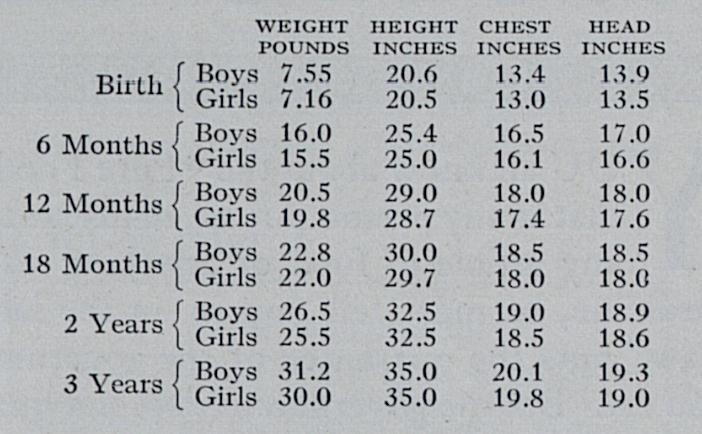
I wonder if the baby was born prematurely, and was very small. Here’s what Ladies Home Journal had to say in 1914 about the characteristics of “normal” babies:
The Normal Baby
Every mother is anxious for a normal baby, but many mothers, do not know just what a normal baby should be like. Variations are always found in every human being, but the following measurements given by Dr. L.E. Holt in his large book, “Diseases of Infancy and Childhood,” are now taken as the standard for the normal baby.
The weights are taken without any clothing. The height is taken by placing the baby on a perfectly flat surface like a table, and having some one hold the child’s knee down so that he lies out straight, then taking a tape-measure and measuring from the top of his head to the bottom of his foot, holding the tape line absolutely straight.
The chest is measured by means of a tape line passed directly over the nipples around the child’s body and midway between full inspiration and full expiration. The head measurement is taken directly around the circumference of the head, over the forehead and occipital bone.
Some other points of interest in the development of the normal baby are the following: head held erect if trunk is supported during the fourth month. Sit alone for a few minutes about seven months of age. In the ninth or the tenth month the baby will usually attempt to bear his weight on his feet. When ten or eleven months old he often stands alone with slight help. Makes first attempt to walk at twelve or thirteen months. The baby must not be urged to do any of these things; let him alone to develop naturally.
The teeth are always of interest; here is the way the average normal baby cuts his first set of teeth: Two lower central incisors, 6 to 9 months; four upper incisors, 8 to 12 months; four canines, 18 to 24 months; four posterior molars, 24 to 30 months.
At 1 year a child should have 6 teeth; at 1 1/2 years, 12 teeth; at 2 years, 16 teeth; at 2 1/2 years, 20 teeth.
The “soft spot” on fontanel on top of the head closes with the average normal baby at eighteen months, but often varies greatly.
19-year-old Helena Muffly wrote exactly 100 years ago today:
Wednesday, May 20, 1914: This afternoon I learned that I am an “auntie” for the second time. It is a little baby girl. Mingled with this new joy is a dim foreboding.
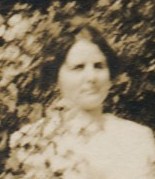
Besse (Muffly) Hester (circa 1912)
Her middle-aged granddaughter’s comments 100 years later:
Grandma—
Wow. . . Congratulations on being an auntie once again!
. . . but this has taken us by surprise. . . Why didn’t you ever mention in the diary that your married sister Besse was pregnant?
I understand your sense of foreboding. This is what you wrote in 1912 when Besse had her first baby:
I was an aunt for one brief half a day yesterday, but didn’t know it until this morning. I was so disappointed when I heard it was dead. My little nephew was buried this afternoon. The baby I never saw. I feel like crying, when I think I am an aunt no longer.
19-year-old Helena Muffly wrote exactly 100 years ago today:
Tuesday, May 19, 1914: Nothing much today.
Her middle-aged granddaughter’s comments 100 years later:
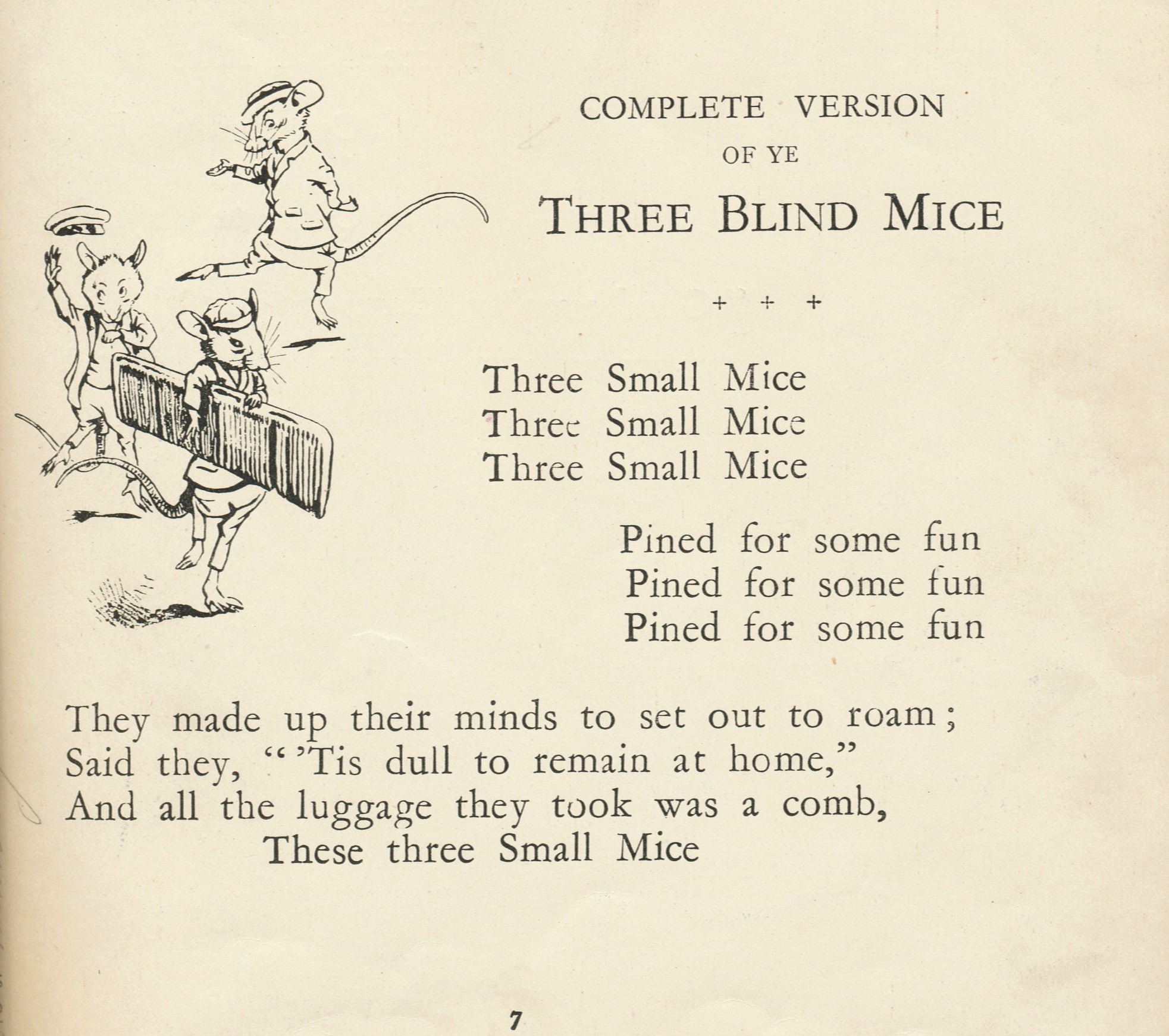
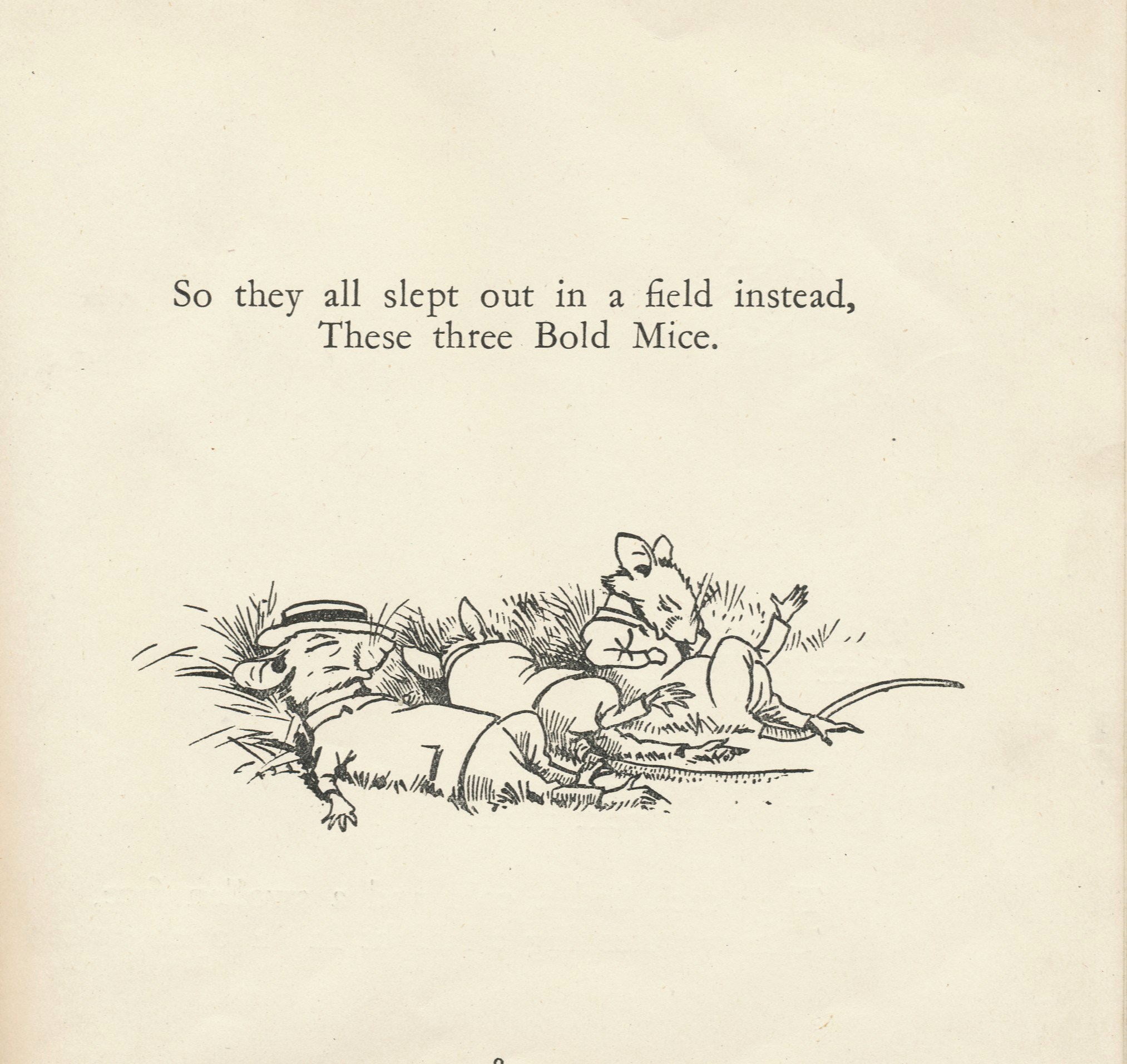
Since not much was happening in Grandma’s life a hundred years ago today, I thought that you might enjoy seeing a few pages from a children’s book published in the early 1900s. I wonder if Grandma’s 8-year-old brother Jimmie owned a copy of Three Blind Mice.
I scanned in these pages from a hard copy of the book, but you can read the entire book on the Project Gutenberg site.
19-year-old Helena Muffly wrote exactly 100 years ago today:
Monday, May 18, 1914: These May days are rather lazy times. I go to bed sleepy; sleep like a top, and get up sleepy.
Source: Ladies Home Journal (July ,1914)
Her middle-aged granddaughter’s comments 100 years later:
Life was good! . . Grandma usually had to do so much work. I think this is the first time that she ever sounded like she had some time to relax.
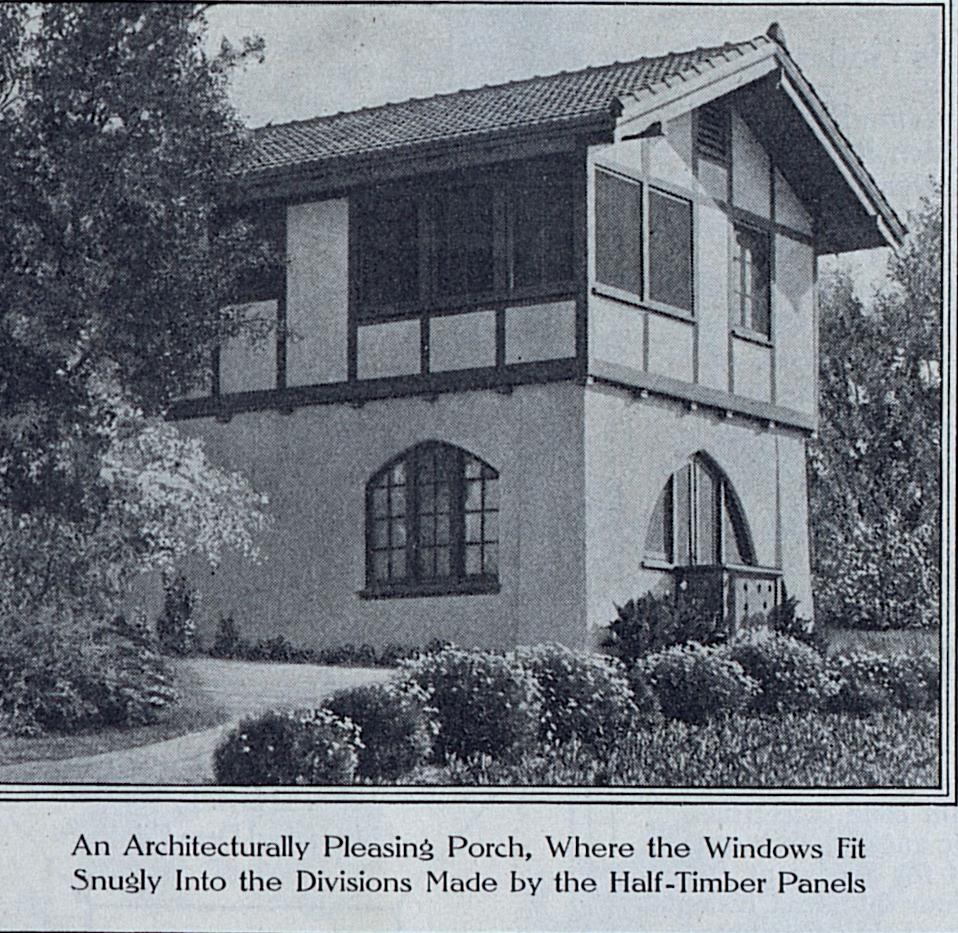
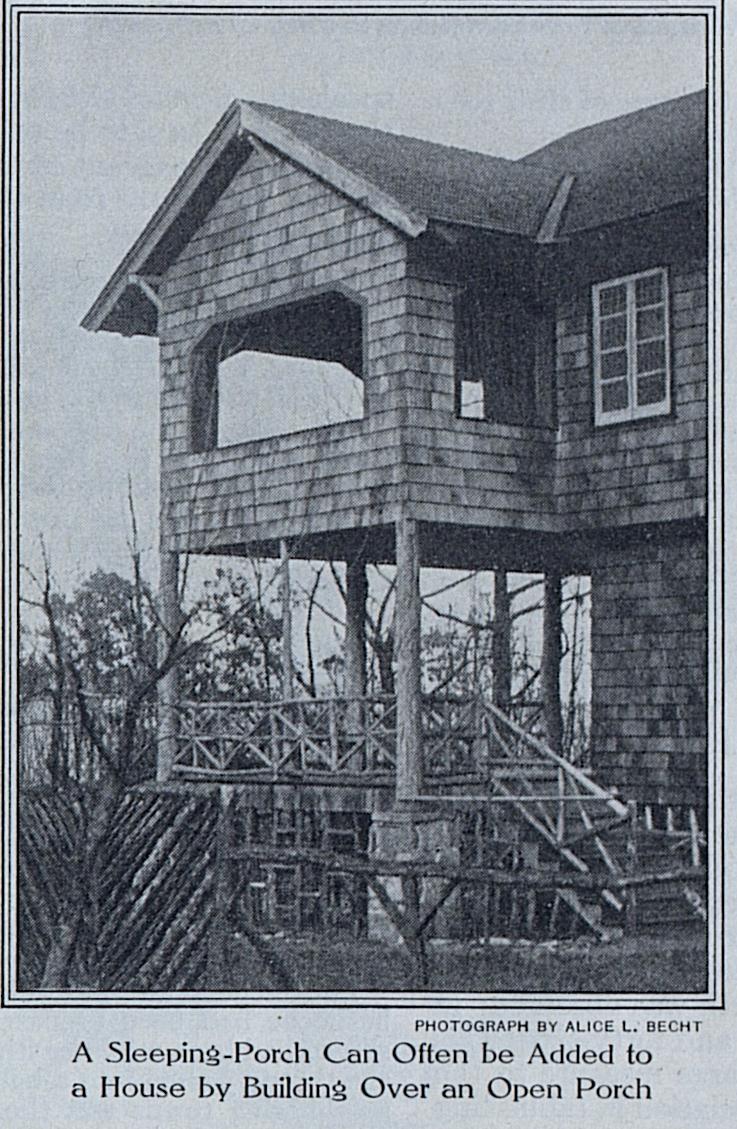
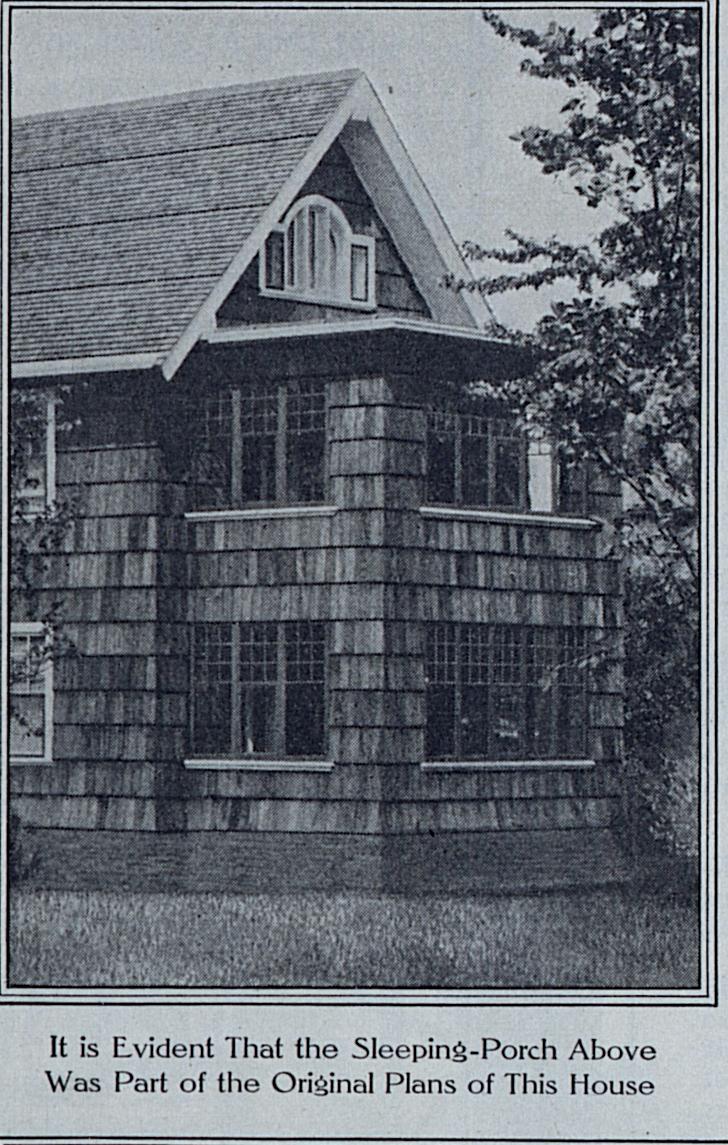
The weather must have been perfect for sleeping. A hundred years ago—in the days before electric fans and air conditioning— sleeping porches were very popular. The Muffly’s didn’t have one, but I thought that you might enjoy seeing pictures of some lovely sleeping porches that were featured in the July, 1914 issue of Ladies Home Journal.

Things will get better for Grandma and her sister Besse. This photo was taken in 1924—and it is a picture of Besse’s husband Curt. The older boy is his son, Curt, Jr. The other two children are two of Grandma’s children. The baby is my father Harold, and the little girl is his sister Marjorie.