Hundred-Year-Old Fleischmann’s Yeast Advertisement

Source: The Housewife’s Cookbook by Lilla Frich (1917)

I always find it challenging to interpret hundred-year-old bread recipes. The old recipes generally call for cakes of yeast, and I’m never quite sure how that translates when using modern dry yeasts.

So I was amazed when I saw a hundred-year-old advertisement for Fleischmann’s Yeast in the back of a 1917 cookbook. Was Fleischmann’s Yeast a cake back then? Perhaps the product has been refined and modernized across the years, but the same company has been around for at least a century.

Old-Fashioned Beef Loaf

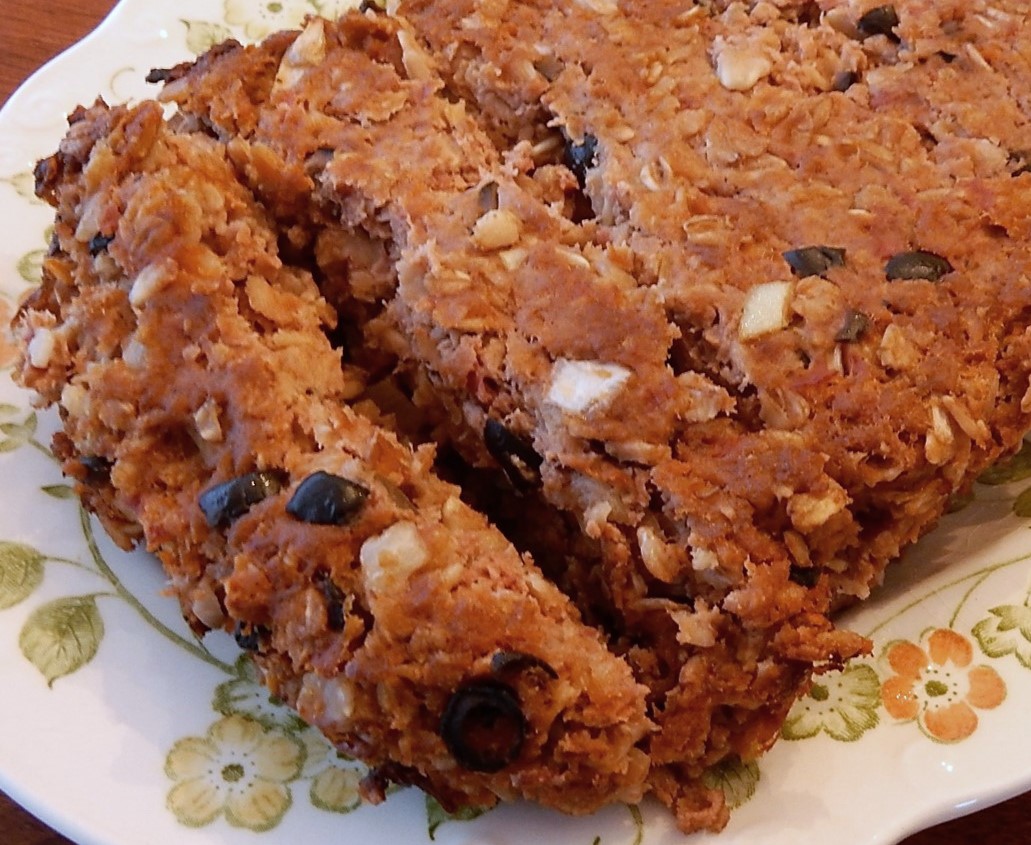
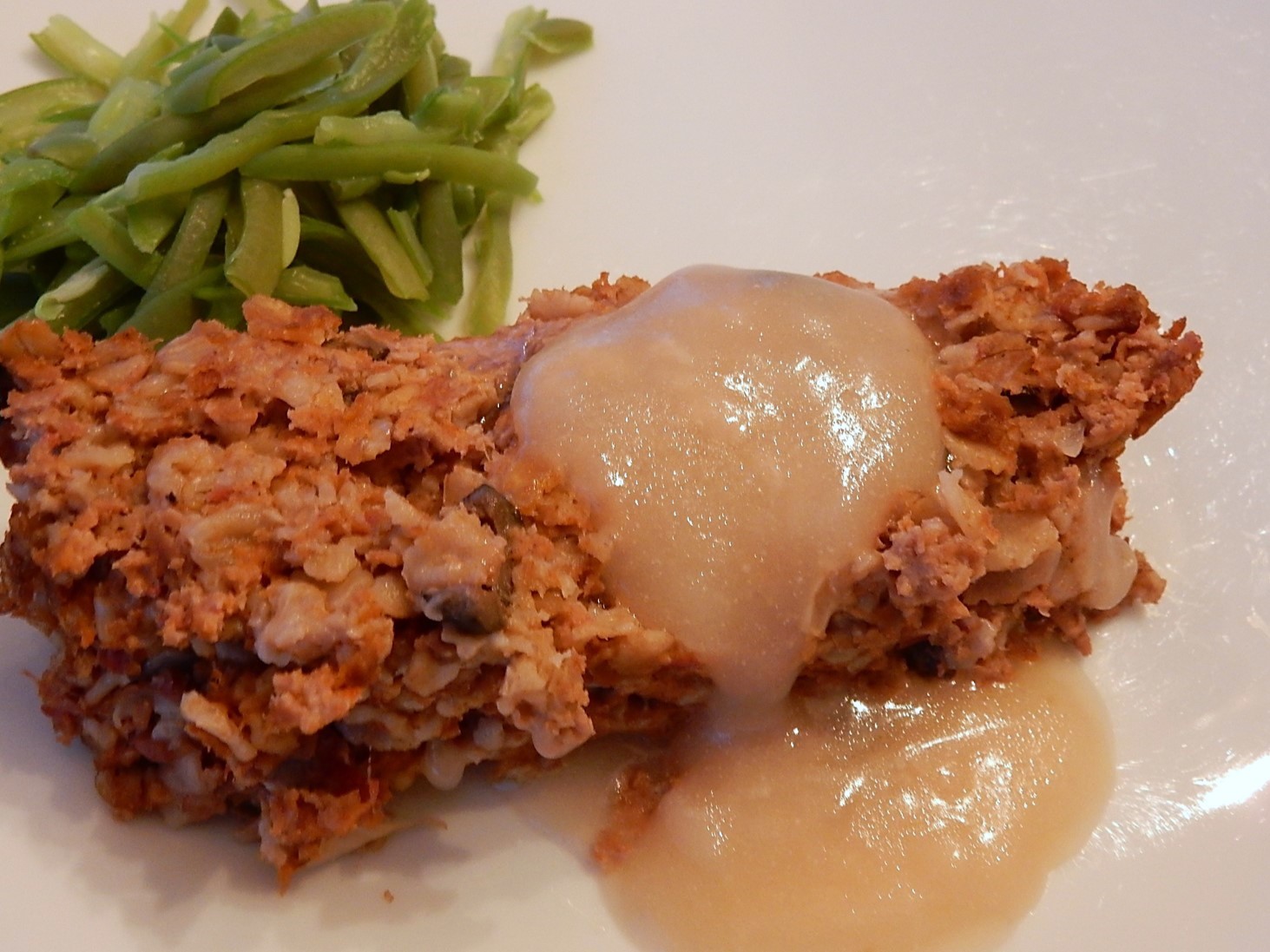
Meat loaf is the ultimate comfort food, so I was thrilled to find a hundred-year-old beef loaf recipe. This recipe is different from modern meatloaf recipes. In addition to ground beef, it contained ripe olives, oatmeal, canned tomatoes, and onion; and brought back memories of some meatloaf recipes served at family reunions when I was a child.

Here’s the original recipe:

Source: Good Housekeeping (June, 1917)

And, here’s the recipe updated for modern cooks:

Beef Loaf

  • Servings: 8 - 10
  • Difficulty: moderate
  • Print

Meatloaf

2 pounds ground beef

3/4 cup old-fashioned oatmeal

12 ripe olives, chopped

1/2 small white onion, chopped

2 cups canned tomatoes (1 one-pound can diced onions)

1 teaspoon salt

1/4 teaspoon pepper

Gravy

meat drippings from pan (approximately 1/4 cup)

2 tablespoons flour

1 cup water

Preheat oven to 375° F.  Thoroughly combine all ingredients in a mixing bowl.  Shape meatloaf in a 9″ X 13″ or similar-sized baking dish (or put in a large bread pan). Place in oven, and bake until done (approximately 1 hour).

If desired, serve with gravy. To make gravy,  put meat drippings from the baking pan in a small  skillet. Heat to boiling. Sprinkle with flour and stir to combine. Slowly pour in the water while stirring constantly. Continue stirring until the gravy thickens, then remove from heat and serve.

Cook’s note: My meatloaf had relatively few drippings which limited the amount of gravy that I could make. I used ground beef that contained very little fat. Ground beef with a higher fat content probably would provide more drippings.

I used less salt than called for in the original recipe. It called for 3 teaspoons of salt. I used 1 teaspoon of salt which seemed like plenty.

Vegetarian Diets a Hundred Years Ago

I tend to think of vegetarian diets as a relatively new way of eating, but it actually is a traditional way of eating. Here’s what a hundred-year-old cookbook says:

Meatless Meals

While authorities disagree as to the advisability of adopting a strictly vegetarian diet, there are increasing numbers who believe that such a diet is wholesome and beneficial. Be that as it may, vegetable menus are so much in demand that it behooves the housewife who caters to vegetarians to see that the necessary food elements are present. While fruits and vegetables are rich in starch, sugar, mineral salts, and acids, there are only a few that are rich in protein and fats.

For those who do not object to animal products, milk, cream, butter, cheese and eggs should be generously used. Cheese naturally suggests itself as a meat substitute as it is a highly concentrated protein food. Weight for weight, it contains twice as much protein as meat and its fuel value is almost double.

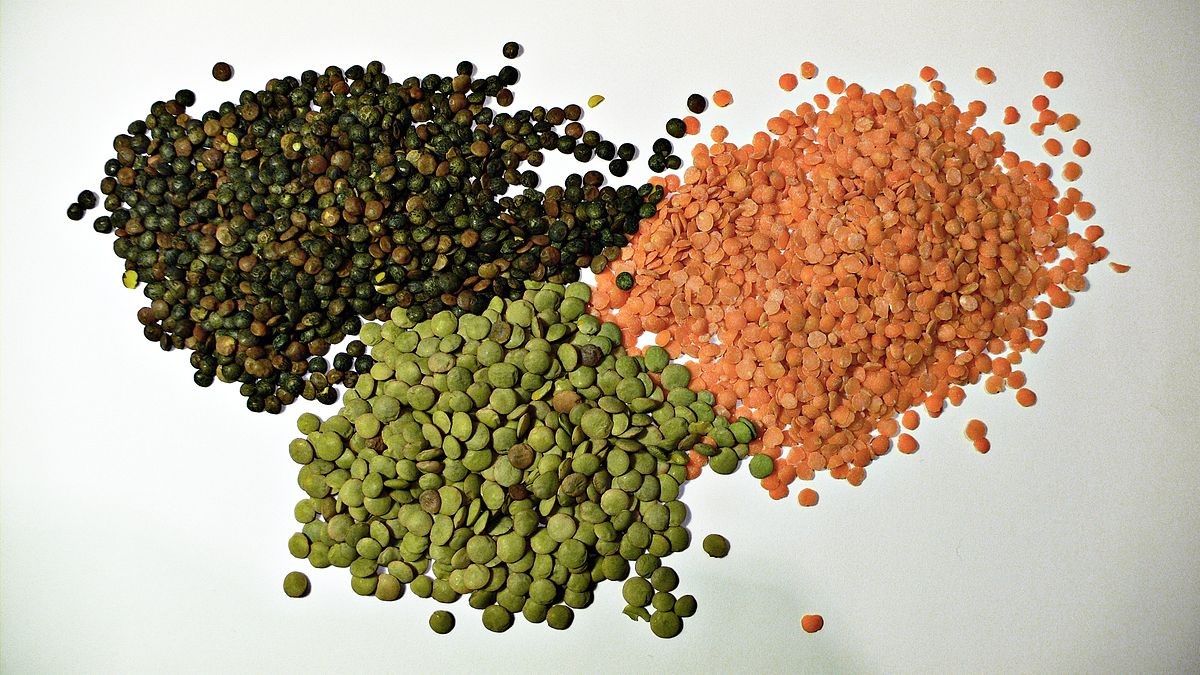
Dried peas, beans and lentils are the vegetables conspicuous in protein and therefore are excellent as meat substitutes. There is a Hindu proverb, “Rice is good, but lentils are my life.” Mushrooms are also valuable meat substitutes.

Nuts may also be regarded as meat substitutes, especially peanuts, almonds and Brazil nuts. Nuts, however, are rich in fat. No other vegetable food is so rich in fats as nuts. On account of their high fat content, an excessive consumption is likely, sooner or later, to derange digestion. They should be combined with foods having a low fat content. If properly combined with other foods, they furnish valuable food.

The cereals, such as oatmeal and whole wheat preparations, contain from 13 to 16 percent protein and therefore may be regarded as protein supplying foods. Combining them with milk increases the protein content and furnishes a happy balanced combination.

The Housewife’s Cook Book by Lilla Frich (1917)

Traditional Onion Souffle Recipe

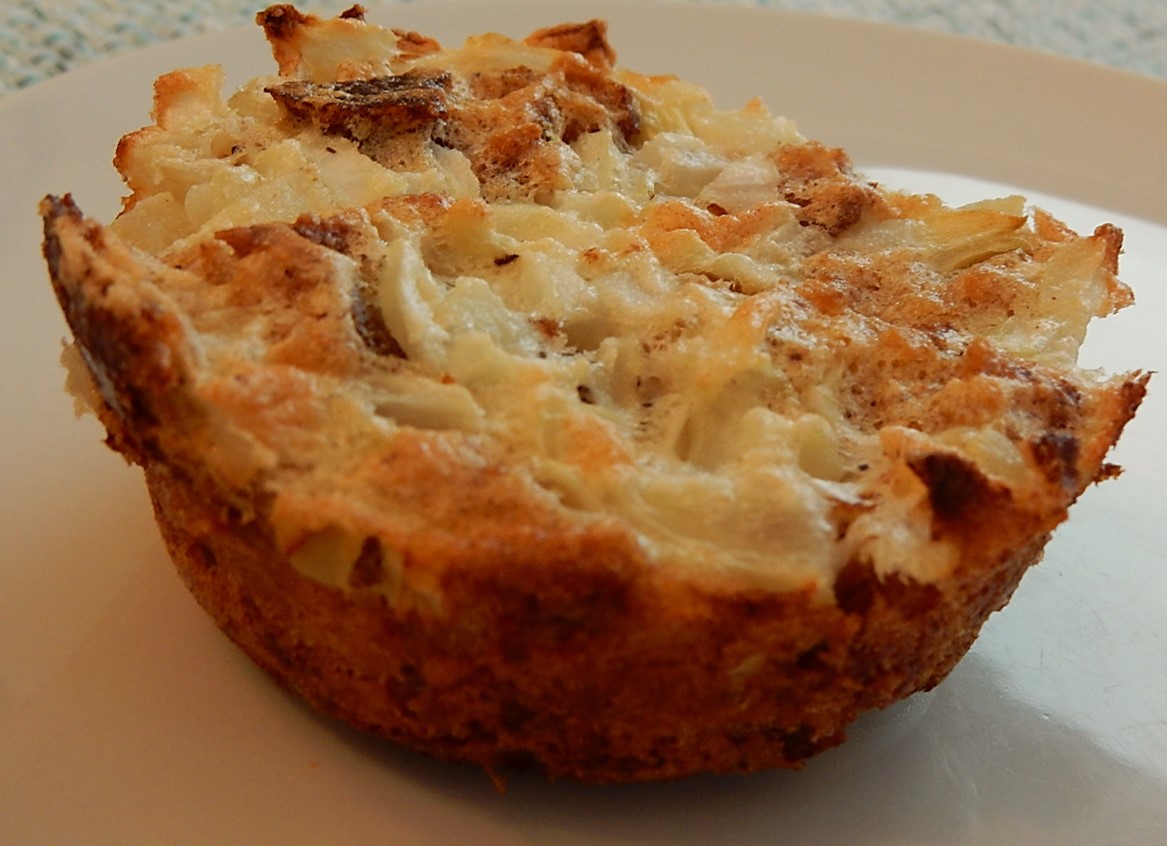
I recently had a roast in the oven, and was looking for a side dish to accompany it, so when I happened upon a hundred-year-old recipe for Onion Souffle, I decided to give it a try.

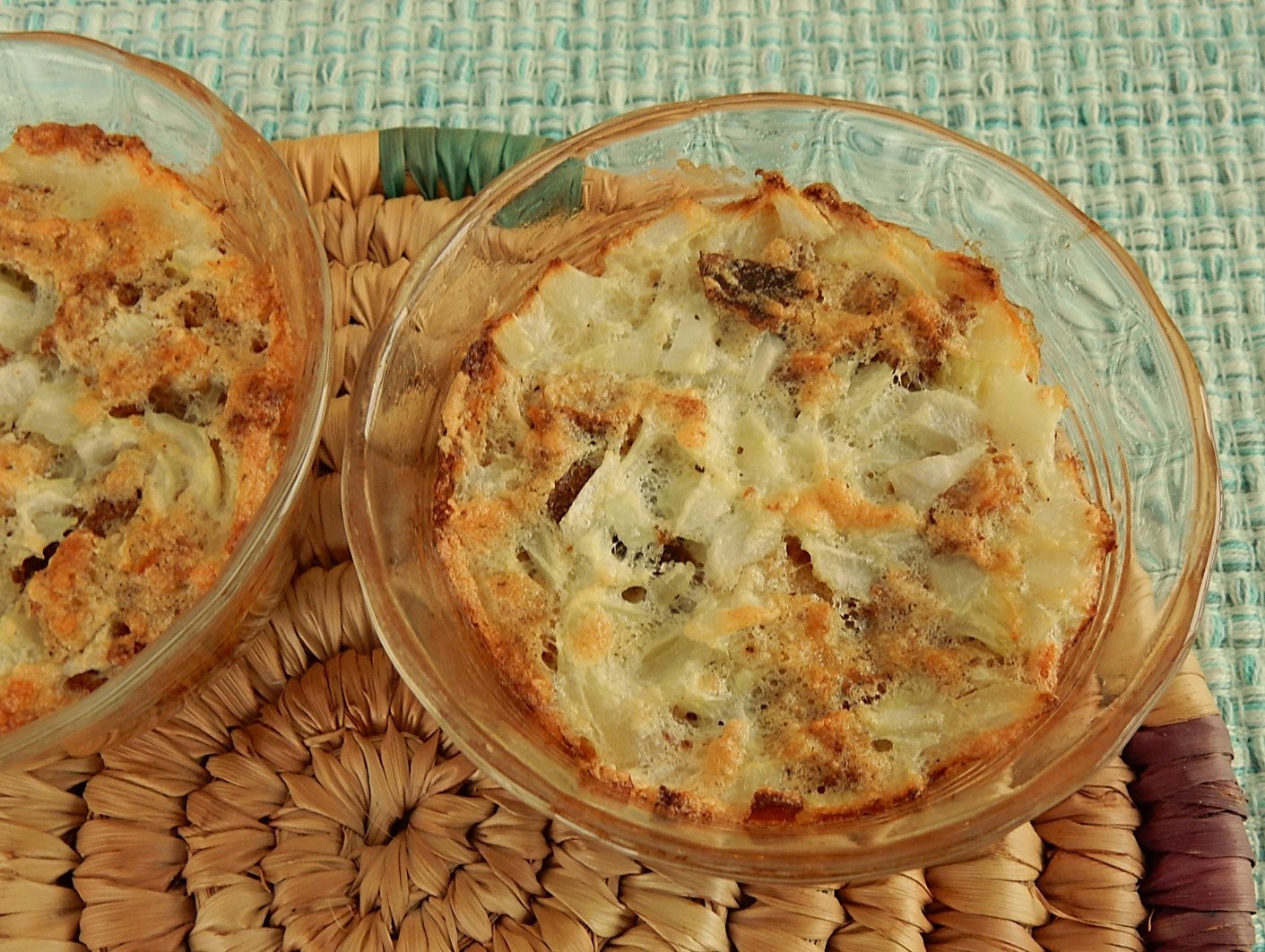
Onion Souffle contains onions and bread crumbs, and reminds me a little of stuffing.  This side dish had a robust onion flavor and nicely complemented the roast, though it was a little dry. The next time I make this Souffle, I’ll probably drizzle a little gravy or other sauce over the top.

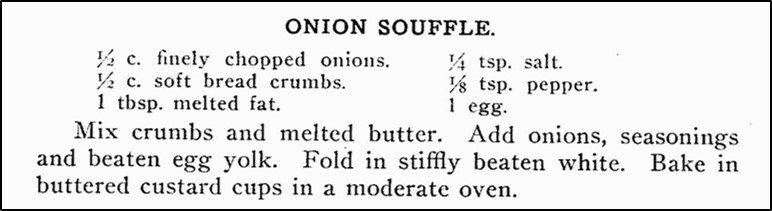
Here is the original recipe:

Source: The Housewife’s Cook Book by Lilla Frich (1917)

And, here is the recipe updated for modern cooks:

Onion Souffle

  • Servings: 2
  • Difficulty: moderate
  • Print

1 tablespoon butter, melted

1/2 cup soft bread crumbs

1/2 cup onion, finely chopped

1/4 teaspoon salt

1/8 pepper

1 egg, separated

Preheat oven to 350° F. Put bread crumbs and melted butter in a bowl, then stir.  Add onions, salt, pepper, and egg yolk; stir to combine.

Put the egg white in a small mixing bowl, beat until stiff peaks form. Then fold the beaten egg whites into the onion and bread mixture.

Spoon into buttered custard cups (small ramekins). The souffle does not rise much during cooking, so the custard cups can be filled to within 1/2 inch of the top. Place in oven and bake until set and lightly browned (about 30 minutes). Removed from oven and serve. If desired,  the onion souffle can be unmolded.

Soup Seasoning and a Tea Ball

Here’s a tip for preparing soups in a hundred-year-old magazine:

Soup Seasoning and a Tea Ball

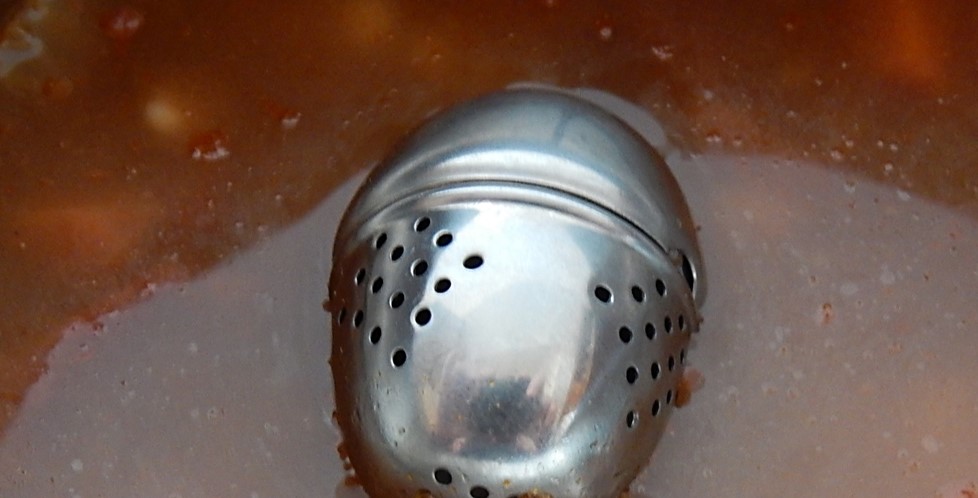
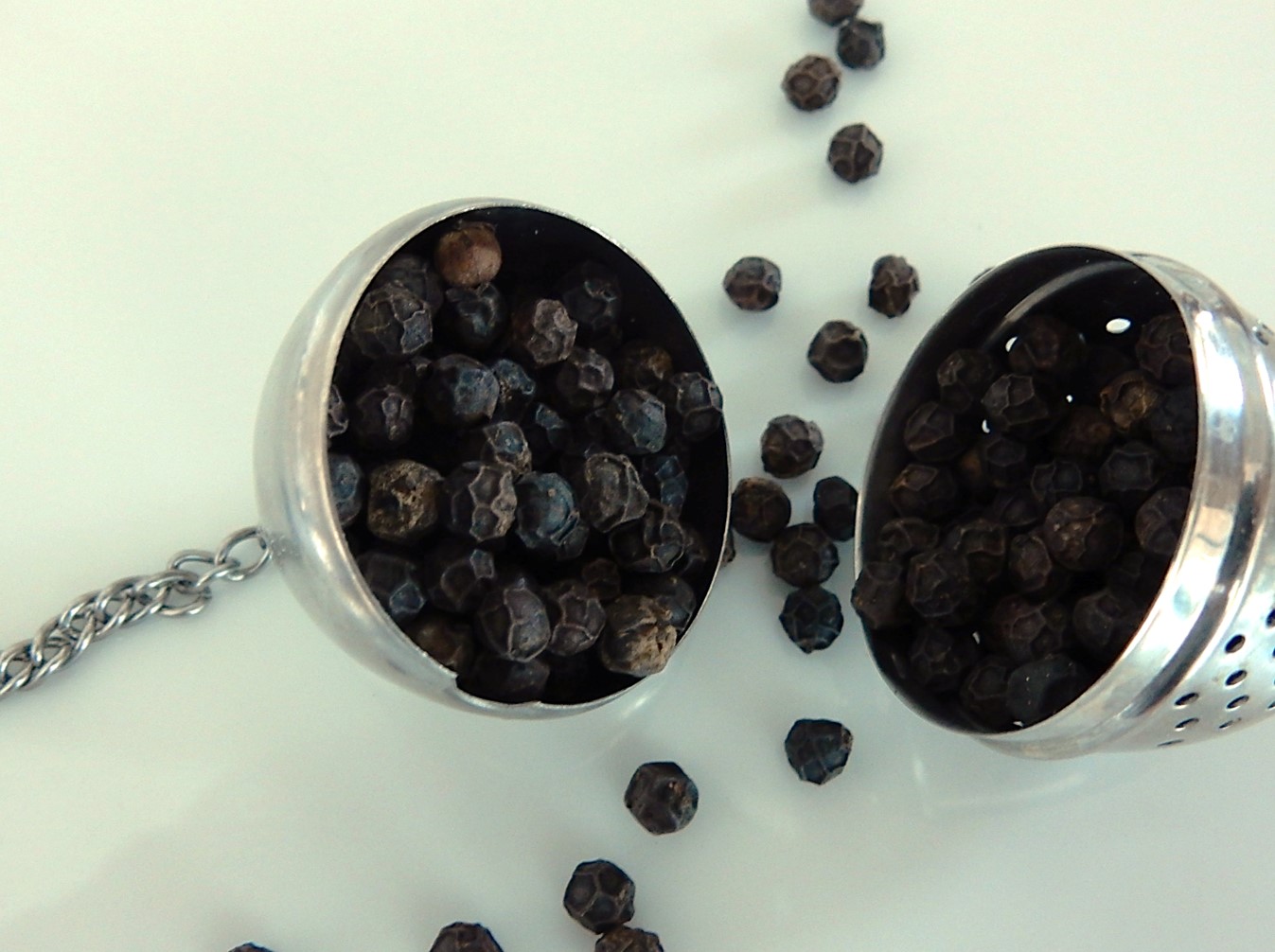
In adding peppercorns and other whole flavorings to soups that are not to be strained, place them in a tea ball and drop the tea ball into the soup. It may be removed before the soup is served and the seasonings with it. All of the desired flavor is thus obtained without the chance of anyone getting a mouthful of hot pepper.

Good Housekeeping (September 1917)

Hundred-year-old Caramel Biscuits Recipe

Caramel Biscuits is the name of a recipe that I found in a hundred-year-old magazine, but the recipe name may be a misnomer.  This is a dessert or snack pastry, not the typical biscuit.

Caramel Biscuits are similar to cinnamon rolls, but contain no cinnamon. Instead nutmeg provides a more nuanced and sophisticated flavor when combined with the rich brown sugar filling that is embedded between each layer of bread. They are made using baking powder, rather than yeast, so are quick and easy to make.

Here is the original recipe:

Source: Good Housekeeping (July, 1917)

And, here is the recipe updated for modern cooks:

Caramel Biscuits

  • Servings: approximately 2 - 2 1/2 dozen 1 1/2-inch in diameter biscuits
  • Difficulty: easy
  • Print

1 cup light brown sugar

1/2 cup butter

2 cups flour

4 teaspoons baking powder

1 teaspoon salt

1 tablespoon butter + 1 tablespoon lard (or use 2 tablespoons butter)

1/3 cup milk

1/3 cup water

nutmeg

Preheat oven to 400° F.  Put the brown sugar and butter in a bowl; stir to combine. Set aside.

Place flour, baking powder, and salt in a mixing bowl, then stir together. Cut in the butter and lard, then add water and milk. Mix using a fork until dough starts to cling together. If needed, add additional water. Divide into two balls.  Put one ball put on a floured pastry board. Roll into a 1/4 inch-thick rectangle approximately 6 inches X 10 inches. Spread one-half of the brown sugar mixture on the rectangle of dough. Rolling from the wide side, roll up the dough, and then cut into 3/4″ slices. Place slices in a greased 10″ inch round (or similar-sized) pan. There should be about 1/4″ space between each slice. Repeat with the second ball of dough, again putting the slices in the pan. Sprinkle each slice with nutmeg.

Place in oven and bake for approximately 25-30 minutes or until lightly browned.  Remove from oven. Let cool for 5 minutes, then remove from pan. Serve either warm or cold.

Sugarless Sweets?? Sugar Substitutes During WWI

During World War I there were sugar shortages, so consumers were encouraged to use alternatives to white sugar. Here’s some excepts from a hundred-year-old article about “sugarless sweets” – though I tend to consider most of the alternatives to be sugars.

Sugarless Sweets: Delicious Desserts Made with No Sugar

The recent sugar shortage has brought home to us the fact that we need not be dependent upon white sugar for sweetening.

Brown Sugar. In substituting brown sugar – when we are lucky enough to obtain it – the same amount should be used as white. A cupful of brown sugar has less actual sweetening power than white sugar, but it makes up in flavor what it lacks in sweetness. 

Maple Sugar. In using maple sugar the same thing is true, and the usual recipe will be as successful as ever, the texture being the same and only the flavor changing – often for the better.

Maple Sirup. Maple sirup is not so sweet as sugar, and when used to replace it should be increased by one-half. Of course in this case allowance must be made for the increase of liquid. Using the amount of liquid called for in the recipe should be halved.

Corn Sirup. The same rule holds good for corn sirup. One and a half again as much sirup may be used, and to make up for a certain flatness of taste, it is desirable to use an extra amount of flavoring. When used in cakes and cookies better results are obtained if sirup is substituted for only half the sugar.

Molasses. In using molasses we find that no change need be made so far as amounts for sweetening purposes are concerned, because, like brown sugar, what it lacks in sweetness must be made up in flavor; but the same allowance must be made for liquid as when using sirup – it should be halved. When molasses is used in cake mixtures, soda should be used instead of baking powder in the proportion of one teaspoonful of soda to one cupful molasses.

Honey. Honey, probably the longest-used sweetening in the world, has not been in common use for cooking purposes recently. It has a distinct favor, which combines well with spices and its sweetening power is about the same as that of sugar. Honey is thicker than sirup, so it therefore adds less liquid, and in replacing sugar only one-fourth of the liquid in the recipe need be left out. As honey is slightly acid, soda in the proportion of half a teaspoonful to one cupful of honey should be used in cake or cookie mixtures.

Fruits. The sweetening qualities of fruits are not always recognized, but when raisins or dates are used the sugar may be appreciably lessoned. If twelve cut-up dates are added to two cupfuls of cooked oatmeal ten minutes before serving, no sugar will be required – unless your family has a very sweet tooth.

With all these sugar-saving sweets at our disposal, we shall certainly not find it difficult to cut down our use of sugar from the pre-wartime amount of four ounces a day to the two-ounce ration which the Food Administration is asking us to make our maximum.

Ladies Home Journal (March, 1918)