According to the October, 1919 issue of Good Housekeeping, October is the last fresh vegetable month:
The Last Fresh Vegetable Month
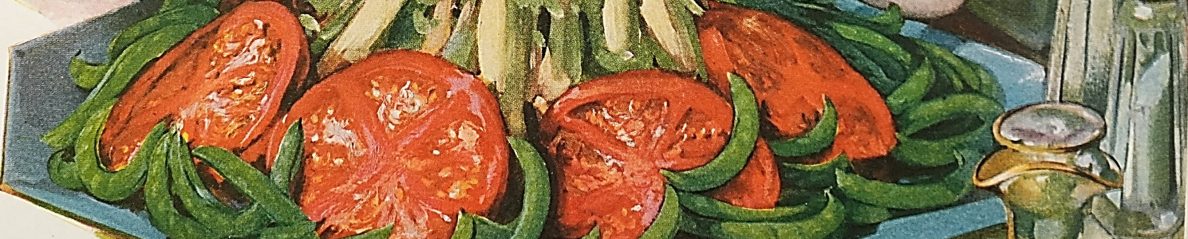
In October vegetables may still hold the post of honor on the table which is planned on a truly economical and sensible basis. By using freely and consistently what is in season, and by utilizing especially the delicious vegetable overflow, it is possible to lessen the meat bill appreciably. If we do use the abundant fresh vegetables lavishly when in season, it will make us feel more comfortable about the increased meat consumption, which the cold weather later makes necessary. The savings on meat and grocery bills when we effect by living largely on vegetables during the summer and fall will help us to balance the budget satisfactorily.
A hundred-years-ago people apparently ate more meat in the winter than during the warmer months. I don’t think that my meat consumption varies much across the year, though I have vague childhood memories of having strawberry shortcake as the main course sometimes in June, and being told that, “We eat lighter in the summer because it’s hot.”
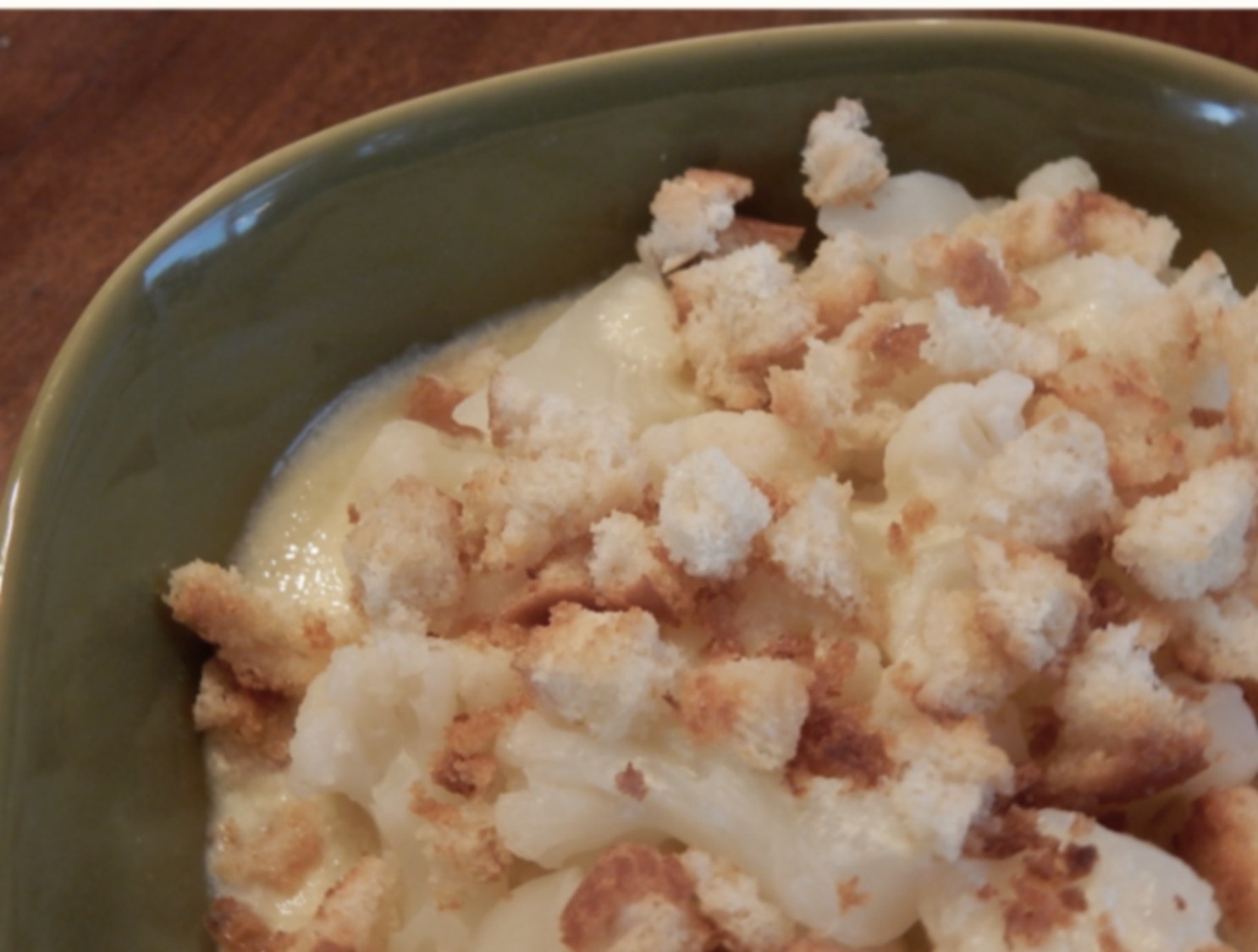
Cauliflower is a delightful fall vegetable, so I was pleased when I recently came across a hundred-year-old recipe for Cauliflower with Onion Sauce. This dish contains cauliflower florets smothered with a rich and creamy sauce made with cream and onion puree. It is then topped with lightly toasted bread cubes.
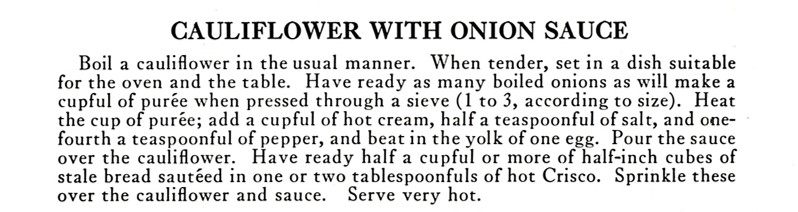
Here’s the original recipe:
Source: Recipes for Everyday by Janet McKenzie Hill (1919)
Making the sauteed bread cubes brought back warm memories of my mother in law. She often sauteed bread cubes to lightly toast them when making a topping for casseroles or other dishes. I generally go the easier route when making a bread topping, and use fine bread crumbs and skip sauteing them. But I really liked the larger sauteed bread cubes in this dish, and may have to make them again to top other dishes.
I couldn’t bring myself to use Crisco when I sauteed the bread cubes and instead used butter.
Remove outer layer from onions, slice and place in a saucepan. Cover with water, and using high heat bring to a boil. Reduce and cook until tender about 15 minutes. Drain, then press through a sieve or puree (I used a Foley mill.) Combine onion puree, cream , salt, pepper, and egg yolk in a saucepan. Using medium heat, heat until the sauce thickens and is on the verge of boiling. Remove from heat.
Cauliflower
Cut the florets from the head of cauliflower. Place in a saucepan, and cover with water. Bring to a boil, then reduce heat and cook until tender (about 8 -10 minutes). Remove from heat and drain.
Bread Cubes
Cut bread into 1/2 inch cubes. Melt butter in small skillet using medium heat, add bread crumbs. Gently stir occasionally until lightly browned. Remove from heat.
To Serve
Place cauliflower in serving dish. Pour onion sauce over the cauliflower, then sprinkle with sauteed bread crumbs.
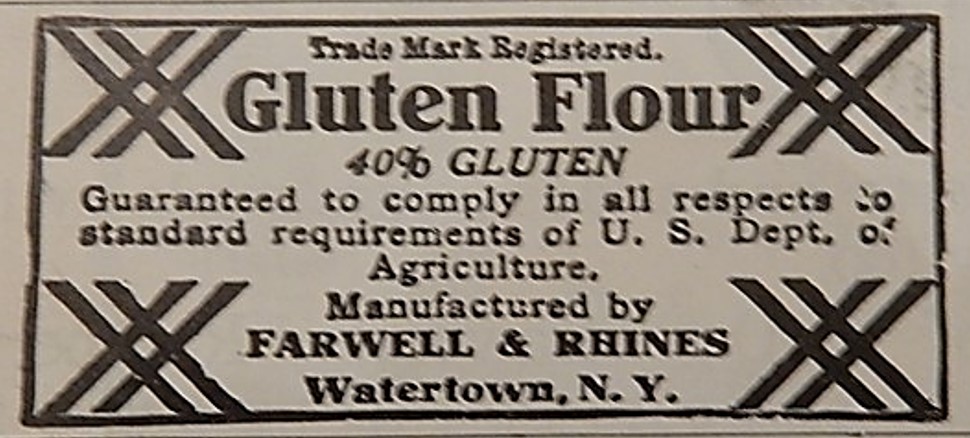
I often learn new things from doing this blog. For example, today I noticed a small advertisement in a hundred-year-old magazine for Farwell & Rhines Gluten Flour. Since some people have health issues that require them to go gluten free (or at least minimize their use of gluten), I was surprised to see high gluten promoted. How did cooks in 1919 use this flour? . . . Did they mix it with other flours? Use if for bread making?
Gluten is a protein. Flours with higher gluten content rise better when making breads. According to SFGate, all-purpose flour typically contains 11-12% gluten. Bread flour is considered a high gluten flour, and it contains up to 13% gluten. Cake flours only have 7-8% gluten. There are also products sold that are just called “gluten.” Gluten is sometimes added to other flours to increase the gluten content when making bread.
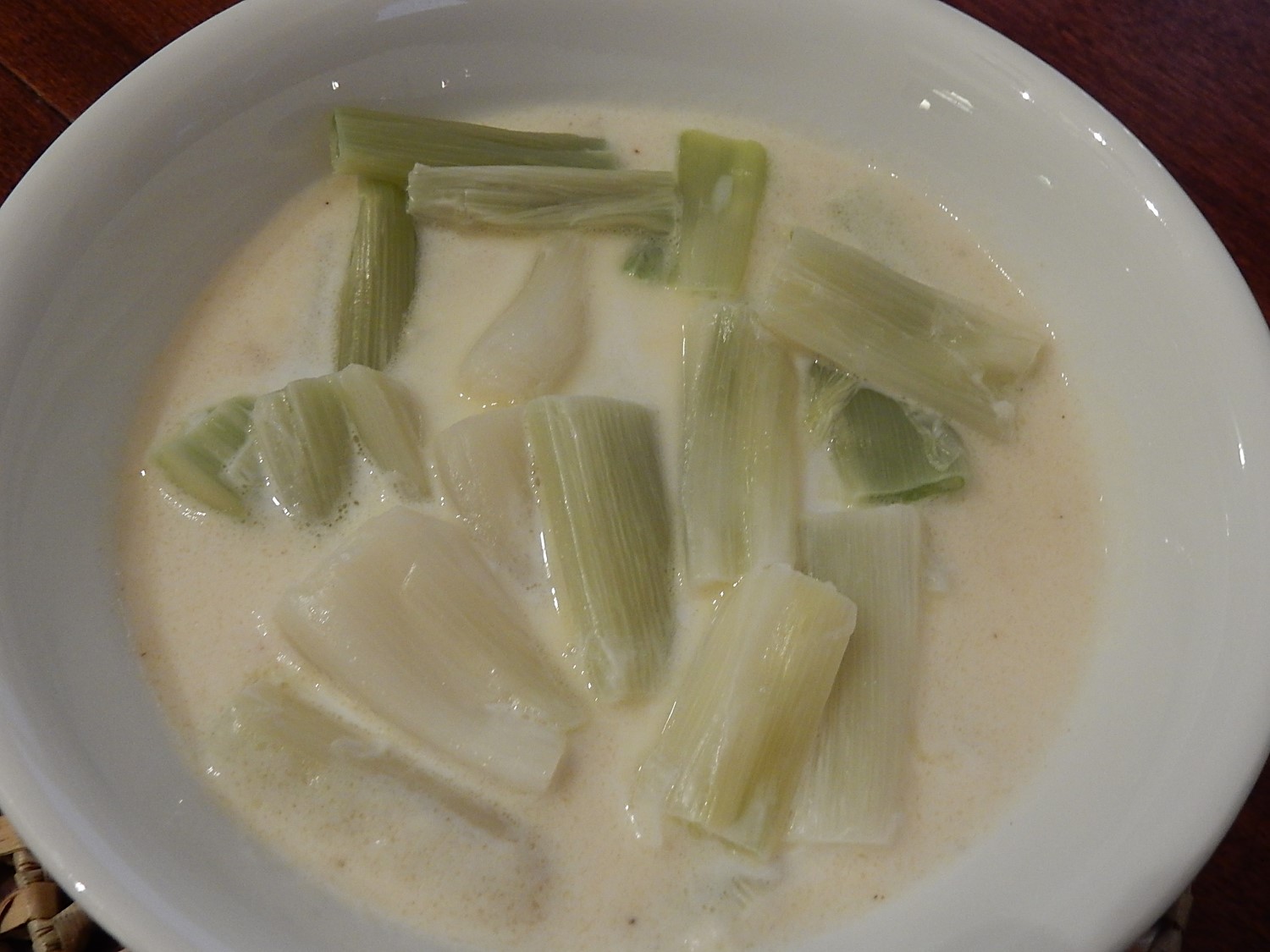
Leeks are a delightful, often under-utilized vegetable, so when I saw a hundred-year-old recipe for Bianca-Style Leeks I knew that I had to give it a try. The mild onion-like flavor of the leeks was accentuated by a delicate chicken broth and cream sauce. This recipe is easy to make, and very tasty. The leeks make a wonderful side dish, and are delightful with beef or pork.
Source: Recipes for Everyday by Janet McKenzie Hill (1919)
When I made this recipe, I couldn’t figure out why the leeks needed to be soaked in cold water for half an hour so I skipped that step. I also didn’t cook the leeks as long as called for in the old recipe. A half hour seemed excessive; they were tender after about 15 minutes. I substituted butter for the Crisco, and made the sauce in a separate pan and then added the leeks – it just seemed easier.
Clean and trim the leeks. Cut crosswise the white and light green parts of the leeks into 2-inch pieces. Place in a saucepan and cover with water; add 1/2 teaspoon salt. Using high heat bring to a boil, then reduce heat and cook until the leeks are tender (about 15 minutes). Remove from heat and drain.
In the meantime, in another pan, using medium heat, melt butter; then stir in the flour, 1/4 teaspoon salt, and pepper. Gradually, add the chicken broth and half and half while stirring constantly. Continue stirring until the white sauce thickens. Add cooked leeks and reheat until the sauce is hot and bubbly while occasionally stirring very gently. Remove from heat and serve immediately.
Last week the eggplants at the farmers’ market just seemed to call me. Their beautiful deep purple color, and smooth curves made them aesthetically pleasing. I also knew that eggplants are known for their versatility because they have little flavor of their own, but rather absorb the flavors of the foods and spices that they are cooked with.
Once I had purchased an eggplant, I had a new challenge – finding a hundred-year-old recipe that called for eggplant.
After browsing through old magazines and cookbooks, I think that I found a winner. Scalloped Eggplant is made by slicing eggplant, then layering it in a casserole dish with grated cheese, and smothering with tomato sauce. It is then baked in the oven until the eggplant is tender.
The Scalloped Eggplant was delicious, and can be served as either a meatless main dish or a hearty side dish.
Here’s the original recipe:
Source: American Cookery (October, 1919)
Today eggplant is generally written as one word, but that has not always been the case. Based on the way it was written in this recipe, it was two words a hundred years ago.
I used cheddar cheese when I made this recipe. And, I didn’t sprinkle the layers in the casserole dish with salt because I had previously soaked the eggplant in salt water. There is also salt in the cheese and tomato sauce. Sometimes I think that people in 1919 liked saltier foods than what we do today.
Peel eggplant and slice it into 1/2 inch slices. In a large bowl, combine the water and salt. Add the eggplant slices. Put a plate or other weight on the eggplant slices to keep them from floating. Let soak for 30 minutes. Drain and rinse.
Preheat oven to 375° F. Pour one-fourth of the tomato sauce in a 1 1/2 quart casserole dish. Next put one-third of the eggplant slices in the dish. Add another fourth of the tomato sauce, then add one-third of the cheese and sprinkle with pepper. Continue layering until all of the ingredients are used, ending with the cheese.
Cover dish and bake in oven for 35 minutes. Remove lid and continue baking until the eggplant is tender (about another 10-20 minutes). Remove from oven and serve.
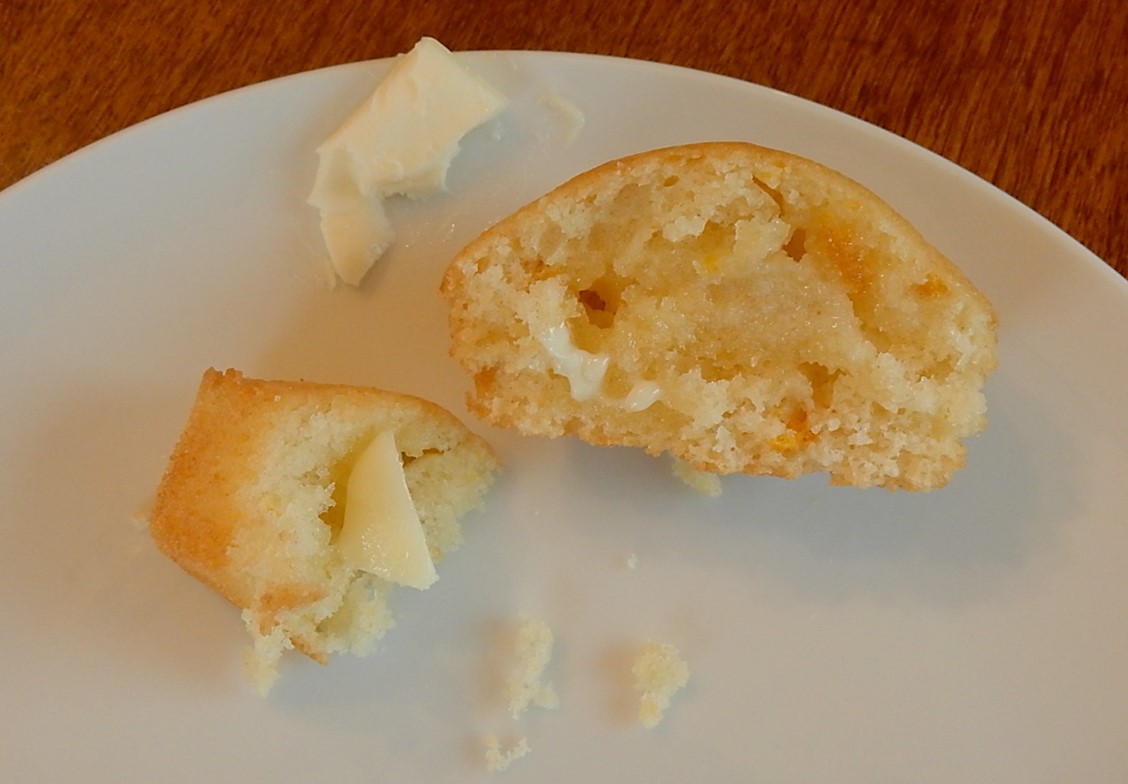
Food must have been a lot scarcer a century ago than it is now. A hundred-year-year old magazine had this tip about how to successfully save those tiny dabs of extra butter that are sometimes left over after buttering bread:
Use bread and butter plates – yes, even if you do your own dishes. Every bit of left-over butter or margarine can be saved this way. It can’t be, or isn’t always, if put on the dinner plate.
American Cookery (August-September, 1918)
Is it just me, or does this tip seem slightly gross? At my house, I scrape any left-over butter off the plate and throw it away. Of course, I never use bread and butter plates, but still this seems a bit over the top.