When I make bacon, it sometimes turns out better than other times, so I was pleased to find tips for making perfect bacon in a Swift’s Premium Bacon advertisement in a hundred-year-old magazine.

When I make bacon, it sometimes turns out better than other times, so I was pleased to find tips for making perfect bacon in a Swift’s Premium Bacon advertisement in a hundred-year-old magazine.

I recently came across a delightful and very versatile hundred-year-old muffin recipe. Sour Milk or Sour Cream Muffins are quick and easy to make. They are tasty with butter – and even better with a little jelly or jam. They also can serve as the basis for a plethora of other muffins; just stir in blueberries, raisins, nuts or other add-ins.
Here is the original recipe:

And, here is the recipe updated for modern cooks:
1 1/2 cups flour
1/2 teaspoon salt
1/2 teaspoon baking soda
1 1/2 teaspoons baking powder
1 egg, beaten
3 tablespoons shortening or butter, melted
1 cup sour milk or sour cream (I used sour cream. If milk is used, it can be “soured” by adding 1 tablespoon vinegar.)
Preheat oven to 400° F. Sift together flour, salt, baking soda, and baking powder. Add egg, shortening or butter, and sour milk or sour cream; stir to combine. Grease muffin tins (or use paper liners), and then fill each muffin cup 3/4th full with batter. Bake for approximately 20 – 25 minutes or until lightly browned.

I was surprised to see an advertisement for refrigerators in a 1919 issue of Ladies Home Journal. Was the refrigerator electric? And, was the electricity dependable enough to ensure that food stayed cold in the refrigerator?
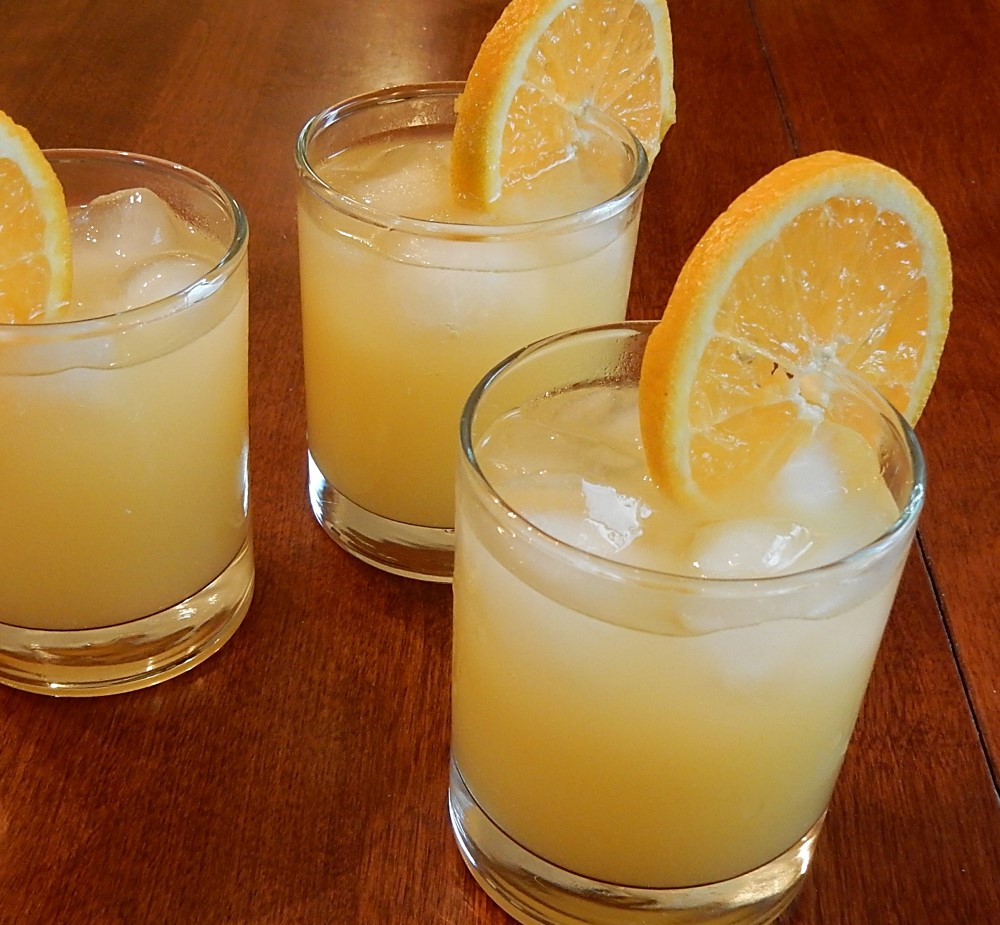
Looking for the perfect summer mocktail? I found a great recipe in a hundred-year-old magazine that fits the bill. Country Club Shake combines orange juice, white grape juice, and ginger ale to create a sunny, sophisticated, nonalcoholic drink.
1919 was the heyday of mocktails, and Country Club Shake is one of the best. Prohibition was slated to begin in January, 1920 – and, in preparation, magazines contained lots of nonalcoholic drink options.
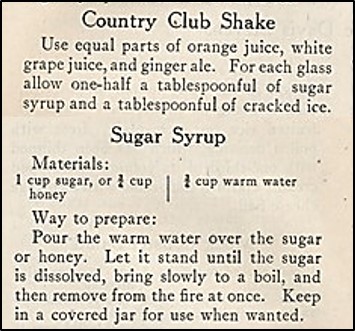
Here’s the recipe updated for modern cooks:
1 cup orange juice
1 cup white grape juice
1 cup ginger ale
2 tablespoons sugar syrup (see recipe below)
4 tablespoons cracked ice
orange slices or other fruit for garnishing, optional
Combine all ingredients, and serve. If desired, serve on ice, and garnish with orange slices or other fruit.
Sugar Syrup
1 cup sugar
1/2 cup warm water
Put the sugar in a sauce pan. Pour the warm water over the sugar, and stir. Let sit a few minutes until the sugar is dissolved, then using medium heat bring to a boil. Remove from heat. Store in a covered jar for use when needed.
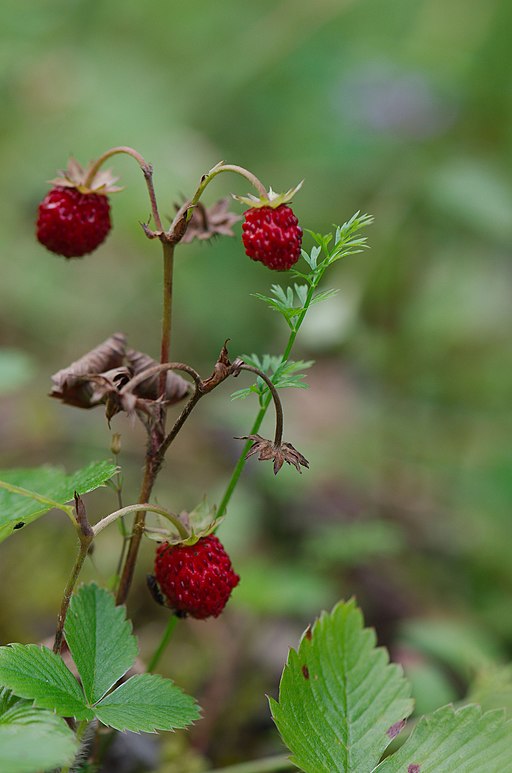
What was it like to pick wild strawberries a hundred years ago? Here’s a description that appeared in a 1919 magazine:
One might manage April and May, or even July, in the city, but a wild strawberry June belongs only in the heart of the country.
Do you know where these, the sweetest of wild berries, thrive? Up a hill road strewn with leaves, where an ovenbird calls and the red squirrel scolds, over a wall in a mowing, shut away from the rest of the world by pines and birches. A towhee hops on a crumbled stone fence. From remote woods is the trill of a thrush. A squirrel speaks out of the abundance of his irascible nature. The trees sway, the clouds trail their shadow across the slopes of the mountain.
Gathering wild strawberries is exceeding intimate work. Here they grow in a wide patch, to the exclusion of other plants, so thick that when you lean close to them and peek under the leaves you see a red-spotted carpet. Continued bending is painful. Continued squatting is impossible. You select a less fruited section and kneel. Then, preferring stains to stiff joints, you sit. Basket full, you cover the delicious sweetness with ferns and, then, there at the foot of the hill is the brook in which to dip your arms to the elbow and lave your hot face.
Excerpt from “Berrying” by Beulah Rector (American Cookery, June/July, 1919)

On hot summer days many cookies seem too heavy, so I browsed through my hundred-year-old cookbooks for a light, summer cookie. And, I think that I found the perfect recipe. Sponge Drops are the “angel food” of cookies. They are light and airy with a hint of vanilla.
Though I didn’t try it, I think that these cookies would work well to make ice cream sandwiches.
I’m still intrigued by how many desserts a hundred years ago had the word “sponge” in the title. There were sponge cakes, sponge pies, this sponge cookie recipe – and two weeks ago, I made a recipe for Apricot Sponge. I think that sponge refers to desserts with lots of beaten eggs that give them a certain lightness or creaminess.
Here is the original recipe:

Here’s the recipe updated for modern cooks:
1 cup flour
1 teaspoon cream of tartar
1/2 teaspoon baking soda
3 eggs
1 cup sugar
1 teaspoon vanilla
Preheat oven to 400° F. Sift together flour, cream of tartar, and baking soda; set aside.
In a mixing bowl beat eggs, then add sugar and beat. Stir in flour mixture and vanilla. Drop by rounded teaspoons on greased baking sheet. (The teaspoons should just be round – not heaping. These cookies spread out quite a bit.) Bake about 10 minutes or until lightly browned.
Did you ever wonder whether broths are nourishing? Well, I found the answer in a hundred-year-old magazine. Here’s the question posed by a reader and the response:
Q: I should like to ask you about the advisability of giving canned broths to invalids and children. I am speaking particularly of a child fourteen months old that is taking broths every day. Are such broths as nutritious as if freshly made? Is there any nutritive value left in the used meat?
Mrs. A.K.H., Mass.
A: Broths are usually made from meats, sometimes with the addition of vegetables, and contain only those food materials which are soluble in hot water, or, like starch, diffusible in water. Sugars and meat bases, such as creatin, are soluble in water. A part of the mineral substances in the foods is also soluble. The nutritive value of broths is necessarily limited. It is the opinion of many physicians and physiologists that the food stuffs in broths, especially the nitrogenous bases, are not equal in value to the ordinary proteins which are not soluble in water. It is a common opinion that the food materials in broths are more easily assimilated and therefore are preferable in many diseased conditions to more nutritious foods, which the impaired digestive apparatus is unable to utilize. I should regard broths of any kind as a poor substitute for milk for a child of fourteen months. Canned broths, when they are first made, are perhaps as desirable as home-made broths. They are likely to dissolve some of the tin from the container, and soluble tin salts are not particularly useful in the stomach of a child. It is not possible, in my opinion, to nourish a child on broths of kinds. It should be milk.
Good Housekeeping ( June, 1919)